
Monasteries have been important places for practice, translation, textual preservation and art. Start with a place and its teachers, then explore its images and objects. The illustrations here are identified historical artworks, not substitute photographs of the monasteries described.
Editorial study guide · Chinese / English · Updated 9 September 2026
Ganden · Lhasa region · Gelug
Tsongkhapa founded Ganden east of Lhasa in 1409. The monastery is closely connected with Gelug’s formation and teaching traditions. Explore it alongside his life and the stages-of-the-path literature.
Reading route: consider its founding and teachers, then its roles in study, practice and transmission. Check current local information separately for any visit.
Samye · Shannan region · Early translation
Samye is closely associated with eighth-century Buddhist transmission, monastic community and translation. Its history links language learning, textual work, education and practice.
Its layout is often interpreted through Buddhist cosmology. Distinguish symbolic interpretation from the dating and restoration history of actual buildings.
Sakya · Shigatse region · Sakya tradition
Khön Könchok Gyalpo founded Sakya Monastery in 1073. Its name relates to pale earth, and its history is closely connected with the Khön lineage and Sakya teachings.
The story of Atisha bowing to the grey earth is a monastery legend, while the founding date belongs to its historical account. They can be read together with their categories clearly identified.
Thangkas · From the centre to the surroundings
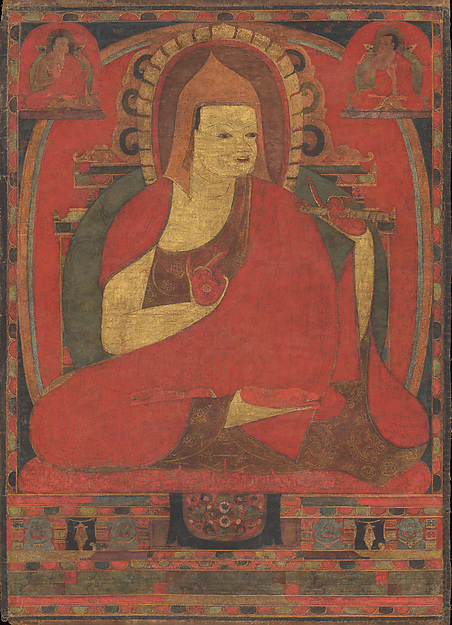
Thangkas are hanging religious images made in painting and textile forms. Begin with the central figure, then examine teachers, surrounding figures and offerings. The arrangement must be interpreted for the particular artwork.
Colours and attributes help identification, but one detail alone is insufficient. Compare the Atisha painting with entries in the illustrated figures guide.
Stupas · Commemoration and awakening
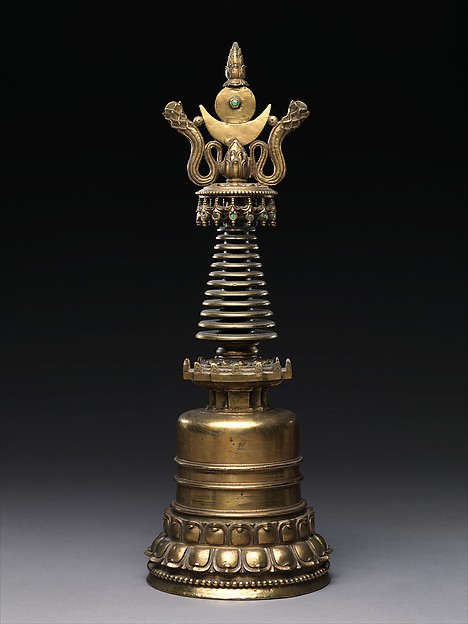
Stupas are associated with relics, commemoration and reverence, and symbolize awakening. They may be buildings or small devotional objects. The fifteenth-century example does not represent every regional form.
Notice the base, body and spire, then check the object’s name, date and purpose. Appearance alone does not establish whether relics are enclosed.
Sculpture and ritual objects · Context matters
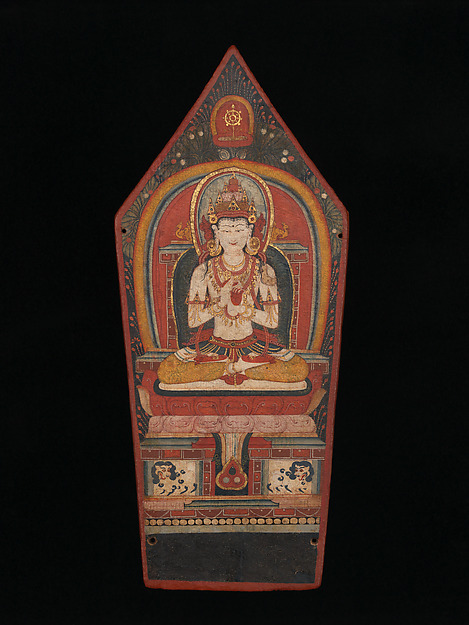
One Buddhist figure can have multiple forms, and historical objects reflect regional craftsmanship. The illustrated crown panel belongs to a particular ritual object; a single panel is not a complete mandala or practice instruction.
Check the catalogue title, date, region and medium before interpreting gestures and attributes. Ritual uses of vajra, bell and other objects require their own instruction.
Textual culture · Books as historical objects
The Kangyur and Tengyur are the two major collections of the Tibetan Buddhist canon. Translation, copying, woodblock printing and bookmaking connect learning with writing, craftsmanship and preservation.
When viewing a manuscript, consider its language and whether it was written or printed. The classics page offers reading links; images of books help explain how texts were transmitted.