
Gelug is our main focus, alongside the wider Tibetan traditions. Search first, then explore the lineage introductions and basic concepts below.
Find a resource
Source language and access are shown on each card. “Mixed” means a directory contains materials at different levels. External sites set their own access and fees.
Tsongkhapa and Gelug →
Local introduction to Tsongkhapa, Ganden and the stages of the path.
On this site · Introductory · Articles and guidesFPMT Discovering Buddhism →
Structured curriculum; some study formats require registration or payment.
External source · Introductory · CoursesFPMT Education →
Find programs and practice resources by level.
External source · Mixed-level directory · CoursesAtisha and the graduated path →
Biography and related teachings.
External source · Introductory · Articles and guidesLama Yeshe Wisdom Archive →
Read teachings with teacher and archive information.
External source · Introductory · Articles and guidesLotsawa House Chinese translations →
Chinese translations across traditions; check each text’s author and conditions.
External source · Mixed-level directory · Scriptures and practice texts84000 canonical translations →
English translations of the Tibetan Buddhist canon.
External source · Further study · Scriptures and practice texts84000 glossary →
Look up terminology in textual context.
External source · Mixed-level directory · Tools and glossariesLamrim translations →
Texts on the graduated path, including works by Atisha.
External source · Further study · Scriptures and practice textsLojong translations →
Root texts and explanations on mind training.
External source · Further study · Scriptures and practice textsNyingma in Chinese →
Public Chinese translations; begin with the introduction to each work.
External source · Mixed-level directory · Scriptures and practice textsNyingma and the nine vehicles →
Explore the ancient translation tradition and its frameworks.
External source · Mixed-level directory · Articles and guidesKagyu lineage history →
Teachers and transmission in Dakpo Kagyu.
External source · Introductory · Articles and guidesDrikung Kagyu →
A lineage-published historical introduction.
External source · Introductory · Articles and guidesDrukpa introduction →
Background published by a Drukpa organization.
External source · Introductory · Articles and guidesSakya and Lamdre →
History, masters and principal teachings.
External source · Introductory · Articles and guidesSakya teaching library →
Browse teachings by topic; languages vary by item.
External source · Mixed-level directory · Articles and guidesJonang Foundation →
History, masters and research on Jonang.
External source · Further study · Articles and guidesShangpa history →
Background on Khyungpo Naljor, Niguma and Sukhasiddhi.
External source · Introductory · Articles and guidesShangpa views and practices →
An overview of the transmission, not permission to undertake its full practices.
External source · Further study · Articles and guidesBuddhas and protectors →
25 illustrated entries on identities and introductory study.
On this site · Introductory · Articles and guidesChanting and practice texts →
Existing Gelug-related texts; conditions vary by version.
On this site · Mixed-level directory · Scriptures and practice textsTibetan calendar →
Calendar dates, observances and cultural references.
On this site · Introductory · Tools and glossariesBuddhist stories and legends →
Illustrated stories with historical and legendary categories identified.
On this site · Introductory · Articles and guidesYour First Steps in Tibetan Buddhism →
Eight illustrated introductions to Buddhist foundations, Gelug lamrim, bodhicitta, lineages and everyday learning.
On this site · Introductory · Articles and guidesMasters and Lineage Connections →
Explore Tibetan Buddhist learning through Tsongkhapa, Atisha, Padmasambhava, Milarepa and other masters.
On this site · Introductory · Articles and guidesMonasteries and Buddhist Art →
Explore Ganden, Samye and Sakya, with illustrated introductions to thangkas, stupas, sculpture and texts.
On this site · Introductory · Articles and guidesFPMT Discovering Buddhism videos →
English introductory videos by topic; availability depends on the original streaming service.
External source · Introductory · VideosNo match. Try clearing a filter or changing the search words.
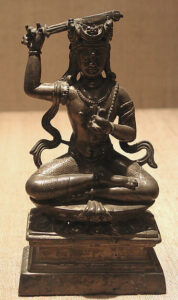 Wisdom · Manjushri
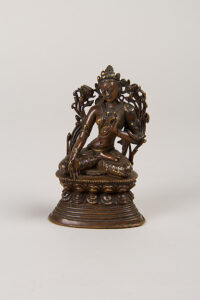 Compassion · Tara
A simple reading route
Traditions and approaches
Gelug · Featured
Centred on Tsongkhapa’s teachings, with emphasis on the stages of the path, discipline, philosophical study and debate. Ganden’s founding in 1409 is a key milestone. Start with his life and the gradual cultivation of renunciation, bodhicitta and wisdom.
Source / further reading →Nyingma
Associated with the early translations and the traditions of Padmasambhava and Shantarakshita. The nine vehicles are a distinctive framework. Begin with history and literature; specific Dzogchen practice requires appropriate instruction.
Source / further reading →Kagyu
The Dakpo Kagyu transmission includes Marpa, Milarepa and Gampopa, with strong emphasis on experiential instruction. Karma, Drikung and Drukpa have their own histories; no one branch represents all Kagyu. Mahamudra is an important topic.
Source / further reading →Sakya
Historically associated with Sakya Monastery, founded in 1073, and the Khön lineage. Lamdre, the path and its result, is central. Begin with the five founding masters and Parting from the Four Attachments; complete transmissions have specific requirements.
Source / further reading →Jonang
Named for Jonang, with Dolpopa and Taranatha important to its intellectual history. Kalachakra’s sixfold yoga and the zhentong view are distinctive. Begin with history and careful terminology rather than reducing zhentong to a simple claim about substances.
Source / further reading →Shangpa Kagyu
Associated with Khyungpo Naljor and teachings received from Niguma and Sukhasiddhi. Distinct from the Marpa–Gampopa transmission of Dakpo Kagyu, it highlights the importance of female masters.
Source / further reading →Kadam heritage
Atisha and disciples such as Dromtonpa are key figures. Lamrim and mind training deeply influenced later Tibetan Buddhism. Here Kadam denotes the historical tradition, not an automatic identification with a modern organization.
Source / further reading →Rime · Nonsectarian approach
Rime encourages respect for and preservation of different transmissions. It is not a new ritual assembled from every school, nor a school in exactly the same sense as Gelug or Nyingma. Keep authorship and practice conditions clear.
Source / further reading →Twelve basic concepts
Editorial summaries for introductory study.
Three Jewels and refuge
The Buddha, Dharma and Sangha are the Three Jewels. Refuge establishes orientation; it does not authorize every tantric practice.
Karma and consequences
Karma concerns intentional actions and their consequences. It is not a reason to blame people for suffering.
Impermanence
Bodies, minds and circumstances change with conditions. Reflection can deepen appreciation of life.
Renunciation
The wish for freedom from affliction and cyclic suffering, rather than hatred of others or neglect of responsibilities.
Bodhicitta
The aspiration to awakening for the benefit of beings, cultivated through intention and action.
Emptiness and dependent arising
Emptiness is not mere nonexistence. Study it alongside dependence on causes and conditions.
Study, reflection and meditation
Learn, examine questions, then cultivate familiarity and apply what you understand.
Lamrim and lojong
Lamrim organizes stages of training; lojong works on self-centred habits and bodhicitta.
Empowerment, transmission and instruction
They serve different roles. Access to a text or video is not automatically empowerment or transmission.
Teachers and reliance
Examine lineage, teachings and conduct before establishing reliance; retain questions and personal boundaries.
Dedication
Direct the intention of beneficial actions toward others’ welfare, beginning sincerely and simply.
Thangkas and ritual objects
Read attributes in their specific context. Appreciating art differs from learning ritual procedures.