
Meet an influential lamrim teaching and learn how to approach the book.
An edited learning guide · Sources and image credits below
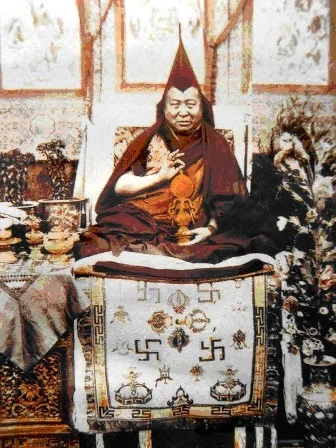
Pabongka Dechen Nyingpo
Pabongka Dechen Nyingpo (1878–1941) was an influential modern Gelug lamrim teacher associated with Sera Me. Devotional biography, disciples’ accounts and later historical scholarship have different emphases. Specific, supported details are more informative than unverified credentials or rankings.
Twenty-four days in 1921
Liberation in the Palm of Your Hand is associated with a twenty-four-day lamrim teaching at Chuzang near Lhasa in 1921. Textual structure, examples and practical reminders help place individual topics within the whole path. Reported audience numbers vary, so an exact attendance figure is not asserted here.
Teacher and editor
Pabongka gave the teachings and Trijang Rinpoche compiled and edited the work. The compiler is not Dagpo Rinpoche, despite the importance of the Dagpo heritage to Pabongka’s training. A familiar English translation is by Michael Richards. Check the actual edition for its translator and publication details.
How the learning is arranged
The teaching proceeds through preparation, precious human life, impermanence, refuge and karma, then liberation, bodhicitta and bodhisattva conduct. Locate each section within the three scopes of motivation. Editions differ in arrangement and pagination; a simplified chart should not be mistaken for the exact content of each teaching day.
Reading alongside the Great Treatise
Tsongkhapa’s Great Treatise and Pabongka’s teaching represent related but distinct works. They are not merely long and short editions of one text, nor a division between theory and practice. Read a manageable section, note questions and compare a reliable explanation. Specialized practice requires appropriate guidance.
Reading with historical context
Pabongka’s influence on modern Gelug teaching was substantial, while his sectarian positions and some protector-related views receive differing assessments. Presenting his lamrim teaching does not endorse disparagement of other traditions. Distinguish doctrine, historical circumstances, personal positions and later interpretation.
Sources & further reading
Introductory cultural and historical material. Specific tantric practices require the relevant instruction, transmission and, where applicable, empowerment.