
Explore the Gelug library
Teachers, monasteries and learning traditions — choose a topic to begin.
Teachers & lineages
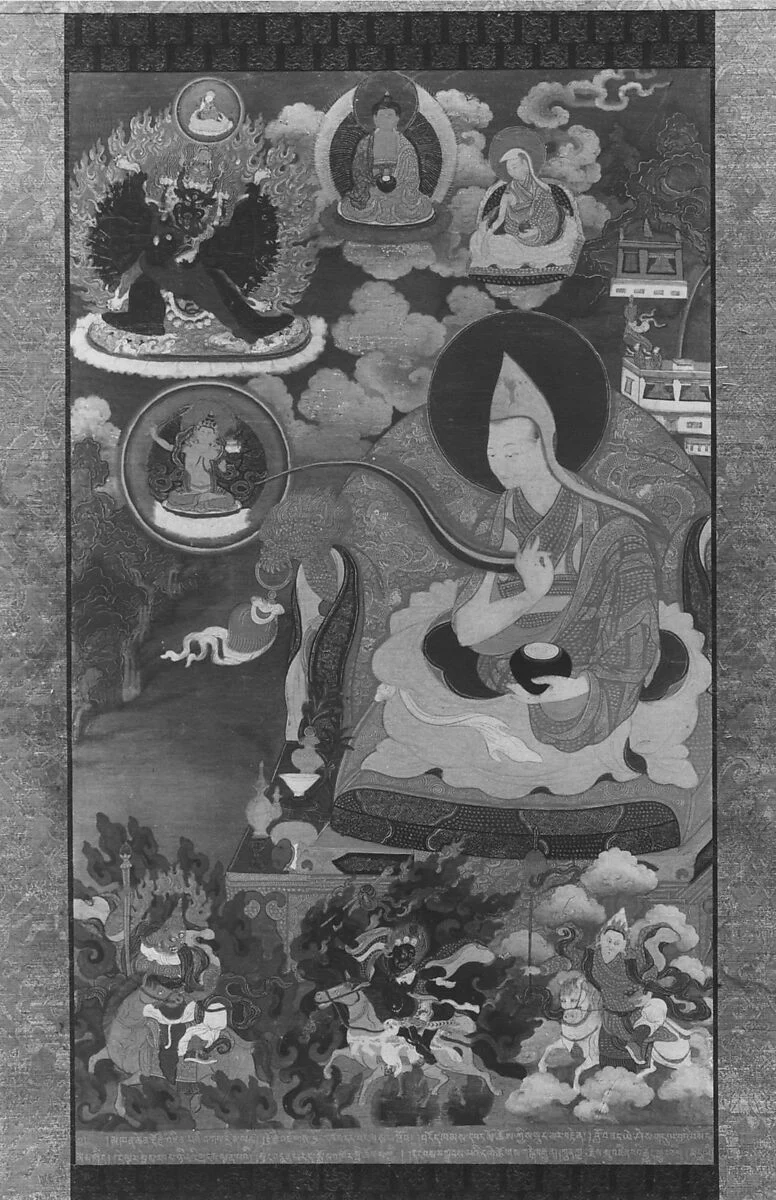 Tsongkhapa: Life & Writings
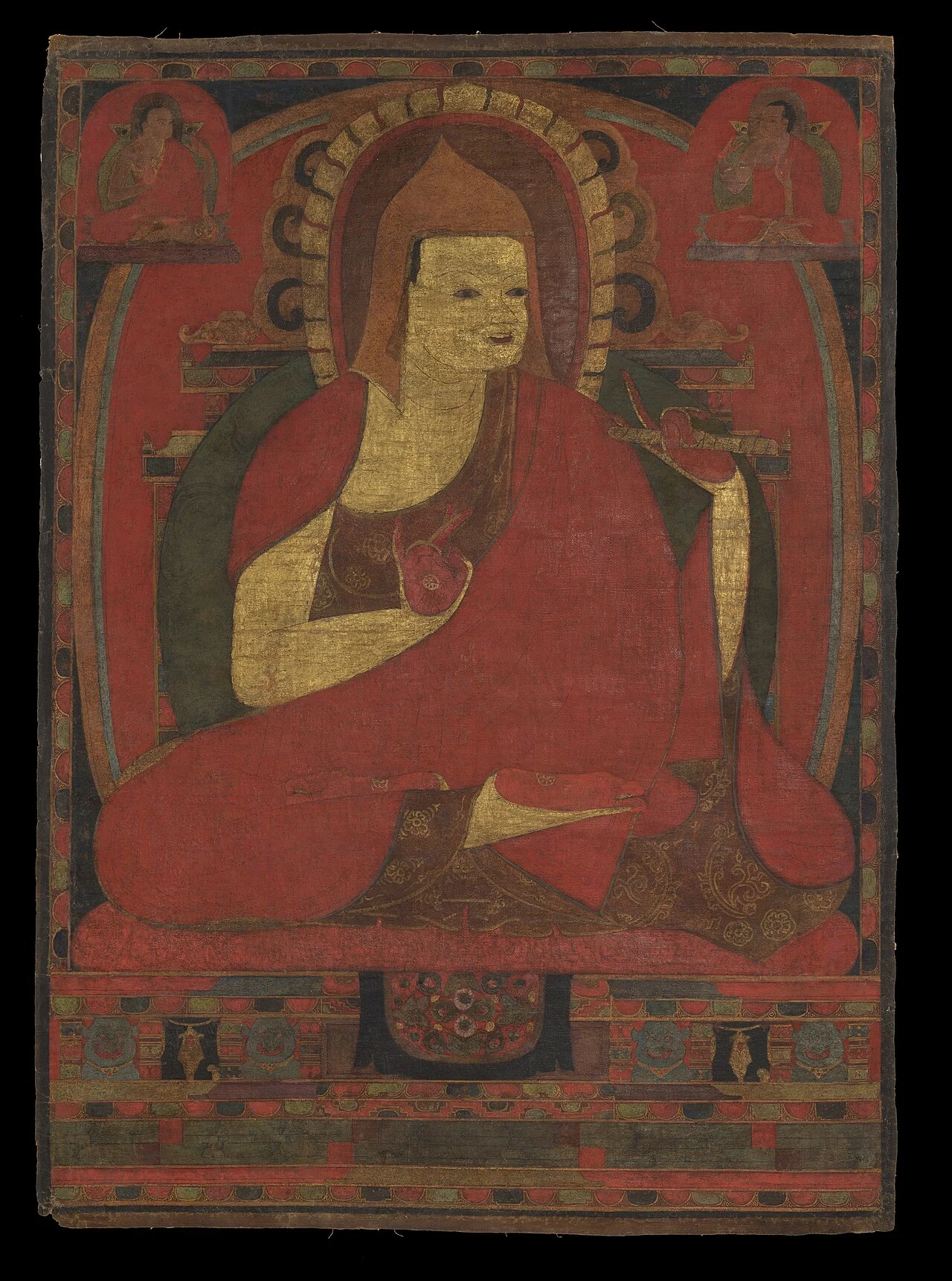 Atisha and the Kadam Tradition
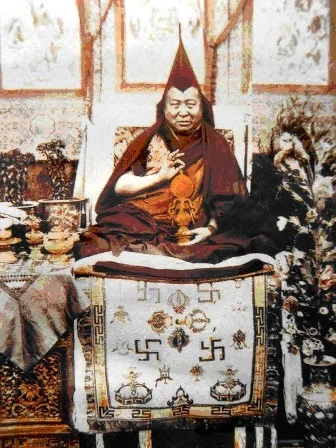 Pabongka and Liberation in the Palm of Your Hand
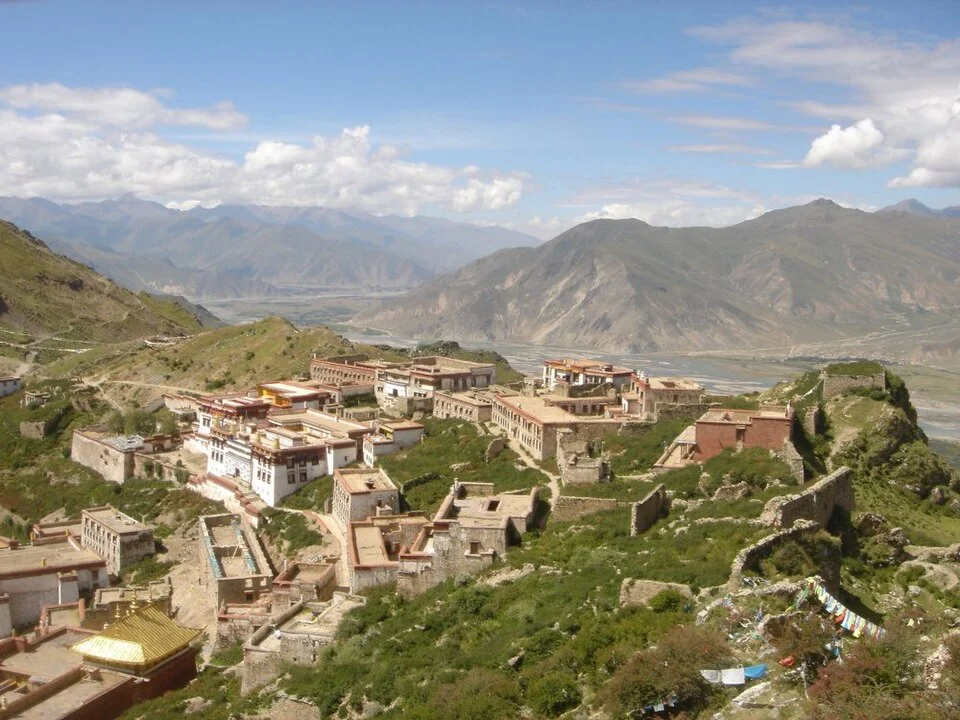 Ganden Tripa: Throne and Succession
Monasteries & education
Ganden Monastery: The Founding Seat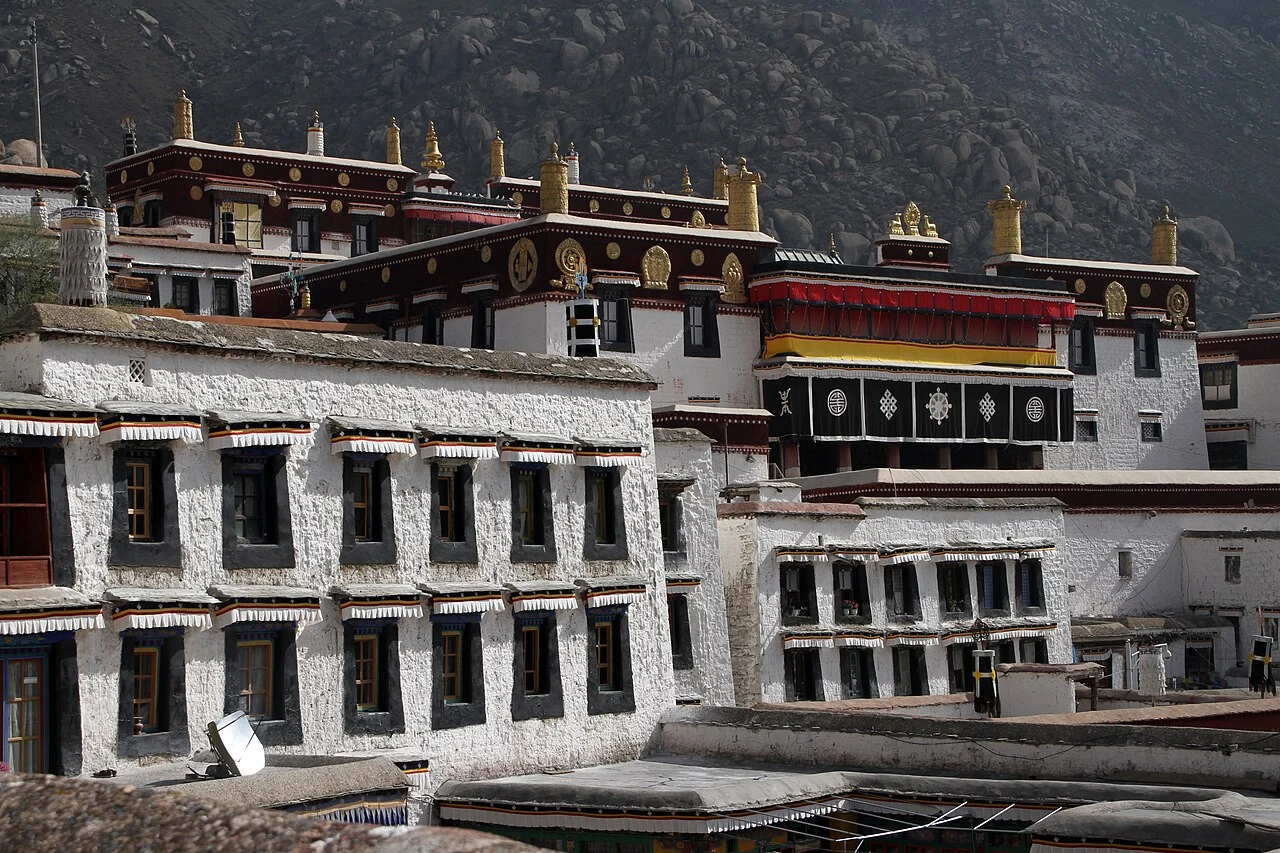 Drepung Monastery: History and Learning
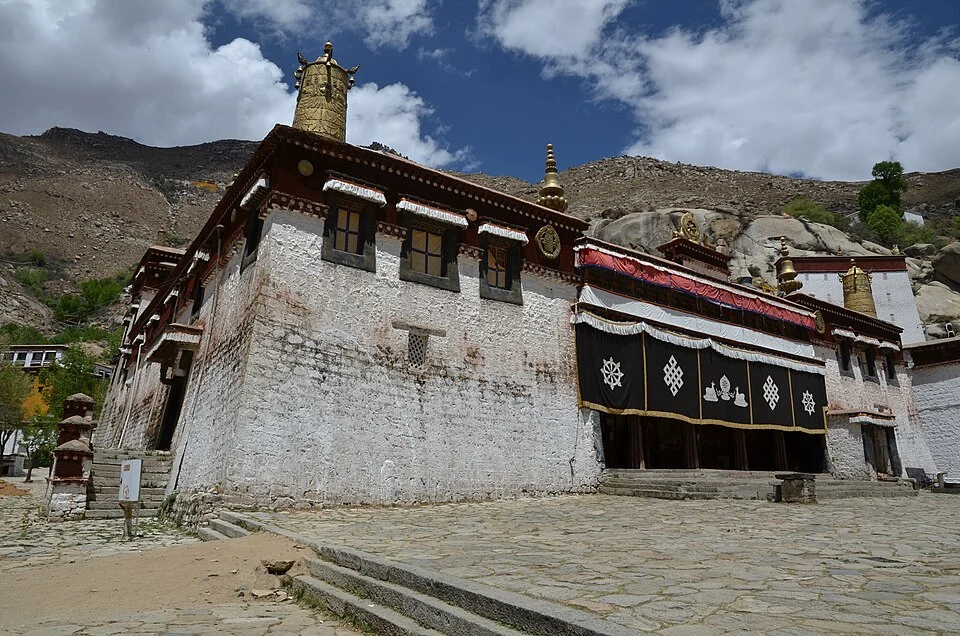 Sera Monastery and Buddhist Debate
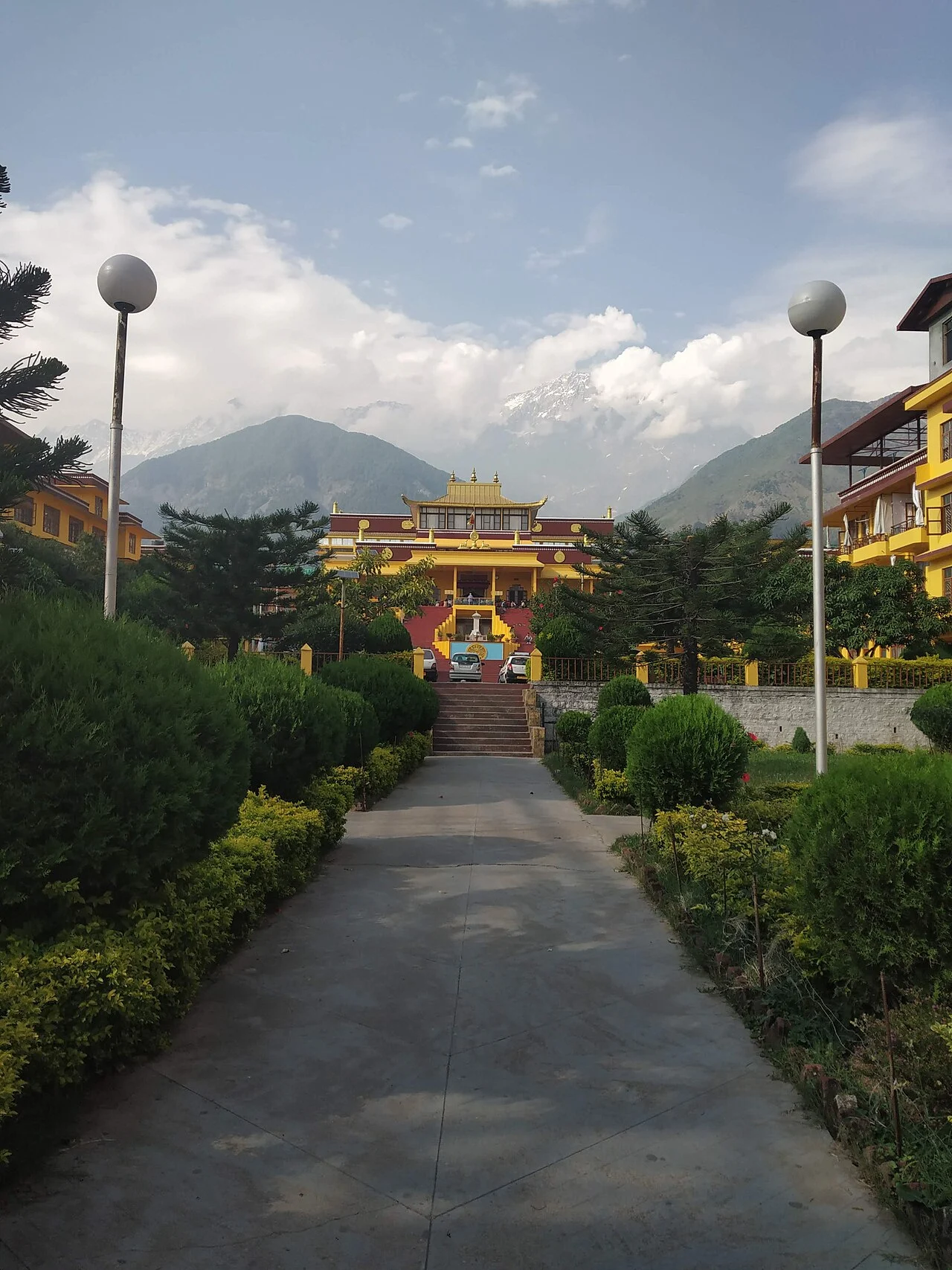 Gyuto and Gyumed Tantric Colleges
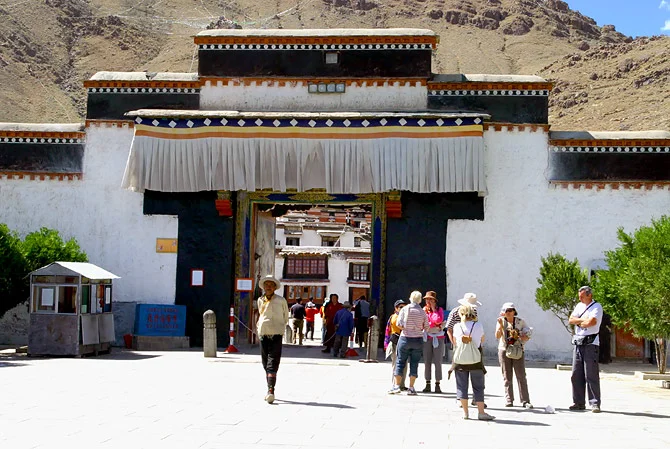 Tashi Lhunpo and the Gelug Heritage of Tsang
Learning & meditational deities
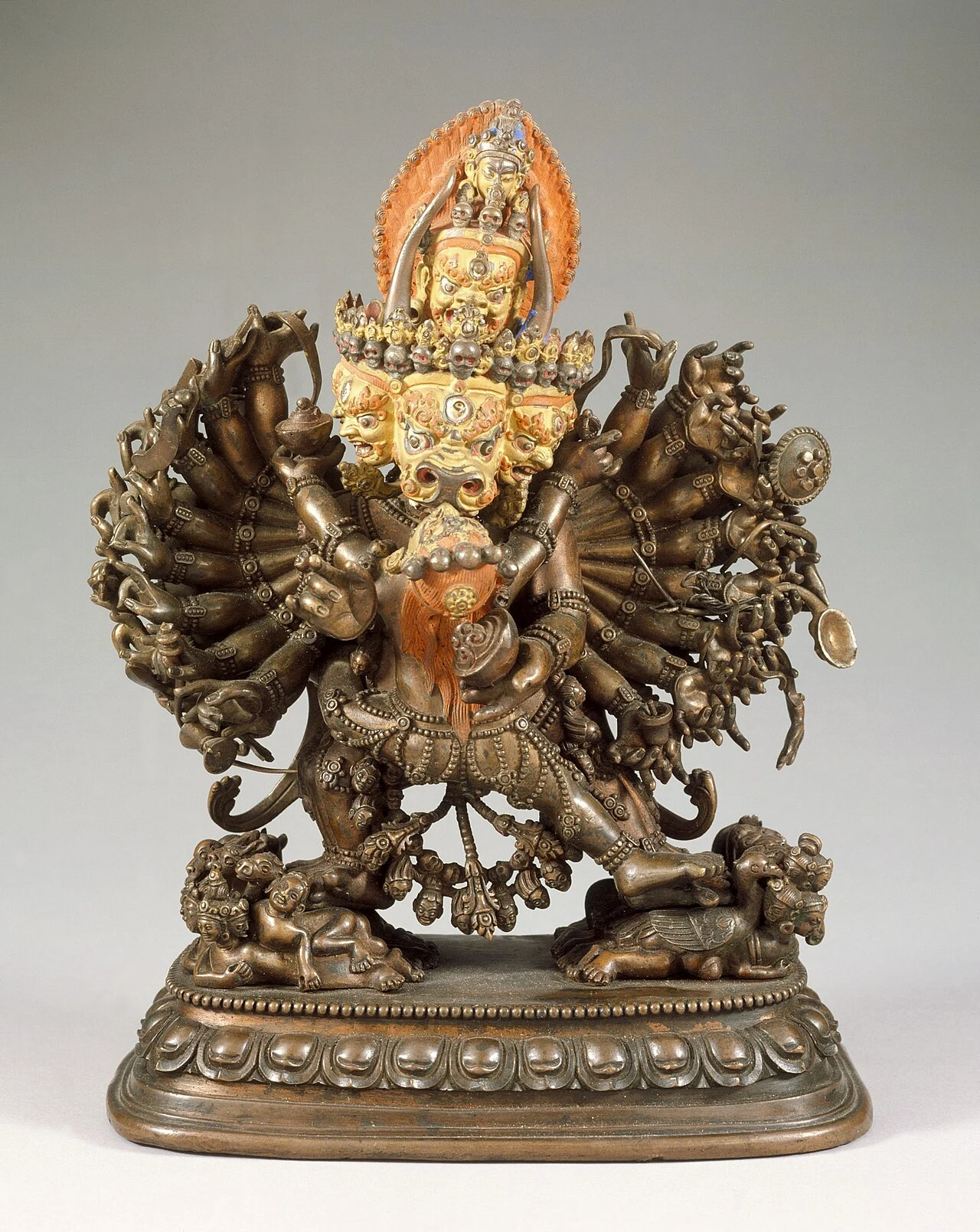
A guide to Tsongkhapa, the stages of the path, monastic learning and living lineages. Read one section at a time, then follow the links to texts, monasteries and everyday practice.
01 · What is the Gelug tradition?
Gelug (དགེ་ལུགས་, dge lugs) is one of the four major Tibetan Buddhist traditions, alongside Nyingma, Kagyu and Sakya. Its name is commonly translated as “virtuous tradition.” It took shape around Tsongkhapa and his disciples in the late fourteenth and early fifteenth centuries; the founding of Ganden in 1409 is a major institutional landmark.
Inspired by the older Kadam tradition, it is sometimes called New Kadam in historical writing. This historical expression should not be confused with a modern organization using a similar name. “Yellow Hat” is a familiar nickname, but hat colours are not a reliable guide to the teachings of the different schools.
Its distinctive emphasis joins ethical discipline, reasoning and meditation: learn carefully, investigate the meaning, and gradually bring it into daily life. Geluk International Foundation: introduction.
02 · Tsongkhapa: a life of learning
Tsongkhapa Losang Drakpa (1357–1419) was born in the Tsongkha area of Amdo, near present-day Kumbum in Qinghai. He received instruction from teachers of several traditions. Important names include Dondrub Rinchen, Rendawa and Umapa. Devotees revere him as an emanation of Manjushri; this is a statement of religious faith.
- 1357: born in Tsongkha; monastic education began in childhood.
- Adolescence: travelled to central Tibet for extensive study, later combining teaching with retreat.
- 1402: composed the Great Treatise on the Stages of the Path, Lamrim Chenmo.
- 1409: established the Great Prayer Festival in Lhasa and founded Ganden Monastery.
- 1419: passed away at Ganden; the twenty-fifth day of the tenth Tibetan month is observed as Ganden Ngamchoe.
Gyaltsab Je Darma Rinchen (1364–1432) and Khedrub Je Gelek Palsang (1385–1438) are his two principal disciples in the familiar image of “the master and his two sons.” Biography and bibliography.
03 · Where do the teachings come from?
Kadam and mind training
Atisha (982–1054), who arrived in Tibet in 1042, and Dromtonpa (1005–1064), associated with the founding of Reting, are central to the Kadam heritage. Potowa, Langri Tangpa and Chekawa are important figures in its study and mind-training traditions. The Eight Verses and Seven-Point Mind Training remain useful points of entry.
Madhyamaka and tantra
Gelug study draws on Indian authors including Nagarjuna, Aryadeva, Buddhapalita and Chandrakirti. Tsongkhapa’s interpretation of dependent arising and emptiness is central. The school also preserves multiple tantric lineages, including Guhyasamaja, Chakrasamvara and Vajrabhairava. A list of famous names is not a complete transmission lineage; the lineage for a particular practice should be checked with its authorized teacher.
04 · Three principal aspects, three scopes
Renunciation
The wish to be free of samsara and its causes. It means examining attachment, not abandoning kindness or ordinary responsibilities.
Bodhicitta
The intention to awaken for the benefit of all beings, supported by compassionate conduct.
Correct view
Understanding that things arise dependently and lack independent, inherent existence. Emptiness does not negate cause and effect.
These are the themes of Tsongkhapa’s Three Principal Aspects of the Path.
- Initial scope: precious human life, impermanence, refuge and karma; concern for favourable future lives.
- Middle scope: the disadvantages of samsara, the four noble truths and the aspiration for liberation.
- Great scope: bodhicitta, the six perfections and awakening for all beings.
The scopes organize a growing motivation, rather than rank people. Vajrayana training builds on the shared Mahayana foundation; reading about tantra does not confer empowerment.
05 · Why study and debate?
In a debating courtyard, questions test definitions, reasons and consequences. Debate is a way to refine understanding, not simply an argument to win. Gelug institutions developed extensive curricula using earlier Indian and Tibetan traditions; Tsongkhapa did not invent Buddhist debate.
- Prajnaparamita: Abhisamayalamkara, traditionally attributed to Maitreya.
- Madhyamaka: Chandrakirti’s Madhyamakavatara.
- Logic and epistemology: Dharmakirti’s Pramanavarttika.
- Abhidharma: Vasubandhu’s Abhidharmakosha.
- Vinaya: Gunaprabha’s Vinayasutra, a systematic monastic discipline text.
Study often extends over many years, with memorization, explanation, debate and examinations. Curricula and duration vary. Geshe Lharampa is a distinguished traditional qualification; “Buddhist doctorate” is an approximate comparison, not a universal academic equivalence.
06 · A bookshelf for gradual study
- Lamrim Chenmo: a detailed presentation of the stages of the path.
- The Great Treatise on the Stages of Mantra: the structure of tantric training and its foundations.
- Essence of True Eloquence: definitive and interpretable meanings.
- Illuminating the Intent: commentary on Chandrakirti’s Madhyamakavatara.
- The Middle-Length Lamrim and Songs of Experience: more concise presentations of the path.
- Three Principal Aspects of the Path and In Praise of Dependent Origination: short works for repeated reflection.
Tsongkhapa’s collected writings are often described as eighteen volumes, though physical volume counts vary by edition. His works also include commentaries on guru devotion and tantric ethics; check the title and translation of the edition you use.
Liberation in the Palm of Your Hand presents Pabongka’s 1921 lamrim teachings, edited by Trijang Rinpoche. It is not Words of My Perfect Teacher, the work by Patrul Rinpoche. English outline (PDF).
07 · Monasteries: places where learning continues
Ganden · 1409
Founded by Tsongkhapa near Lhasa. Shartse and Jangtse are its two principal colleges. It is the founding seat of the tradition.
Drepung · 1416
Founded by Jamyang Choje Tashi Palden west of Lhasa. Its colleges include Gomang, Loseling, Deyang and Ngagpa.
Sera · 1419
Founded by Shakya Yeshe north of Lhasa. Je, Me and Ngagpa are its principal colleges; it is widely associated with monastic debate.
Gyumed and Gyuto: the Lower and Upper Tantric Colleges were founded in 1433 and 1474 respectively, by Sherab Senge and Kunga Dhondup. Their curricula include several tantric systems. It is inaccurate to assign each college exclusively to one deity. Gyuto’s curriculum.
A regional guide
- Central Tibet: Tashi Lhunpo in Shigatse, founded by Gendun Drub in 1447; Reting is important to the older Kadam heritage.
- Qinghai and Gansu: Kumbum, Labrang, Gonlung (Youning) and Rongwo (Longwu), with distinctive educational and artistic histories.
- Sichuan and Yunnan: Litang, Garze and Songzanlin.
- Mongolia and Inner Mongolia: Erdene Zuu and Gandantegchinlen in Mongolia; Wudangzhao in Inner Mongolia. Their histories should be treated individually rather than assigned one shared modern timeline.
- Southern India: re-established Ganden and Drepung colleges in Mundgod; Sera Je and Sera Me in Bylakuppe, Karnataka.
See the illustrated monastery directory for locations and individual sources. Monastery schedules and visitor arrangements should be checked with each institution.
08 · Teachers, throne holders and incarnate lineages
The Ganden Tripa is the holder of Tsongkhapa’s throne and the formal spiritual head of the Gelug tradition. This office follows a scholastic and monastic career, including service connected with the tantric colleges and the Shartse or Jangtse Choje offices. It is not itself an incarnate succession, although an individual office holder may also be recognized as a tulku.
The Dalai Lama and Panchen Lama lineages have distinct histories, titles and institutions. Gendun Drub was retrospectively recognized as the First Dalai Lama; Khedrub Je is retrospectively counted as the First Panchen Lama. They should not be conflated with the Ganden Tripa office. Reverence for these lineages as manifestations of Avalokiteshvara or Amitabha belongs to religious tradition.
Other important incarnate lineages include Changkya, Jebtsundamba, Reting, Tsemonling, Pabongka, Tuken, Jamyang Zhepa, Gungthang, Ling and Trijang. Offices, monasteries and personal teacher-student relationships are related but not interchangeable.
Figures for further reading
Gendun Drub, Gendun Gyatso, Sonam Gyatso, the Fourth Panchen Lama Losang Chokyi Gyaltsen and the Fifth Dalai Lama are important historical figures. Pabongka, Trijang and Ling Rinpoche are influential twentieth-century teachers. Lama Thubten Yeshe (1935–1984) and Lama Zopa Rinpoche (1945–2023) founded FPMT, contributing to international teaching and translation. Chinese-language study also owes much to figures such as Nenghai and Fazun.
For current Ganden Tripa news, consult the foundation’s dated announcements. Undated lists of “current” office holders can become misleading.
09 · Understanding the practice texts
- Lama Chopa (Guru Puja): associated with the Fourth Panchen Lama Losang Chokyi Gyaltsen. An important practice, but not a universal daily obligation for every Gelug learner.
- Ganden Lhagyama: the Hundred Deities of Tushita, a widely used Tsongkhapa guru yoga.
- Six-Session Guru Yoga: associated with particular tantric commitments; not a general beginner’s daily checklist.
- Guhyasamaja, Chakrasamvara and Vajrabhairava: major tantric systems with specific requirements for practice.
- Tara, Avalokiteshvara, Manjushri, Medicine Buddha and Vajrasattva: familiar figures with different texts and levels of practice. Requirements depend on the actual text, not just its title.
Start with openly taught refuge, compassionate motivation, study and dedication. For self-generation, advanced visualization or completion-stage practices, follow the empowerment, transmission and instructions required by the lineage. FPMT: questions about daily practice and Guru Puja.
10 · Days of remembrance and practice
- First Tibetan month: the Great Prayer Festival and the period of the Buddha’s miracles.
- Fourth month: Saga Dawa, commemorating the Buddha’s life and awakening.
- Sixth month, day 4: the First Turning of the Wheel of Dharma.
- Ninth month, day 22: the Buddha’s descent from the heavenly realm.
- Tenth month, day 25: Ganden Ngamchoe, remembering Tsongkhapa.
Most Buddha festivals are shared across Tibetan traditions. Dates in the Gregorian calendar change annually; use the Tibetan calendar and confirm the local monastery’s arrangements.
11 · Bring learning into an ordinary day
- Listen and read: begin with the Three Principal Aspects, an introduction to lamrim, or a suitable guided course.
- Reflect: choose one idea, such as impermanence or kindness, and relate it to something that happened today.
- Practise: set a manageable period, perhaps ten minutes, for motivation, reflection and dedication.
- Ask: discuss unclear points with a qualified teacher; agree on a suitable course before taking on commitments.
Learning communities now exist across Tibetan regions, Mongolia, India and many other countries. FPMT and other centres offer different ways to study. Choose by the quality of instruction, clear transmission and respectful conduct, rather than an impressive title or a claim to be the largest.
May careful learning become greater kindness, clarity and benefit for others.
12 · Sources and editorial notes
Edited from material supplied to BlessFu, with corrections and selected references. This is a learning guide, not a root text or an attributed teacher’s discourse. Traditional narratives are identified as such. Unverified superlatives, current population estimates and an inaccurate list of recent Ganden Tripas have not been reproduced.
- Geluk International Foundation: history and institutional roles — the historical page contains an older office-holder reference; use dated announcements for current information.
- Shambhala Publications: Tsongkhapa’s life and writings
- Gyuto Monastery: history and curriculum
- Lotsawa House: Three Principal Aspects of the Path
- FPMT: daily practice guidance