These introductory notes mainly follow public Gelug/FPMT guidance. Other Tibetan traditions may differ. The original diagrams show objects and movement stages, not complete ritual instructions. Sources open directly as articles or PDFs; some are in English.
Bowing & prostrations
Full-length prostrations · Original schematic illustration
Full-length prostrations
A bodily expression of respect, humility and altruism. This is an introductory outline of a common Gelug form.
Use a firm, non-slip mat with room to stretch out. Begin with the wish to benefit others.
Stand steadily with palms joined and slightly cupped. In this form, bring them to crown, forehead, throat and heart.
Support yourself with both hands, lower the knees, then gently extend the body and arms. Let the forehead touch the mat without impact.
Bring the hands back for support and rise slowly. Join the palms again. Begin with a few unhurried repetitions and dedicate afterwards.
The diagram shows stages only; learn the movement in person where possible. Stop if painful or dizzy. Use the respectful bow below if kneeling is difficult. Gestures and sequences vary by lineage.
Water bowls: arrange, fill & clear · Original schematic illustration
Water bowls: arrange, fill & clear
Practise generosity with a clear, impartial intention. Seven water bowls are commonly used.
Clean your hands and bowls. Prepare fresh water and a cloth. Put a little water in each bowl before arranging them from left to right, facing the shrine.
Leave a small gap between bowls. Fill them close to the rim without overflowing.
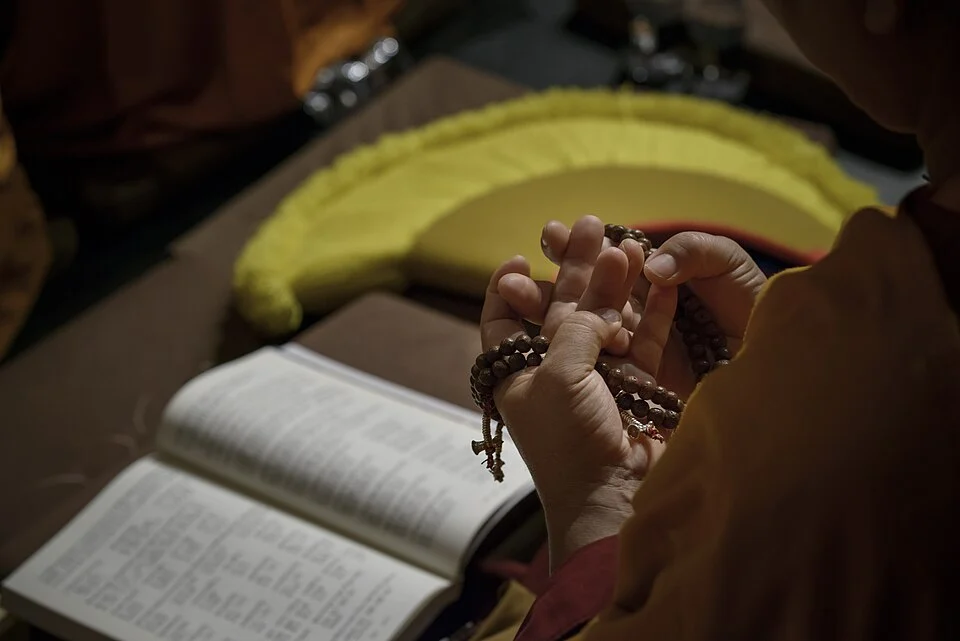
Offer with joined palms and the wish to benefit beings; recite OM AH HUM if this is your learned practice.
Later in the day, empty from right to left, dry and invert or store the bowls. Use the clean water for suitable plants.
This summarizes the FPMT sequence; see the source for details. The arrow shows placement direction when facing the shrine.
Introduction to mandala offering · Reference photograph: offering mudra
Introduction to mandala offering
A base and grains can represent offering the beautiful things of the universe. Seven-heap and thirty-seven-heap forms exist; intention and visualization matter more than an expensive display.
First learn the meaning of a short offering verse; prepare a clean base, grains and a cloth to catch them.
Arrange and visualize according to the form you have learned, reciting the offering verse. Learn positions and mudras from a teacher.
Dedicate and store the base and grains carefully; formal preliminary counts require their own guidance.
Mandala offering is distinct from constructing a deity sand mandala. This is an introduction, not a full preliminary liturgy.
Light offerings: lamps, candles & electric lights · Original schematic illustration
Light offerings: lamps, candles & electric lights
Let light remind you to cultivate wisdom and wish freedom from ignorance for all beings.
Choose a stable, heat-resistant holder; an electric offering light is an option at home.
With an altruistic intention, light the lamp or switch it on and make the offering according to your practice.
Dedicate the practice; extinguish any flame before leaving.
Keep flames away from flags, curtains, paper and children, and never leave them unattended. An offering is not a guarantee of protection, healing or fulfilled wishes.
Incense & fruit offerings · Original schematic illustration
Incense & fruit offerings
Make offerings with clean items and a generous intention, within your means.
Incense: use a stable burner, burn a small amount and ventilate; omit burning incense where smoke is unsuitable.
Fruit: wash fresh fruit, place it on a clean offering plate and prevent spoilage.
Offer and dedicate. Clear cooled ash and remove offerings before they spoil.
Never leave burning incense unattended. Follow staff guidance for temple offerings; do not take them yourself. Handle household offerings according to your tradition and avoid waste.
Reading sutras & reciting mantras · Original schematic illustration
Reading sutras & reciting mantras
Bring voice, attention and understanding together in a steady daily practice.
Choose a public text from a reliable source and check its language, pronunciation and practice conditions.
Sit comfortably, place the text on a clean surface and begin with an altruistic intention.
Recite clearly with natural breathing and study the meaning. Do not rush or force long breaths.
Dedicate afterwards and optionally record the time or count in Daily Practice.
Public availability does not authorize every full deity practice. Follow each text’s empowerment, transmission and instruction requirements, especially for self-generation.
Wind-horse flags & prayer flags · Original schematic illustration
Wind-horse flags & prayer flags
Prayer flags bear prayers, mantras or sacred images. Wind-horse flags are one type of prayer flag.
Choose clearly printed flags from a reliable source and understand their contents.
With permission for the location, secure them in a clean place above the ground. A common horizontal sequence is blue, white, red, green and yellow.
Hang with the wish for beings’ wellbeing. Collect damaged flags respectfully and ask your tradition or temple how to handle them.
This is a colour diagram, not a printable sacred flag. Dates and blessings depend on the tradition. Flags do not guarantee good fortune; do not leave discarded fabric in nature.
Seated meditation: cushion or chair · Original schematic illustration
Seated meditation: cushion or chair
Begin by sitting steadily and attending to natural breathing. This is an introductory exercise, not a tantric subtle-body practice.
Choose a quiet place; try 3–5 minutes initially. Sit comfortably cross-legged on a cushion, or on a stable chair with feet supported. Full lotus is unnecessary.
Keep the back naturally upright, shoulders relaxed and chin slightly tucked. Rest the hands on the legs and soften the gaze downward. Use support as needed.
Notice breath sensations at the nostrils or the natural movement of the abdomen. Do not control or hold the breath. When distracted, gently return.
To finish, notice your surroundings, move hands and feet gently before standing, and carry your good intention into daily life.
Do not aim to eliminate every thought. Adjust or pause for pain, significant numbness or discomfort. Learn further calm-abiding and insight practice with a teacher.
Set a kind intention, settle for a few minutes with natural breathing or a familiar recitation, and finish with a wish for others’ wellbeing. This timing is a practical suggestion, not a prescribed liturgy.
A simple dedication in your own words: “May this good action help beings find wellbeing and wisdom.”