
Explore Buddhism with a special focus on Tibetan traditions and Gelug. Begin with the featured topics, then discover the origins and wider Buddhist family.
Featured study · Tibetan Buddhism
History, lineages and the Gelug tradition
Follow its historical development, explore its schools, and learn about Tsongkhapa and the stages of the path.
Where Buddhism began
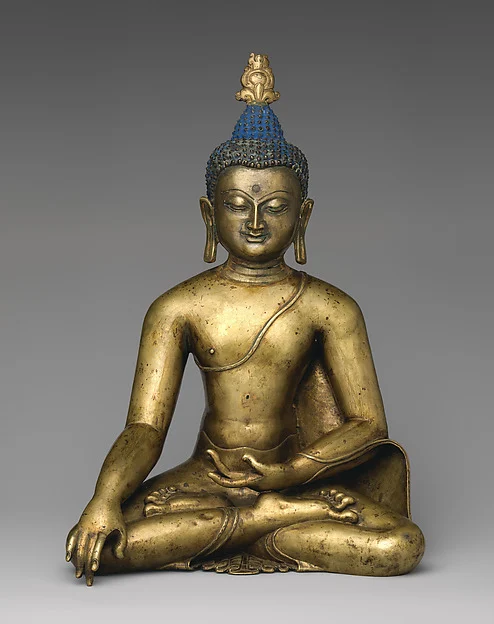
Buddhism arose in ancient South Asia around the teachings of Siddhartha Gautama, known as Shakyamuni Buddha. His teaching addresses suffering, its causes and the path to liberation. As communities and scriptures spread, different traditions developed through translation, study and cultural exchange.
Buddhism
Central ideas
Centres on awakening and freedom from suffering, with teachings on dependent arising and impermanence; generally not centred on a creator god.
Major texts
Pali, Chinese and Tibetan canons, with different textual emphases across traditions.
Common practices
Ethics, meditation, study, chanting and generosity. Theravada, Mahayana and Vajrayana share foundations while differing in teachings and ritual.
Understanding differences
A Buddha is an awakened one. Tibetan Buddhism is a Buddhist tradition, and Gelug is one of its schools.
Buddhist traditions: origins and regions
These names describe different levels: Theravada and Mahayana are major streams; Chinese and Tibetan Buddhism are cultural and transmission traditions; Chan and Pure Land are more specific schools or practice traditions. Categories overlap.
Hinayana (“lesser vehicle”) occurs in historical Mahayana classifications and carries a negative evaluation. It is not a precise synonym for modern Theravada or for all early Buddhist schools. Here we use Theravada when describing that living tradition.
Theravada Buddhism
Origins
Rooted in early Indian Buddhist traditions, preserved and developed in Sri Lanka and later across Southeast Asia, with a central place for the Pali canon.
Main regions
Especially Sri Lanka, Thailand, Myanmar, Cambodia and Laos, with communities in parts of Yunnan and worldwide.
Characteristics
Emphasizes ethics, meditation, wisdom and liberation, alongside generosity, loving-kindness and monastic life; it should not be reduced to concern only for oneself.
Source / further readingMahayana Buddhism
Origins
Gradually emerged in India around the beginning of the Common Era through diverse texts and communities, rather than a single founding event.
Main regions
Influential in China, Korea, Japan, Vietnam and the Himalayan region, and now worldwide.
Characteristics
Highlights the bodhisattva path, bodhicitta and Buddhahood for the benefit of beings. The name is not a country or a ranking of living traditions.
Source / further readingVajrayana and esoteric traditions
Origins
Developed within Indian Mahayana and became increasingly established in the later first millennium CE, spreading to the Himalayas and East Asia.
Main regions
Especially important in Tibetan Buddhism; distinct esoteric lineages also survive in Japanese Shingon and other traditions.
Characteristics
Uses mantras, mandalas and ritual on a Mahayana foundation. Some practices require empowerment, transmission and qualified guidance.
Source / further readingChinese Buddhist traditions
Origins
Buddhism gradually reached China around the first century CE; land and sea routes, translation and local developments shaped traditions grounded in Chinese-language scriptures.
Main regions
Especially Chinese-speaking communities, with major influence on Korea, Japan, Vietnam and diaspora communities.
Characteristics
Predominantly Mahayana, including Chan, Pure Land, Tiantai and Huayan, while preserving early discourses and monastic discipline; it is not limited to Chan.
Source / further readingTibetan Buddhist traditions
Origins
Buddhism developed in Tibet during the seventh to ninth centuries and revived from around the tenth, transmitting Indian scriptures, philosophy, discipline and tantra.
Main regions
Especially the Tibetan plateau, Mongolia, Bhutan and parts of Himalayan Nepal and India, with communities worldwide.
Characteristics
Combines Mahayana study with Vajrayana practice. Schools include Nyingma, Kagyu, Sakya, Gelug and others such as Jonang. Tsongkhapa and his disciples established Gelug foundations around the late fourteenth and early fifteenth centuries.
Source / further readingKorean, Japanese and Vietnamese Buddhism
Origins
Developed through exchanges with India, Central Asia and China. Buddhism reached the Korean peninsula in the fourth century and Japan in the sixth; Vietnam received influences by both land and sea.
Main regions
Historically centred in Korea, Japan and Vietnam, with communities abroad.
Characteristics
Korea includes Seon; Japan includes Zen, Pure Land, Tendai, Shingon and Nichiren. Vietnam includes Zen and Pure Land practices as well as Theravada communities. Each has its own developments.
Source / further readingTwo familiar East Asian traditions
Chan developed in China, emphasizing meditation and direct insight; related traditions are known as Seon in Korea, Zen in Japan and Thien in Vietnam. Pure Land traditions draw on scriptures about Amitabha and Sukhavati, emphasizing recollection or recitation of the Buddha and aspiration for birth in the Pure Land. In Chinese and Vietnamese practice, Chan and Pure Land often coexist.
Harvard Pluralism Project: Pure Land Buddhism
An introductory selection, not an exhaustive classification. Regional descriptions indicate historical centres, not exclusive boundaries.