Mainly a Gelug-oriented introduction, with Tibetan traditions considered individually. Practices and the use of blessed objects depend on their actual source. A photograph cannot establish blessing, ingredients or authorization.
Look closely: a mani stone, a mandala offering and a deity mandala sound related, but are three different things.
A familiar recitation that brings attention back to compassion.
Om Mani Padme Hum is the six-syllable mantra of Avalokiteshvara, known as Chenrezig in Tibetan. Chinese spellings are phonetic renderings; the Chinese characters are not a word-by-word translation.
How to approach it · Steps & care
Begin with the compassion represented by Chenrezig and the wish to help rather than harm.
Learn pronunciation from a reliable lineage recording and recite clearly with natural breathing; regional pronunciations differ.
Dedicate afterwards; a mala or Daily Practice can help with counting.
Mantra recitation is distinct from a full Chenrezig sadhana; follow the conditions stated in that text.
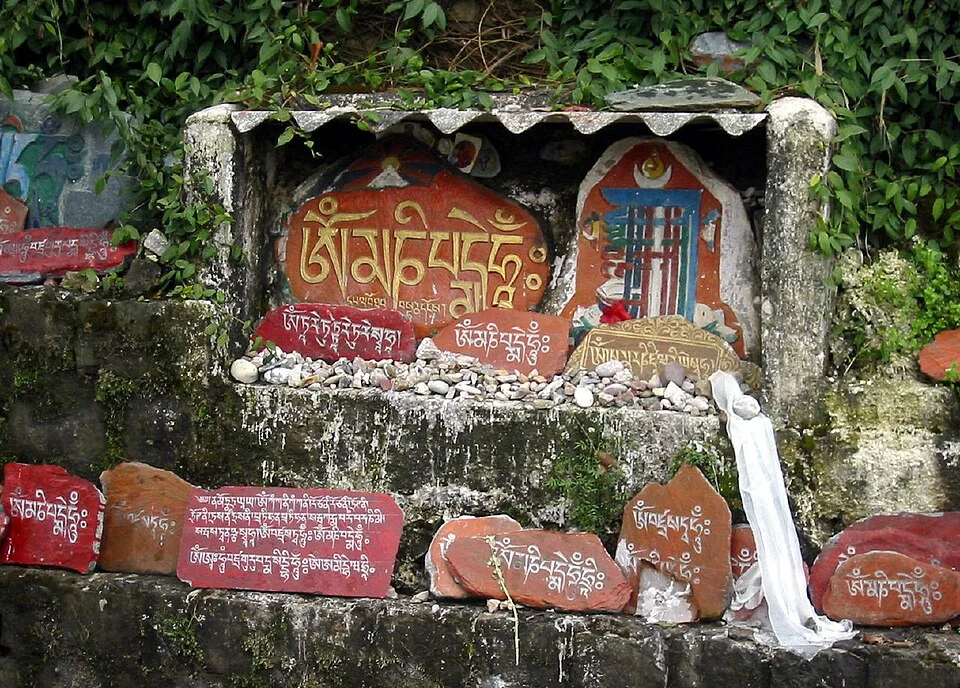
Mani stones often bear the six-syllable mantra, other sacred texts or images. They may form cairns or walls. They are different from a mandala offering made with an offering base.
How to approach it · Steps & care
Read the inscription and local notices; visit quietly.
Follow the local route. In the common clockwise form, keep the mani wall on your right.
Before commissioning a stone, ask the receiving temple about the text, size and placement.
Do not step or sit on existing mani stones or remove them. Do not carve or deposit stones in protected natural areas.
A respectful way to place good wishes in another person’s hands.
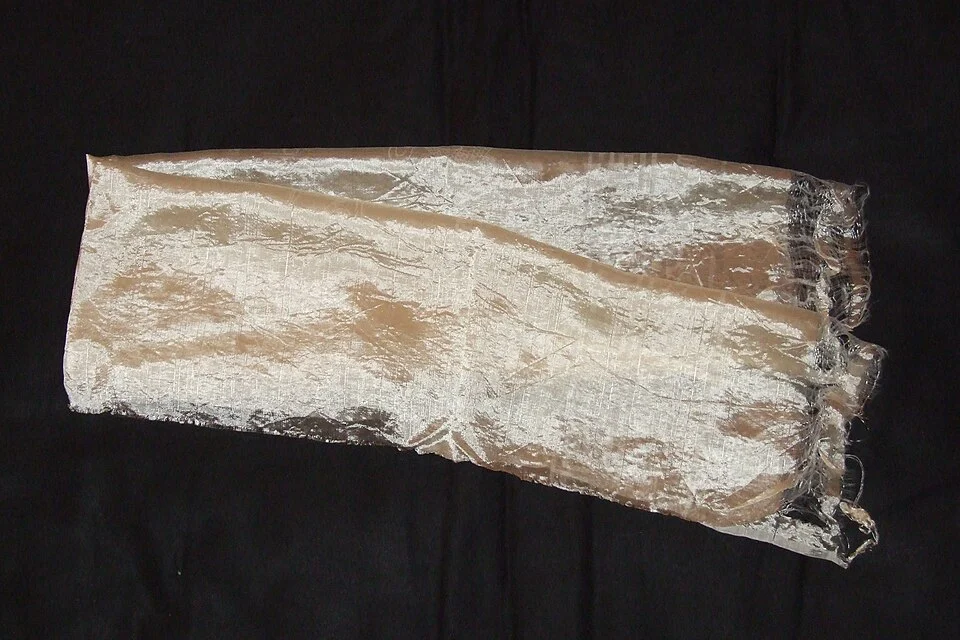
A khata is a ceremonial scarf expressing respect, welcome and good wishes, also used as an offering. White and ivory are common; colours, patterns and occasions vary.
How to approach it · Steps & care
Prepare a clean scarf and support it with both hands without letting it drag on the ground.
When offering to a teacher, bow slightly and present it with both hands; follow the teacher or attendant rather than placing it around their neck yourself.
When receiving, bow slightly and receive with both hands, or allow it to be placed around your neck, then thank the giver.
Follow local ceremony etiquette. Do not obscure a sacred image or place scarves near flames.
Red and blue-green colours tell stories of craft and exchange.
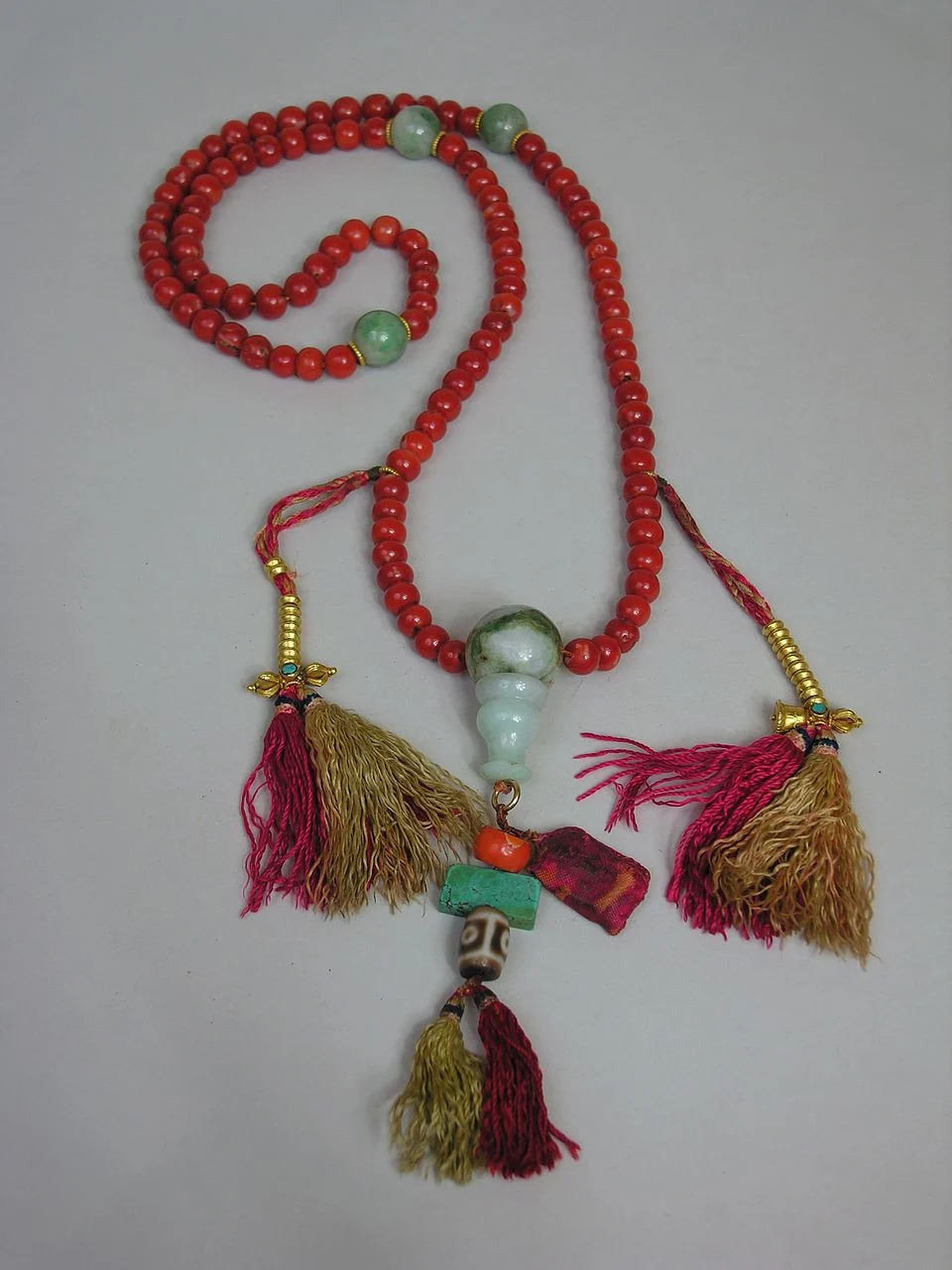
Coral and turquoise appear in Tibetan jewellery, malas and gau decoration. They are materials with craft histories; monetary value does not measure practice or blessing.
How to approach it · Steps & care
Identify the object’s use, then its materials, workmanship and recorded date.
Handle or wear it gently, away from cleaning chemicals, intense heat and knocks.
Do not authenticate material, age or origin from a photograph; seek documented provenance.
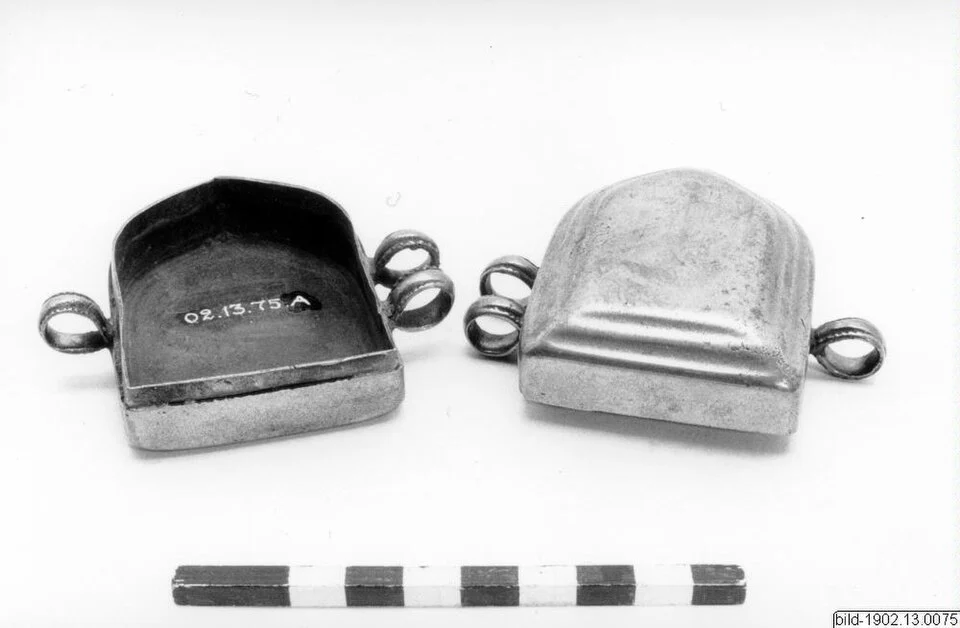
The image shows a historical object, not a product or an authentication reference.
Silver amulet box · Etnografiska Museet Etnografiska Museet · CC BY 2.5 · Photo source
Etiquette & personal objects
Gau: a portable shrine or amulet box
Understand the container and its contents separately.
A gau or gawu is a portable container that may hold sacred images, texts, tsatsas or other objects. Forms, sizes and contents vary; a windowed example resembles a small shrine.
How to approach it · Steps & care
Ask what it contains, who installed it and whether it should be opened.
Wear or place it respectfully as instructed, protecting it from water and pressure.
Before repairing it or changing the contents, consult the original temple or teacher.
An empty box is not itself proof of consecrated contents; appearance cannot establish provenance.
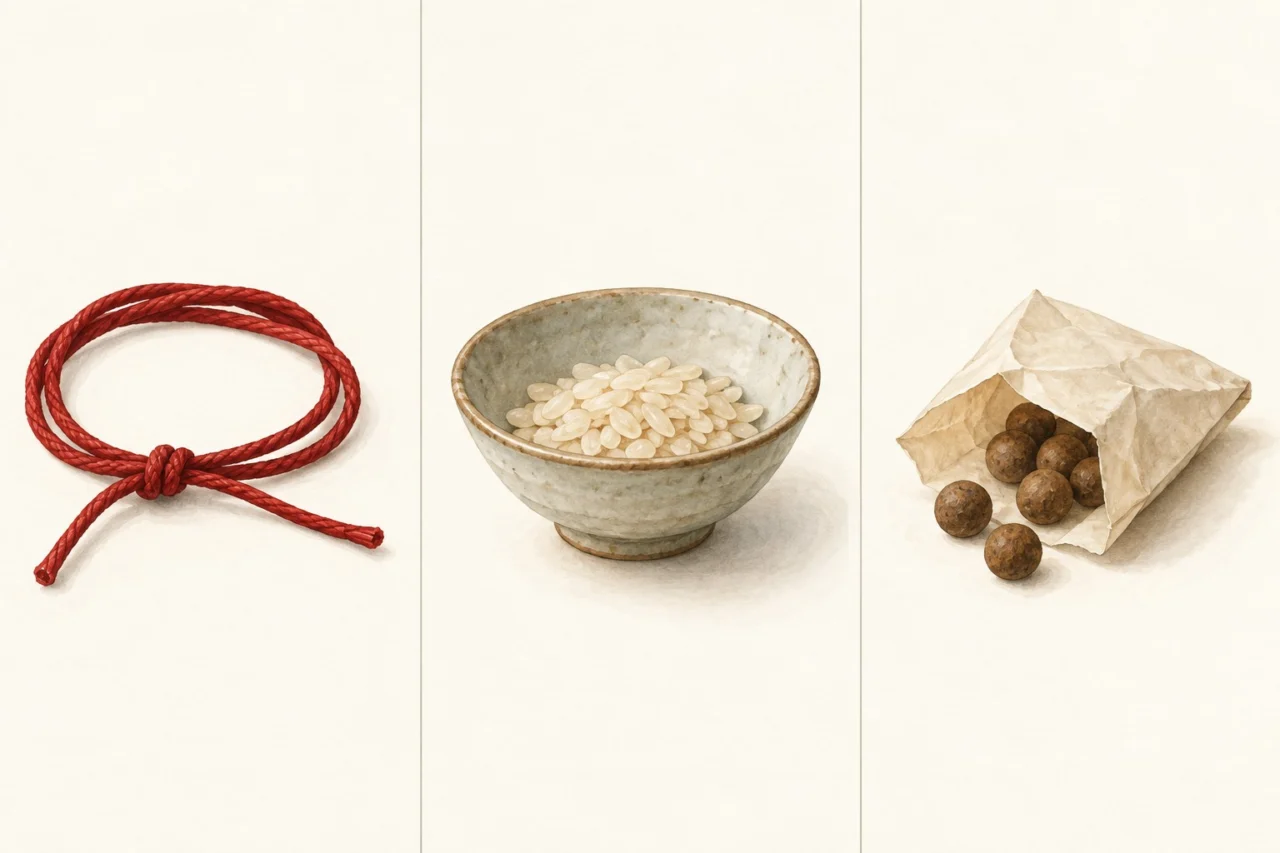
Original AI illustration · For cultural explanation only; not an actual ritual item, a standard knot pattern or an identification guide.
Blessings & provenance
Blessed objects: provenance & purpose
Keep the explanation that came with the object.
“Blessed object” is a broad description covering texts, cords, grains, pills and other items, not a material or standard specification. Context depends on the ceremony, lineage and giver.
How to approach it · Steps & care
Record the name, provider, date and instructions when receiving it.
Store items separately with their notes so their purposes remain clear.
If instructions are lost or an item is damaged, ask the provider how to handle it.
Do not judge blessings by price, colour or rumour, or mix instructions from different sources.
Moving bead by bead can bring attention back to the practice.
A mala assists counting. A full string commonly has 108 beads, though shorter forms also exist. Wood, seeds and stone are among the materials; expense or rarity is unnecessary.
How to approach it · Steps & care
Move a bead after each complete recitation, attending to the recitation and intention.
Follow your teacher on turning at the main bead, hand position and retreat counting.
Store it cleanly; practising without beads or using time and a digital counter is also possible.
The historical example shows one form, not a requirement to use the same material.
Original AI illustration · For cultural explanation only; not an actual ritual item, a standard knot pattern or an identification guide.
Blessings & provenance
Blessing knots & protection cords
A cord can hold the memory of a ceremony.
“Vajra knot” is used loosely in Chinese for cords given with prayers or ceremonies; names, colours and knot forms vary. An ordinary craft cord differs from one received in a ritual context.
How to approach it · Steps & care
Ask where to wear it, whether it may be removed and what instructions apply.
Keep it clean and comfortably loose; avoid entanglement.
If it breaks, do not panic; ask the provider how to store or dispose of it.
This AI illustration shows an ordinary knot, not a lineage-specific knot or a consecrated object.
Original AI illustration · For cultural explanation only; not an actual ritual item, a standard knot pattern or an identification guide.
Blessings & provenance
Protector rice & blessed rice
The same word “rice” need not mean the same ritual use.
Some institutions use names such as “protector rice” or “blessed rice”. Here these are context-specific names for ritual grains, not a single standard practice shared by all four schools.
How to approach it · Steps & care
Ask which ceremony it comes from, its purpose and how to store it.
Keep it dry with its instructions, separate from ordinary food rice.
Without instructions, store it respectfully and check with the provider before use.
No universal advice to swallow, burn, scatter or place it by a door is given; such uses need specific instructions. The illustration shows ordinary rice.
Original AI illustration · For cultural explanation only; not an actual ritual item, a standard knot pattern or an identification guide.
Blessings & provenance
Blessing pills & ritual pellets
Similar appearance does not mean identical contents.
“Nectar pill” may refer to ritual pellets from different traditions. Mani pills and long-life pills may have different contexts; no single relic ingredient or formula can be assumed.
How to approach it · Steps & care
Keep packaging, ingredient information and instructions, and establish whether the item is for enshrinement or another specified purpose.
If origin or contents are unknown, do not ingest based on online advice or give it to children or animals.
Ask the provider about damp, mouldy or unidentified items.
This is cultural information, not dosing advice or a presentation of pills as medical treatment. The AI illustration cannot identify an actual item.
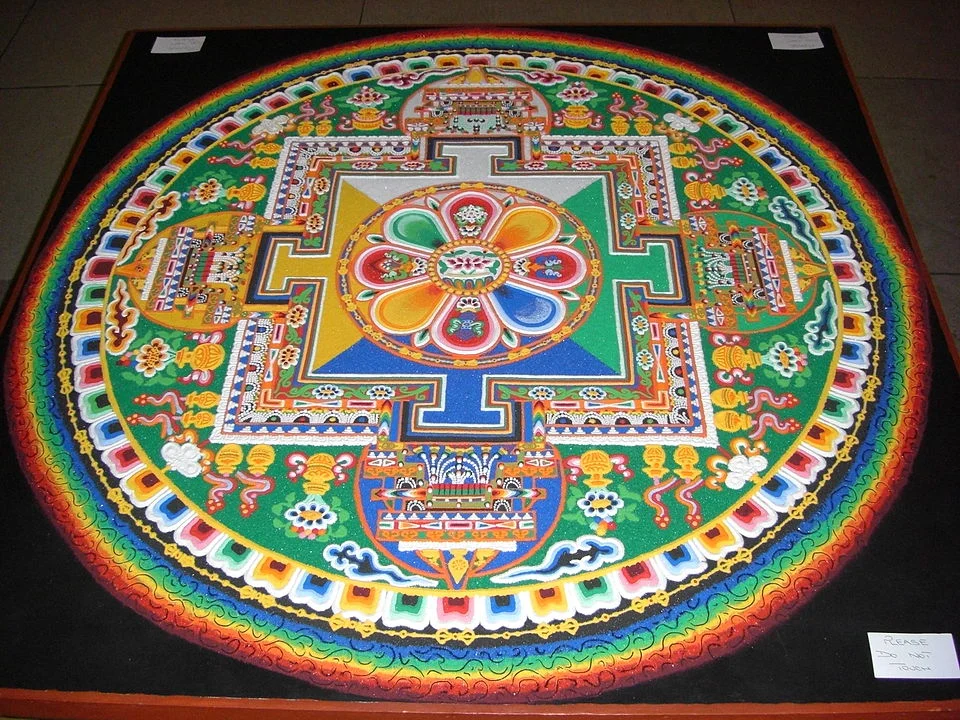
Archival photograph of a Chenrezig sand mandala The original uploader was Colonel Warden at English Wikipedia. · CC BY-SA 3.0 · Photo source
Understanding mandalas
Understanding mandalas: images, making & practice conditions
A flat image may represent an ordered world of awakening.
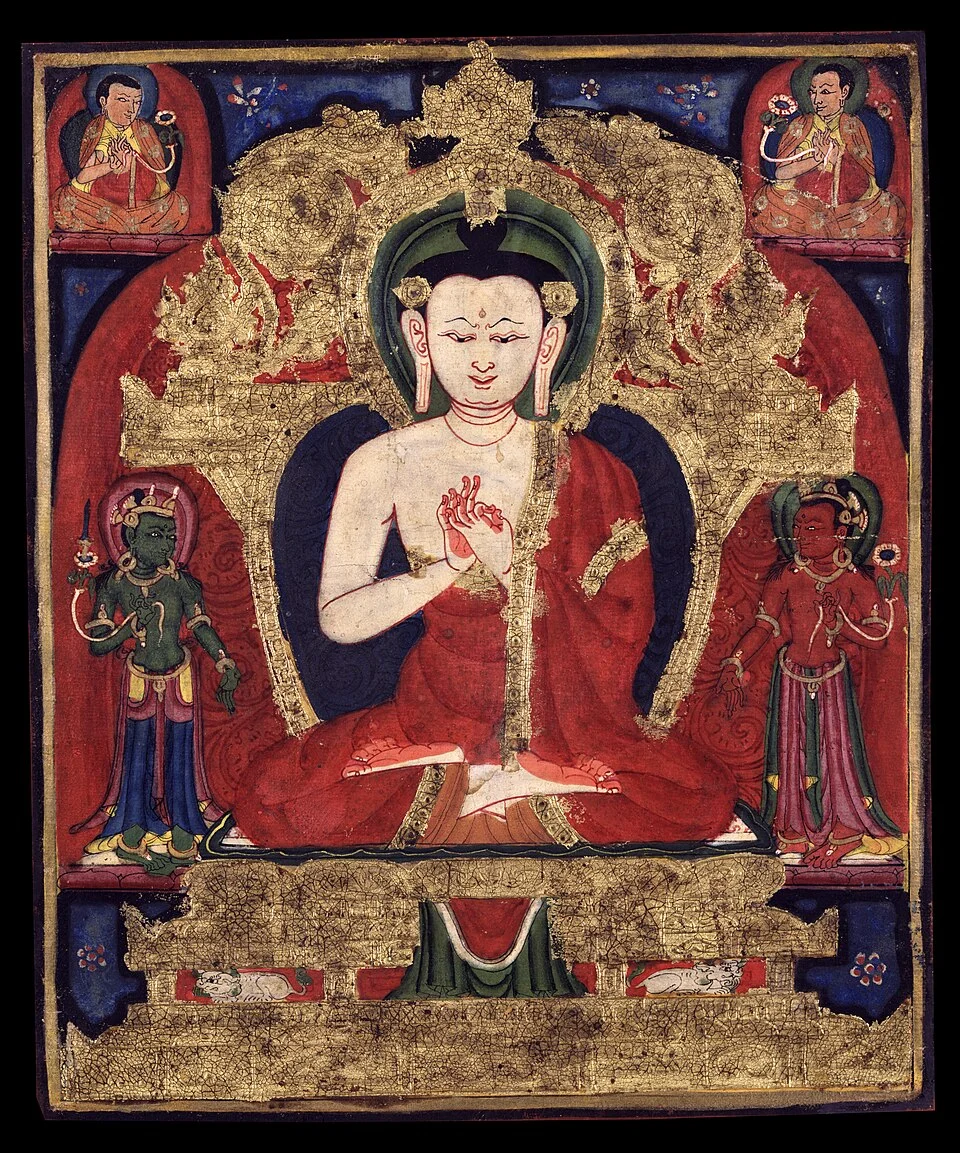
A mandala can depict a deity and a pure palace in painted, three-dimensional or sand form. Deity mandalas have specific systems, not arbitrary geometric designs.
How to approach it · Steps & care
Read the deity name, tradition, date and description, then study the centre, palace, gates and outer rings.
Trained practitioners follow their tradition for drawing, laying sand, ceremonies and dissolution.
For formal mandala practice, identify the deity and text, then confirm empowerment, transmission and instruction requirements with a teacher.
A household shrine, a mandala offering and deity-mandala practice are different things. An illustration is not authorization to practise.
Paired implements evoke the union of method and wisdom.
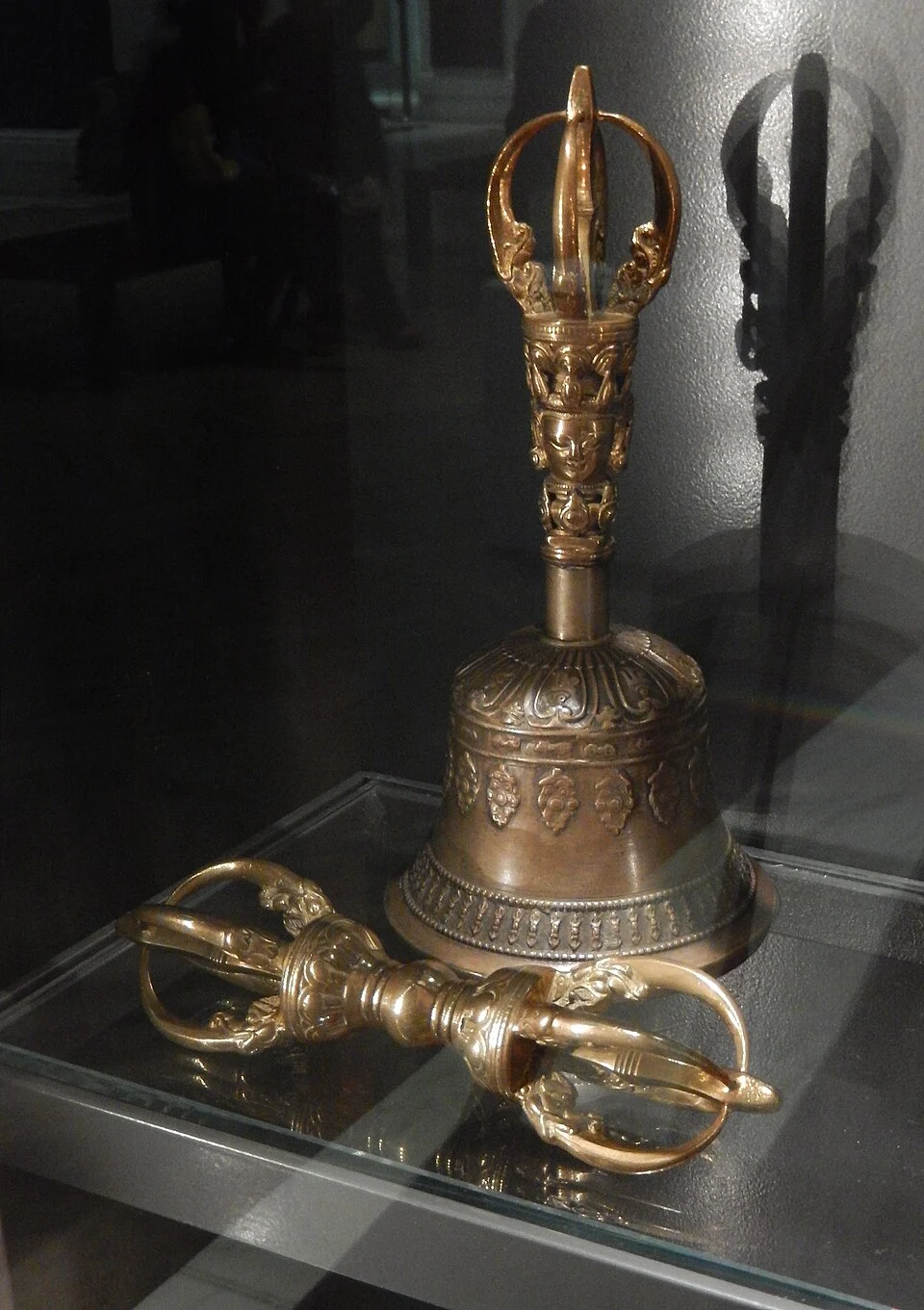
Vajra and bell appear in rituals and sacred imagery. A common interpretation associates the vajra with method and the bell with wisdom; handling depends on the liturgy.
How to approach it · Steps & care
Learn the forms and related liturgy; owning implements does not establish training.
Learn holding, ringing and gestures from a teacher.
Set them down gently in a clean place, protecting the bell rim.
Do not handle or ring another person’s ritual implements without permission.
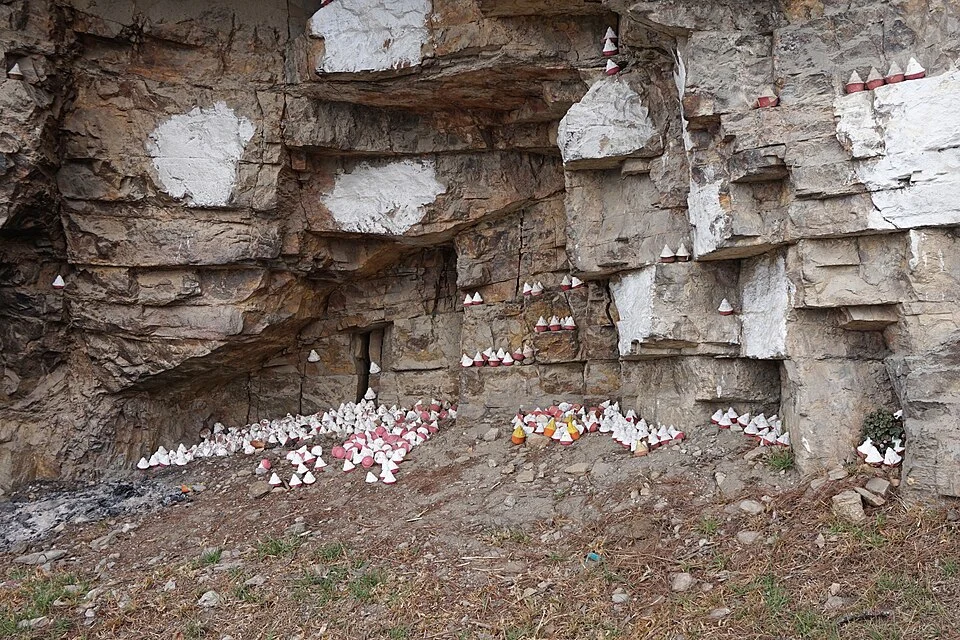
Tsatsas are commonly mould-made sacred forms, such as relief images or small stupas. Materials, contents and purposes vary; not all contain ashes or relics.
How to approach it · Steps & care
Identify the image and its provenance first.
Learn mould selection, materials, release, drying and placement from a temple.
Plan respectful storage and placement before making them; do not abandon them outdoors.
A craft tutorial cannot reproduce the religious purpose of a tsatsa with specific ritual or material requirements.
Join a steady turning motion with a compassionate intention.
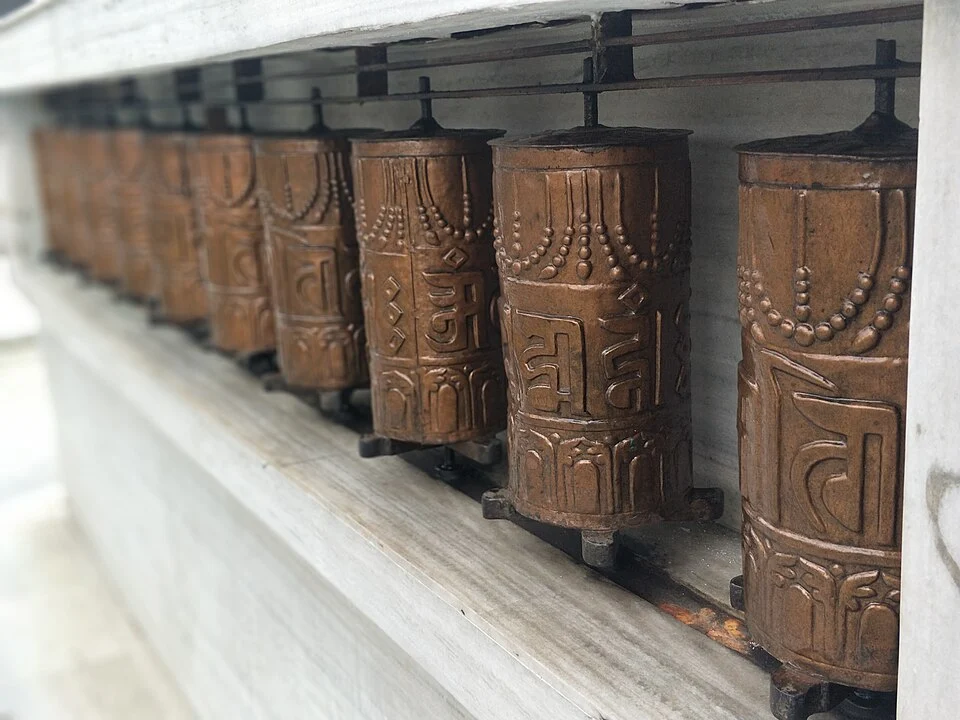
A prayer wheel contains sacred texts and may have inscriptions outside. Handheld and fixed forms differ; installing the texts requires specific guidance.
How to approach it · Steps & care
In the common Tibetan Buddhist form, turn gently clockwise when viewed from above.
Combine it with familiar recitation and dedication, rather than speed.
See Prayer Wheels in the Practice Guide for further steps.
Not every decorative cylinder contains sacred texts; establish its provenance.