
Explore the Lamp for the Path, Dromtonpa and the mind-training heritage behind Gelug.
An edited learning guide · Sources and image credits below
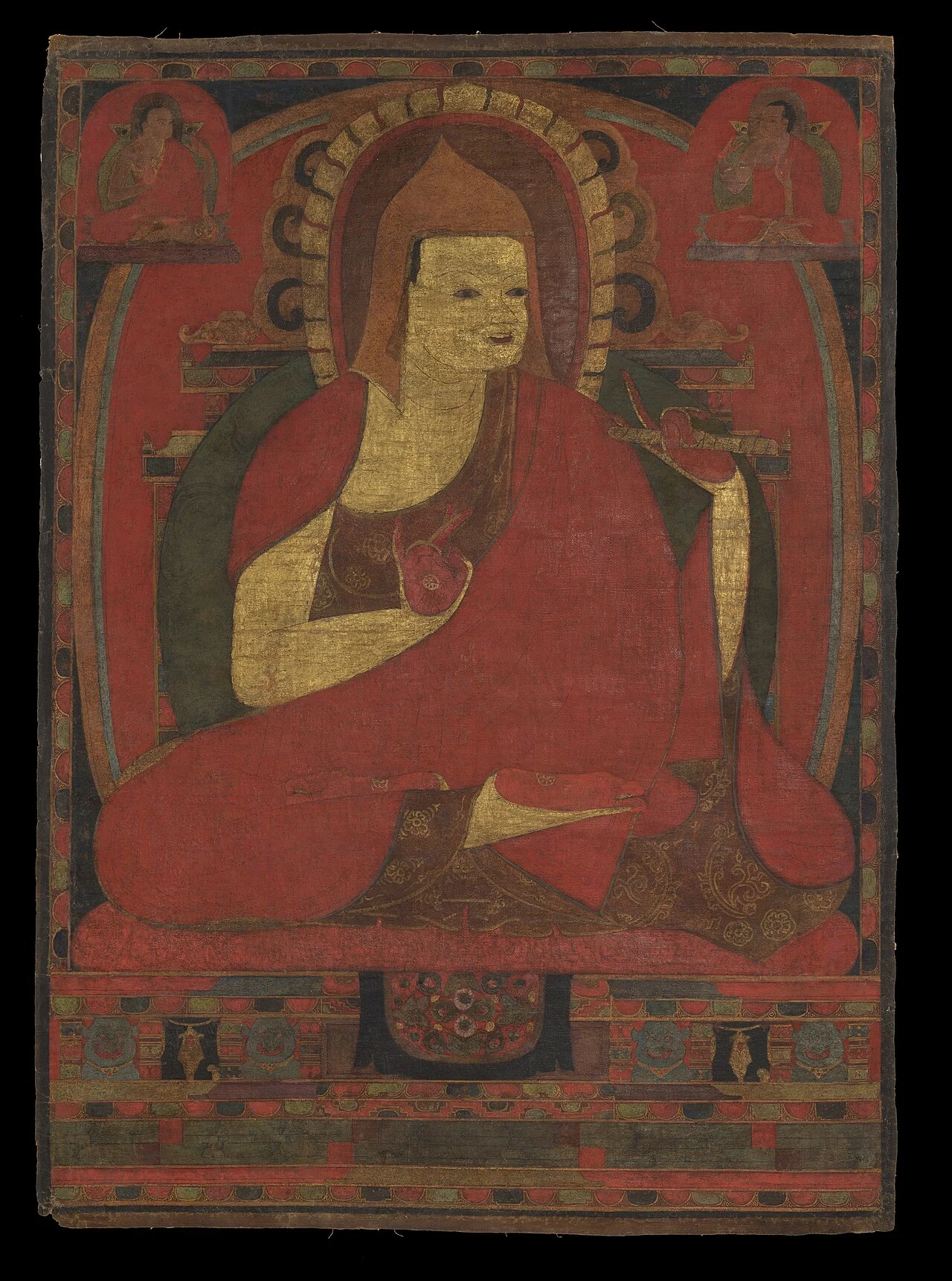
From India to Tibet
Atisha, also known as Dipamkara Shrijnana, was born in Bengal in 982. His death is commonly dated to 1054, with 1055 appearing in some scholarship. He studied widely and was associated with Vikramashila. Traditional biographies emphasize his journey to Suvarnadvipa to study bodhicitta. The broader Nalanda heritage should not be confused with one specific place of study.
The journey and the Lamp
Atisha arrived in western Tibet in 1042. At Jangchub O’s request he composed the Lamp for the Path to Enlightenment, a concise presentation that became foundational for later lamrim literature. He subsequently taught in central Tibet. Tholing and Nyetang are important places in the accounts of his Tibetan years.
Three scopes of motivation
The initial scope concerns favourable future lives, refuge and karma. The middle scope seeks liberation from samsara. The great scope develops awakening for all beings. These scopes describe widening motivation, not a ranking of people. Tsongkhapa’s Great Treatise develops this heritage alongside other Indian and Tibetan sources.
Dromtonpa and Reting
Dromtonpa Gyelwa Jungne (1005–1064), an important lay disciple, founded Reting in 1057. Kadam is often explained as receiving the Buddha’s words as personal instruction. Potowa, Chengawa and Phuchungwa helped sustain a varied heritage of texts and practical instruction; its branches cannot be reduced to three separate departments of listening, thinking and meditation.
Mind training in everyday life
Langri Tangpa’s Eight Verses and Chekawa’s Seven-Point Mind Training are important works. Their practical concern includes reducing self-centredness and cultivating compassion amid changing circumstances. Exchanging self and others and tonglen, giving and taking, are related but distinct terms. Patient listening and rejoicing in kindness offer accessible starting points.
Stories, legacy and reading
Stories of costly journeys and royal sacrifice express devotion to the teachings, while details require attention to their traditional sources. Kadam influenced several Tibetan traditions. Gelug is historically called New Kadam, but it is not the sole inheritor. Begin with an introduction to the Lamp and short mind-training works before a guided study of the Great Treatise.
Sources & further reading
Introductory cultural and historical material. Specific tantric practices require the relevant instruction, transmission and, where applicable, empowerment.