
Family Buddhism · 48 Video & Reading Lessons
48 family lessons in eight progressive units. Start with a story, talk it through, and try one small act of kindness.
Start lesson 1 →Watch lesson 1
1. First steps in kindness
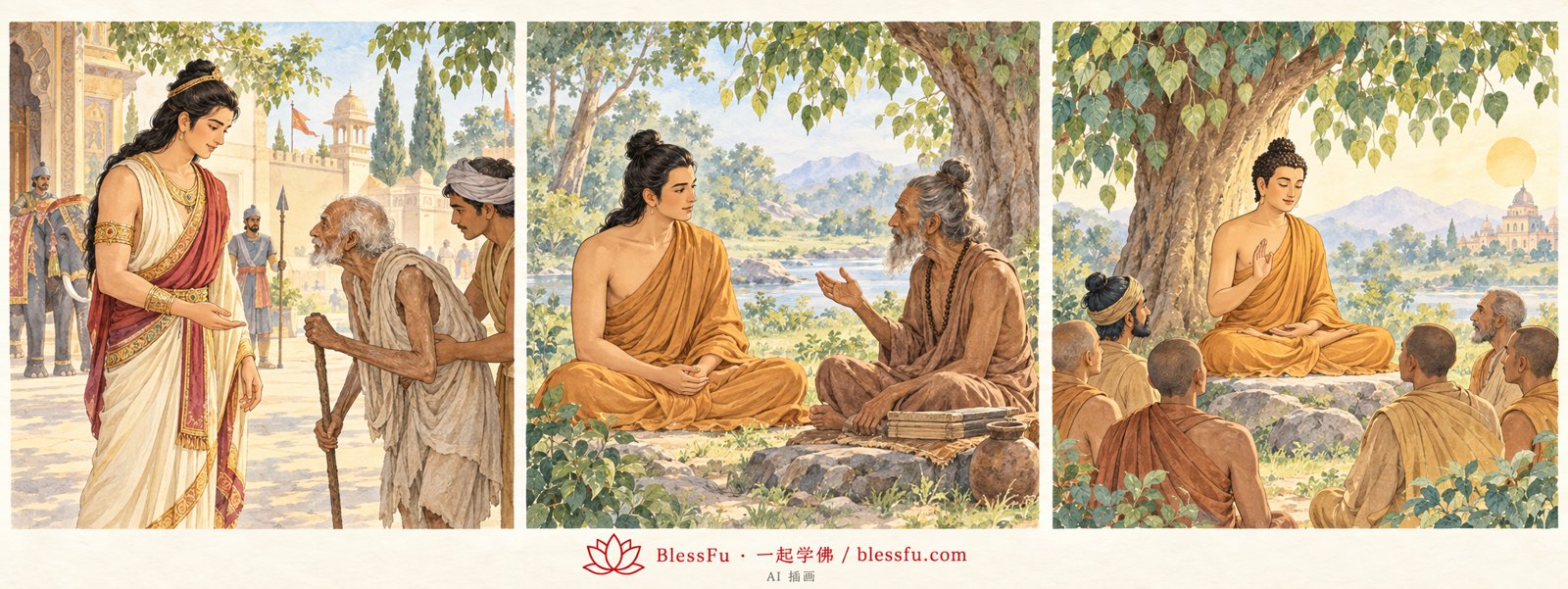 Lesson 1
Who is the Buddha?
Describe the Buddha as an awakened teacher who sought freedom from suffering and taught a path to others.
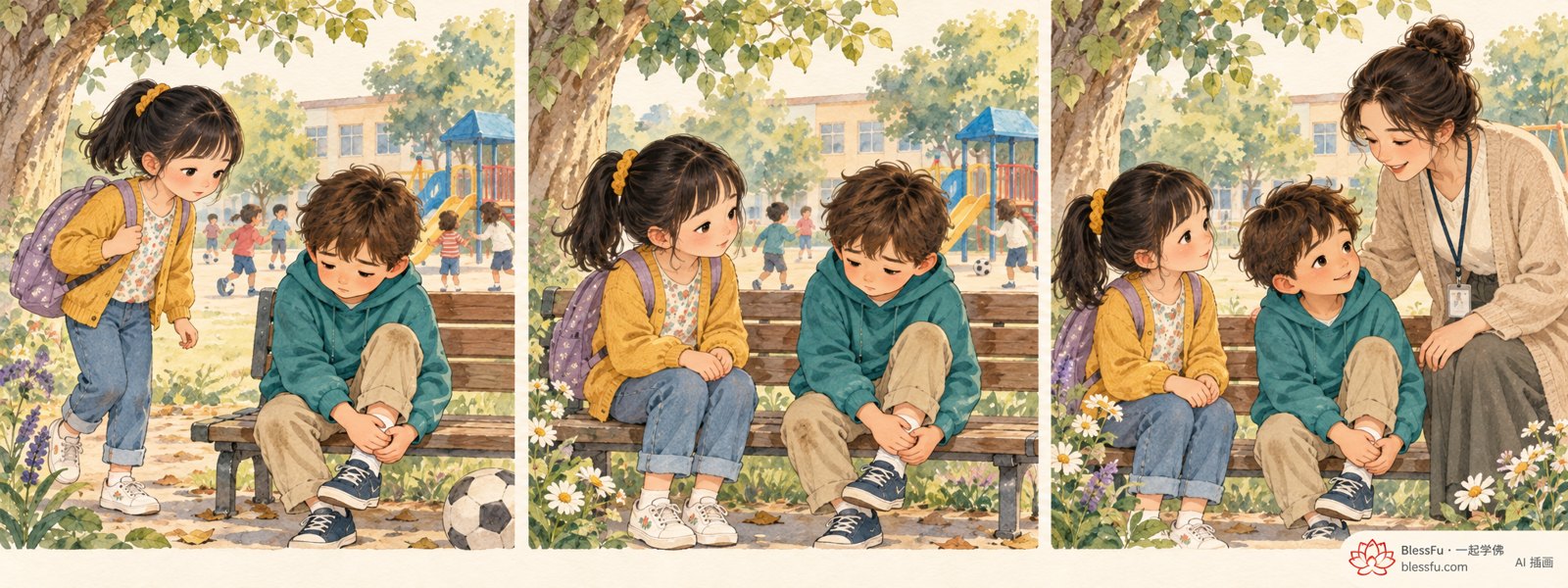 Lesson 2
What is compassion?
Ask what someone needs before choosing a helpful action.
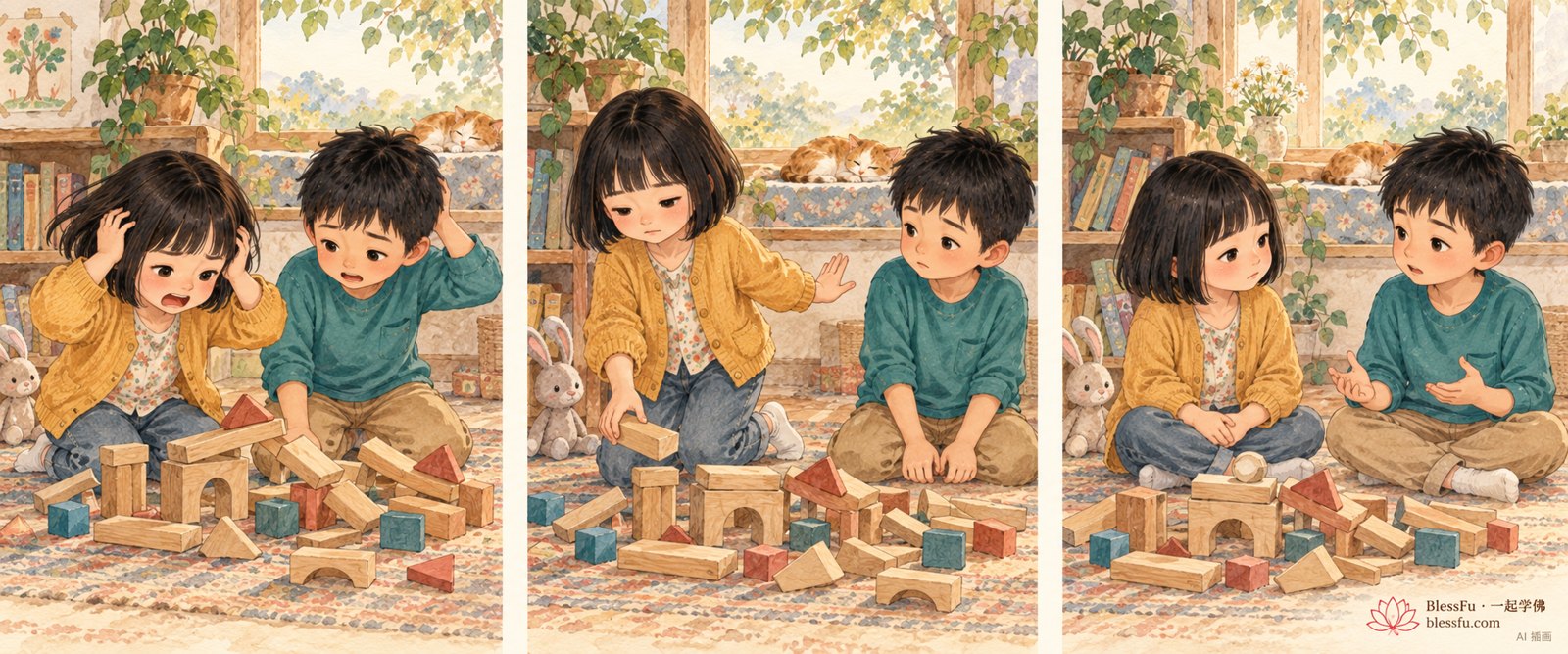 Lesson 3
When I feel angry
Choose a safe pause and express a feeling and a need.
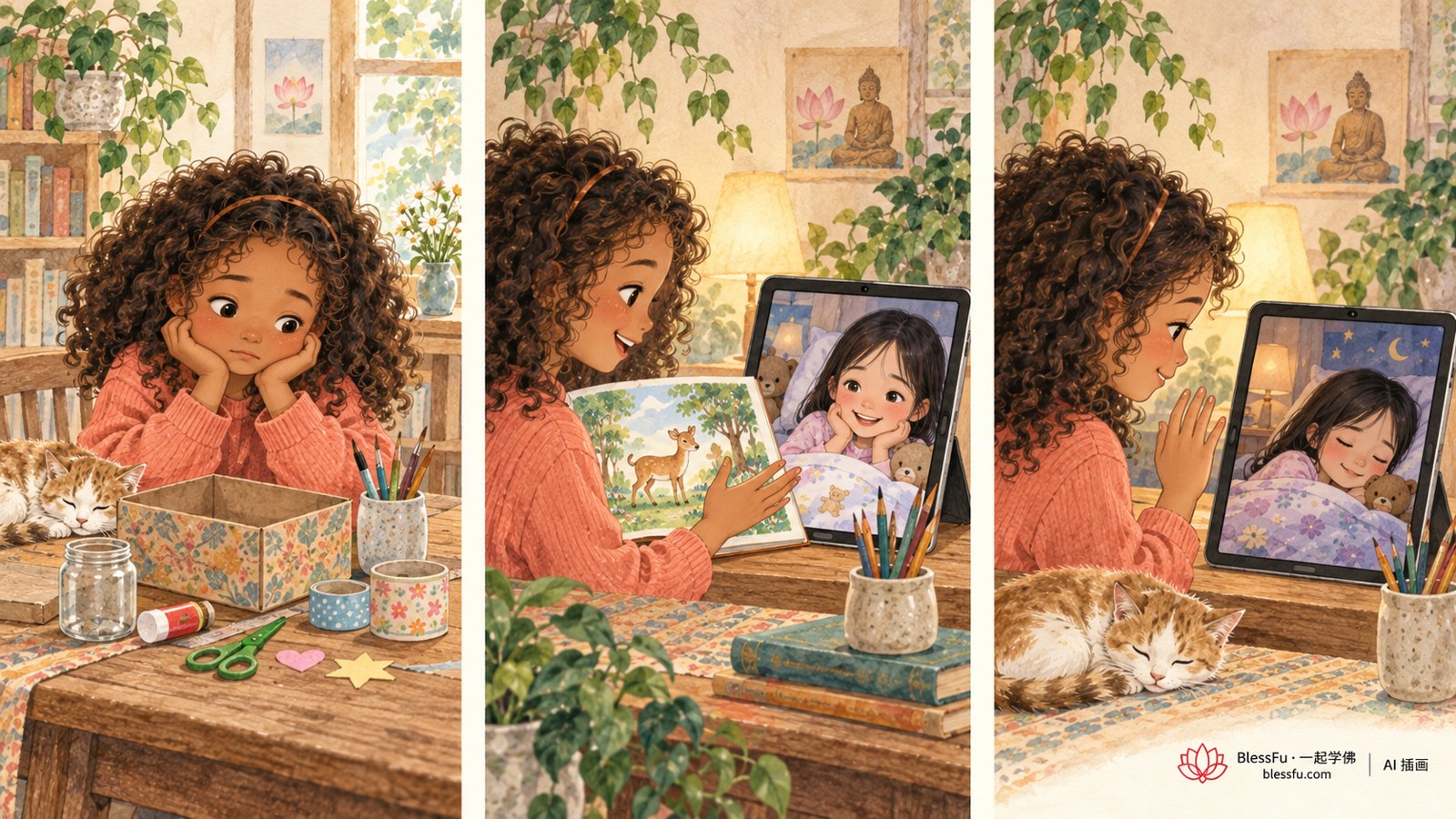 Lesson 4
More ways to share
Name two ways to share without money and understand that giving is voluntary.
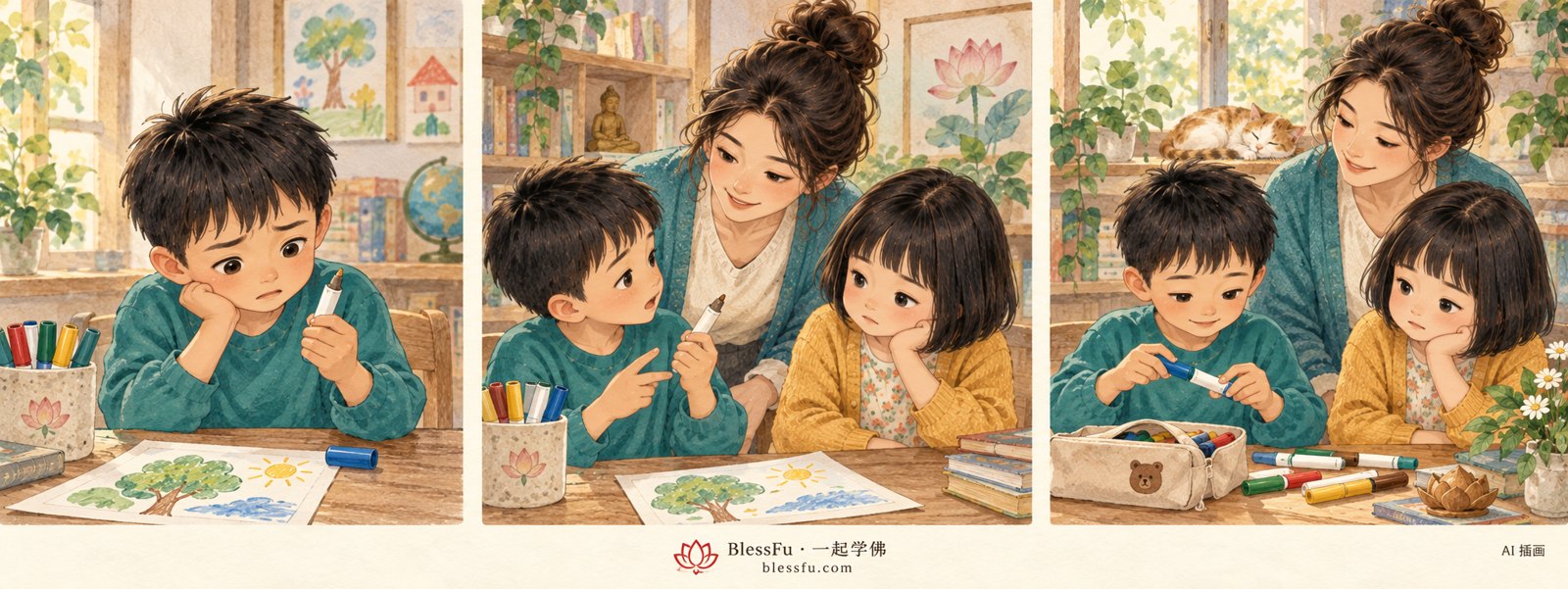 Lesson 5
A mistake can be a new start
Describe an honest repair and a way to act differently next time.
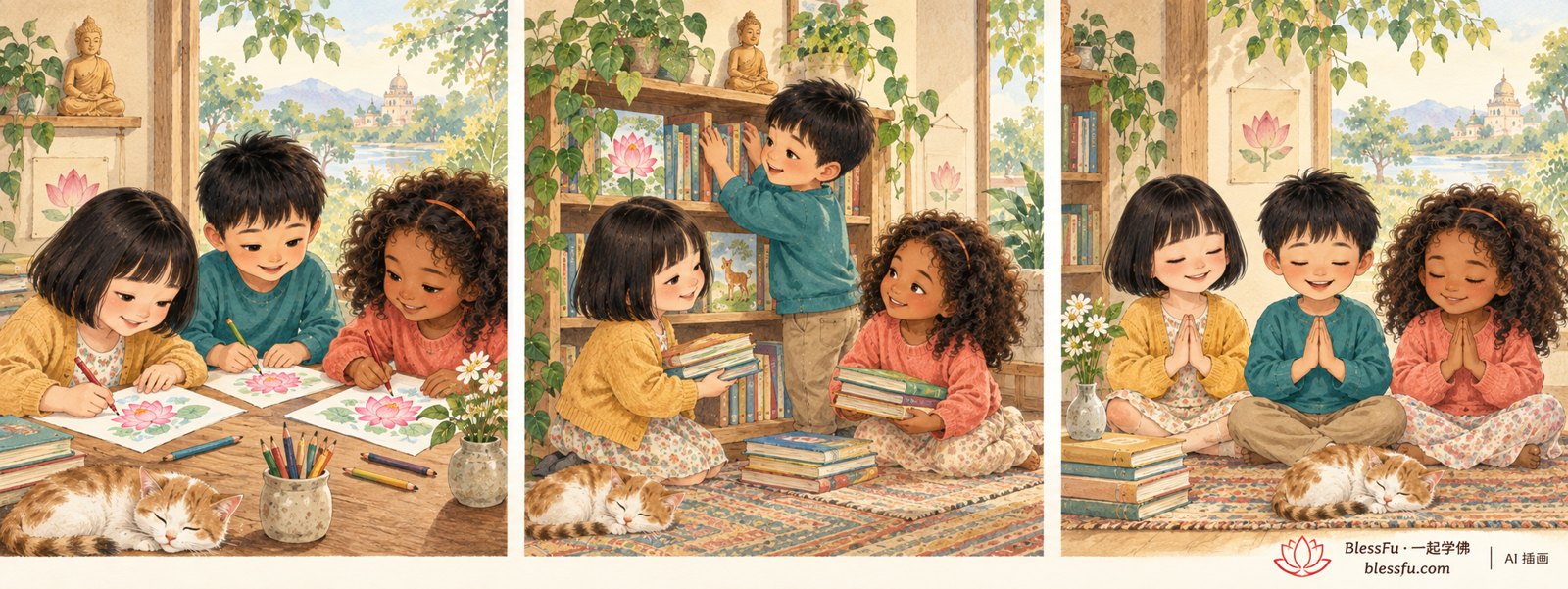 Lesson 6
Kind wishes for everyone
Choose a kind wish, a possible action and a simple dedication.
2. Feelings and thoughts
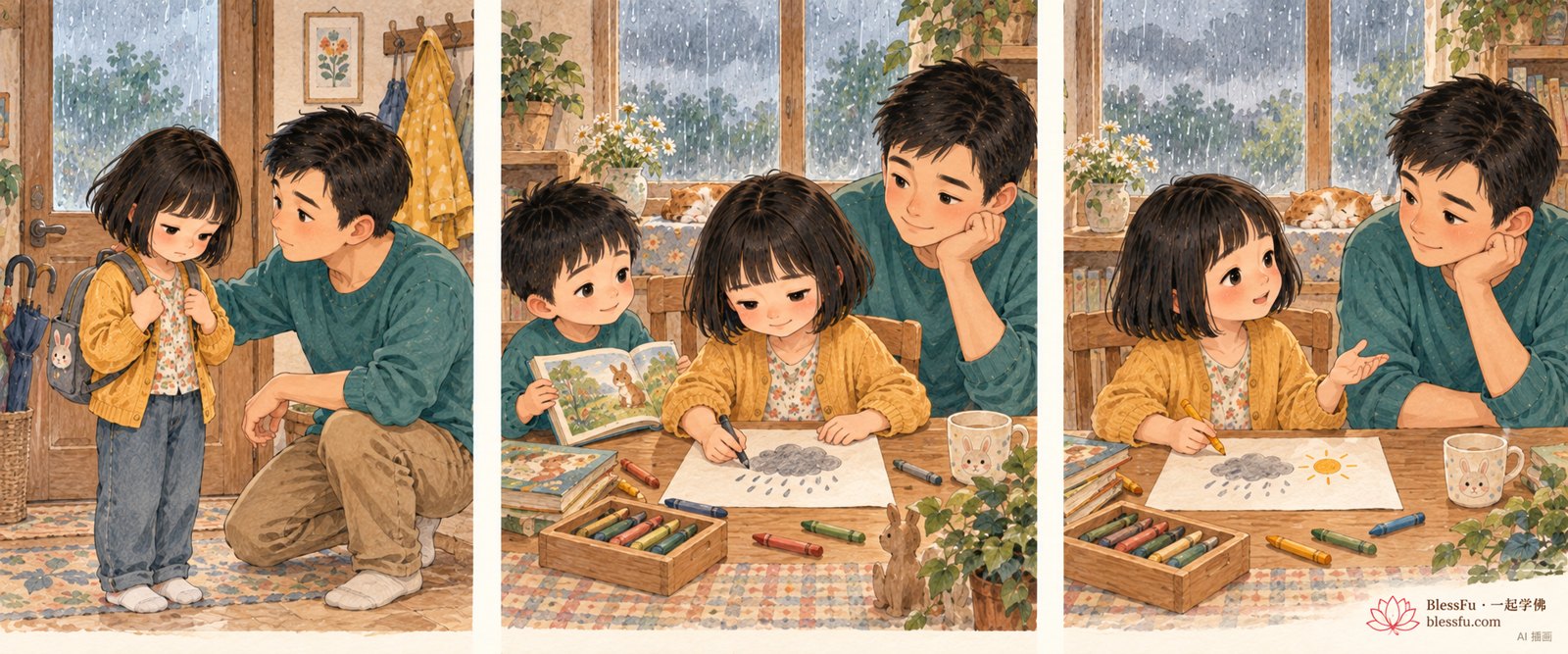 Lesson 7
Weather Inside Me
Name a feeling and notice that different feelings can happen together.
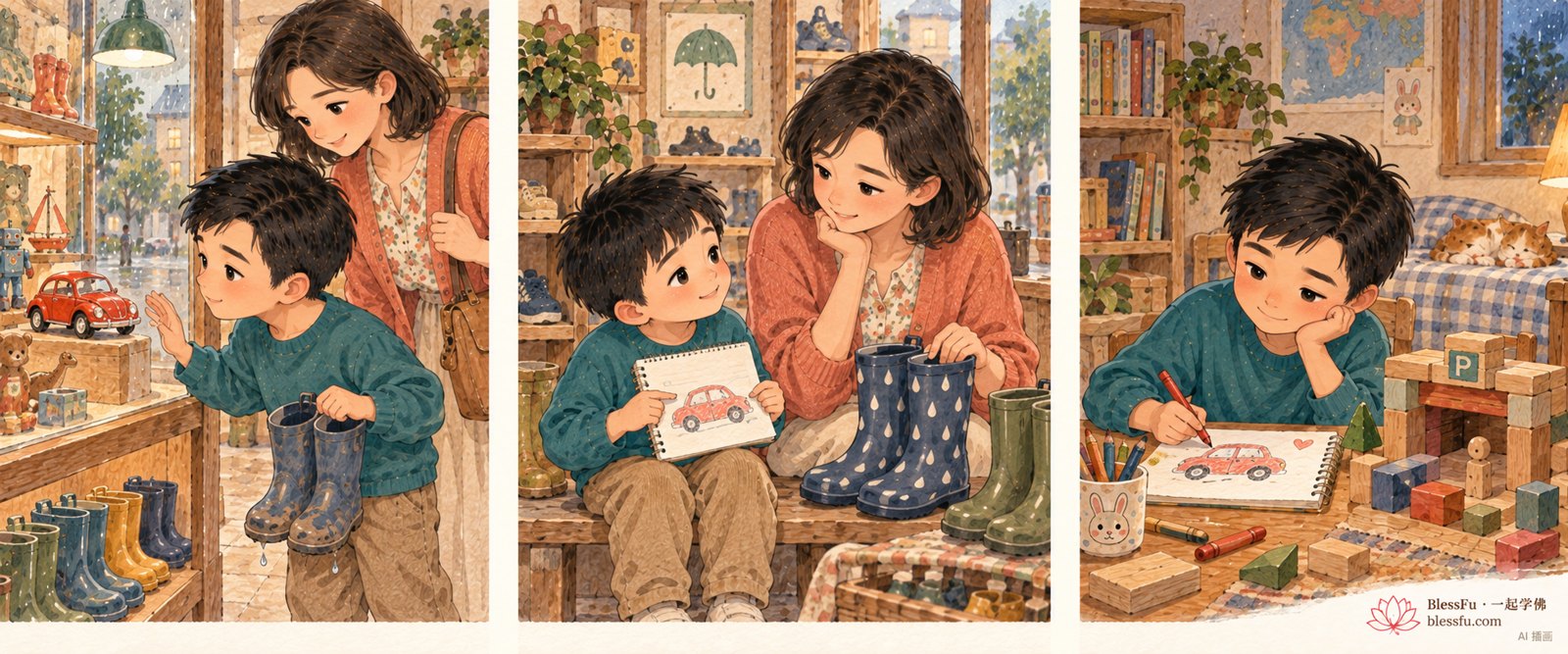 Lesson 8
A Need or a Want?
Discuss a basic need and a wish without feeling ashamed of wanting things.
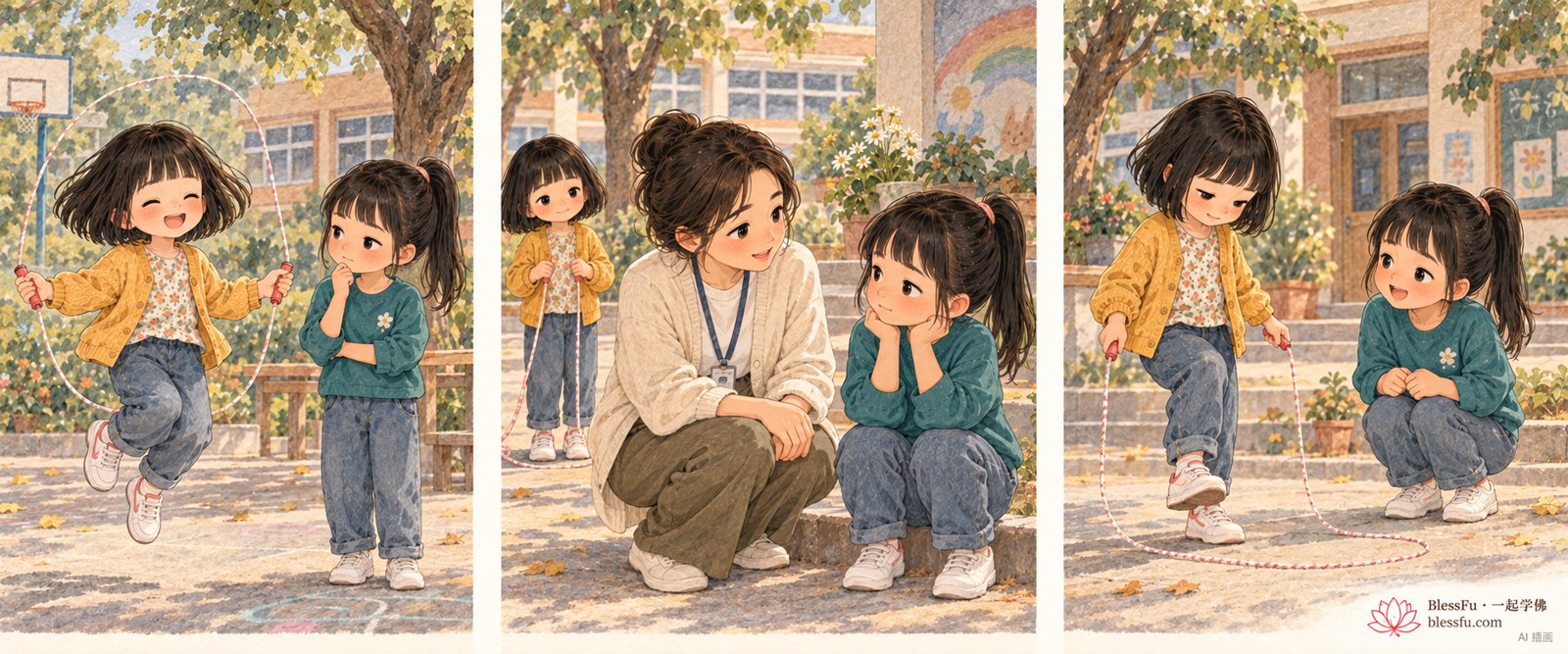 Lesson 9
I Can Be Glad for You
Recognize envy and try a sincere appreciation of another person's effort or kindness.
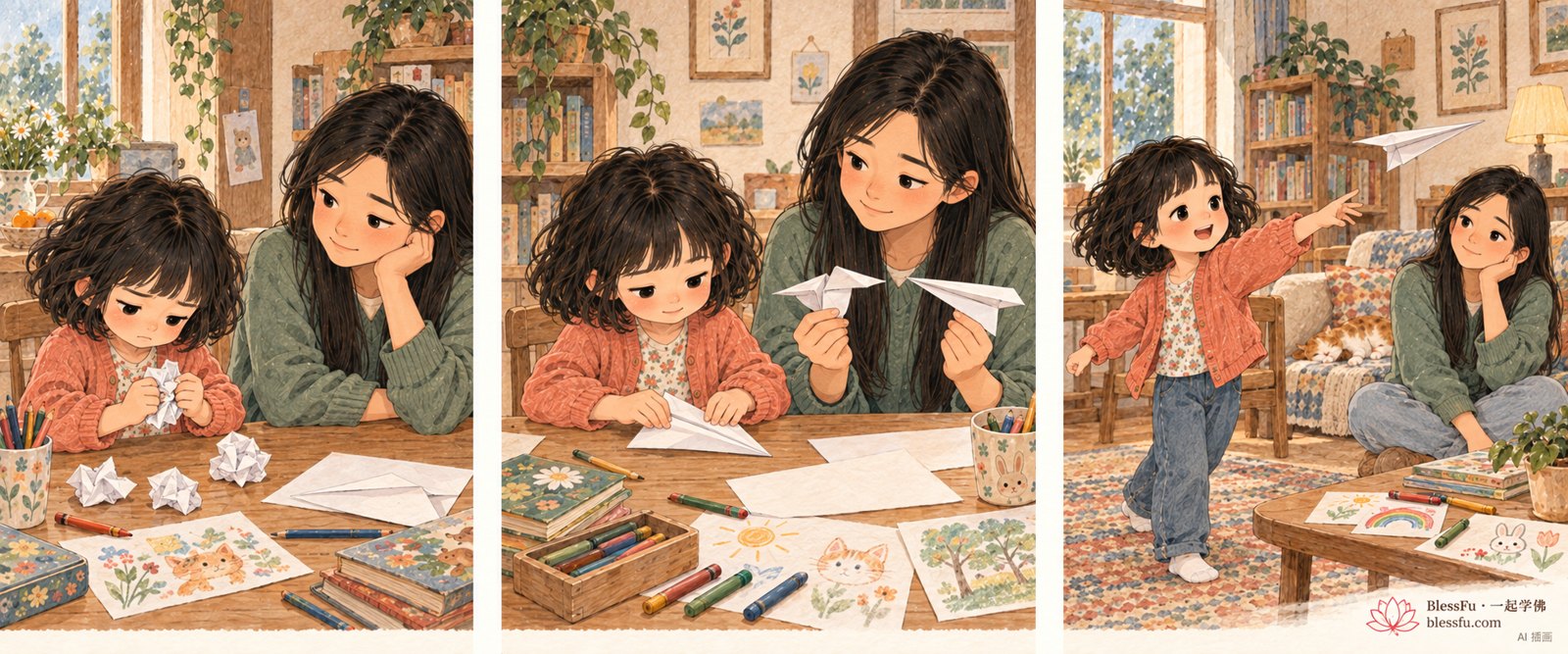 Lesson 10
One Result Is Not All of Me
Separate one result from your whole worth and choose one manageable next step.
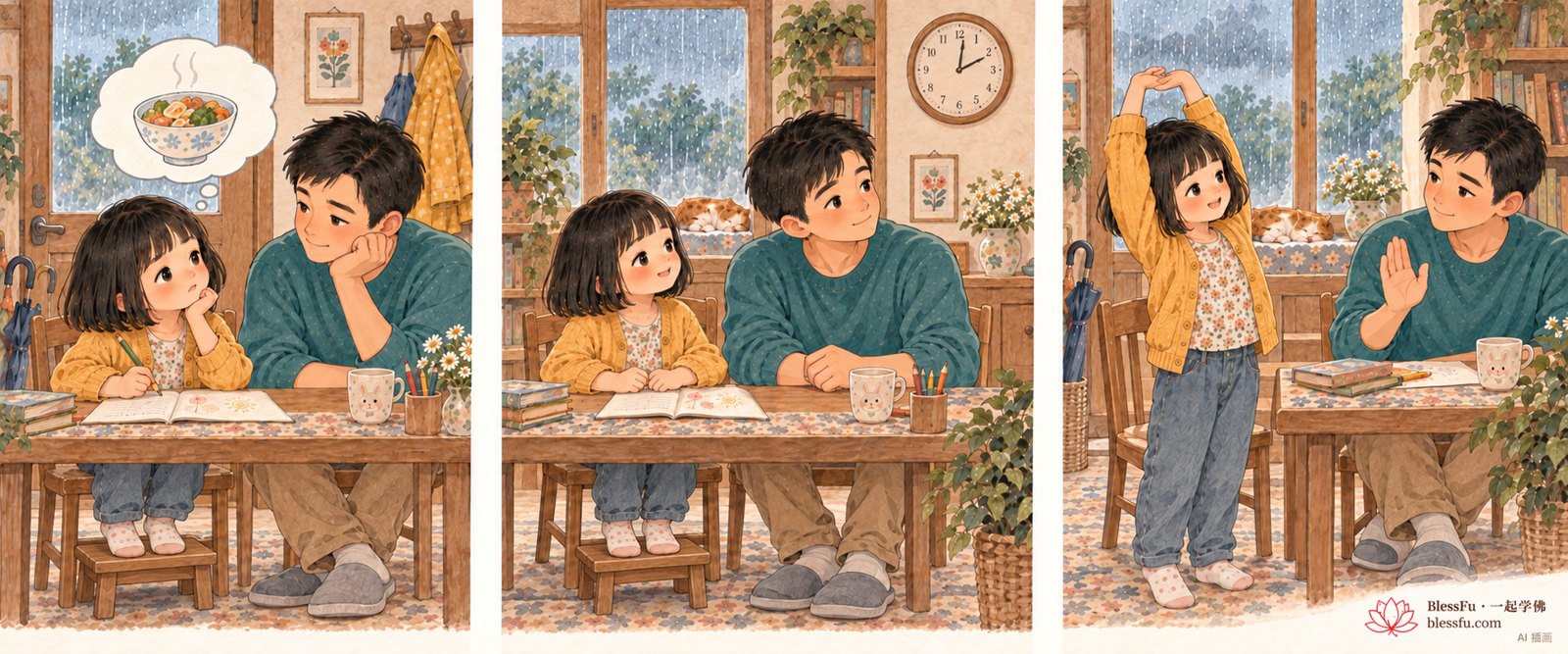 Lesson 11
A Quiet Little Moment
Try gentle attention to a sound or the feeling of supported feet, returning kindly after distraction.
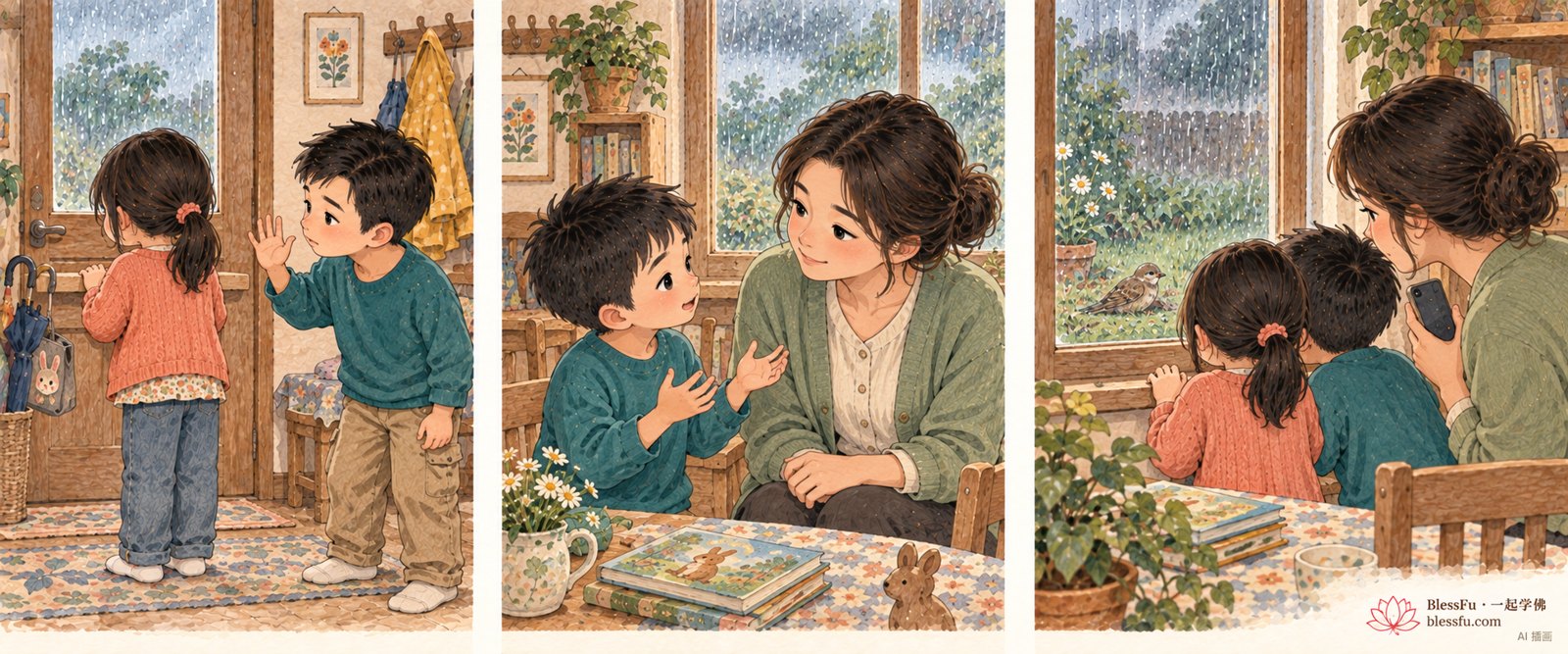 Lesson 12
A Thought Is Not Always a Fact
Distinguish a guess from what is known and choose to ask, check safely or seek help.
3. Getting along with others
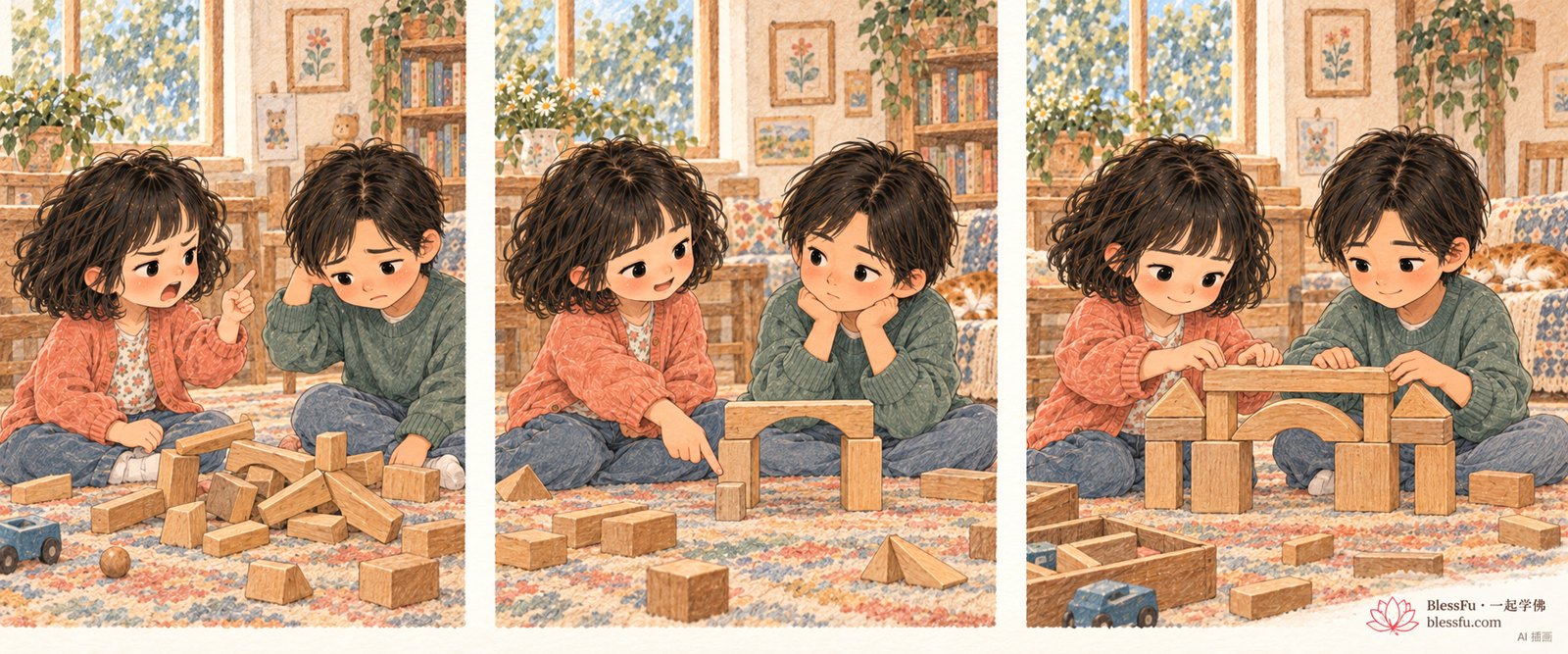 Lesson 13
Words Can Build a Bridge
Turn blame into a truthful, specific request that helps solve a problem.
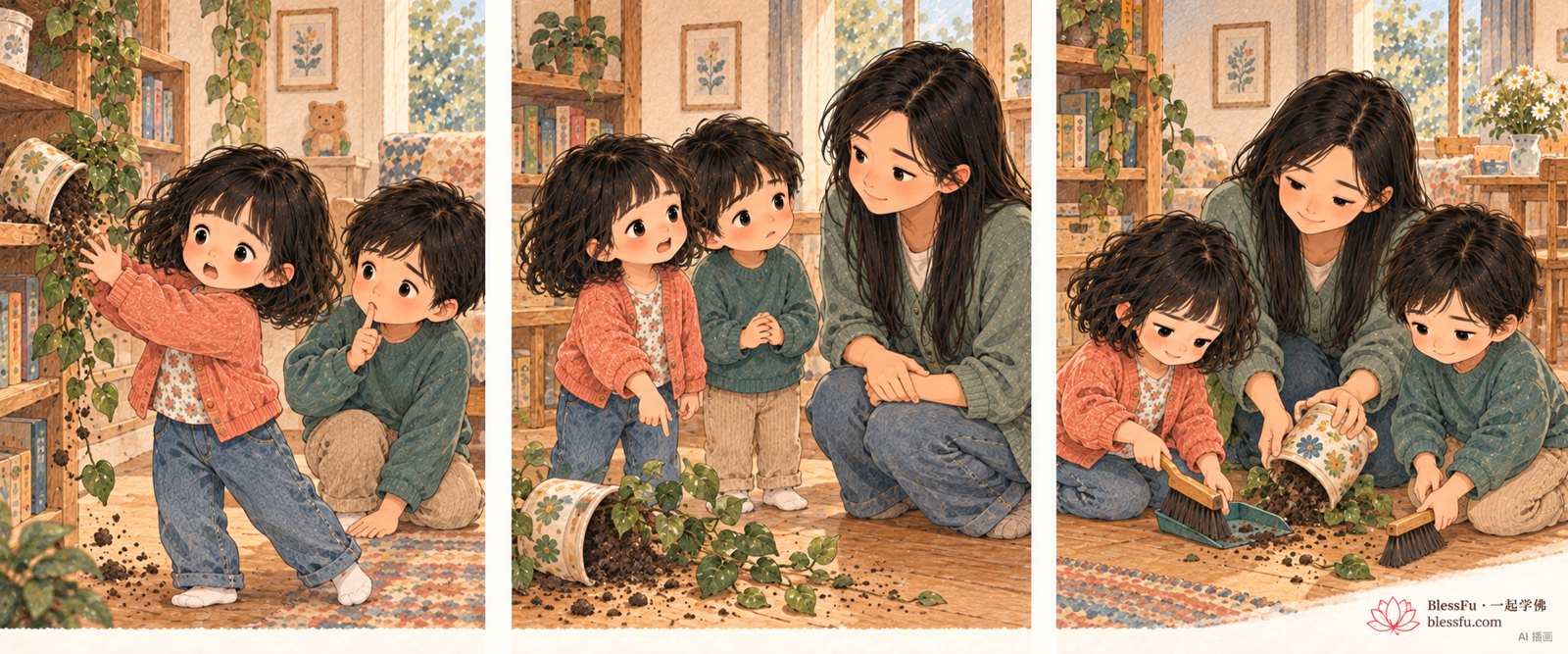 Lesson 14
Tell the Truth, Ask for Help
Know that mistakes can be shared with a trusted adult, and worrying secrets need not be kept.
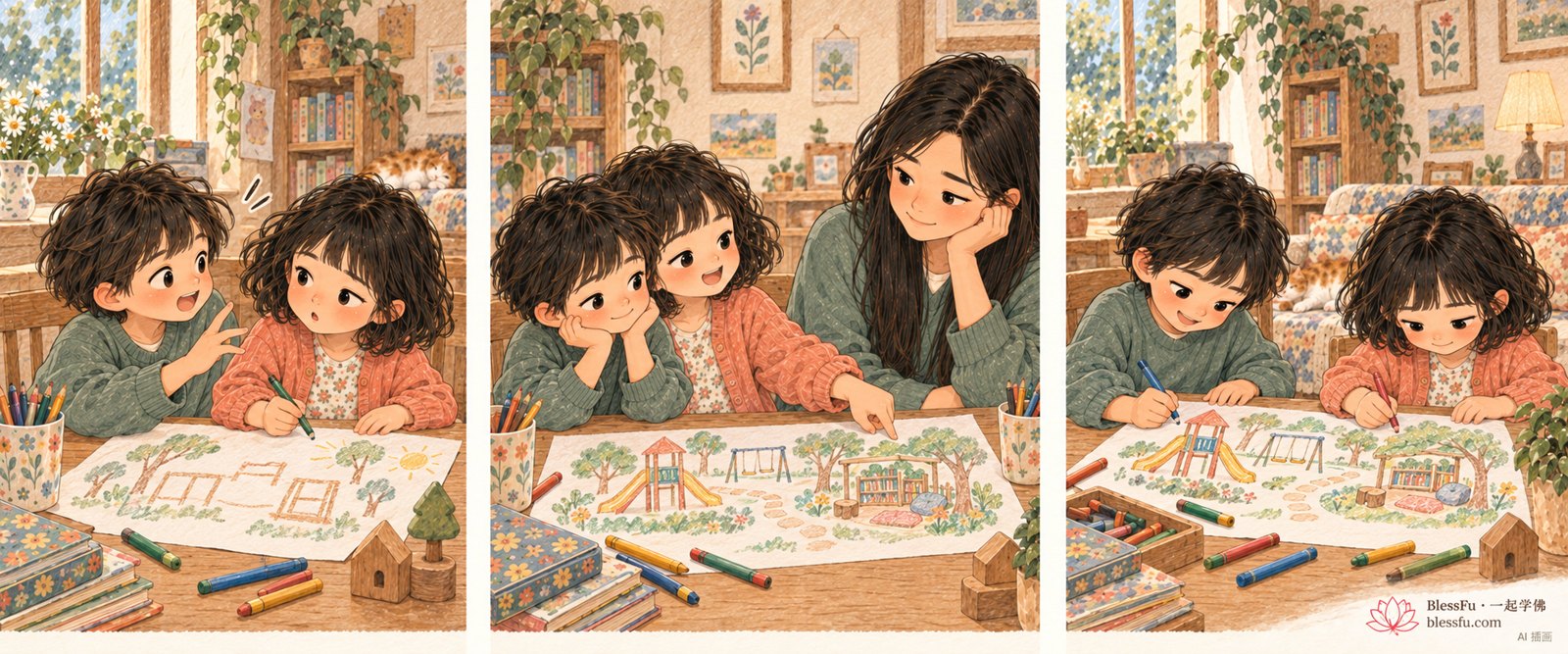 Lesson 15
Listen Before You Reply
Try waiting for someone to finish and checking one meaning in your own words.
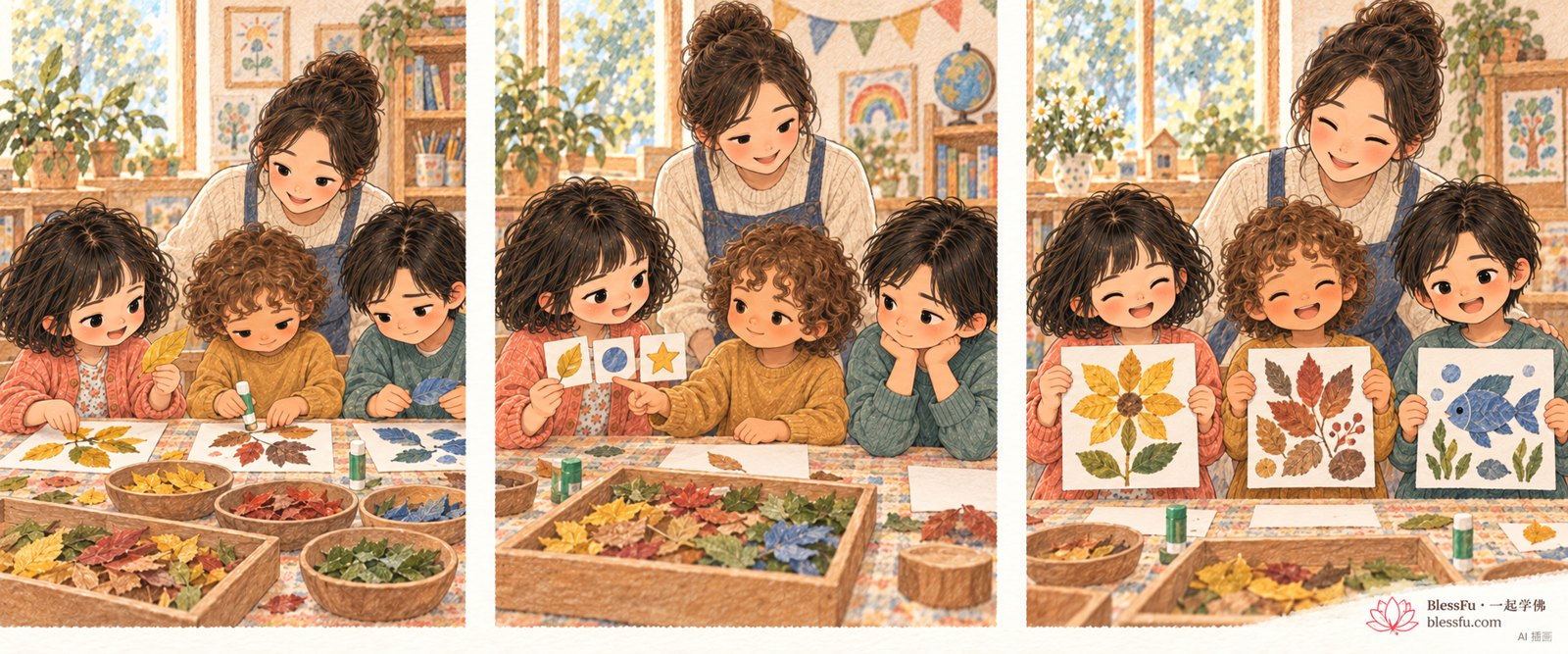 Lesson 16
Different, Together
Notice a difference and show respect by asking and offering choices.
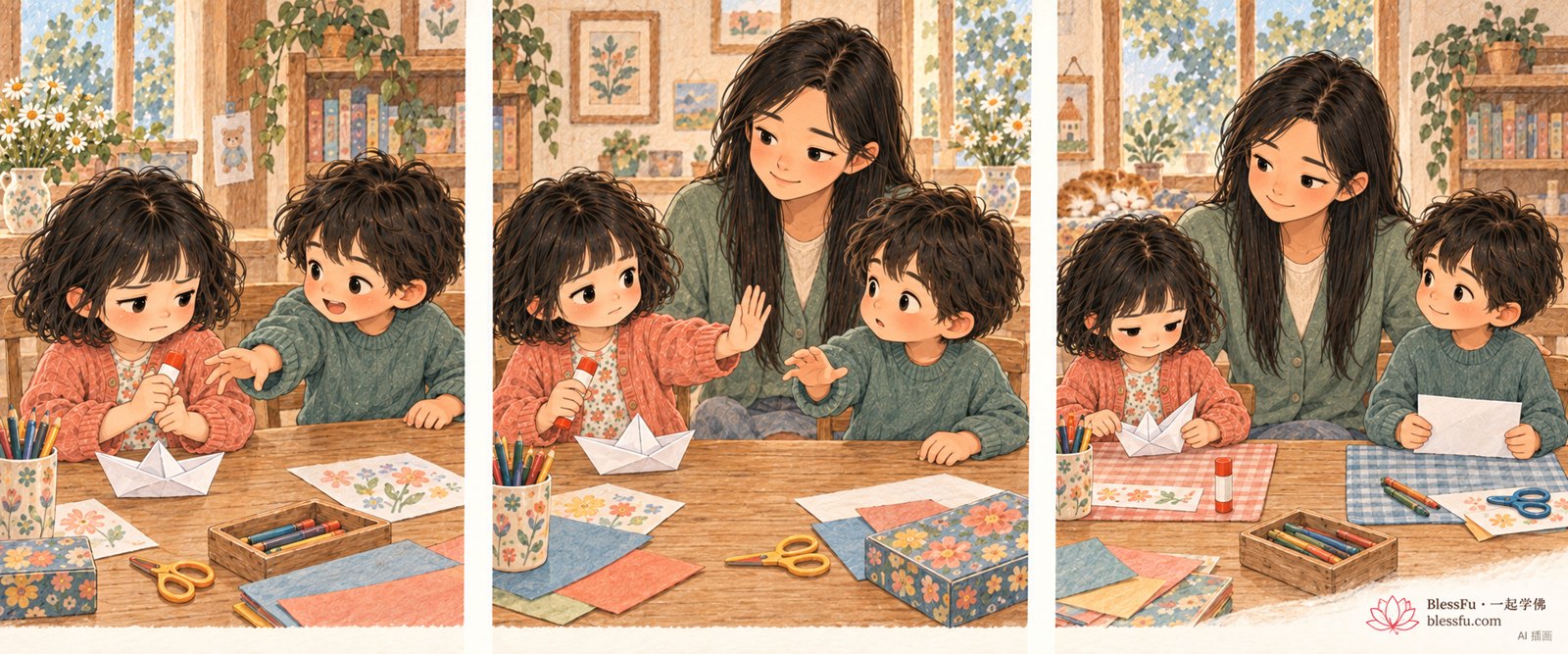 Lesson 17
Kindness Can Say No
Practise refusing clearly, moving away and asking an adult for help.
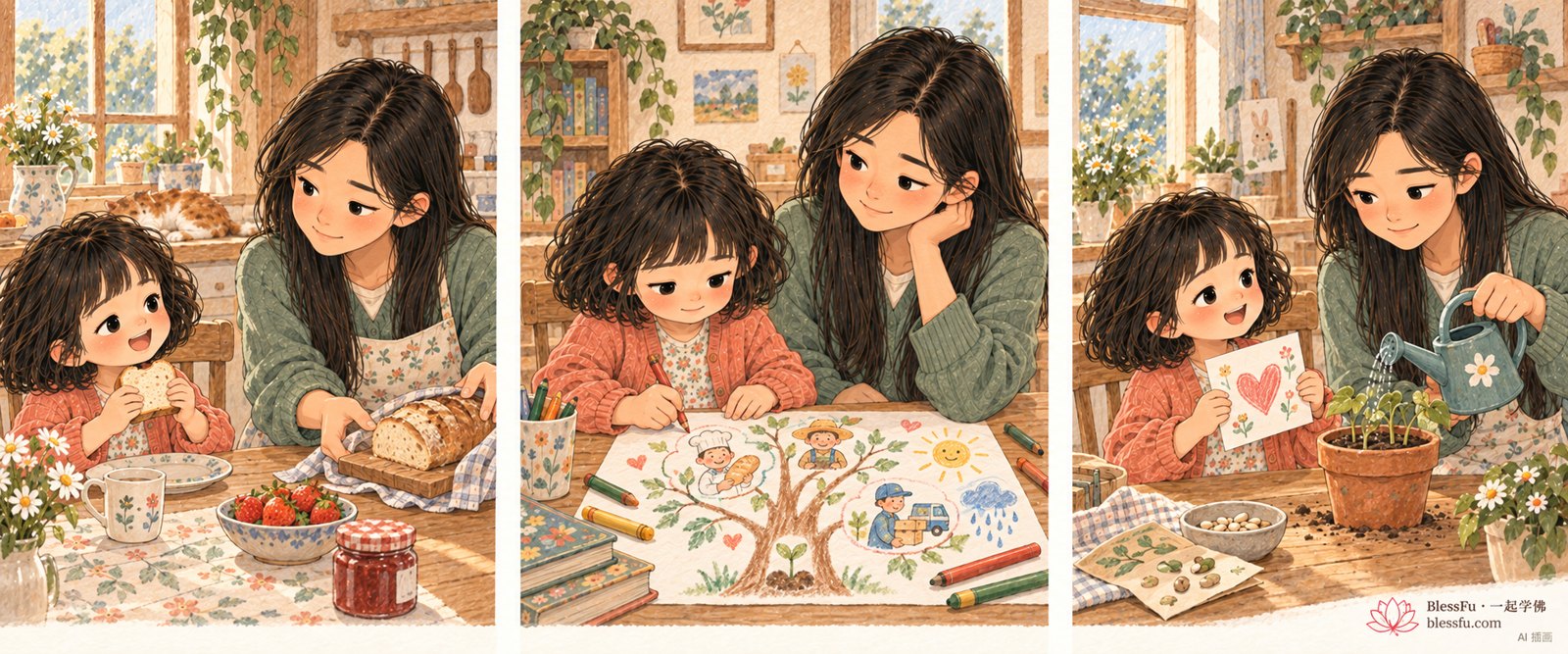 Lesson 18
A Thank-You Tree
Notice one specific kind of help and choose a voluntary way to appreciate it.
4. Noticing connections
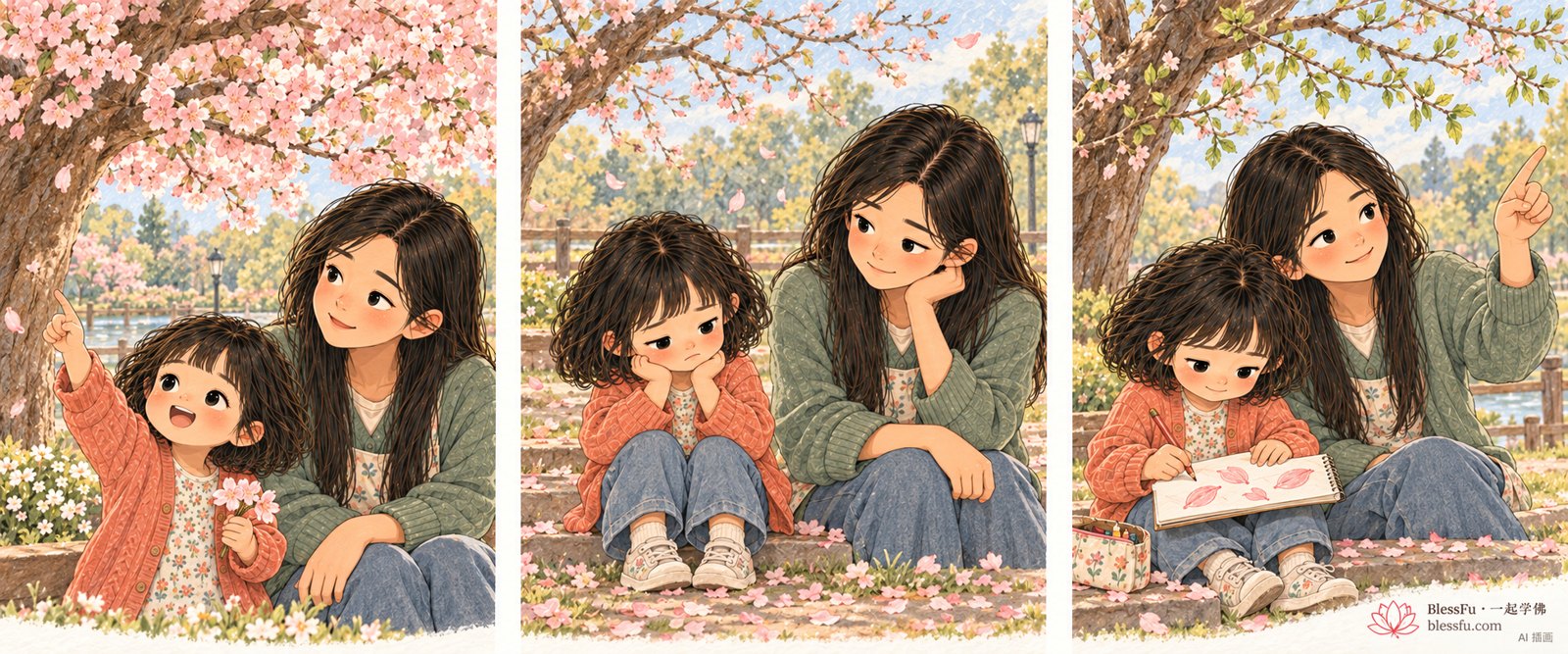 Lesson 19
After Blossoms, New Leaves
Notice a change and allow appreciation and sadness to exist together.
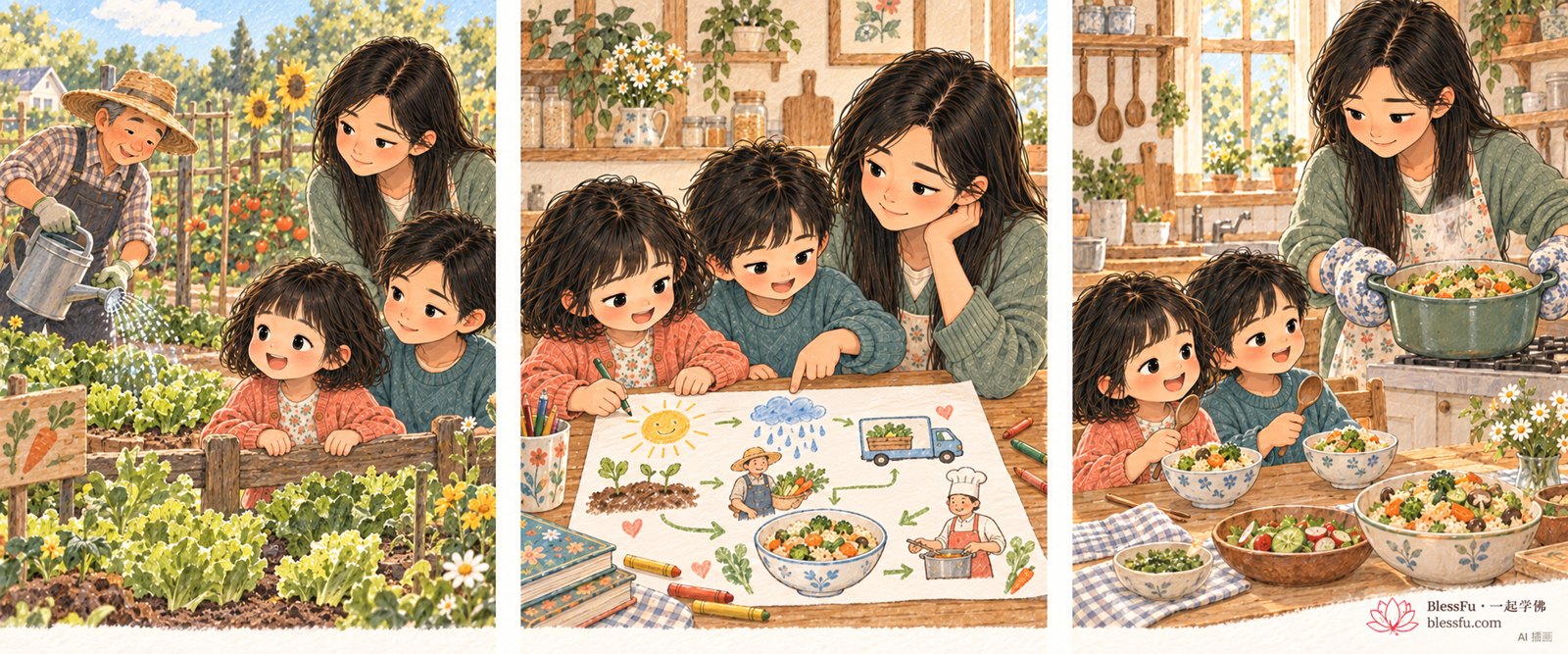 Lesson 20
The Journey of a Meal
Name three kinds of help or conditions that make a meal possible.
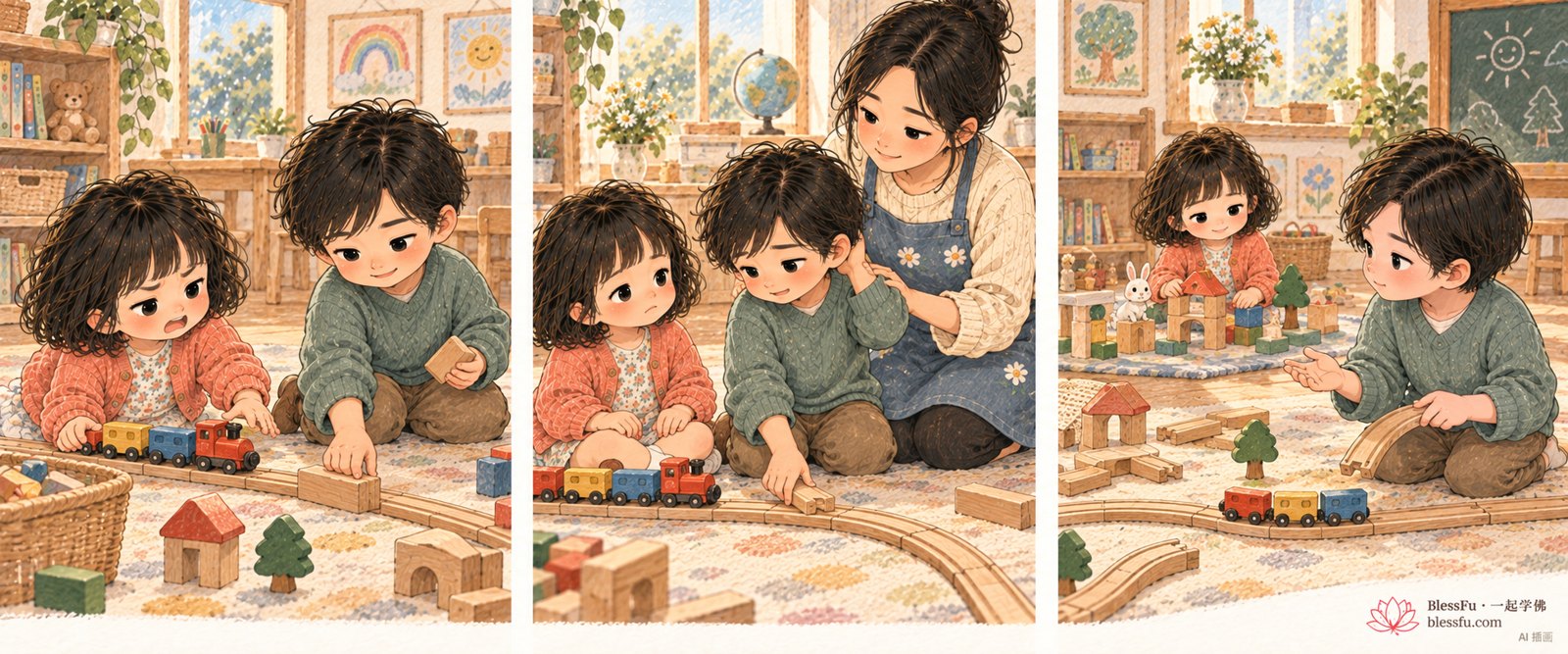 Lesson 21
Small Actions Have Effects
Distinguish an intended action from an accident and suggest a step of repair.
 Lesson 22
One More, or Enough for Now?
Notice the urge to take more, pause and choose an amount that fits the task.
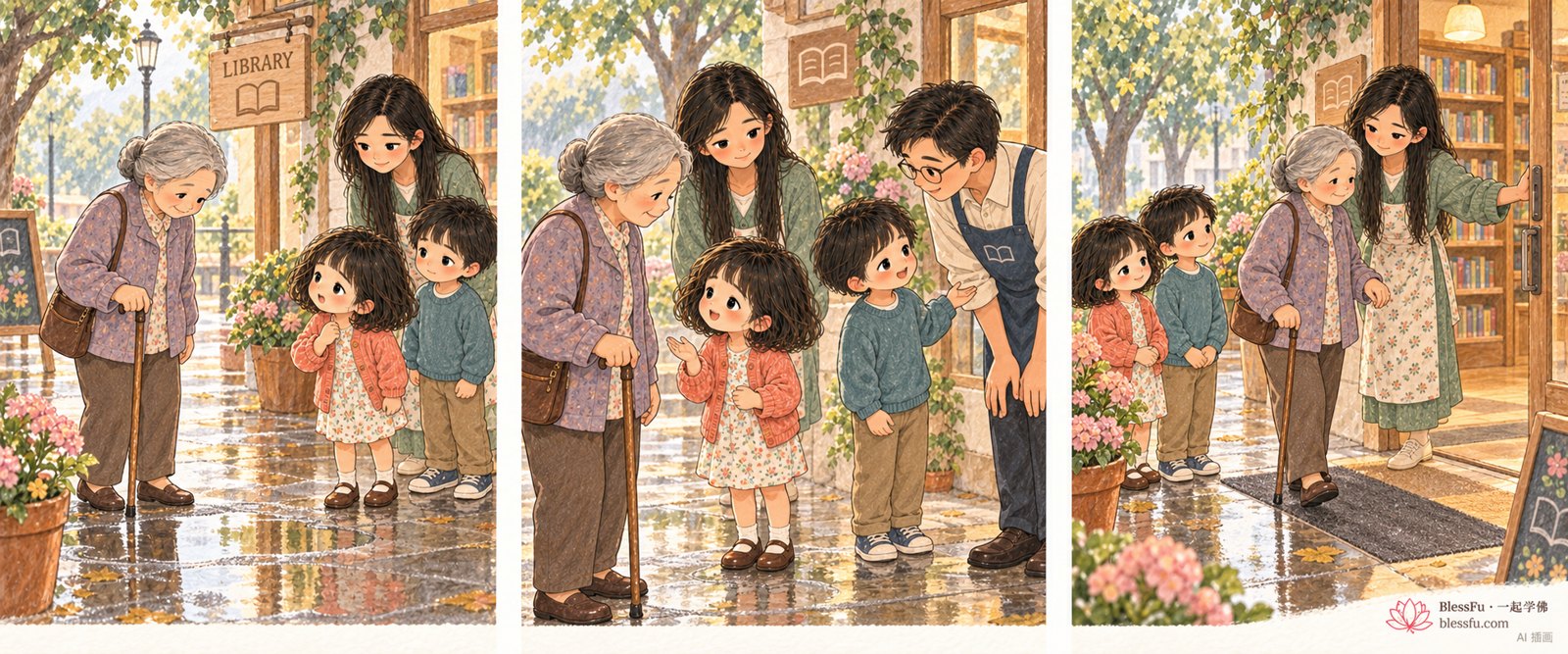 Lesson 23
Kind Help Starts with a Question
Ask what help is wanted and involve an adult when a task exceeds your ability.
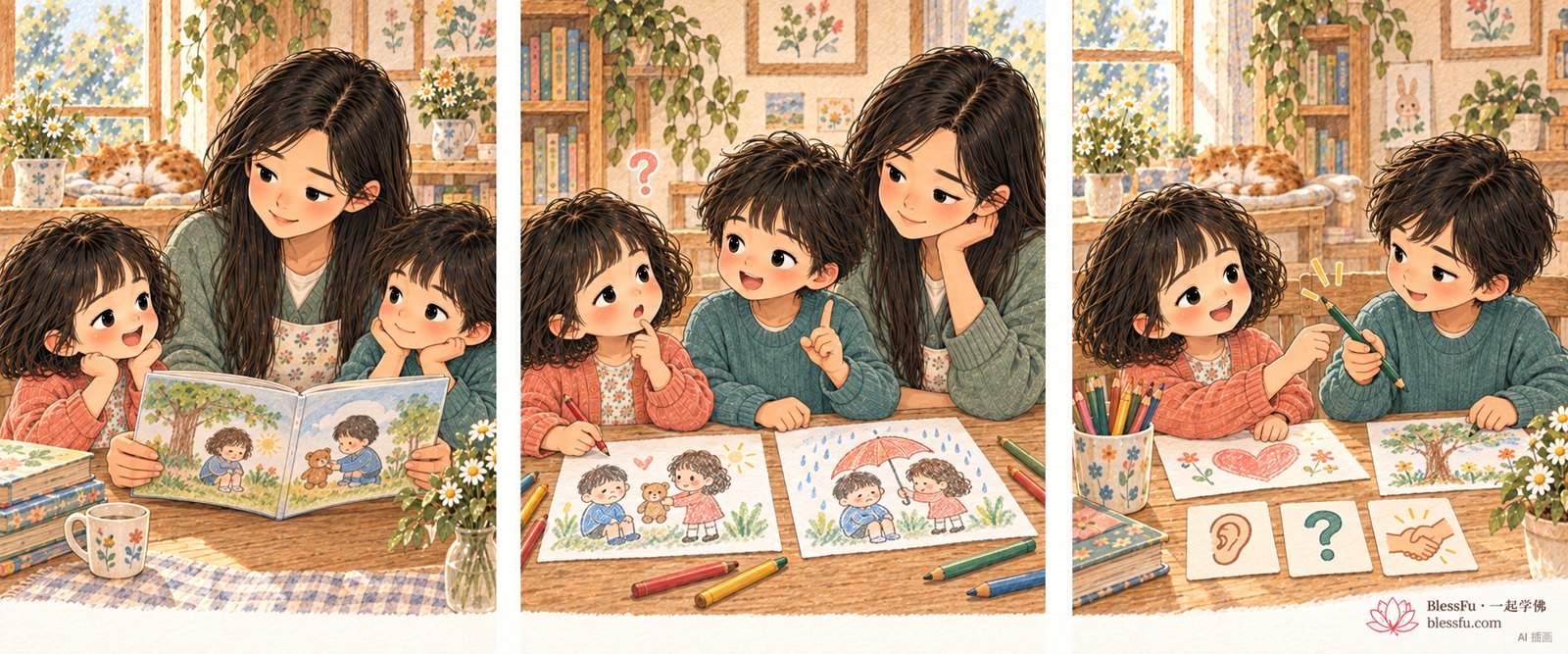 Lesson 24
Listen, Think, Try
Explain learning, reflection and practice through one everyday example.
5. Stories of care and wisdom
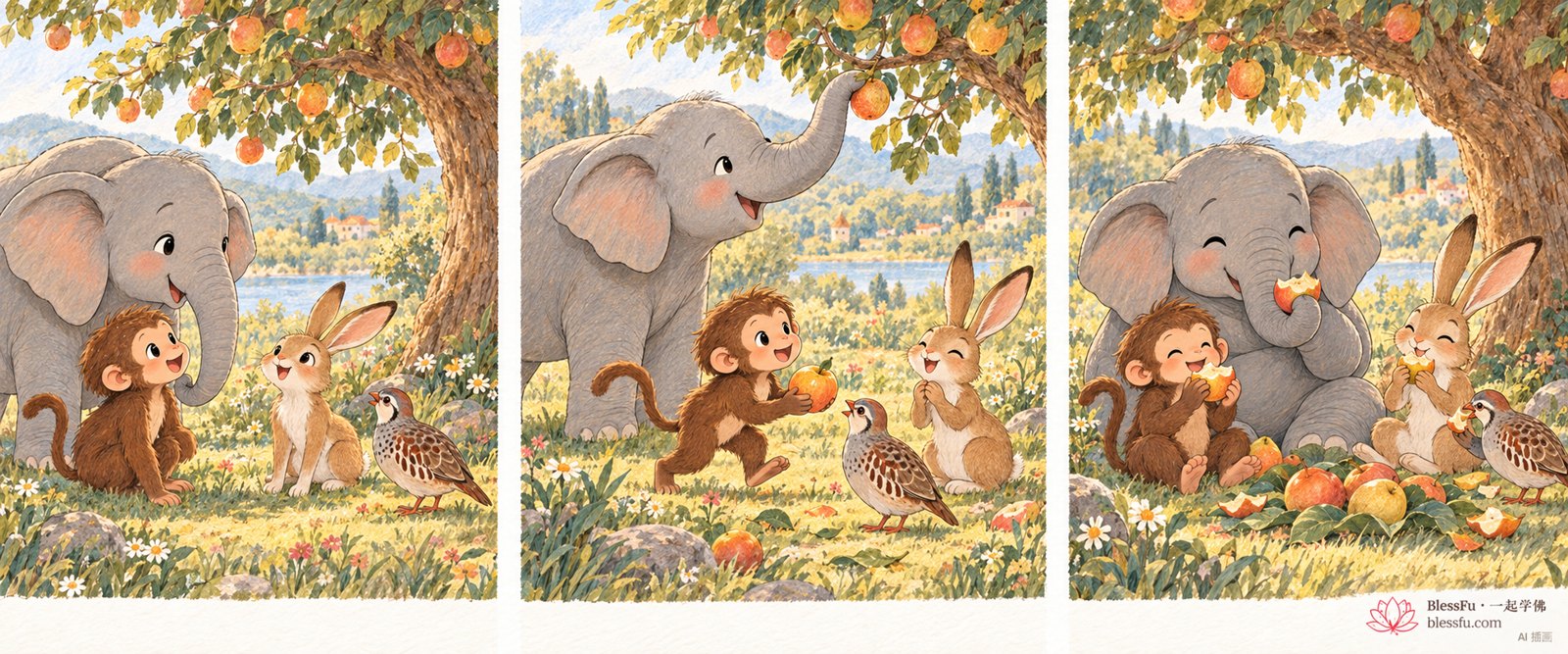 Lesson 25
Four Friends: Whose Skill Matters?
Recognise the four friends and share a task with attention to others.
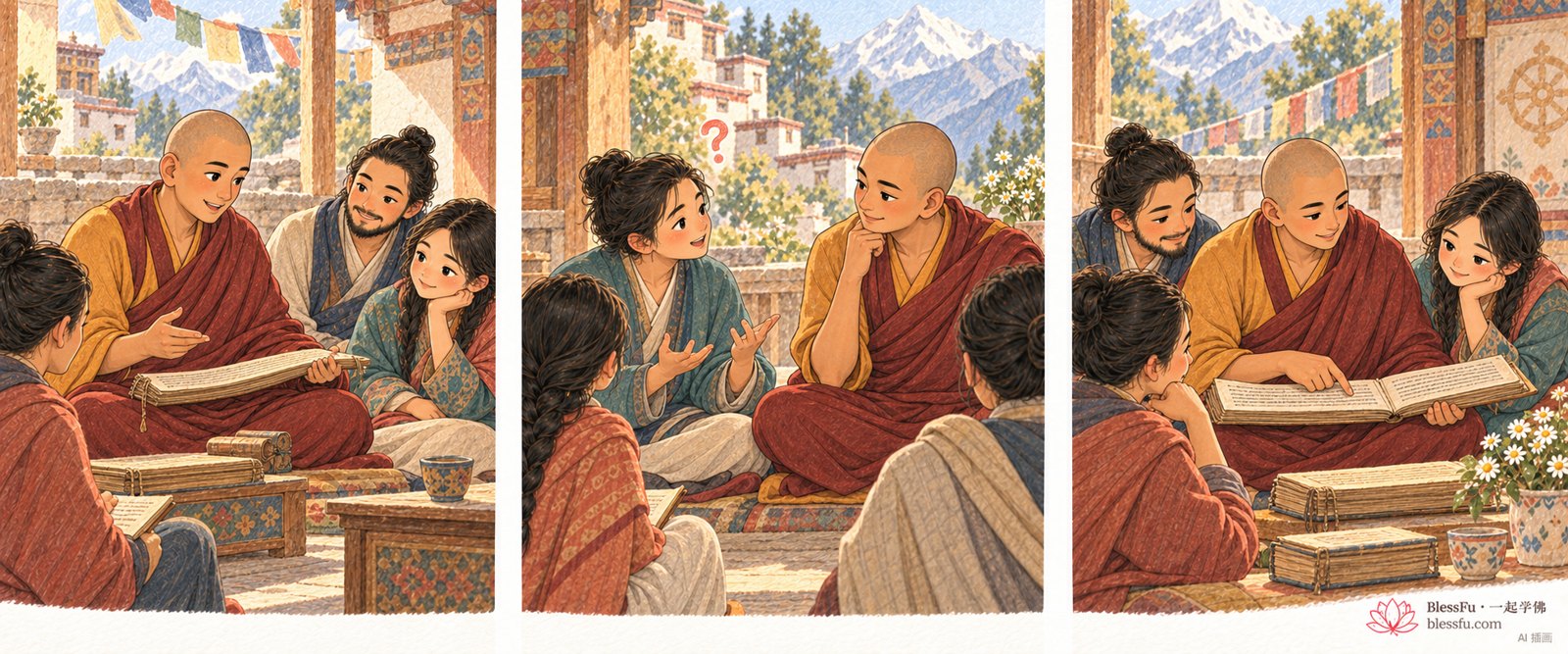 Lesson 26
Atisha: Learning with Humility
Meet Atisha and practise humility without putting yourself down.
 Lesson 27
The Intention in a Small Lamp
Explore generosity through Nanda’s lamp without comparing the price of gifts.
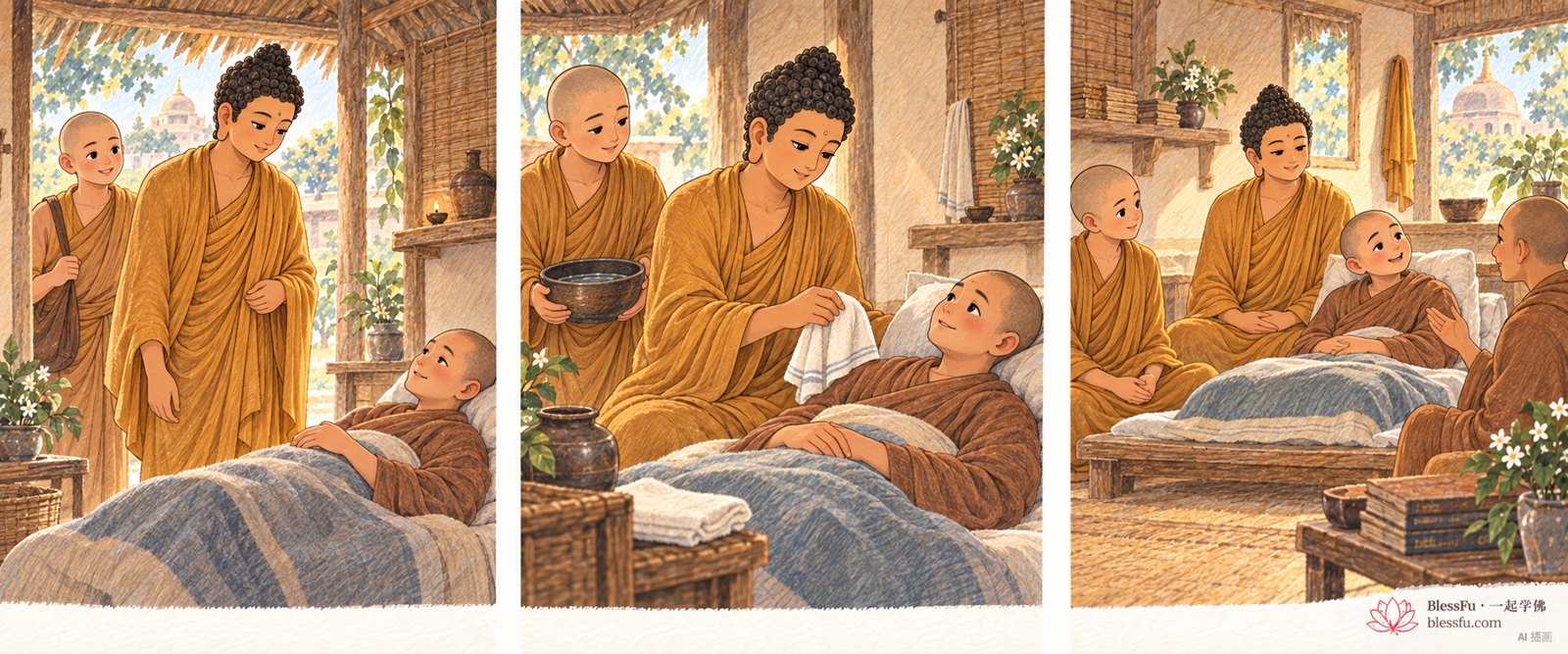 Lesson 28
The Buddha Cares for a Sick Monk
Notice responsibility for care and know when children should ask adults for help.
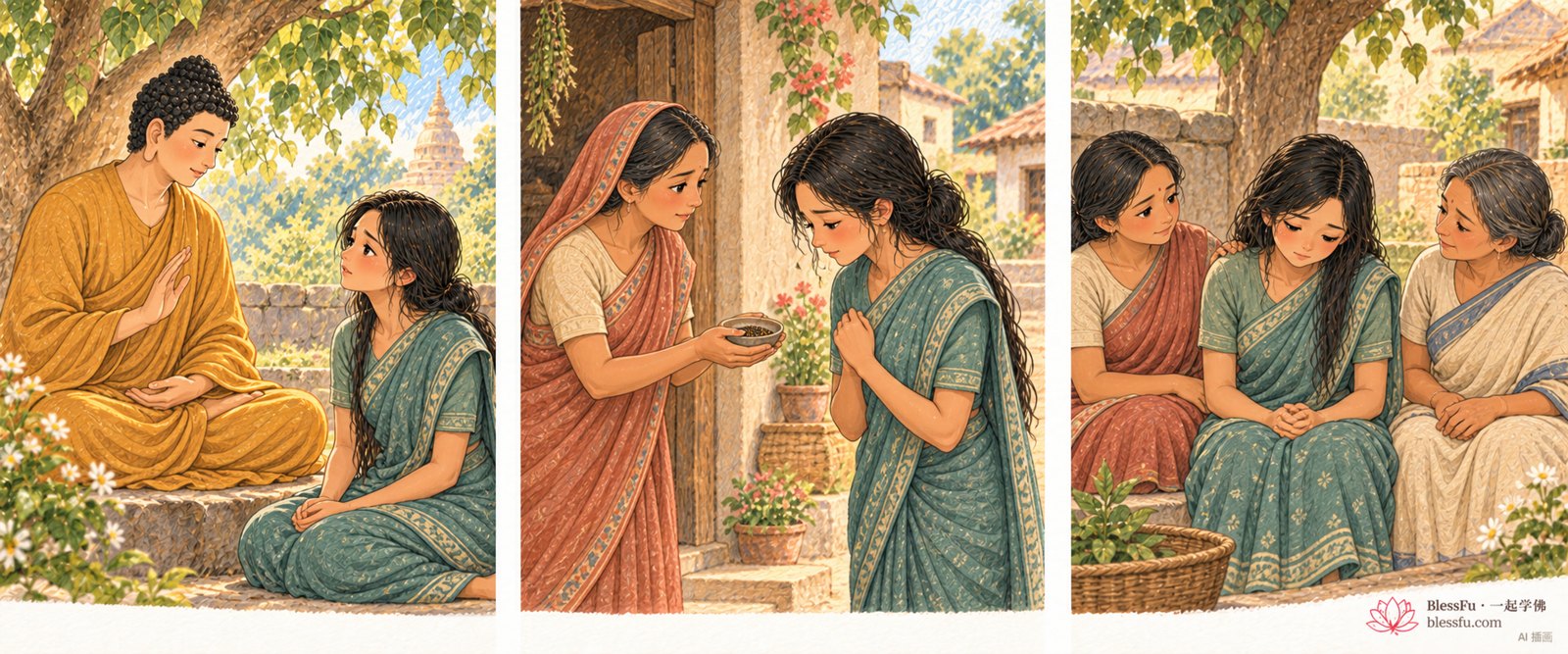 Lesson 29
A Mustard Seed: Company in Sadness
With an adult, recognise grief and the choice to talk, pause or skip.
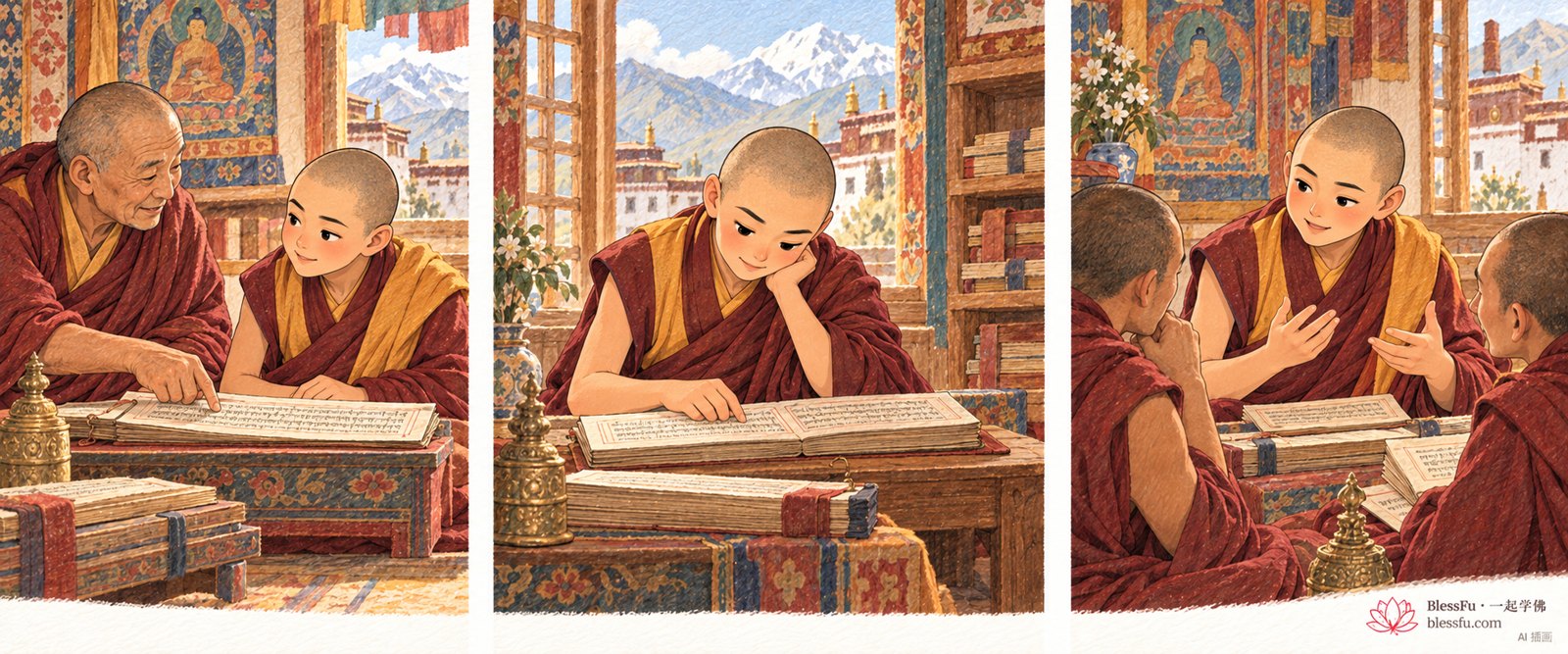 Lesson 30
Tsongkhapa: Learning a Little Deeper
Meet Tsongkhapa as a learner and choose a question to explore.
6. Buddhist figures and traditions
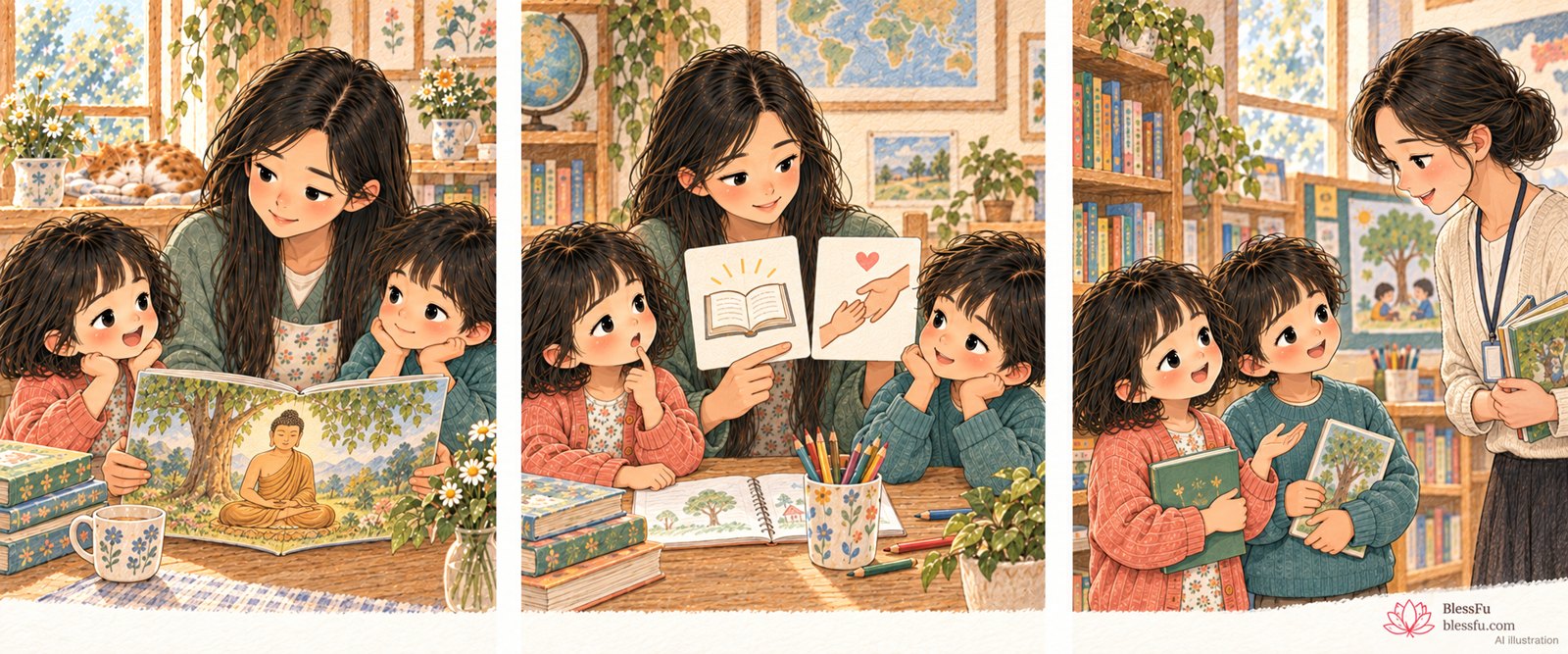 Lesson 31
Buddhas, Bodhisattvas and Teachers
Begin to distinguish three terms and practise respectful questions.
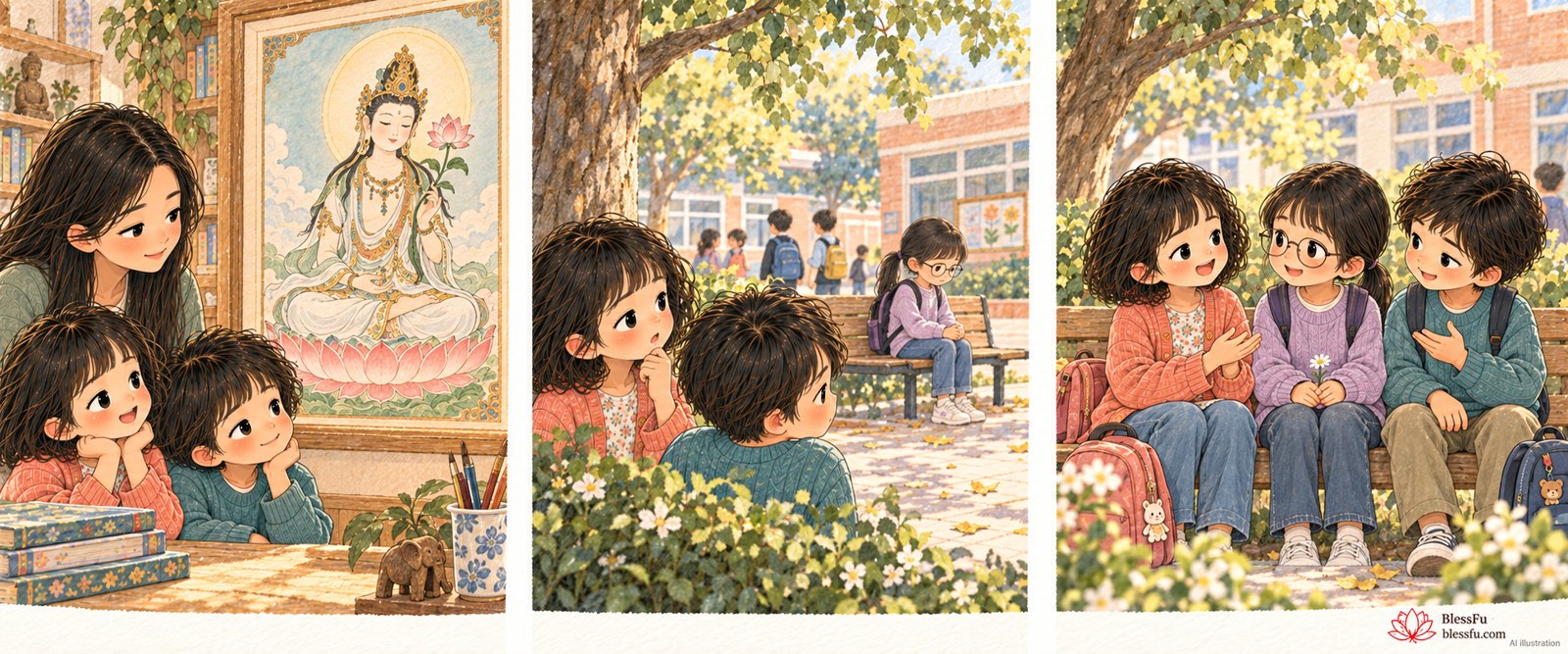 Lesson 32
Avalokiteshvara: Listen and Care
Recognize a theme of compassion and ask before helping.
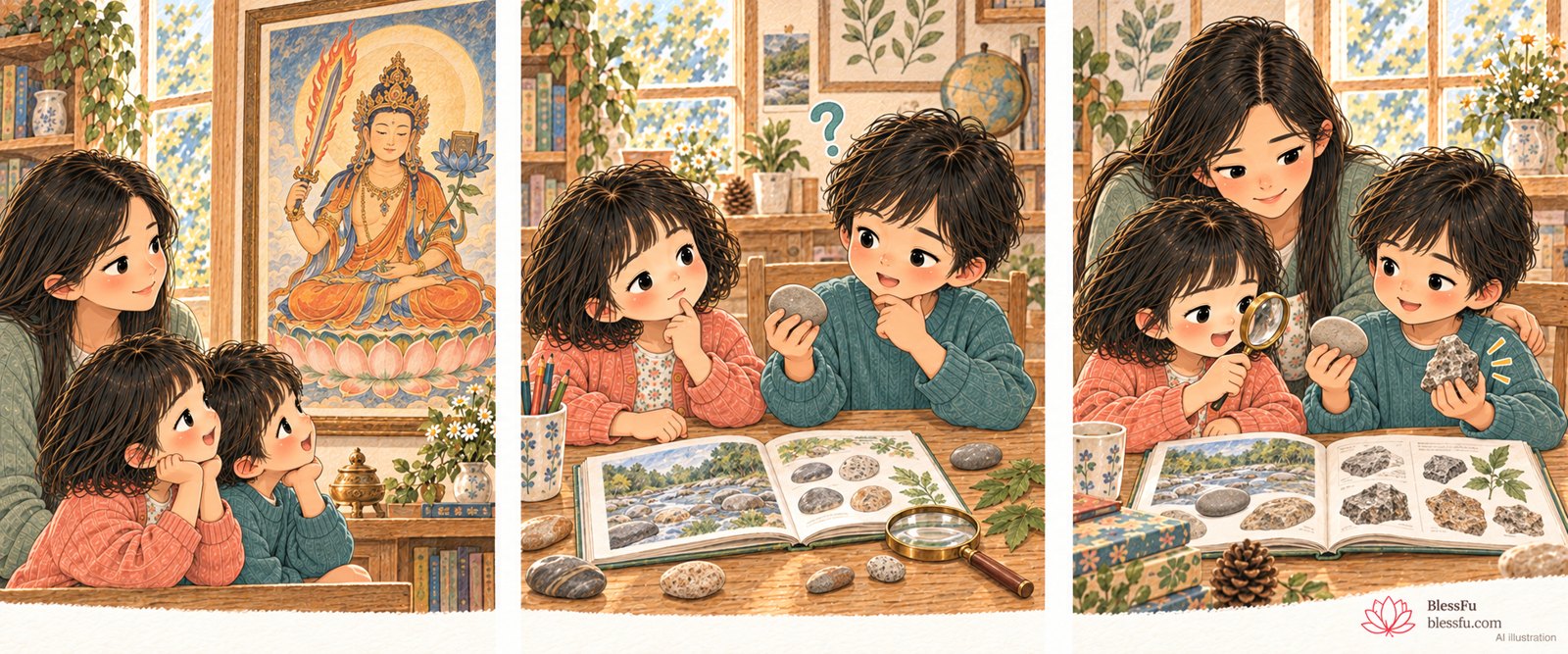 Lesson 33
Manjushri: Ask and Look Again
Explore a wisdom symbol and distinguish observation from a guess.
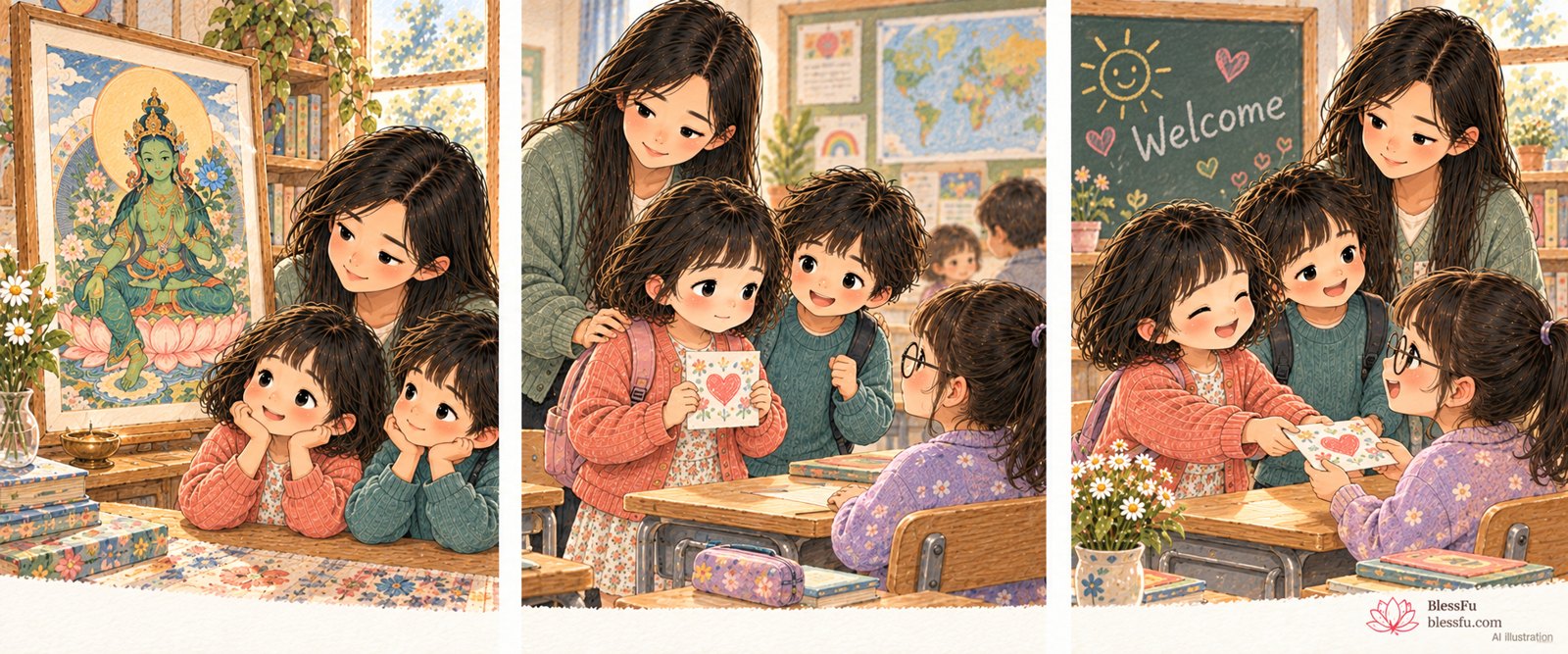 Lesson 34
Tara: One Brave Little Step
Recognize Green Tara and try a safe, gentle act of care.
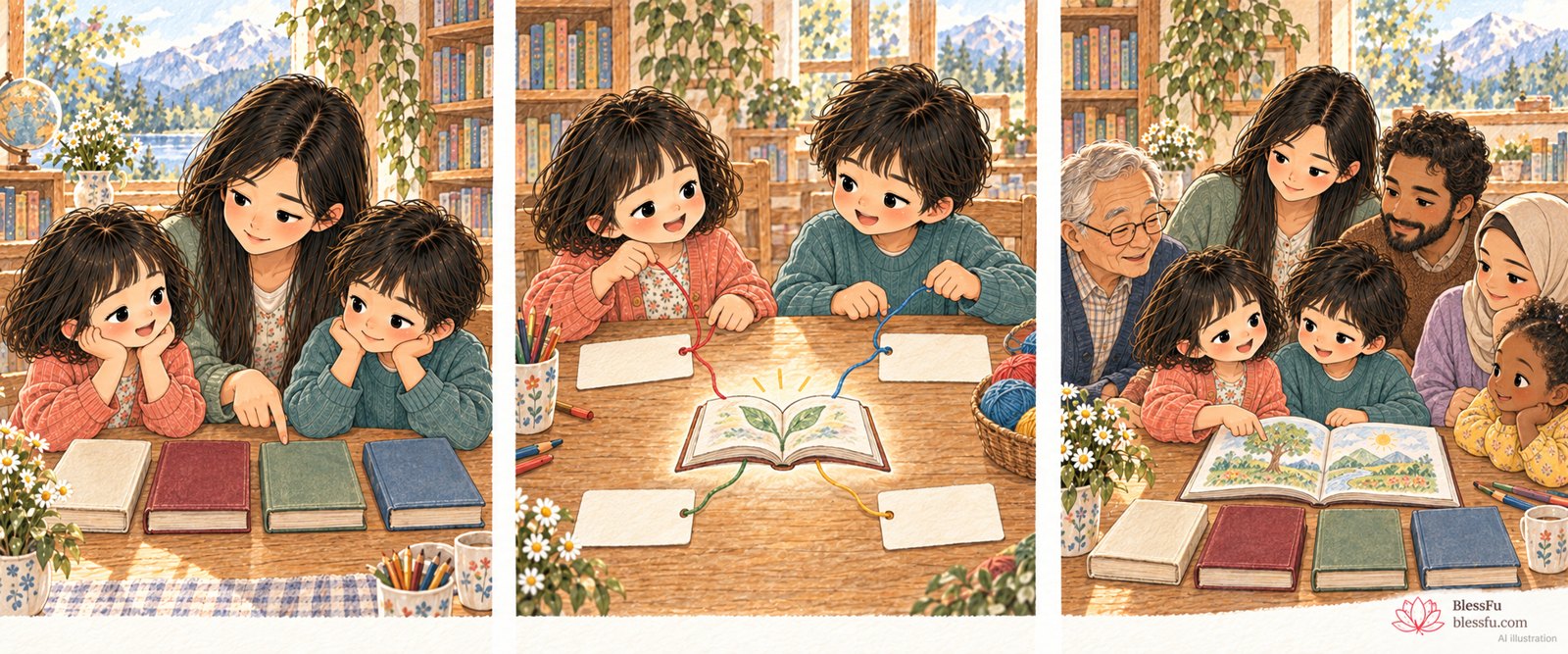 Lesson 35
Four Traditions, Shared Curiosity
Recognize four names and approach differences with respect.
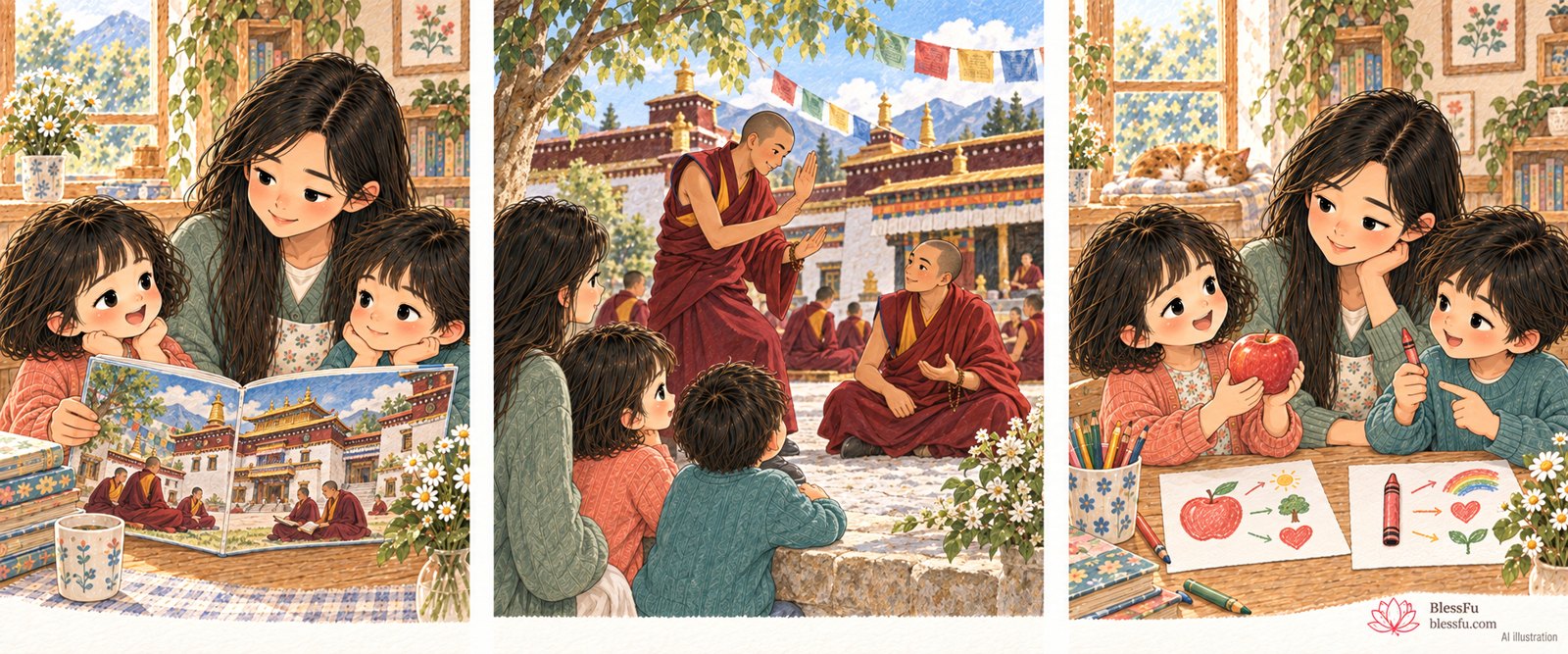 Lesson 36
Learning in a Monastery
Explore study and debate, giving reasons without attacking people.
7. Temples and culture
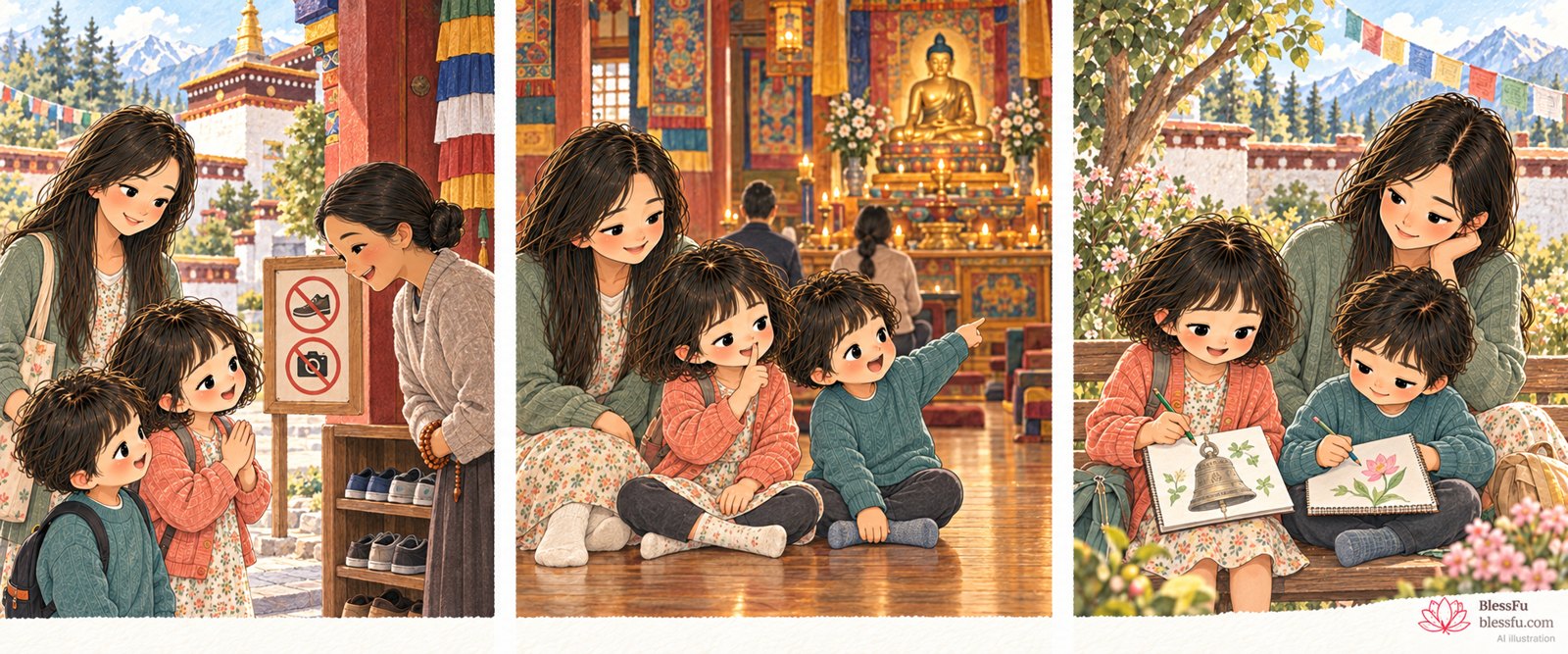 Lesson 37
Our First Temple Visit
Practise observing, asking and visiting without interrupting others.
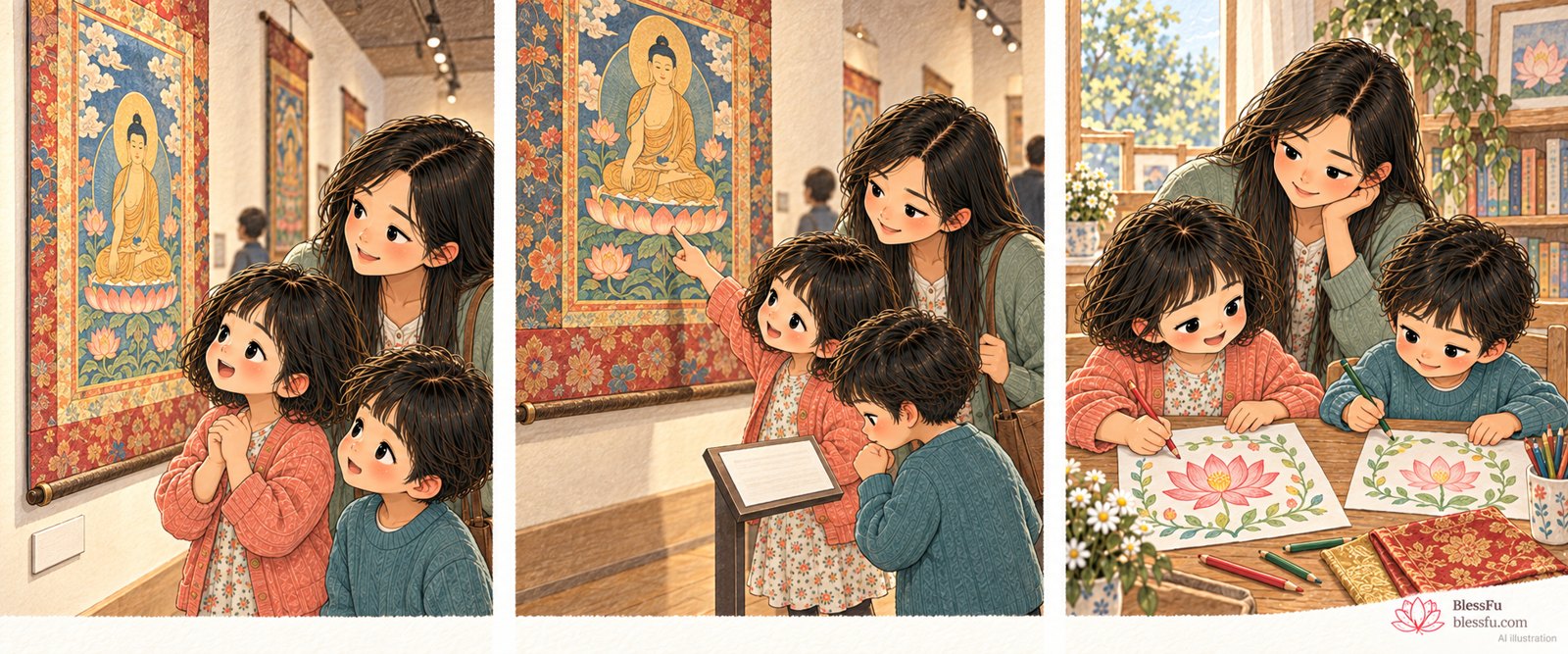 Lesson 38
What Is Inside a Thangka?
Recognize a thangka and separate observation from guesses.
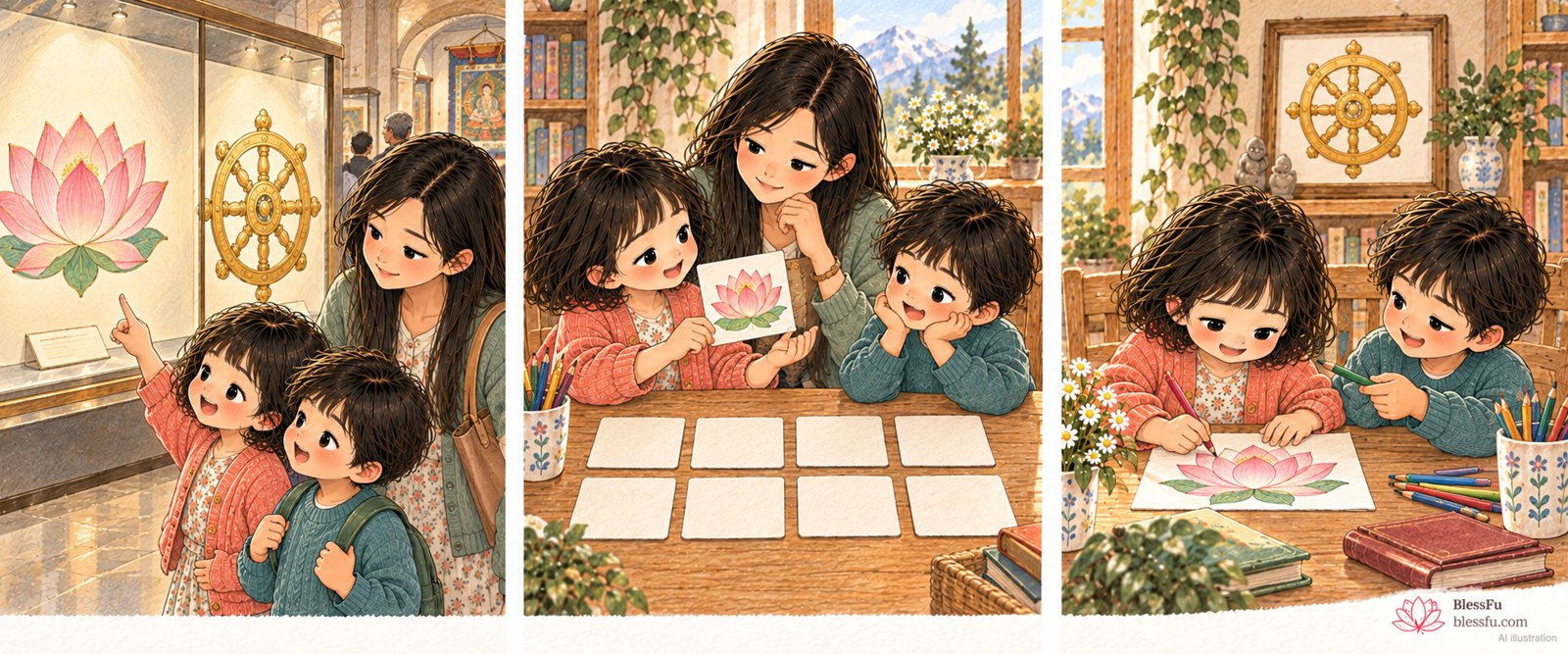 Lesson 39
Eight Auspicious Patterns
Meet the eight names and explore the lotus and Dharma wheel.
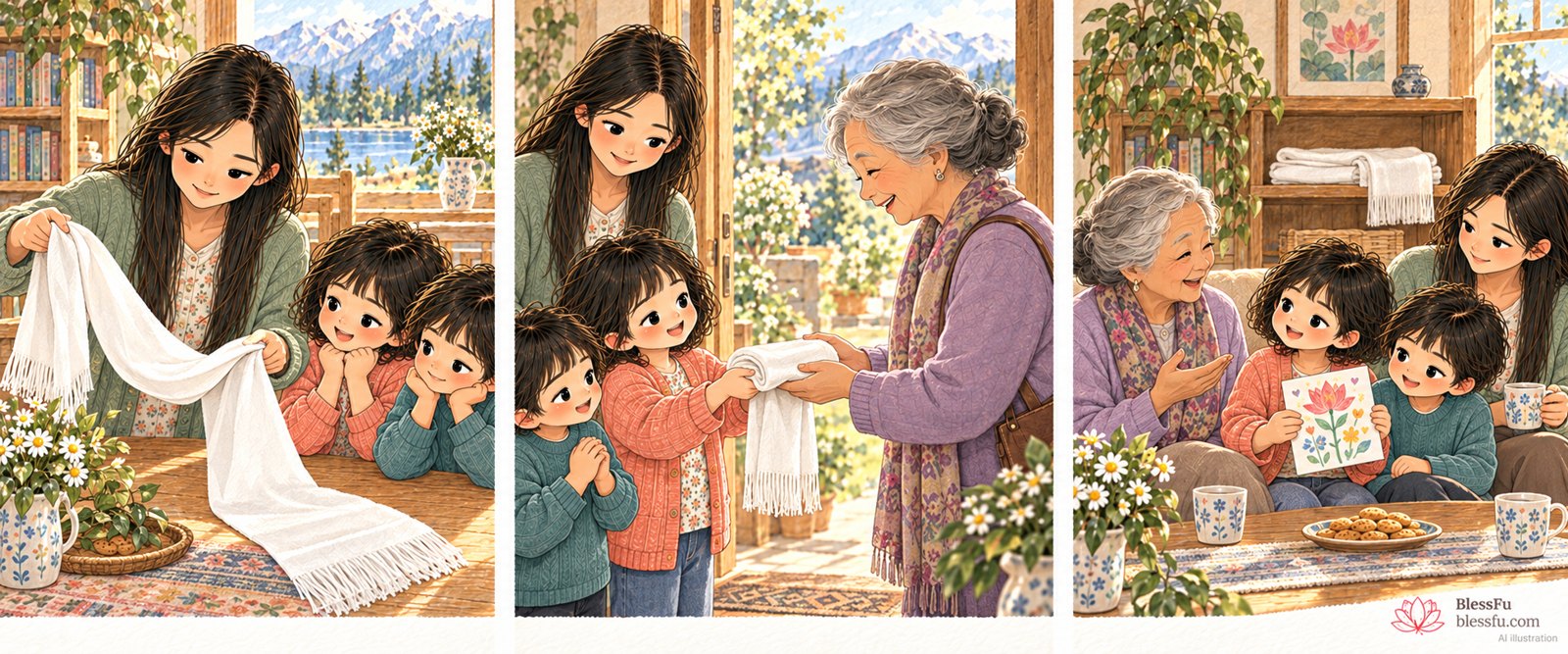 Lesson 40
A Khata and a Welcome
Learn what a khata is and express welcome and gratitude.
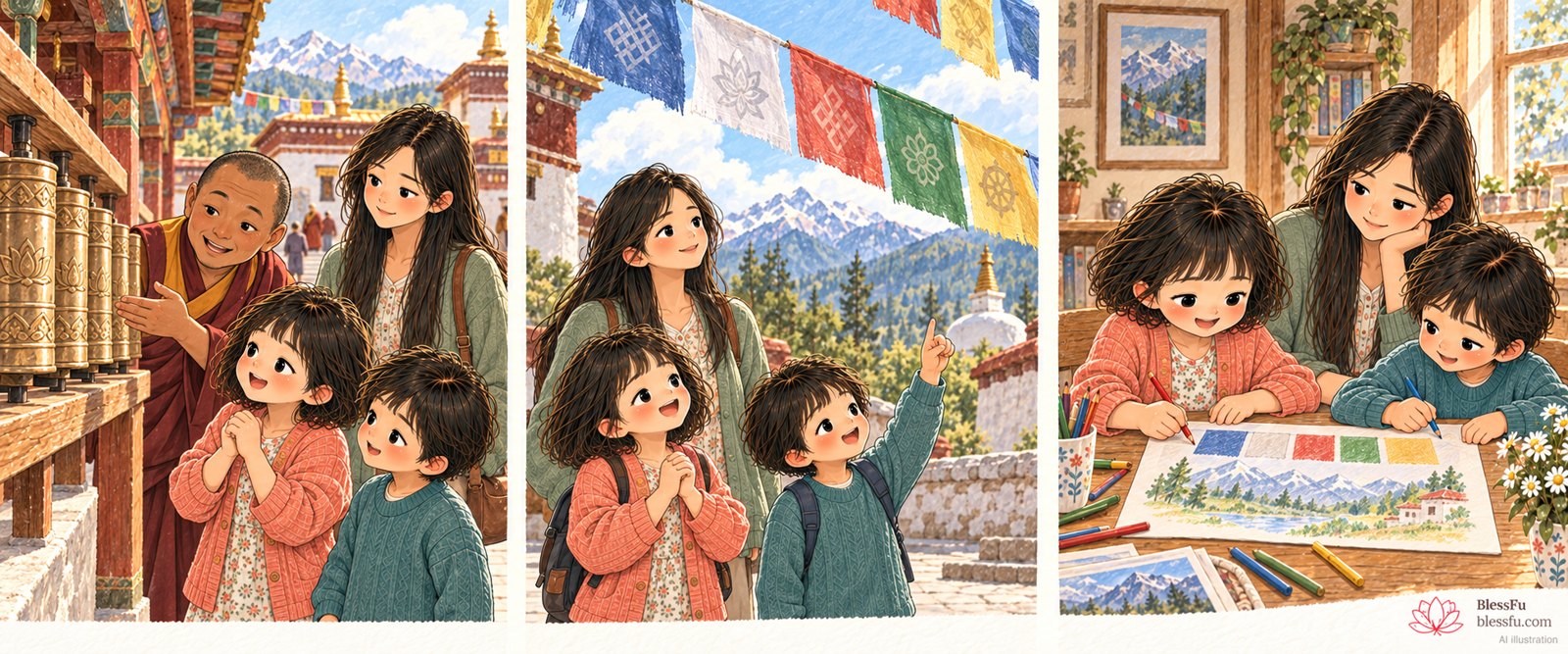 Lesson 41
Prayer Wheels and Flags
Distinguish prayer wheels from flags and learn respectful observation.
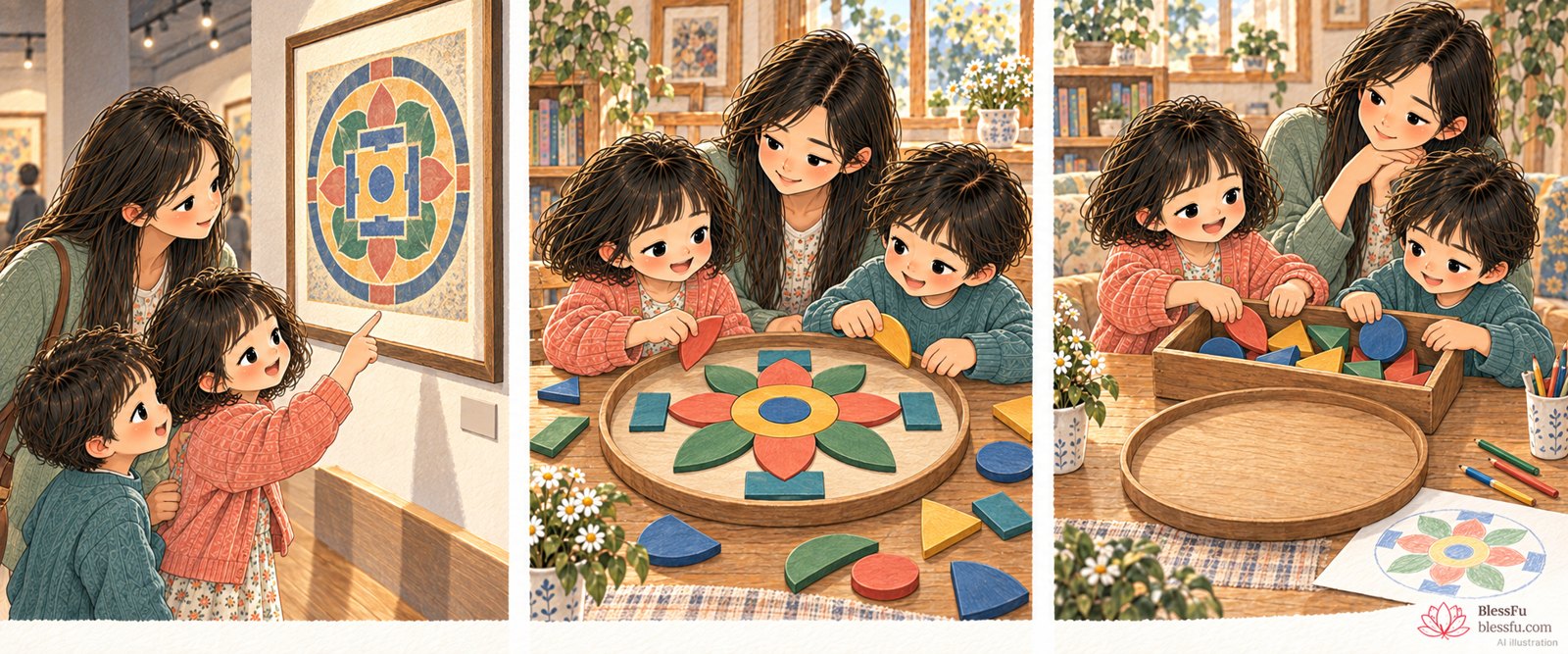 Lesson 42
Looking at a Mandala
Explore mandala art, then use an ordinary pattern game to reflect on cooperation and change.
8. Bringing learning into life
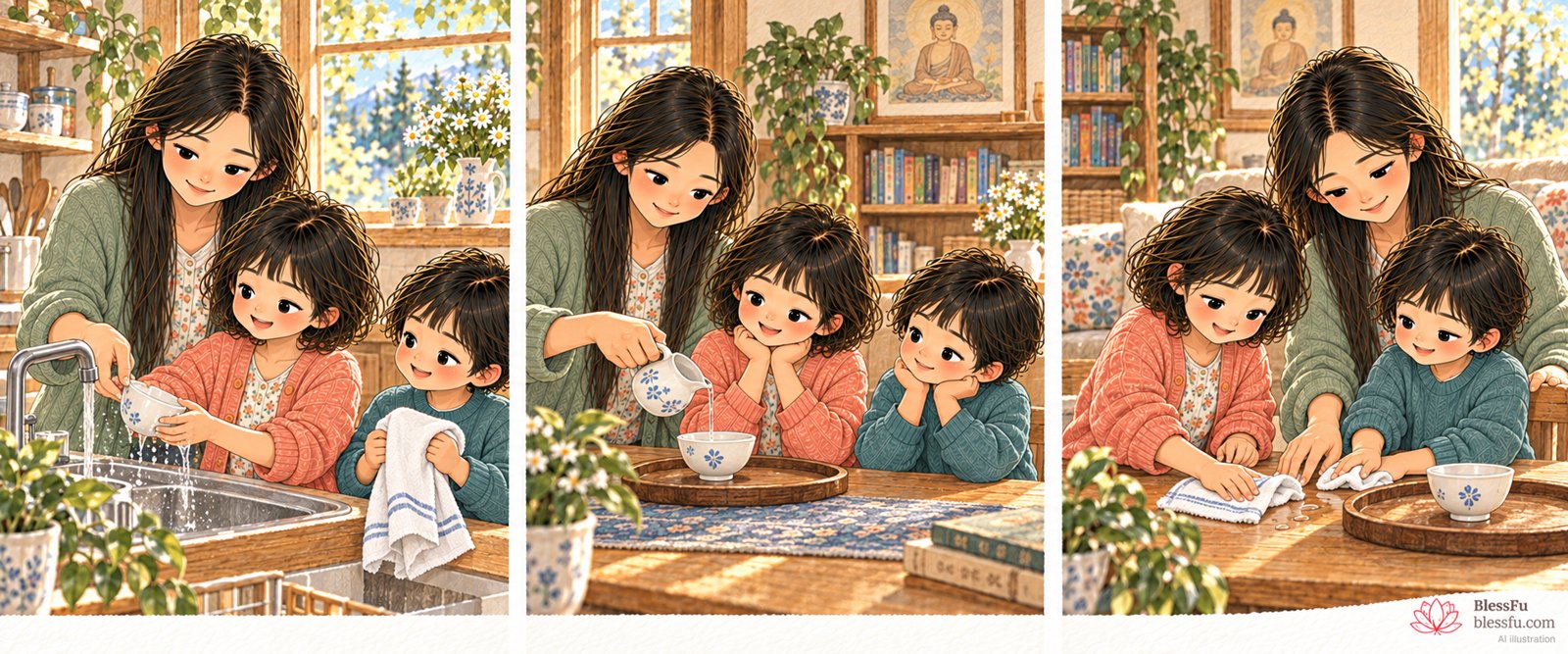 Lesson 43
A Small Bowl of Water
Meet water offerings and practise preparing and tidying with care.
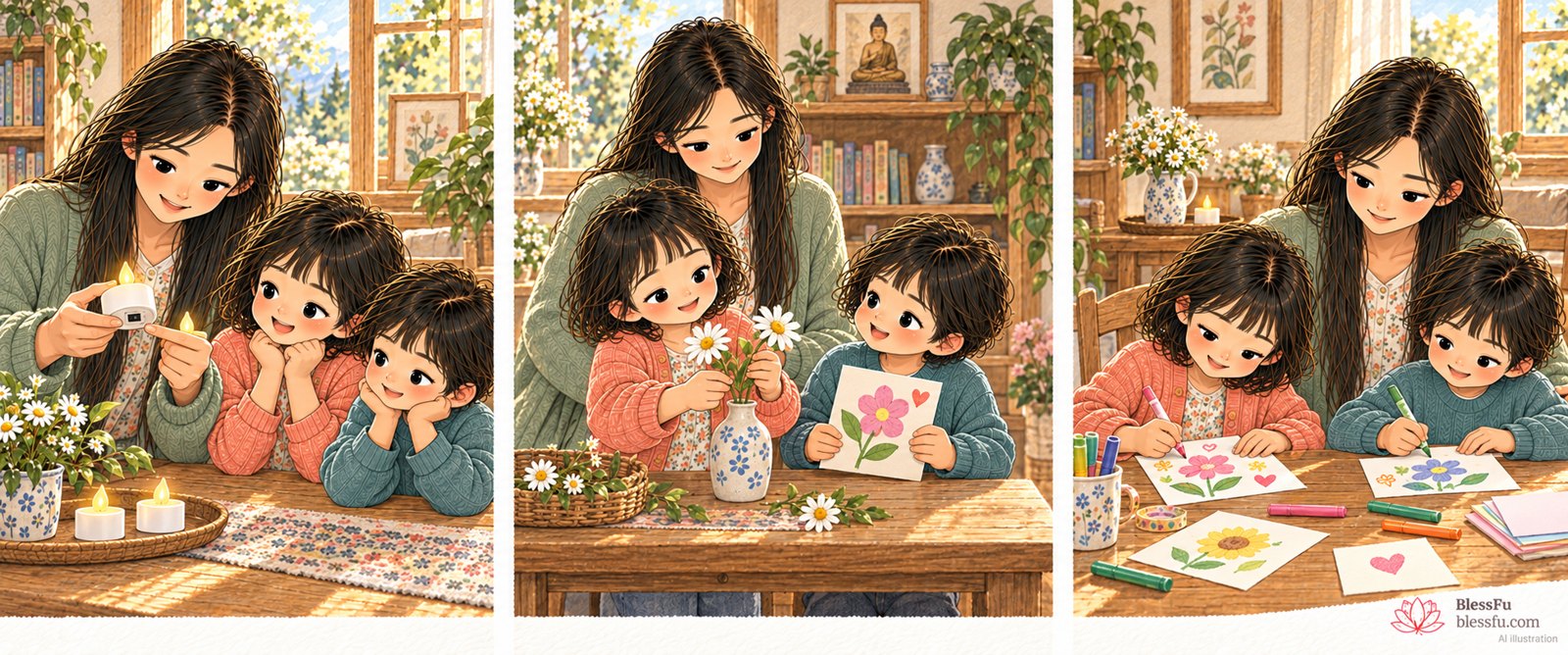 Lesson 44
Light and Flower Offerings
Explore light and flower offerings through simple, thoughtful participation.
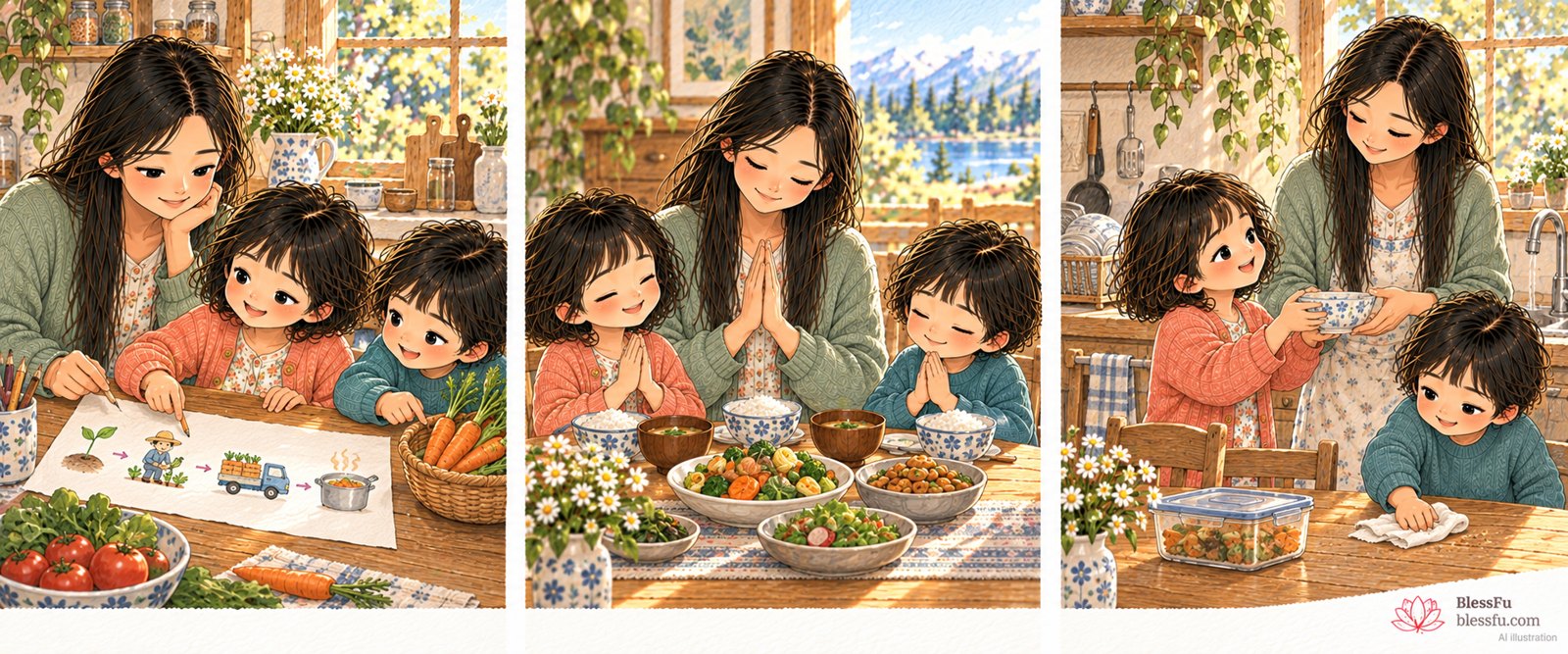 Lesson 45
A Pause Before We Eat
Notice the work behind a meal and practise gratitude and taking what we need.
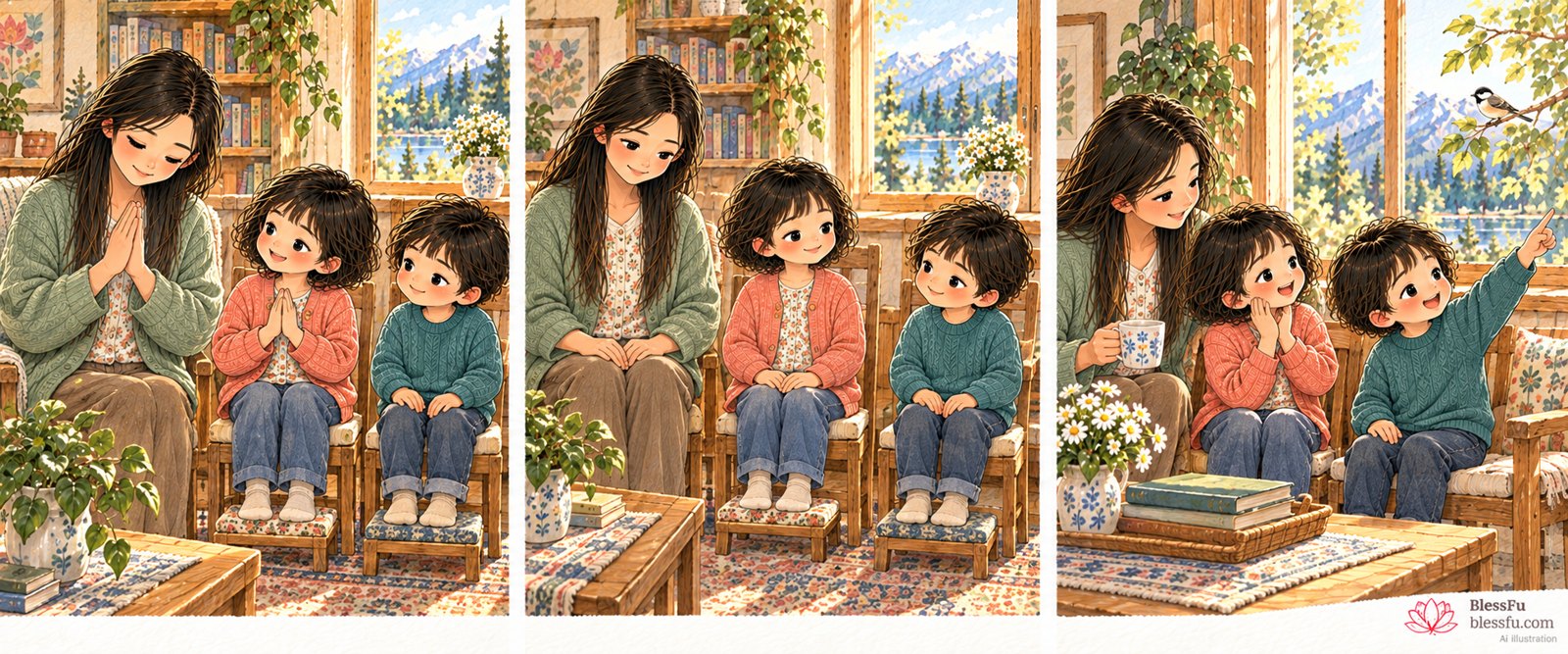 Lesson 46
A Comfortable Quiet Moment
Meet joined palms and recitation, and try a short, voluntary quiet pause.
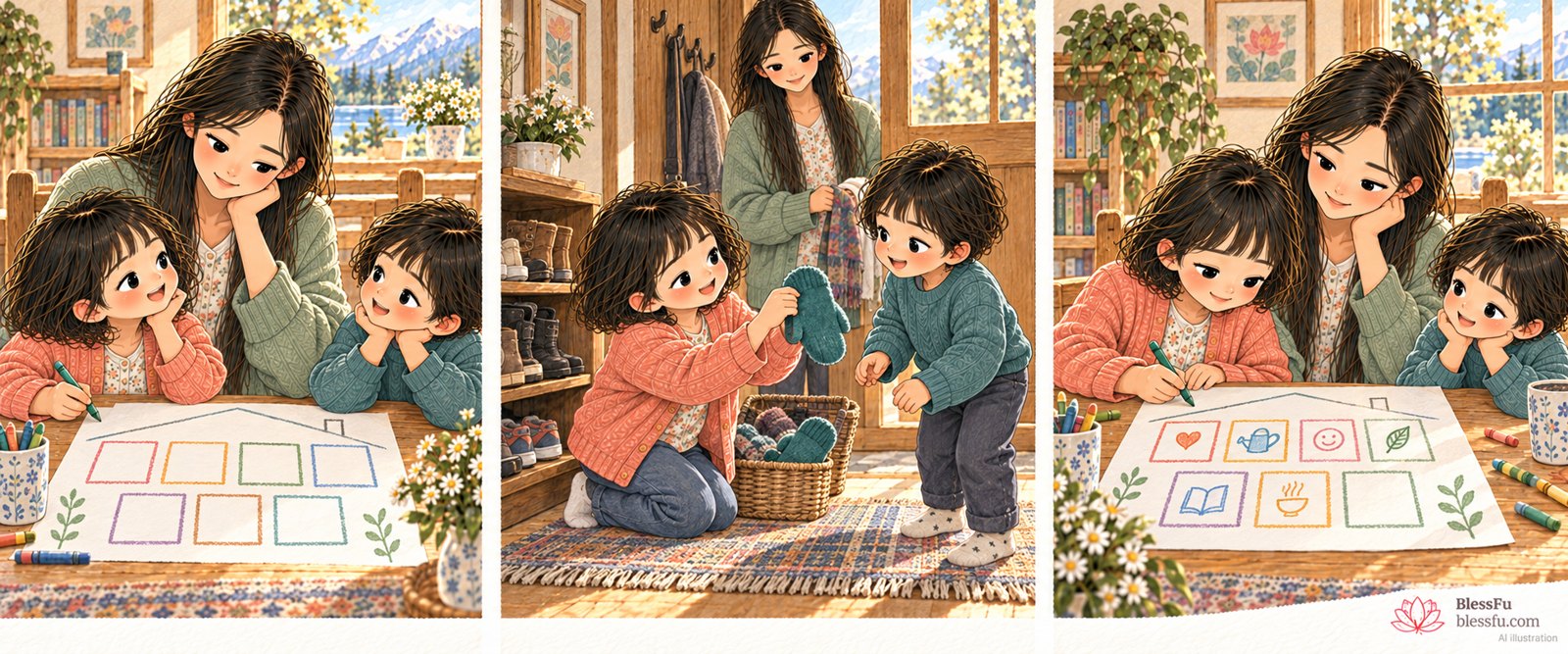 Lesson 47
Seven Days of Small Kindnesses
Choose manageable kind actions and use a record for reflection, not comparison.
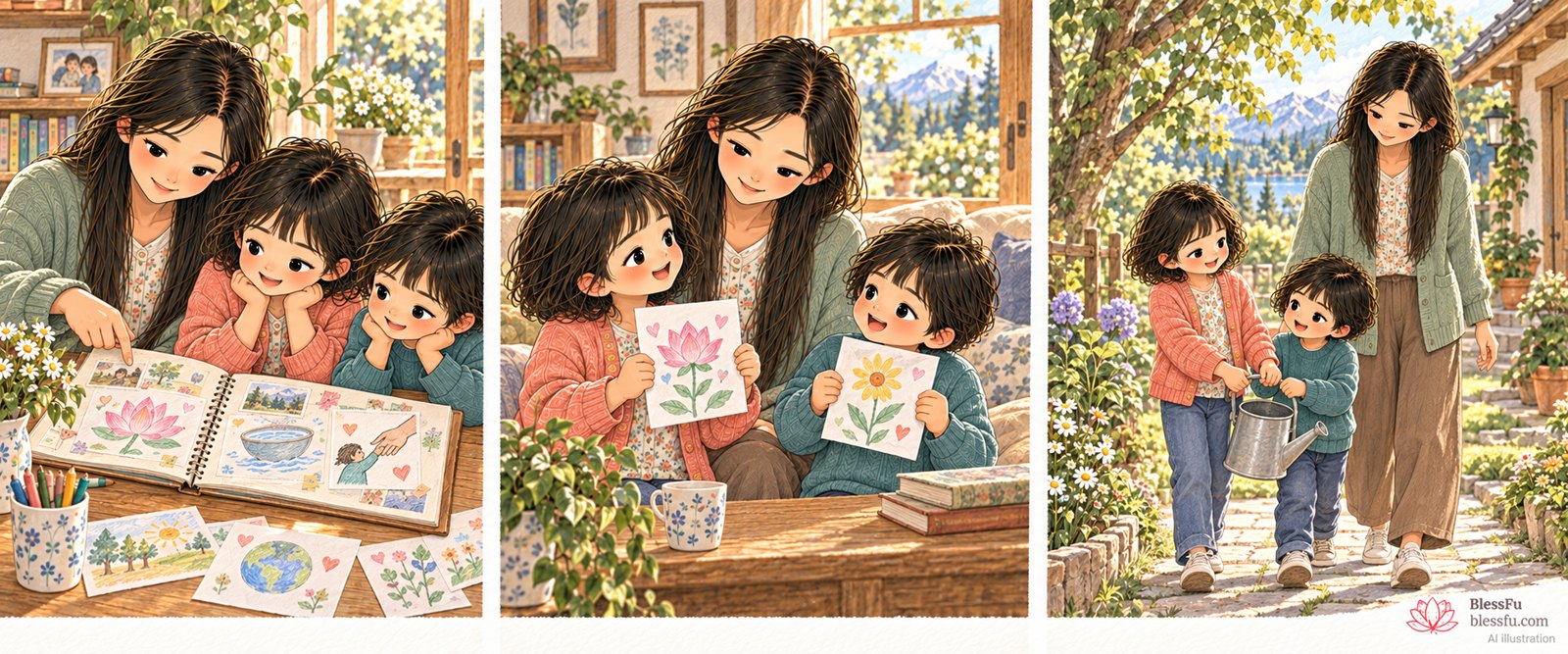 Lesson 48
Let Our Good Wishes Grow
Reflect on learning, meet dedication in accessible words and choose a next step.