
Amitabha
The Buddha of Sukhavati (the Land of Bliss) in the west; his name means "Infinite Light."
Watch the video
Who he is
Amitabha's Sanskrit name is Amitābha, meaning "infinite light." In Tibetan he is called Öpame. He is the Buddha of Sukhavati, the Land of Bliss in the west.
The small Buddha figure above the head of Avalokiteshvara (Chenrezig) is Amitabha. In the Gelug school, the Panchen Lama of Tashilhunpo is traditionally regarded as an emanation of Amitabha.
What he does
He vowed to establish a land without suffering, called Sukhavati. He receives those who wish to go there, so that they are reborn there and continue practicing there until they become Buddhas.
What people pray to him for
Traditionally, people pray to Amitabha for:
- A peaceful death and rebirth in Sukhavati
- Blessings for relatives who have died
- A mind filled with light, not overshadowed by fear
Mantra
OṂ AMIDEVA HRĪḤ
This is the heart mantra of Amitabha commonly recited in Tibet. In Chinese Buddhism, people recite his name: "Namo Amitabha Buddha." Both are openly taught; anyone may recite them.
Story: The forty-eight vows of the monk Dharmakara
Long, long ago, a king heard a Buddha's teaching, gave up his throne, and became a monk. His monastic name was Dharmakara.
Before the Buddha, the monk Dharmakara made forty-eight great vows. The most important of them was this: when I become a Buddha in the future, anyone who sincerely believes and wishes to come to my land will surely be able to come, even with only ten thoughts; if this cannot be done, I will not become a Buddha. Later generations understood the "ten thoughts" as reciting his name. This is the origin of the practice of reciting the Buddha's name.
After a very long time of practice, he fulfilled all his vows and became Amitabha. That land is Sukhavati in the west.
How to recognize him
- Red body, monk's robes
- Both hands in the lap in the meditation gesture, holding an alms bowl
- How he differs from Amitayus: Amitabha wears monk's robes and holds an alms bowl; Amitayus wears a jeweled crown and holds a long-life vase
The images
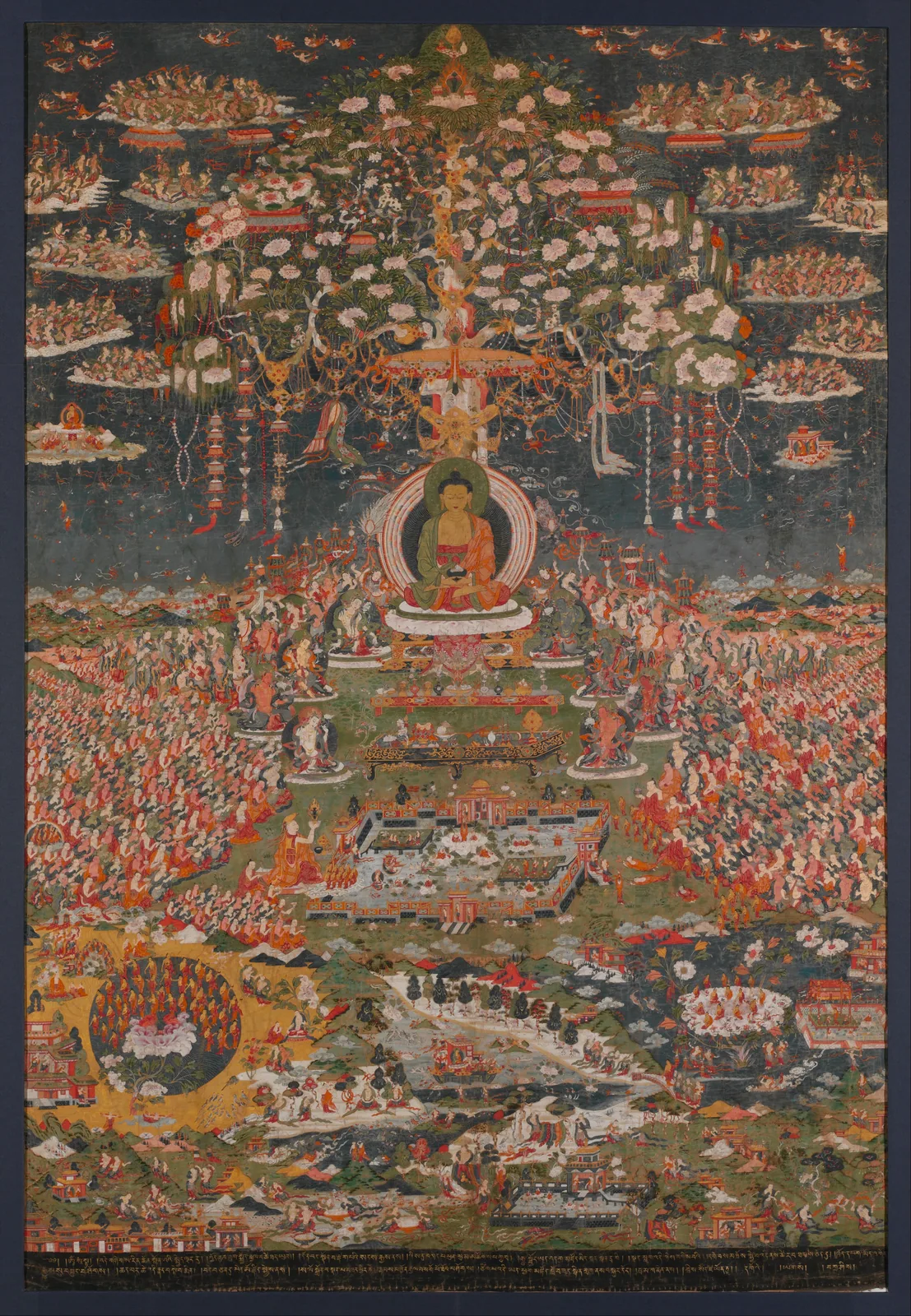
- Date: c. 1700 (Qing dynasty, Kangxi reign)
- Origin and medium: Central Tibet · thangka, distemper and gold on cloth, Amitabha and Sukhavati
- Collection: The Metropolitan Museum of Art, accession no. 2004.139 · Public domain
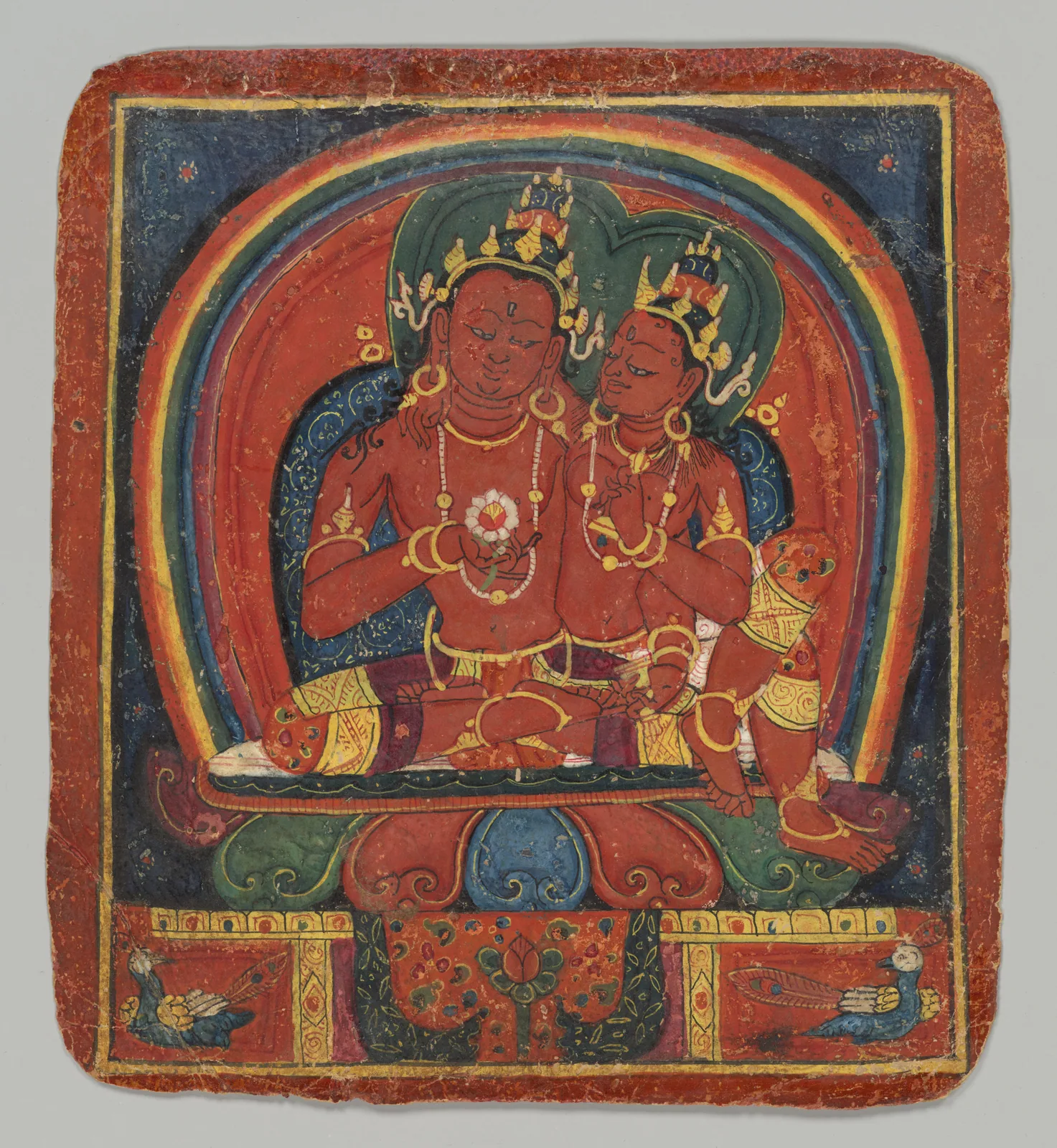
- Date: Early 15th century (Ming dynasty, around the Yongle reign)
- Origin and medium: Tibet · tsakali (initiation card), color on paper
- Collection: The Metropolitan Museum of Art, accession no. 2000.282.4 · Public domain
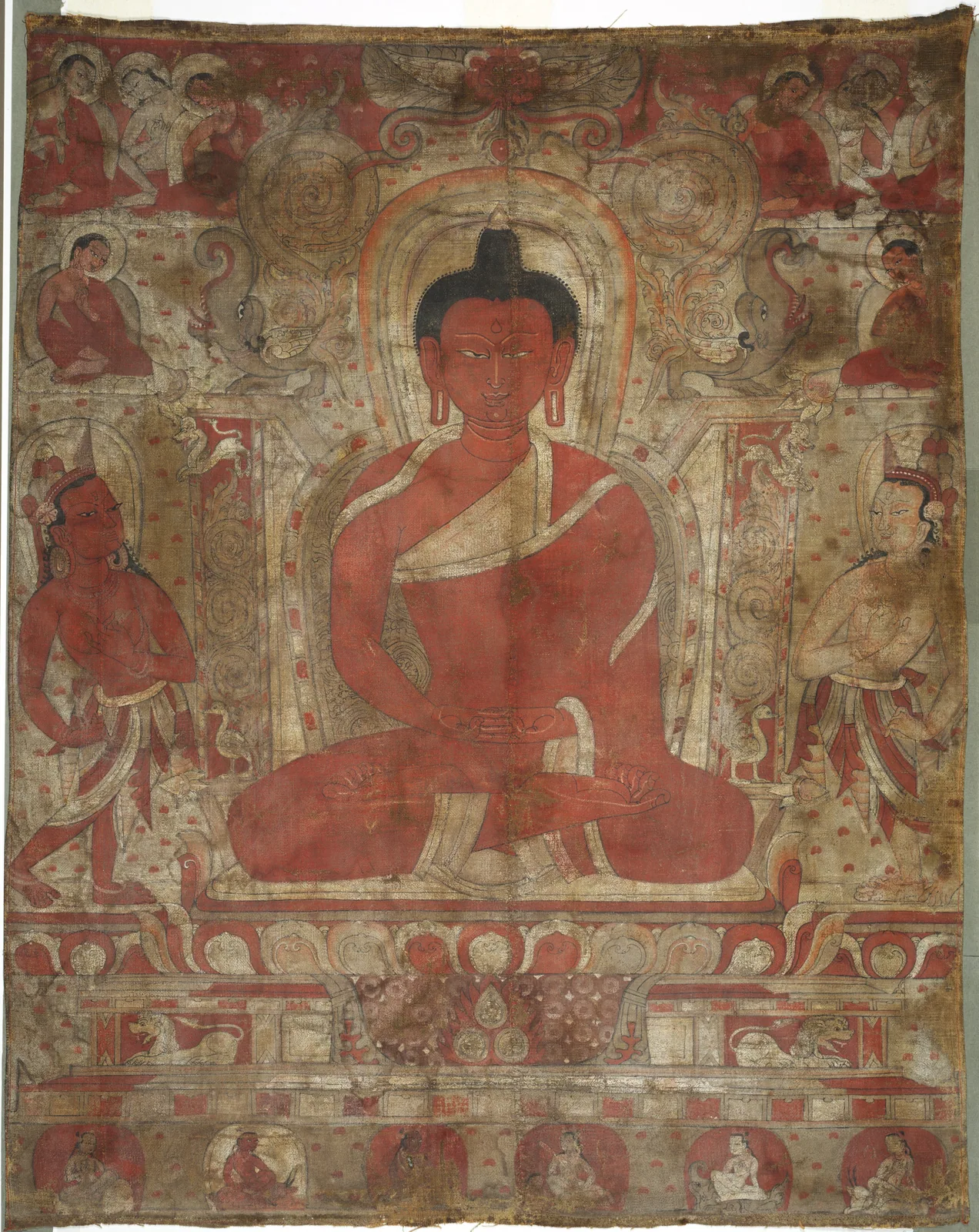
- Date: c. 12th century (roughly the Song period)
- Origin and medium: Tabo Monastery, western Himalayas · painting, Amitabha with attendants
- Collection: Cleveland Museum of Art, accession no. 2000.68 · CC0