
Shakyamuni Buddha
The founder of Buddhism and the source of all its teachings; Buddhists call him the "Original Teacher."
Watch the video
Who he is
Shakyamuni Buddha was a real person who lived more than 2,500 years ago. His given name was Siddhartha. He was a prince of the Shakya clan in ancient India, born in Lumbini (in present-day Nepal).
At 29 he left the palace and became a renunciant, searching for a way to end the suffering of birth, aging, sickness, and death. At 35 he awakened and became a Buddha under the bodhi tree at Bodh Gaya. For more than forty years afterward he traveled both banks of the Ganges teaching. At 80 he passed into final nirvana at Kushinagar.
"Shakyamuni" means "sage of the Shakya clan."
What he does
He is a teacher. He did not say, "Believe in me and you will be saved." Instead he described the path he had walked through himself, and left each person to walk it on their own. All the scriptures and all the practices of today have their source in him.
What people pray to him for
Traditionally, people pray to Shakyamuni Buddha for:
- A path of practice that is true and steady
- Growing wisdom and a settled mind
- Meeting good teachers and teachings
Mantra
OṂ MUNE MUNE MAHĀMUNAYE SVĀHĀ
In Tibetan recitation, TADYATHĀ is often added at the front. Some prayer books also write the two words MUNE MUNE as MUNI MUNI; these are different spellings of the same mantra. It is openly taught; anyone may recite it. The practice of any Buddha or bodhisattva begins by first paying homage to Shakyamuni Buddha, the Original Teacher.
Story: The earth bears witness
On the night the Buddha was about to awaken, the demon king came with his army of demons to disturb him. At last he challenged him: "You say you have practiced for lifetime after lifetime and have earned the right to become a Buddha. Who can bear witness for you?"
The Buddha did not argue. He simply reached out his right hand and lightly touched the ground with his fingertips. At once the earth shook, bearing witness for him. The demon army scattered, and at daybreak he awakened and became a Buddha.
That is why the most common pose in images of Shakyamuni Buddha is the right hand reaching down to touch the ground and the left hand holding an alms bowl. This gesture is called the earth-touching gesture, also known as the "demon-subduing gesture."
How to recognize him
- Golden body, monk's robes, a rounded protuberance on the crown of the head
- Right hand touching the ground, left hand in the lap holding an alms bowl
- Two disciples often stand beside him: Shariputra and Maudgalyayana
The images
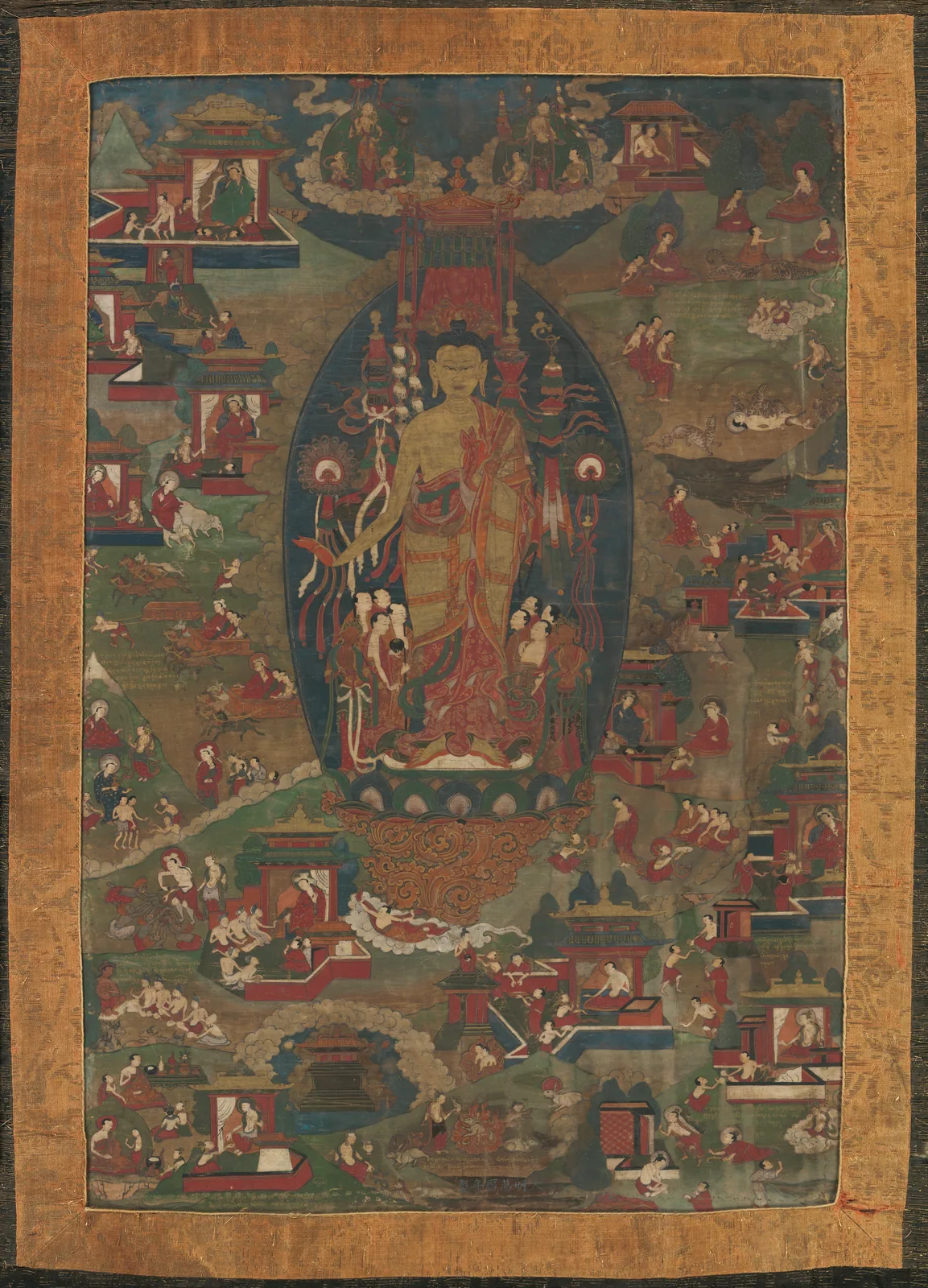
- Date: 1573–1619 (Ming dynasty, Wanli reign)
- Origin and medium: Tibet · thangka, distemper on cloth, the Buddha with stories of his previous lives
- Collection: The Metropolitan Museum of Art, accession no. 2012.461 · Public domain
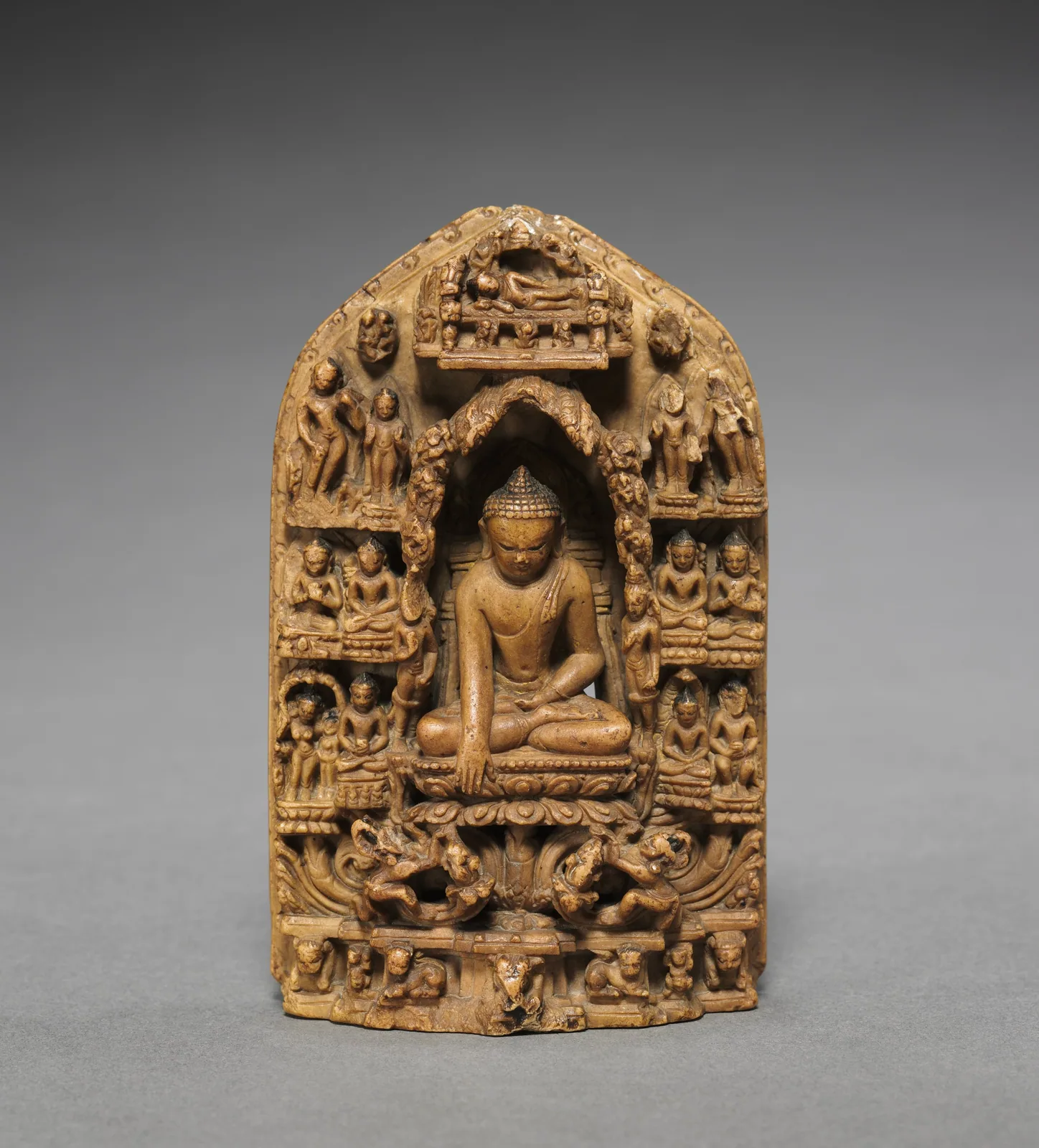
- Date: 11th–12th century (roughly the Northern Song period)
- Origin and medium: Northeastern India · stone sculpture, the Buddha's awakening, in the earth-touching gesture
- Collection: Cleveland Museum of Art, accession no. 1965.27 · CC0
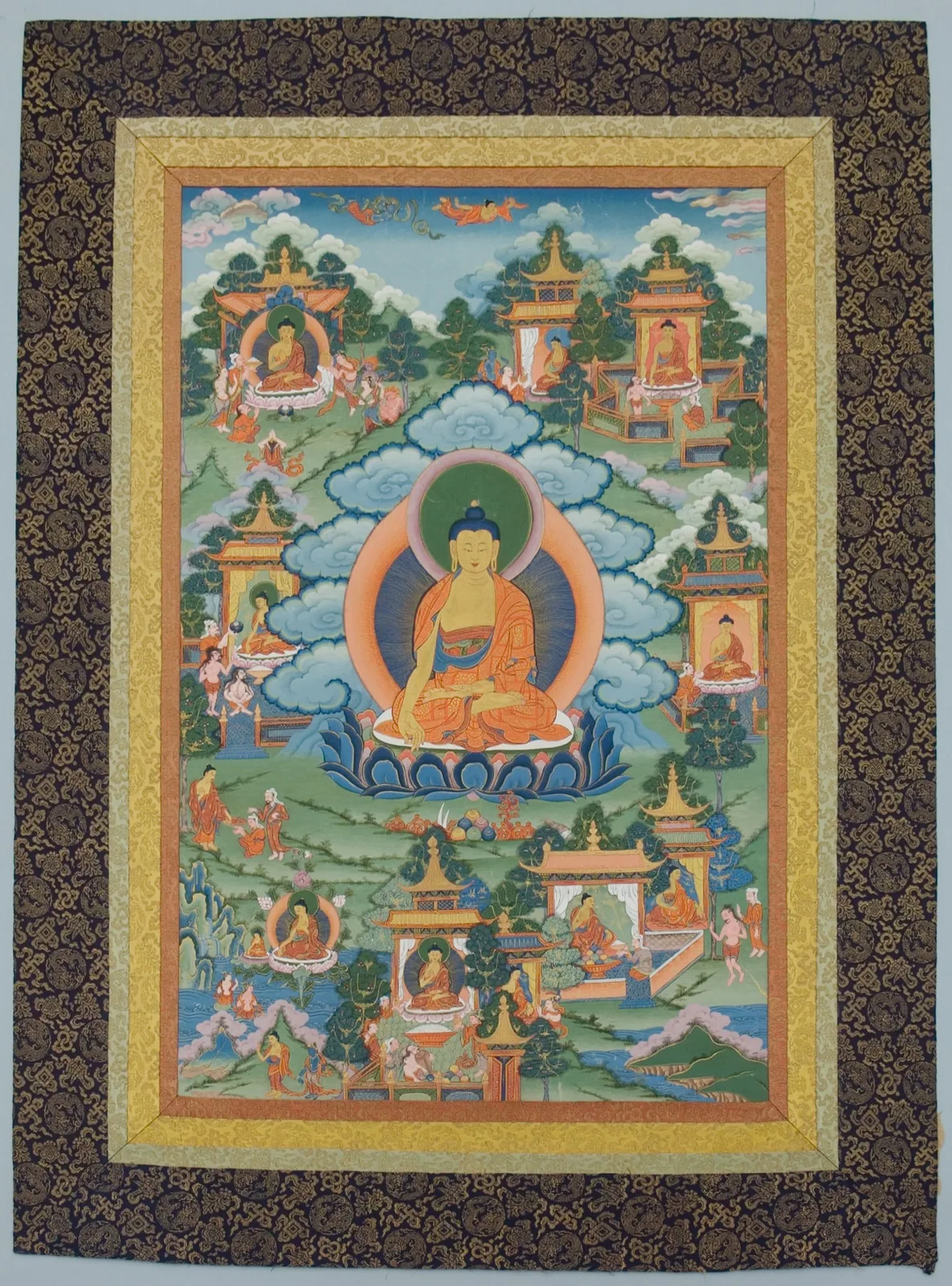
- Date: 19th century (Qing dynasty)
- Origin and medium: Tibet · thangka, distemper on cloth
- Collection: The Metropolitan Museum of Art, accession no. 1971.26.2 · Public domain