
Amitayus
The Buddha of long life. He and Amitabha are two forms of the same Buddha.
Watch the video
Who he is
Amitayus's Sanskrit name is Amitāyus, meaning "infinite life." In Tibetan he is called Tsepame, and popularly he is also known as the "Long-Life Buddha."
Amitabha's name carries two meanings: infinite light and infinite life. The form that wears monk's robes and holds an alms bowl is called Amitabha. The form that wears a jeweled crown and holds a vase is Amitayus.
Amitayus, White Tara, and Ushnishavijaya (Namgyalma) are known together as the Three Deities of Long Life.
What he does
He grants long life. Buddhism values long life not out of clinging to life, but because only while alive does one have the chance to practice and to help others.
What people pray to him for
Traditionally, people pray to Amitayus for:
- Health and long life
- Long life for parents, elders, and teachers
- Removing obstacles to one's lifespan during illness or in times of danger
Mantra
OṂ AMARAṆI JĪVANTAYE SVĀHĀ
It is openly taught; anyone may recite it. In Tibet, when wishing an elder a long life, people often bring home a statue of the Long-Life Buddha, or recite this mantra for the elder.
Story: Why Buddhists also pray for long life
Buddhism often says that "a human life is hard to come by": to be born human, to hear the Dharma, and to have the time and ability to practice. Having all these conditions at once is far from easy.
So in the Tibetan tradition, praying for the long life of teachers and elders is one of the most important ways that students and the younger generation show their care. Long-life ceremonies at monasteries are open to everyone; men and women, young and old, may all attend.
Alongside praying for long life, the tradition also stresses releasing captive animals, giving, and caring for the sick, and holds that these actions are themselves causes of long life.
How to recognize him
- Red body, wearing a jeweled crown and ornaments, the attire of a bodhisattva
- Both hands in the lap in the meditation gesture
- Holding a long-life vase in his hands, filled with the nectar of long life
The images
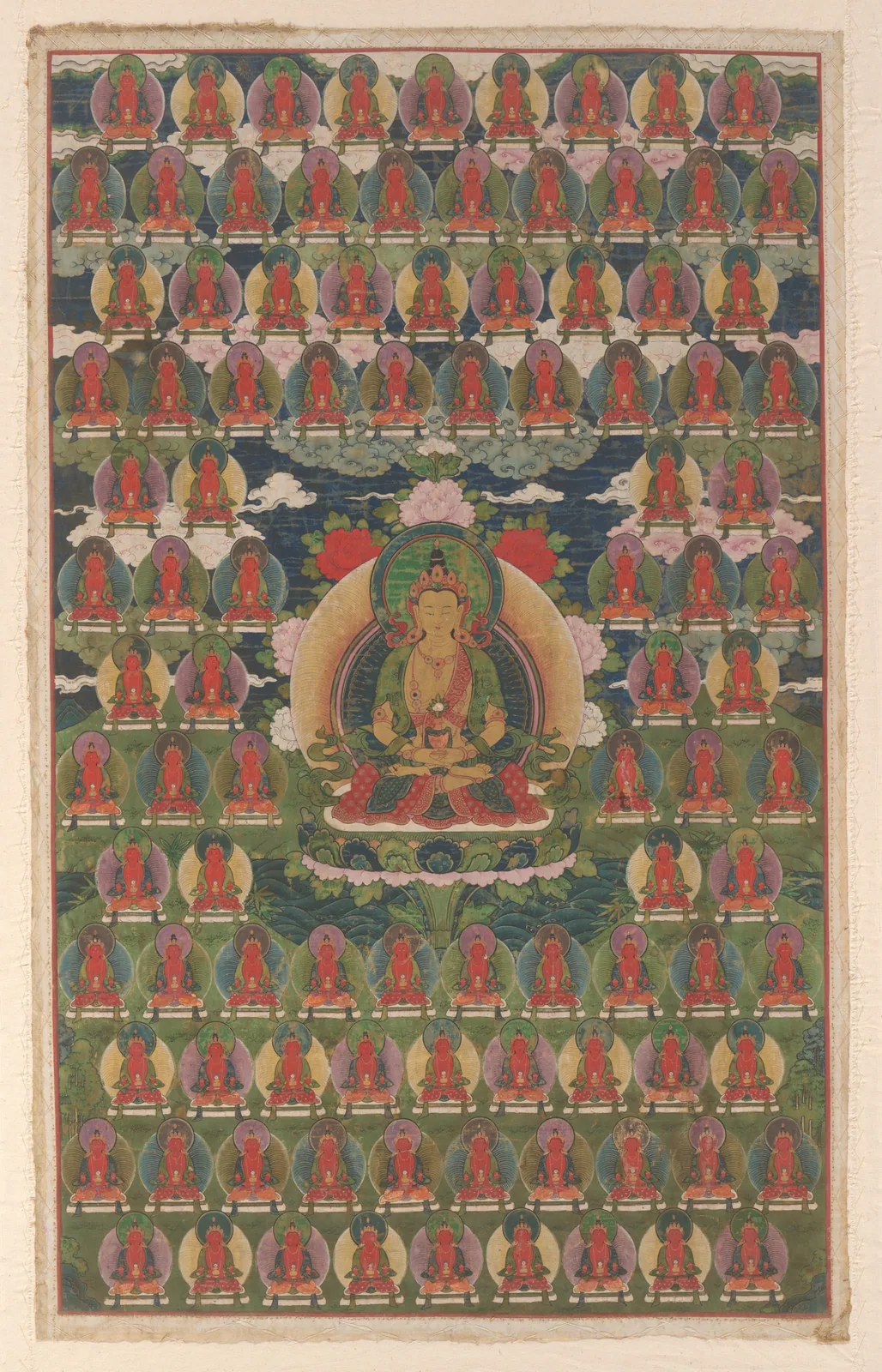
- Date: 18th–19th century (Qing dynasty)
- Origin and medium: Tibet · thangka, Amitayus with one hundred Buddhas
- Collection: Art Institute of Chicago, accession no. 1975.536 · CC0
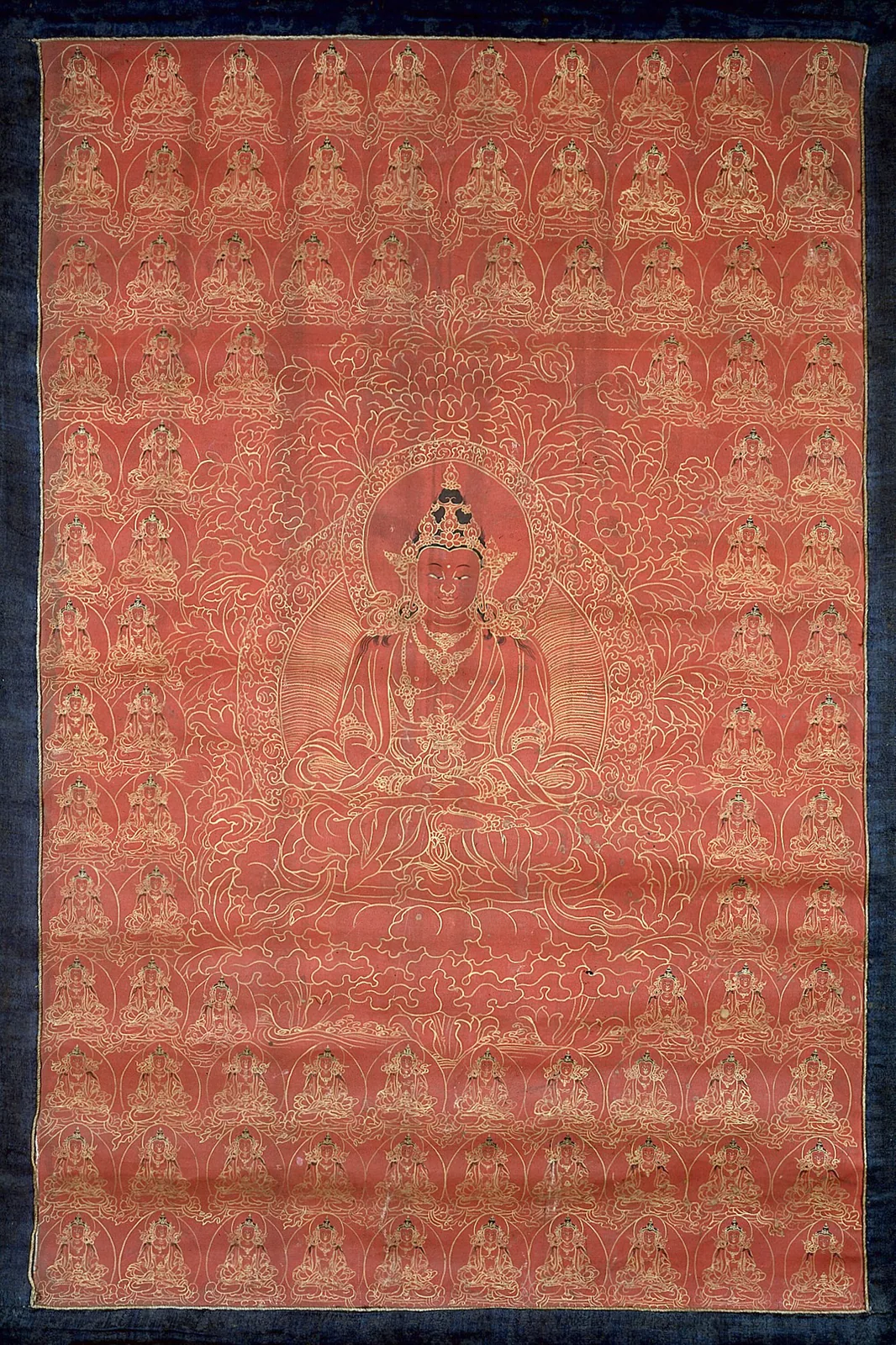
- Date: Date not given
- Origin and medium: Tibet · distemper on cloth, Amitayus with ninety-six emanations, 63.5 × 42 cm
- Collection: Wellcome Collection, London, accession no. 47099i · Public Domain Mark
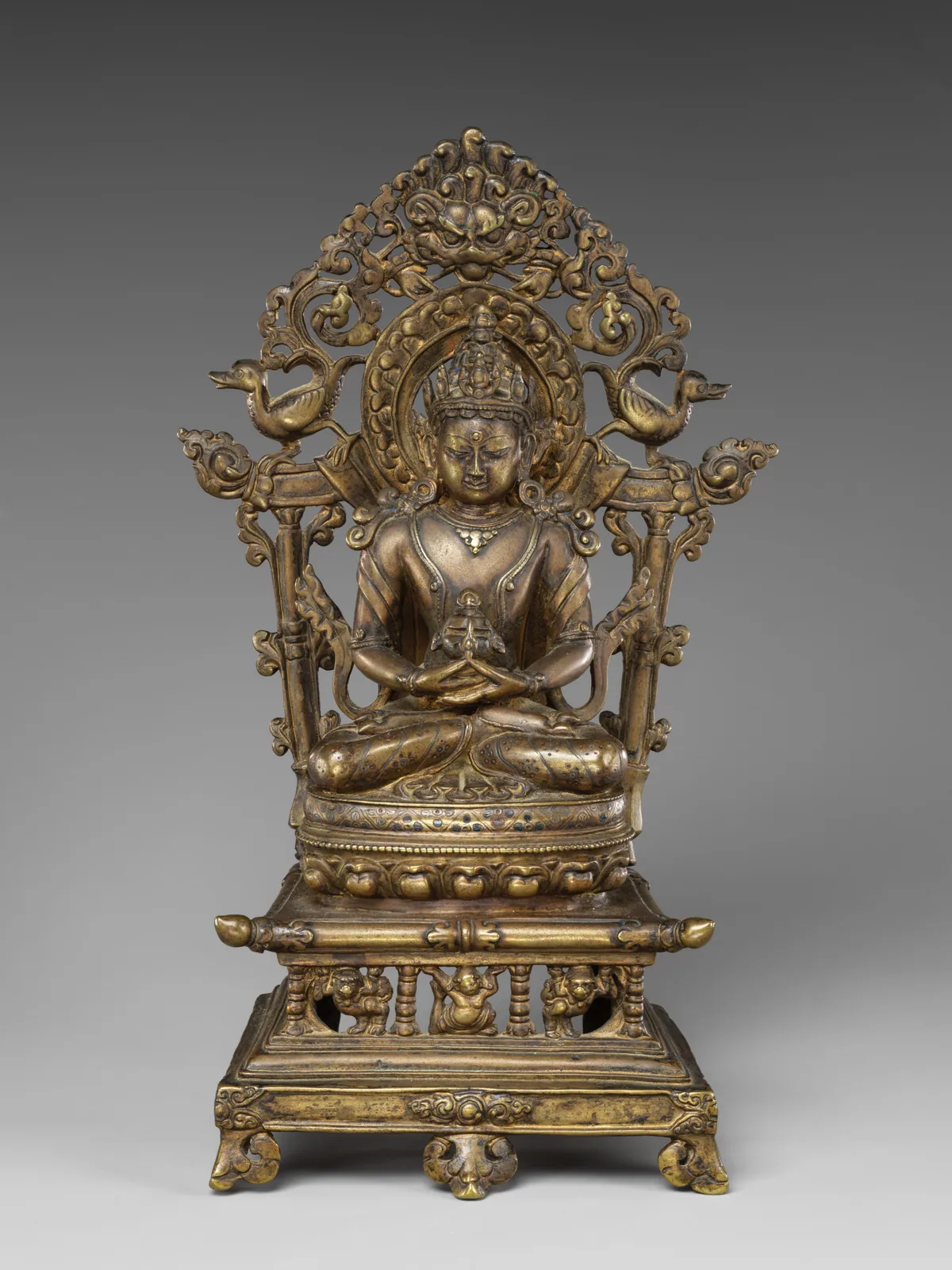
- Date: Early 15th century (Ming dynasty, around the Yongle reign)
- Origin and medium: Tibet · bronze figure, inlaid with silver and copper
- Collection: The Metropolitan Museum of Art, accession no. 2024.441.2 · Public domain