
Avalokiteshvara
The embodiment of compassion; the bodhisattva who hears every cry for help in the world.
Watch the video
Who he is
His name means "the one who observes the sounds of the world." Wherever someone is suffering and calling for help, he hears it. In Tibetan he is called Chenrezig.
Avalokiteshvara has many forms. The one seen most often in Tibet is Four-Armed Avalokiteshvara. The Thousand-Armed and White-Robed forms familiar in China are the same bodhisattva. Tibetans regard Avalokiteshvara as the protector of the Land of Snows. The Potala Palace in Lhasa takes its name from Potalaka, Avalokiteshvara's sacred abode.
What he does
He stands for the compassion of all the Buddhas. In Buddhism, compassion is more than sympathy. It is "wishing that you no longer suffer, and being willing to do something about it."
What people pray to him for
Traditionally, people pray to Avalokiteshvara for:
- Rescue and protection in times of danger
- Relief from illness, pain, and sorrow
- Blessings for relatives who have died
- A softer heart, with a little less anger toward others
Mantra
OṂ MAṆI PADME HŪṂ
This is the six-syllable mantra, the most widespread mantra in Tibet. It is carved on stones, printed on prayer flags, and turned inside prayer wheels. It is openly taught; anyone may recite it.
Story: How the thousand arms and thousand eyes came to be
The story goes that Avalokiteshvara once made a vow before Amitabha: he would rescue all beings, and if he ever gave up partway, may his own head shatter into pieces.
He rescued countless beings. But when he looked back, there were still just as many beings suffering. In that moment a trace of discouragement arose in him, and at once his head split apart.
Amitabha came and blessed him. He turned the shattered head into ten faces, then set his own head at the very top, making eleven faces in all, so that he could see in every direction. He also gave him a thousand arms, with an eye in the palm of each hand, so that he could see and help more people at the same time.
This is the origin of Eleven-Faced Avalokiteshvara with a thousand arms and a thousand eyes. What the story says is this: when compassion meets a setback, it does not draw back. It grows more hands.
How to recognize him
- Four-Armed Avalokiteshvara: white body, one face, four arms
- The two central hands are joined at the chest, holding a wish-fulfilling jewel between the palms
- The upper right hand holds crystal prayer beads; the upper left hand holds a lotus
- A small Amitabha often appears above his head
The images
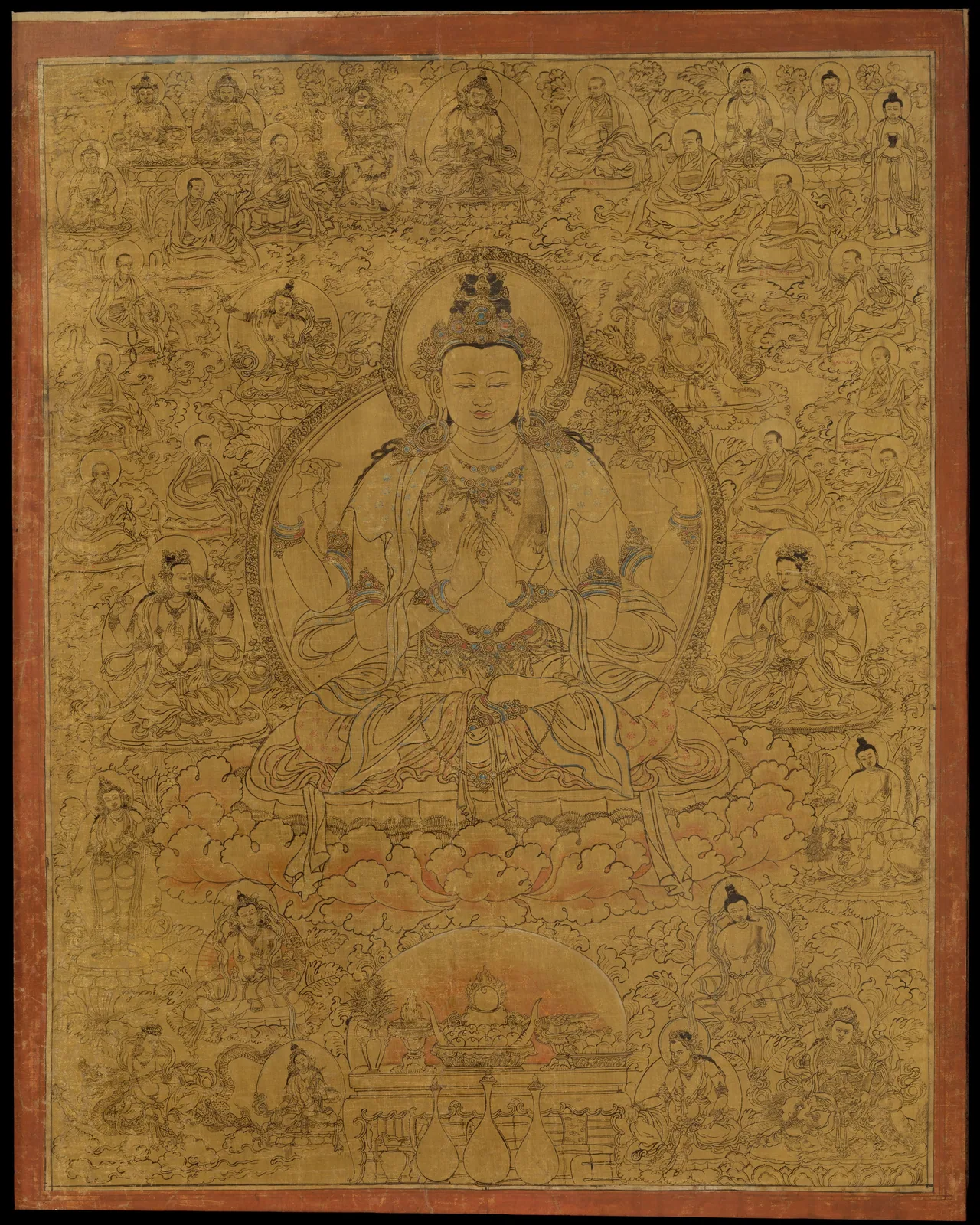
- Date: Late 15th century (mid-Ming dynasty)
- Origin and medium: Tibet · thangka, distemper and gold on cloth, Four-Armed Avalokiteshvara with emanations and monks
- Collection: The Metropolitan Museum of Art, accession no. 1985.390.3 · Public domain
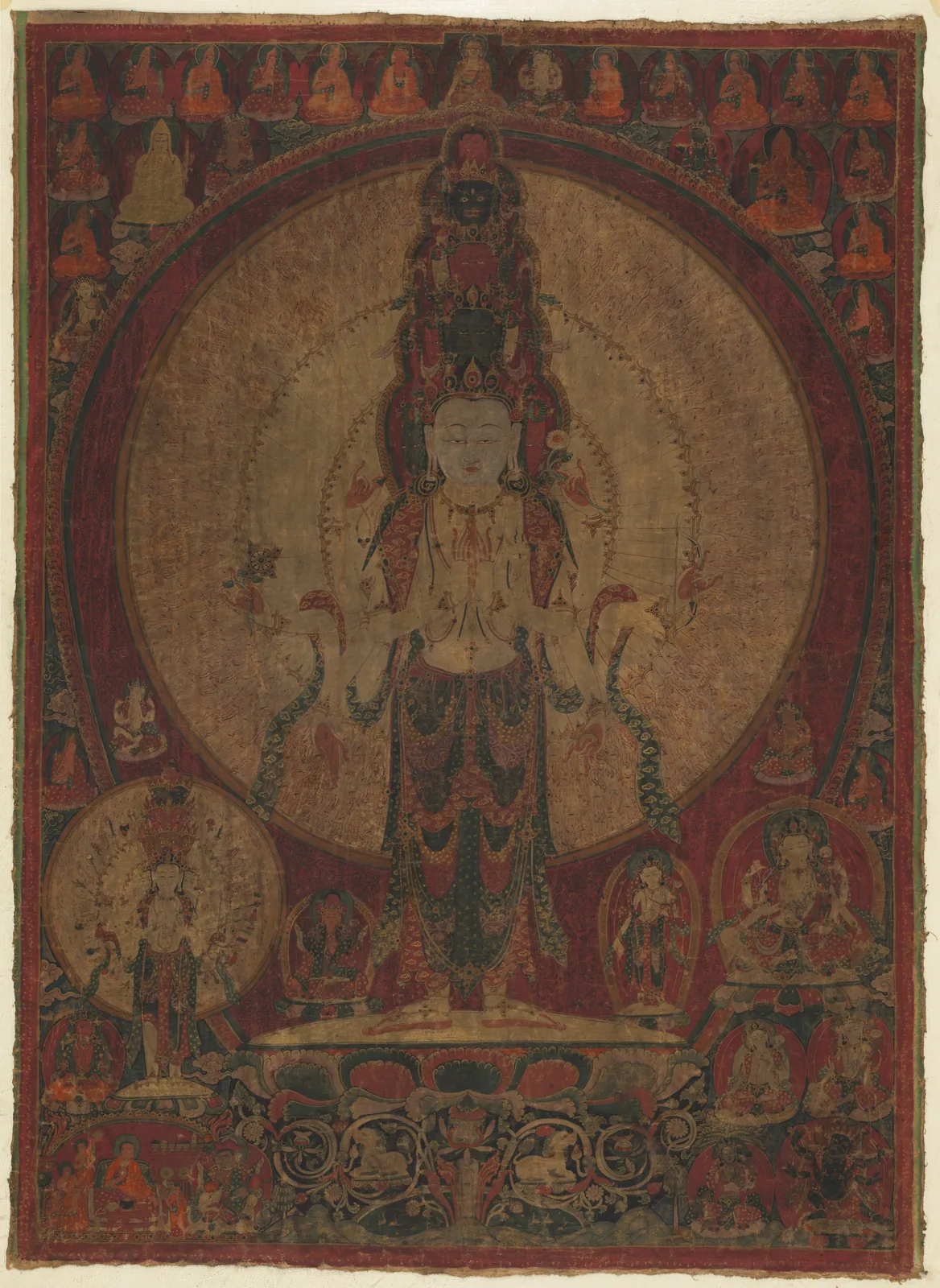
- Date: c. 1500 (mid-Ming dynasty)
- Origin and medium: Western Tibet · thangka, Eleven-Faced, Thousand-Armed Avalokiteshvara
- Collection: Cleveland Museum of Art, accession no. 1982.147 · CC0
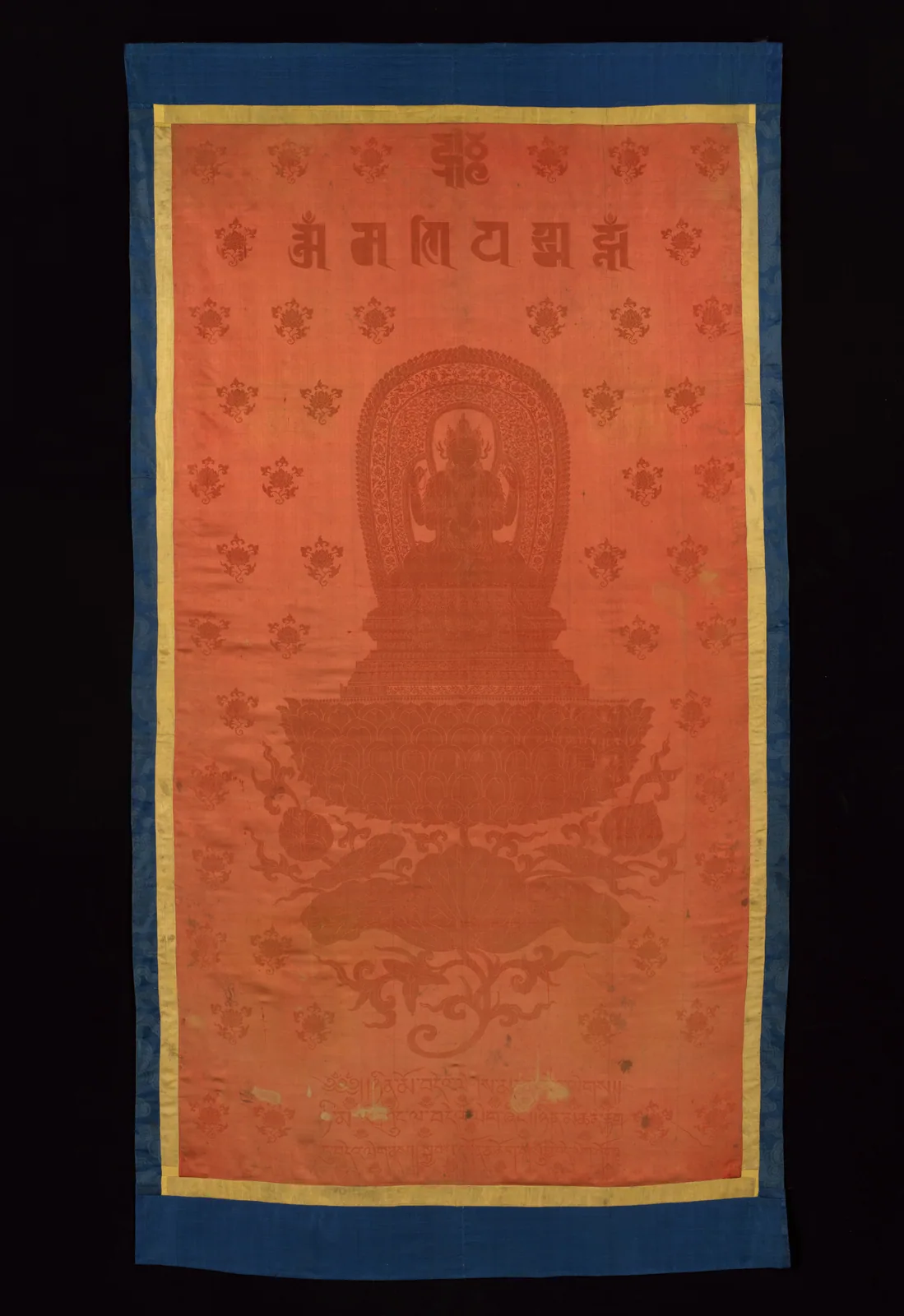
- Date: Early 15th century (Ming dynasty, around the Yongle reign)
- Origin and medium: China · silk textile, Four-Armed Avalokiteshvara, about 2.5 m high
- Collection: The Metropolitan Museum of Art, accession no. 2002.271 · Public domain