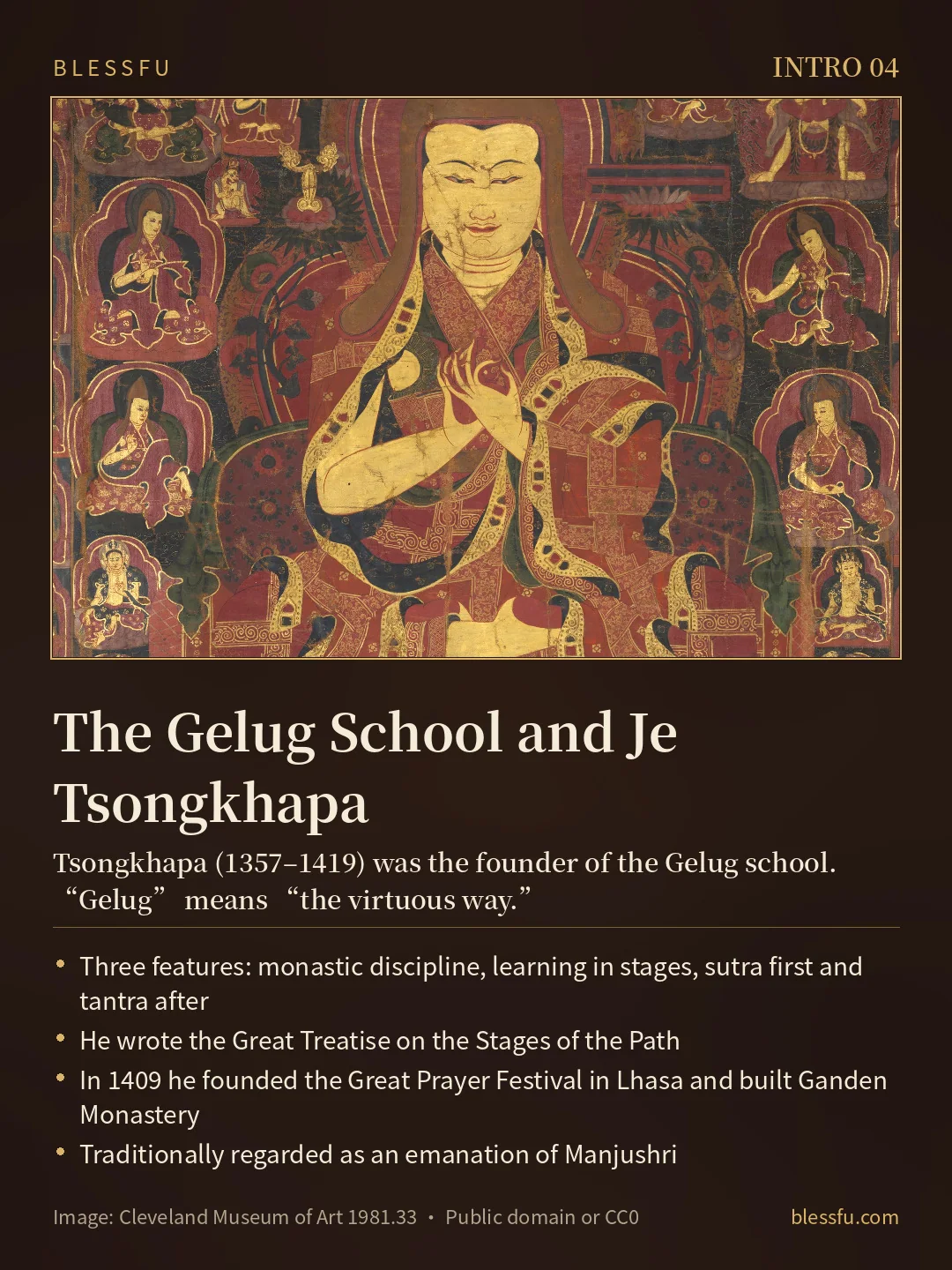
The Gelug School and Je Tsongkhapa
Tsongkhapa (1357–1419) was the founder of the Gelug school. “Gelug” means “the virtuous way.”
Watch the video
What the Gelug school is
Tibetan Buddhism has several main schools. The Gelug school was the last of them to be founded, and later became the largest. "Gelug" is a Tibetan word meaning "the virtuous way," that is, "keeping the rules well." Because its monks wear yellow hats, it is also popularly called the "Yellow Hat" school.
The Gelug school has three distinctive features:
- Emphasis on monastic discipline: monks keep their vows strictly.
- Emphasis on stages: learn one step at a time, without skipping levels.
- Sutra first, tantra after: first gain a solid grounding in the reasoning of the sutras and treatises, then enter tantric practice.
Who Tsongkhapa was
Tsongkhapa (1357–1419) was the founder of the Gelug school. He was born in the Tsongkha region of Qinghai, the place where Kumbum Monastery stands today. "Tsongkhapa" simply means "the man from Tsongkha."
He became a monk as a child. In his teens he went to Tibet to study. He learned from teachers of all the schools of the time and studied the full range of both sutra and tantra teachings.
Three major things he did
- He wrote the Great Treatise on the Stages of the Path (Lamrim Chenmo): it explains the whole path, from beginner to Buddhahood, clearly and in order. To this day this book remains the foundation of Gelug study.
- He restored monastic discipline: at the time, discipline had grown lax in some places. He took the lead in keeping the vows strictly and re-established the standards of the monastic community.
- He founded the Great Prayer Festival and built Ganden: in 1409 he founded the Great Prayer Festival in Lhasa, and in the same year he established Ganden Monastery. That year is usually regarded as the founding of the Gelug school.
The great Gelug monasteries
Tsongkhapa and his disciples founded several great monasteries, one after another:
- Ganden (1409)
- Drepung (1416)
- Sera (1419)
- Tashilhunpo (1447, in Shigatse)
Kumbum in Qinghai and Labrang in Gansu are also famous Gelug monasteries.
Tsongkhapa and Manjushri
Traditionally, Tsongkhapa is regarded as an emanation of Manjushri. That is why, in Gelug monasteries, images of him often show a lotus at each shoulder, with a sword on the right lotus and a scripture on the left. These are exactly the emblems of Manjushri.
The Butter Lamp Festival
The 25th day of the tenth month of the Tibetan calendar is the day Tsongkhapa passed away. On that evening, monasteries and households light butter lamps in his memory. The day is called Ganden Ngamchö, and is also known as the Butter Lamp Festival.
Images
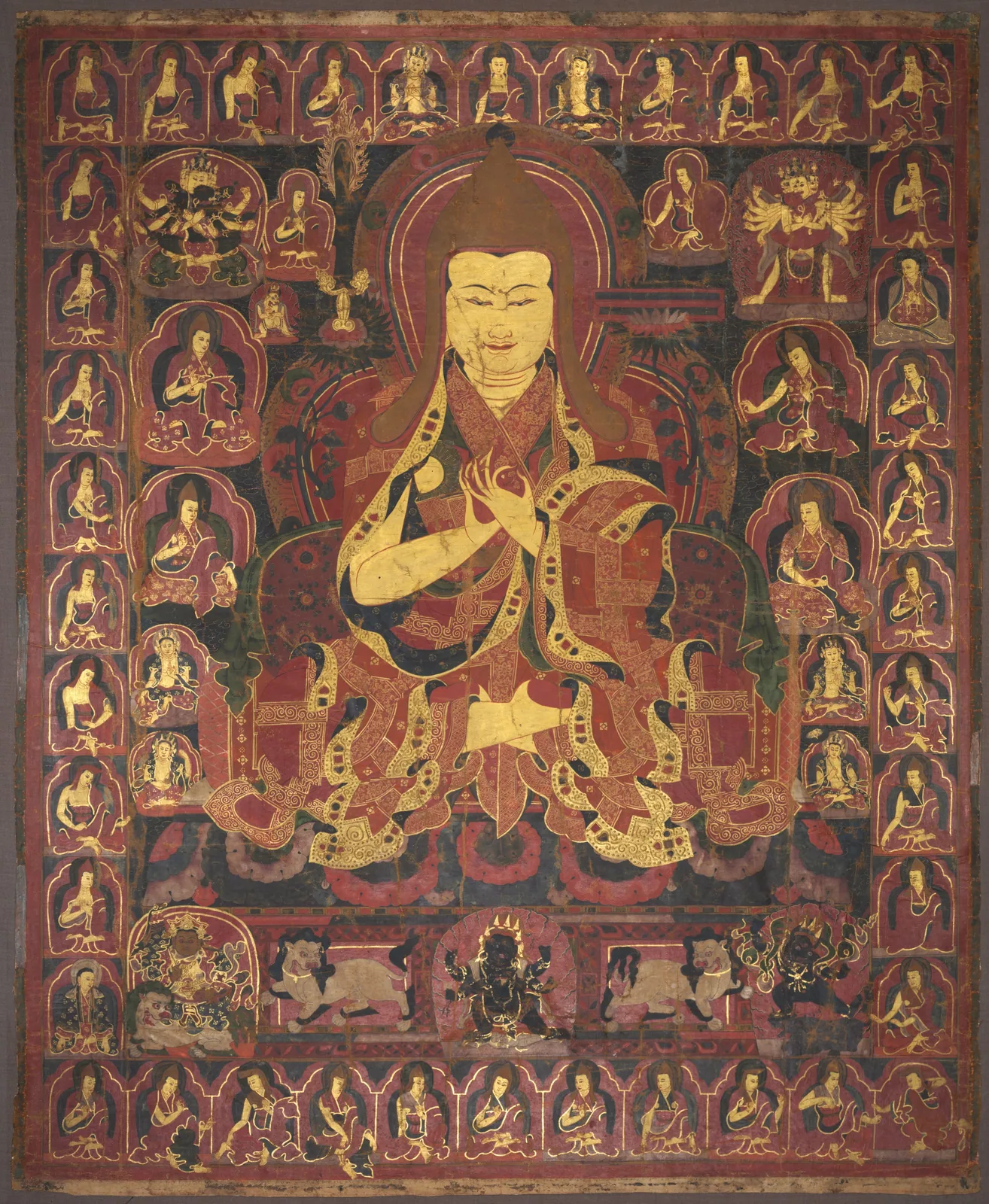
- Date: c. 1440–1470 (early Ming dynasty)
- Origin and medium: Central Tibet · thangka
- Collection: Cleveland Museum of Art, accession no. 1981.33 · CC0
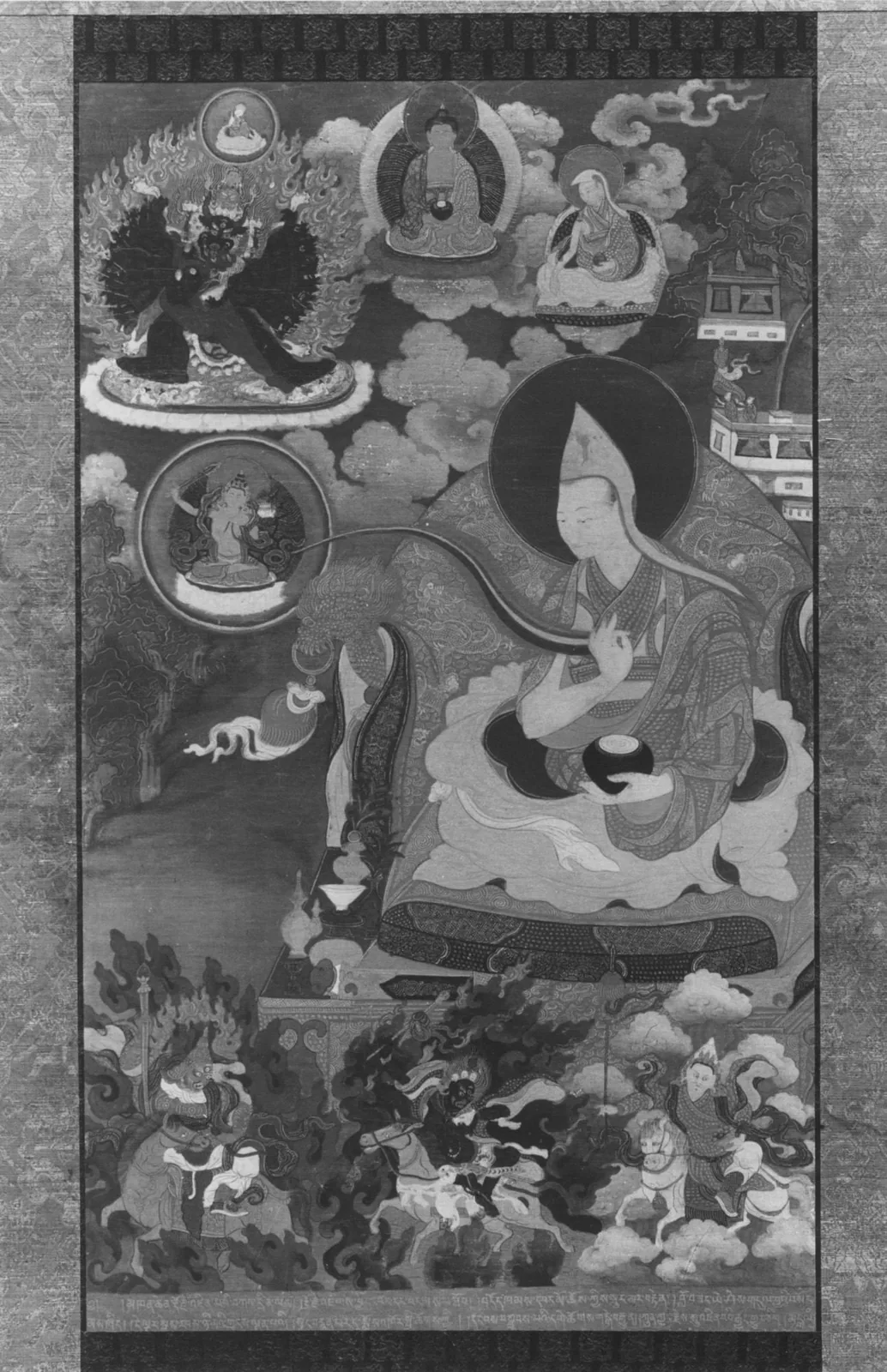
- Date: 18th century (Qing dynasty)
- Origin and medium: Tibet · thangka, distemper on cloth
- Collection: The Metropolitan Museum of Art, accession no. 31.128.1 · Public domain
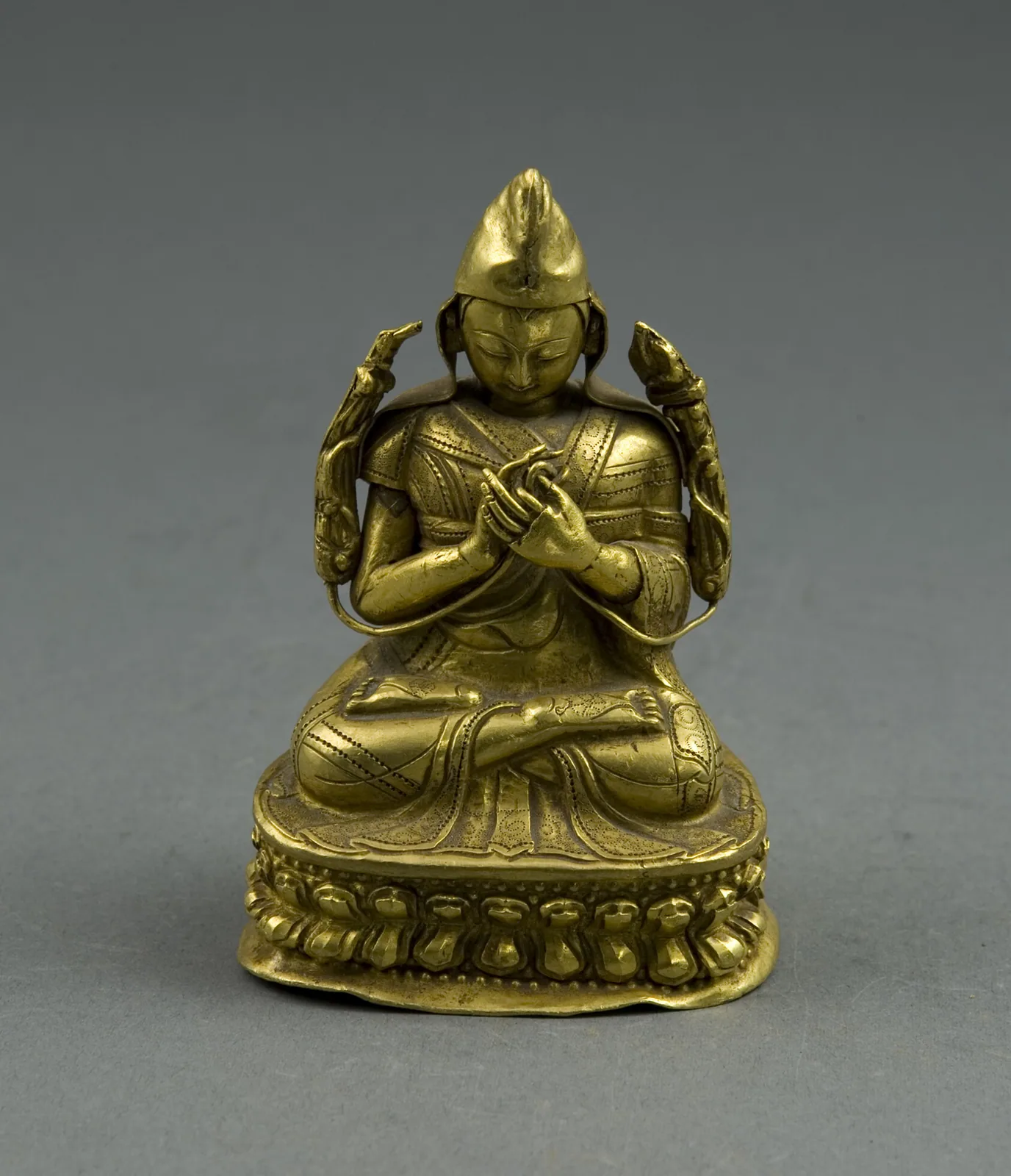
- Date: 18th–19th century (Qing dynasty)
- Origin and medium: Tibet · sculpture
- Collection: Art Institute of Chicago, accession no. 1982.2101 · CC0
At a glance