
Vajrapani
The embodiment of power. Vajra in hand, he sweeps away every obstacle.
Watch the video
Who he is
Vajrapani's name in Sanskrit is Vajrapāṇi, meaning "the one who holds a vajra in his hand". In Tibetan he is called Chakna Dorje. Together with Avalokiteshvara (Chenrezig) and Manjushri, he is one of the Three Protectors (Lords of the Three Families): Avalokiteshvara is compassion, Manjushri is wisdom, and Vajrapani is power.
Compassion and wisdom alone are not enough. You also need the power to get things done. That is the quality Vajrapani stands for.
What he does
He stands for the power and majesty of all the Buddhas, and his special work is clearing obstacles from the path of practice. Tradition also says he is the guardian of the tantric teachings.
What people pray to him for
Traditionally, people pray to Vajrapani for:
- Clearing obstacles, so that things are no longer stuck
- Courage and decisiveness
- Freedom from fear and from outside disturbances
- Relief from illness and from problems that have long resisted treatment
Mantra
OṂ VAJRAPĀṆI HŪṂ
It is openly taught; anyone may recite it.
Story: The guard at the Buddha's side
Vajrapani already appears in the earliest Buddhist scriptures. He is always at the Buddha's side, vajra in hand.
Once, an arrogant young man came to see the Buddha. The Buddha asked him the same question twice, and both times he deliberately did not answer. The Buddha warned him that if he still did not answer when asked a third time, the consequences would be serious. At that moment Vajrapani appeared in the air, raising a blazing vajra. Terrified, the young man quickly turned to the Buddha for help and answered the question truthfully. This story is found in the Ambattha Sutta (Dirgha Agama / Digha Nikaya 3).
In stone carvings from Gandhara made nearly two thousand years ago, a muscular man holding a vajra often stands beside the Buddha. That is the earliest form of Vajrapani.
How to recognize him
- Blue-black body, wrathful form, three eyes, hair standing on end
- Right hand raising a vajra high; left hand at the chest in a threatening gesture
- A tiger skin around the waist, and snakes as ornaments on the body
- Standing with the right leg bent and the left leg straight, surrounded by flames
- There is also a peaceful form, with a calm face and a vajra in hand
The images
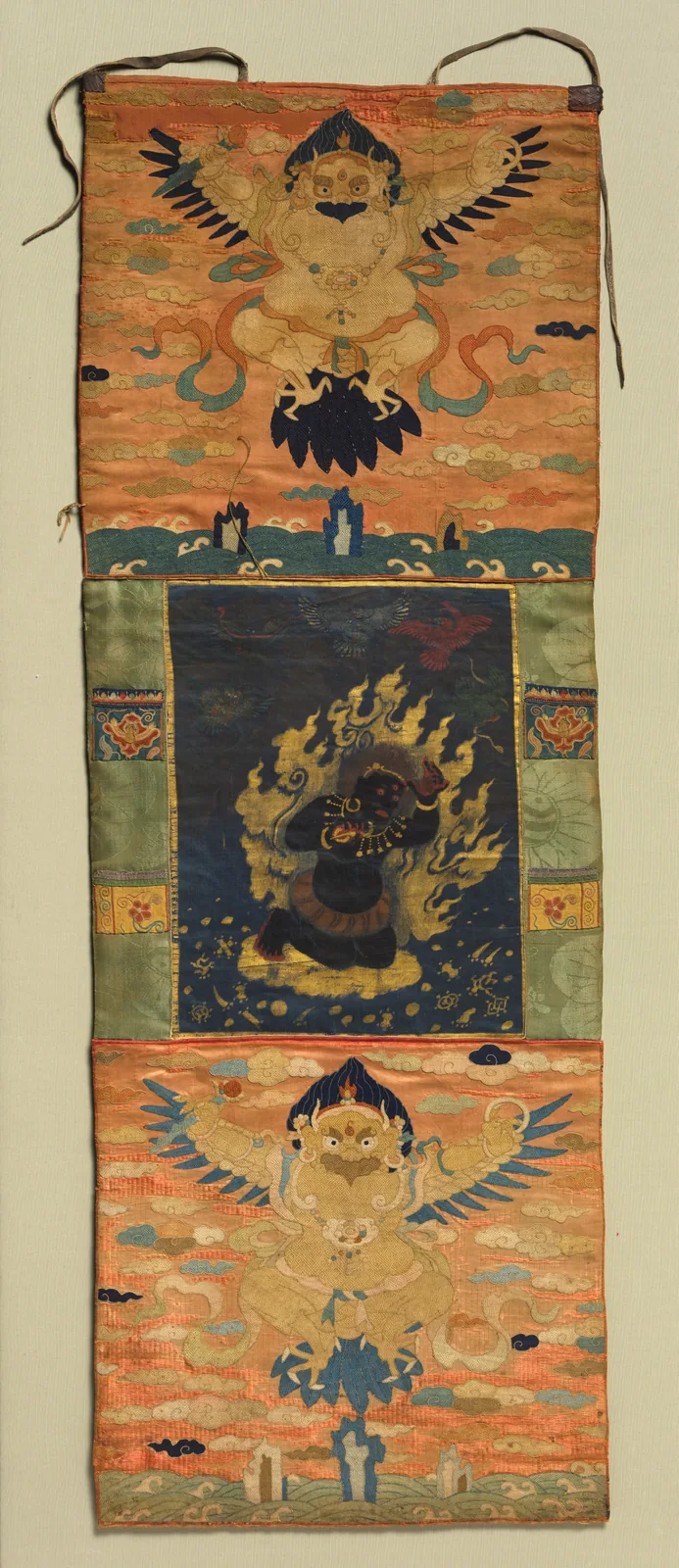
- Date: Painting about 1650 (early Qing dynasty); embroidered mount about 14th century (Yuan dynasty)
- Origin and medium: Sino-Tibetan · Vajrapani with Garuda
- Collection: Cleveland Museum of Art, accession no. 1989.11 · CC0
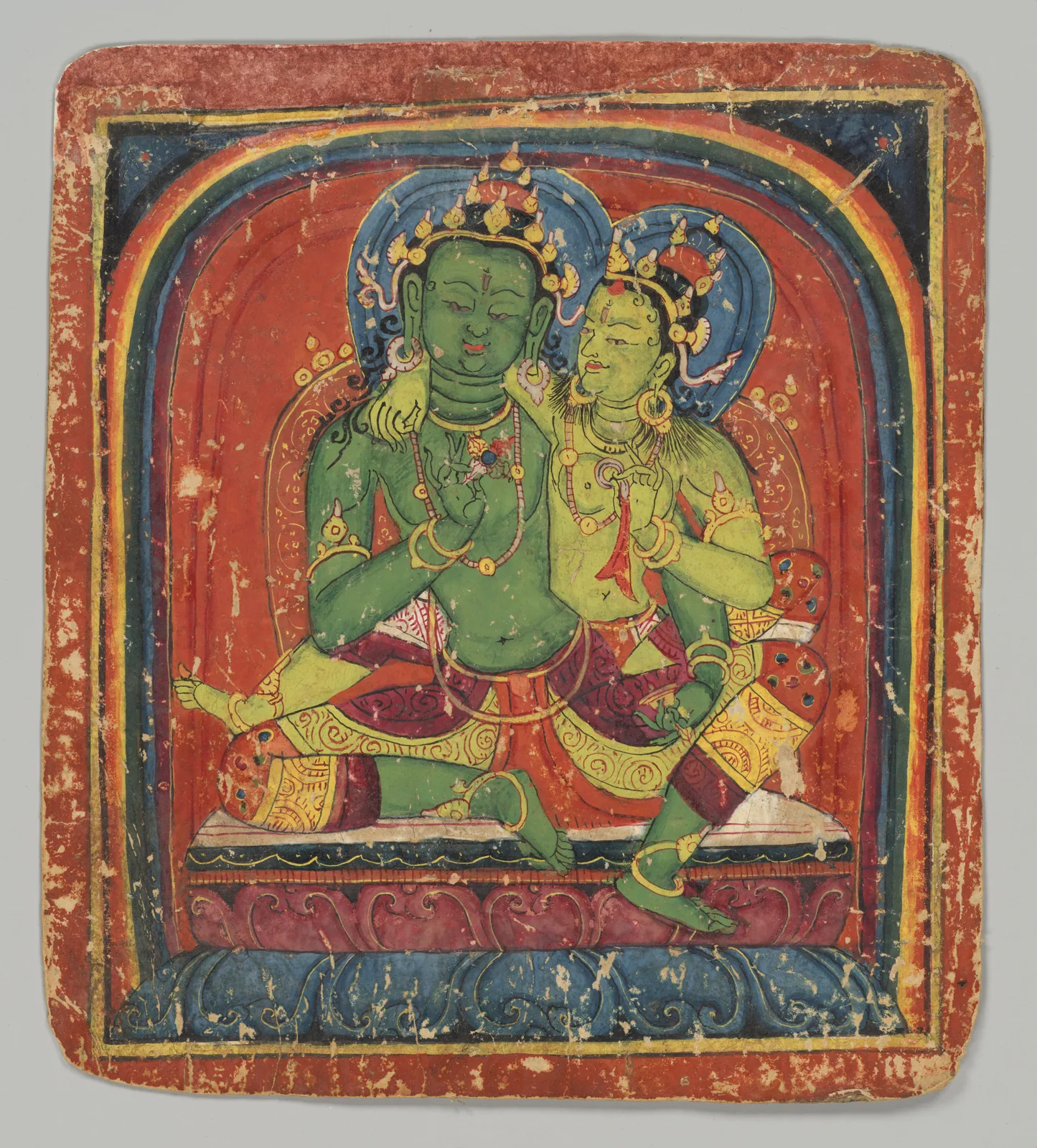
- Date: Early 15th century (Ming dynasty, around the Yongle reign)
- Origin and medium: Tibet · Initiation card (tsakali), color on paper
- Collection: The Metropolitan Museum of Art, accession no. 2000.282.9 · Public domain
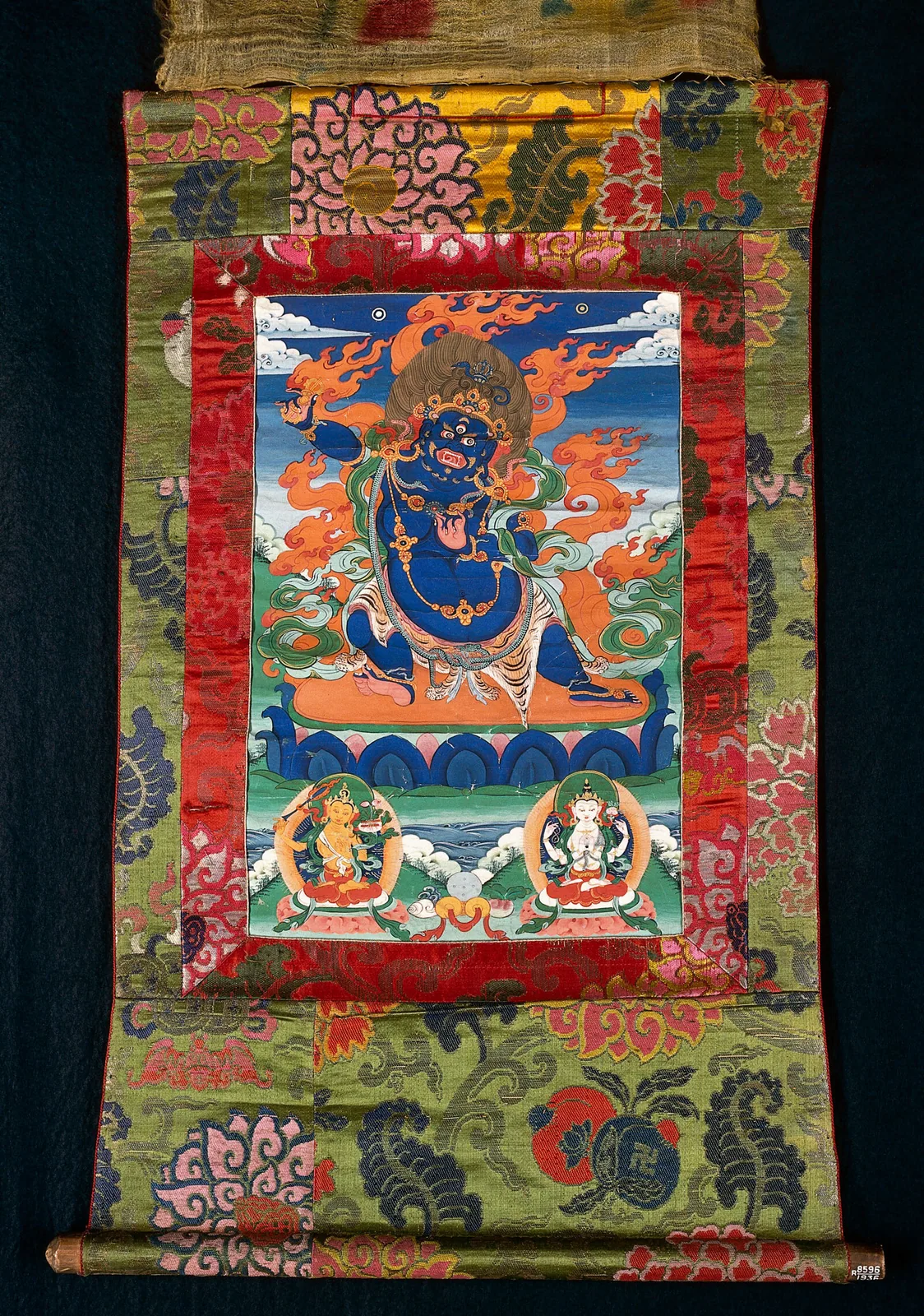
- Date: Date not given
- Origin and medium: Tibet · Distemper on cloth; the Three Protectors (Vajrapani, Manjushri and Avalokiteshvara) in one painting
- Collection: Wellcome Collection, London, accession no. 47093i · Public Domain Mark