
Akashagarbha
The bodhisattva whose wisdom and merit are as boundless as space.
Watch the video
Who he is
Akashagarbha's name in Sanskrit is Ākāśagarbha, meaning "Treasury of Space". In Tibetan he is called Namkhai Nyingpo. He is one of the Eight Great Bodhisattvas.
Kshitigarbha's good qualities are as deep and solid as the earth. Akashagarbha's good qualities are as vast as the sky. The two names form a matching pair.
What he does
He grants wisdom, memory and merit. He is also the one practitioners call on when they confess their faults.
What people pray to him for
Traditionally, people pray to Akashagarbha for:
- A stronger memory, so that what is learned is not forgotten
- Wisdom and merit growing together
- Being made clean through confession after doing wrong
Mantra
You can recite his name: Namo Akashagarbha Bodhisattva.
Story: Confession before dawn
Tibetan Buddhism has a tradition: a person who has taken the bodhisattva vows and commits a serious fault should call on Akashagarbha and confess before dawn. This practice comes from the Akashagarbha Sutra, and the Indian bodhisattva Shantideva also quoted it in his writings.
In Japan, Akashagarbha's connection with memory is especially well known. The story goes that the great master Kukai (Kobo Daishi), when he was young, took up the practice of Akashagarbha and recited the mantra one million times. After that he could remember every scripture he read. To this day, Japan still has a custom in which children visit Akashagarbha at the age of thirteen to pray for wisdom.
How to recognize him
- Dressed as a bodhisattva, wearing a jeweled crown
- Often shown holding a sword or a wish-fulfilling jewel; the way he is painted is not quite the same in every lineage
- The Eight Great Bodhisattvas often appear as a group on either side of a Buddha; you tell them apart by what they hold in their hands
The images
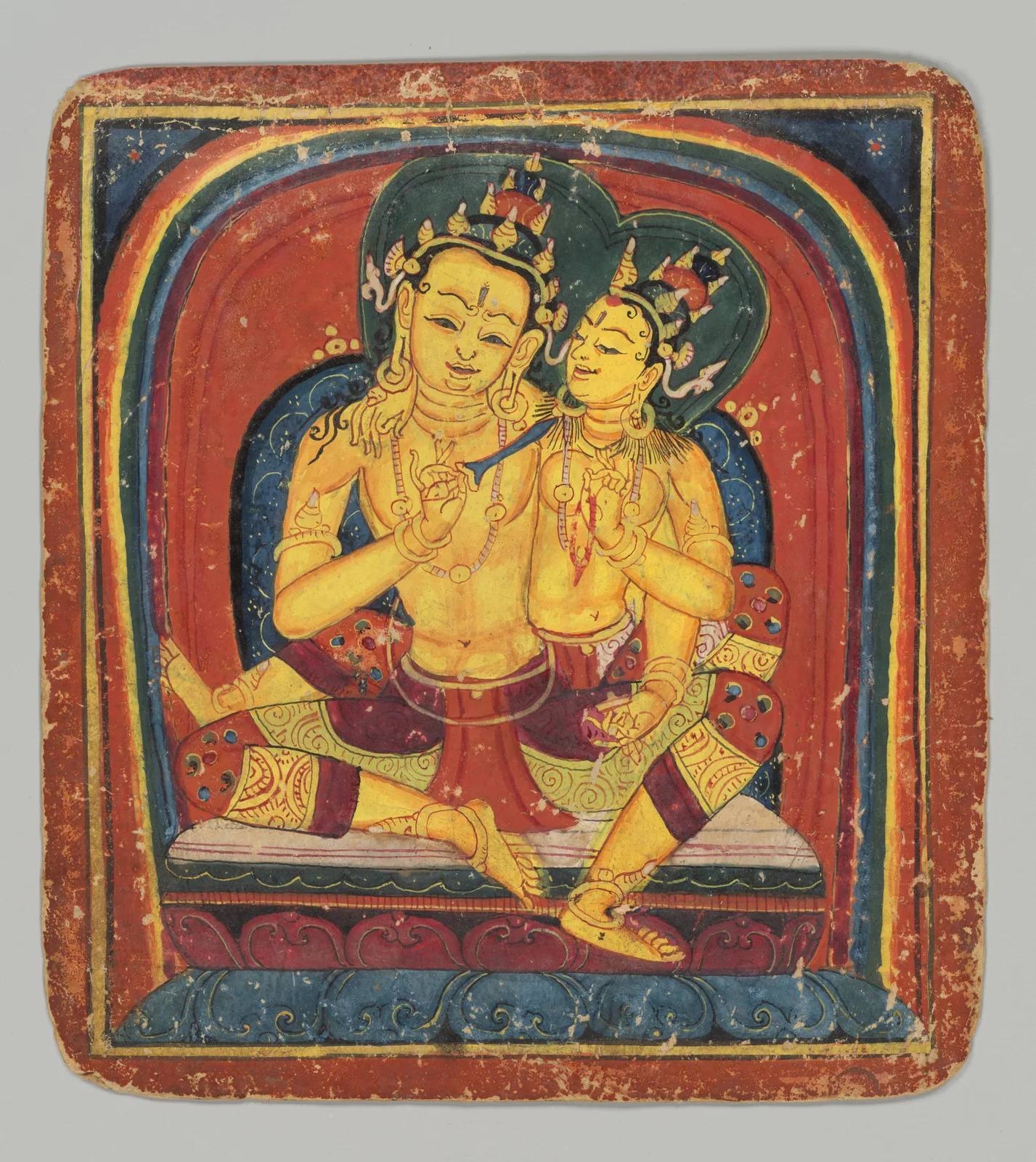
- Date: Early 15th century (Ming dynasty, around the Yongle reign)
- Origin and medium: Tibet · Initiation card (tsakali), color on paper
- Collection: The Metropolitan Museum of Art, accession no. 2000.282.7 · Public domain
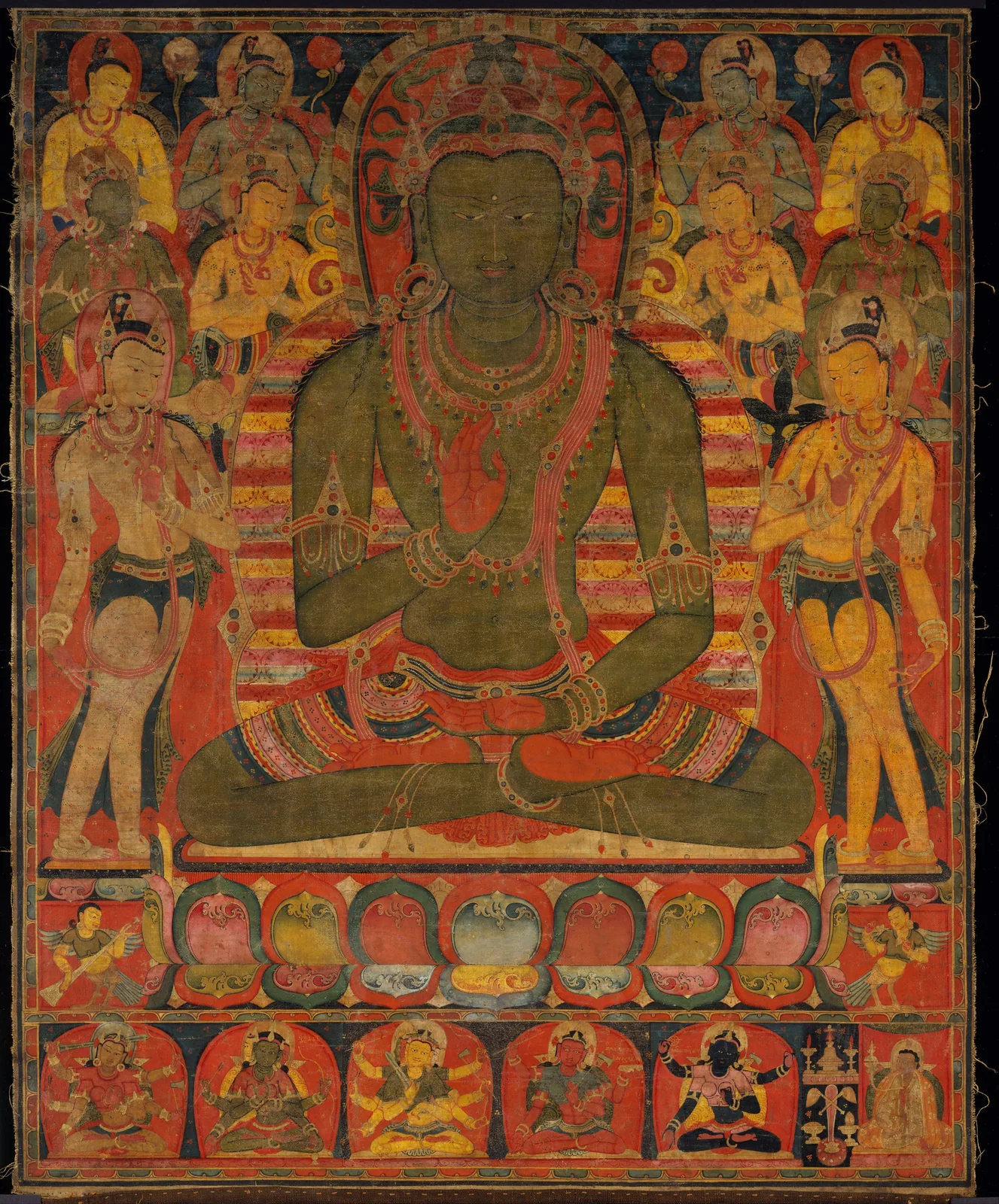
- Date: About 1200–1250 (roughly the Southern Song period)
- Origin and medium: Central Tibet · Thangka, distemper on cloth; the Buddha Amoghasiddhi with the Eight Great Bodhisattvas
- Collection: The Metropolitan Museum of Art, accession no. 1991.74 · Public domain