
Sarvanivaranavishkambhin
The bodhisattva whose special work is removing "whatever is covering the mind".
Watch the video
Who he is
Sarvanivaranavishkambhin's name in Sanskrit is Sarvanīvaraṇaviṣkambhin, meaning "Remover of All Obscurations". In Tibetan he is called Dripa Namsel. He is one of the Eight Great Bodhisattvas.
"Obscurations" here means the things that cover the mind and keep it from being clear. The sutras say there are five main ones: craving, anger, dullness, restlessness and regret, and doubt.
What he does
He helps practitioners clear these coverings from the mind, so that the mind returns to its natural clarity.
What people pray to him for
Traditionally, people pray to Sarvanivaranavishkambhin for:
- Staying free of dullness and distraction while meditating or reciting texts
- Removing karmic obscurations
- Resolving the doubts and knots in the mind
Mantra
You can recite his name: Namo Sarvanivaranavishkambhin Bodhisattva.
Story: He goes in search of the six-syllable mantra
The Karandavyuha Sutra tells where the six-syllable mantra came from, and Sarvanivaranavishkambhin is its main character.
The sutra says that after he heard the Buddha describe the benefits of the six-syllable mantra, he asked: where can this mantra be obtained? The Buddha said that this mantra is extremely hard to come by, and that even many Buddhas and bodhisattvas do not yet know it, but that a Dharma teacher in the city of Varanasi does.
Sarvanivaranavishkambhin went to see that teacher, bringing a great many offerings. This teacher did not keep his vows perfectly, and he had a wife and children. He did not look like a holy man at all. Yet Sarvanivaranavishkambhin bowed down to him with great respect and asked for the teaching, and in the end he received the six-syllable mantra.
The story makes two points: how precious the six-syllable mantra is, and that a person seeking the Dharma does not judge others by their appearance.
How to recognize him
- Dressed as a bodhisattva, wearing a jeweled crown
- Holding a lotus that supports a moon disc or a precious object; the way he is painted is not quite the same in every lineage
- The Eight Great Bodhisattvas often appear as a group on either side of a Buddha; you tell them apart by what they hold in their hands
The images
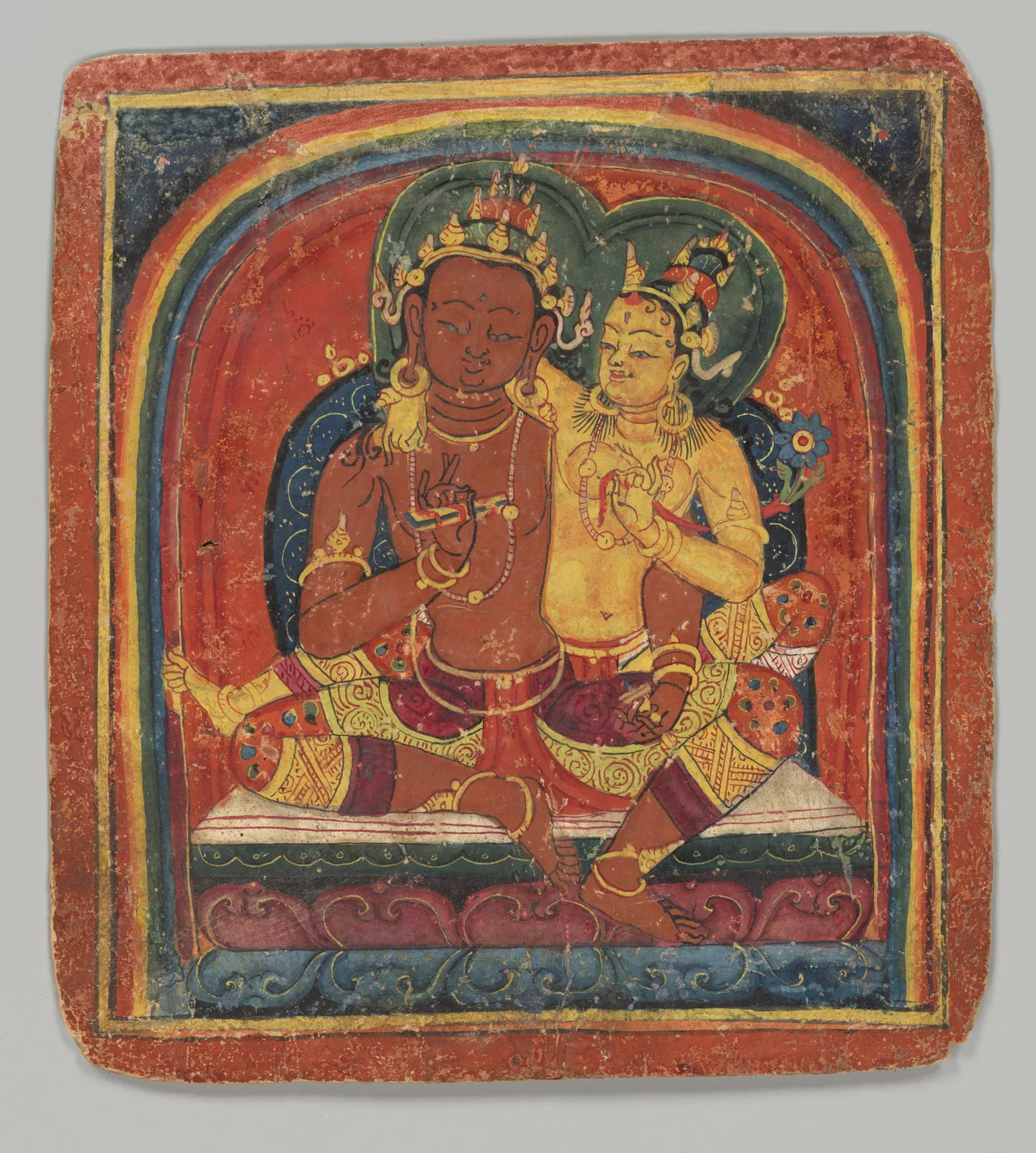
- Date: Early 15th century (Ming dynasty, around the Yongle reign)
- Origin and medium: Tibet · Initiation card (tsakali), color on paper
- Collection: The Metropolitan Museum of Art, accession no. 2000.282.11 · Public domain
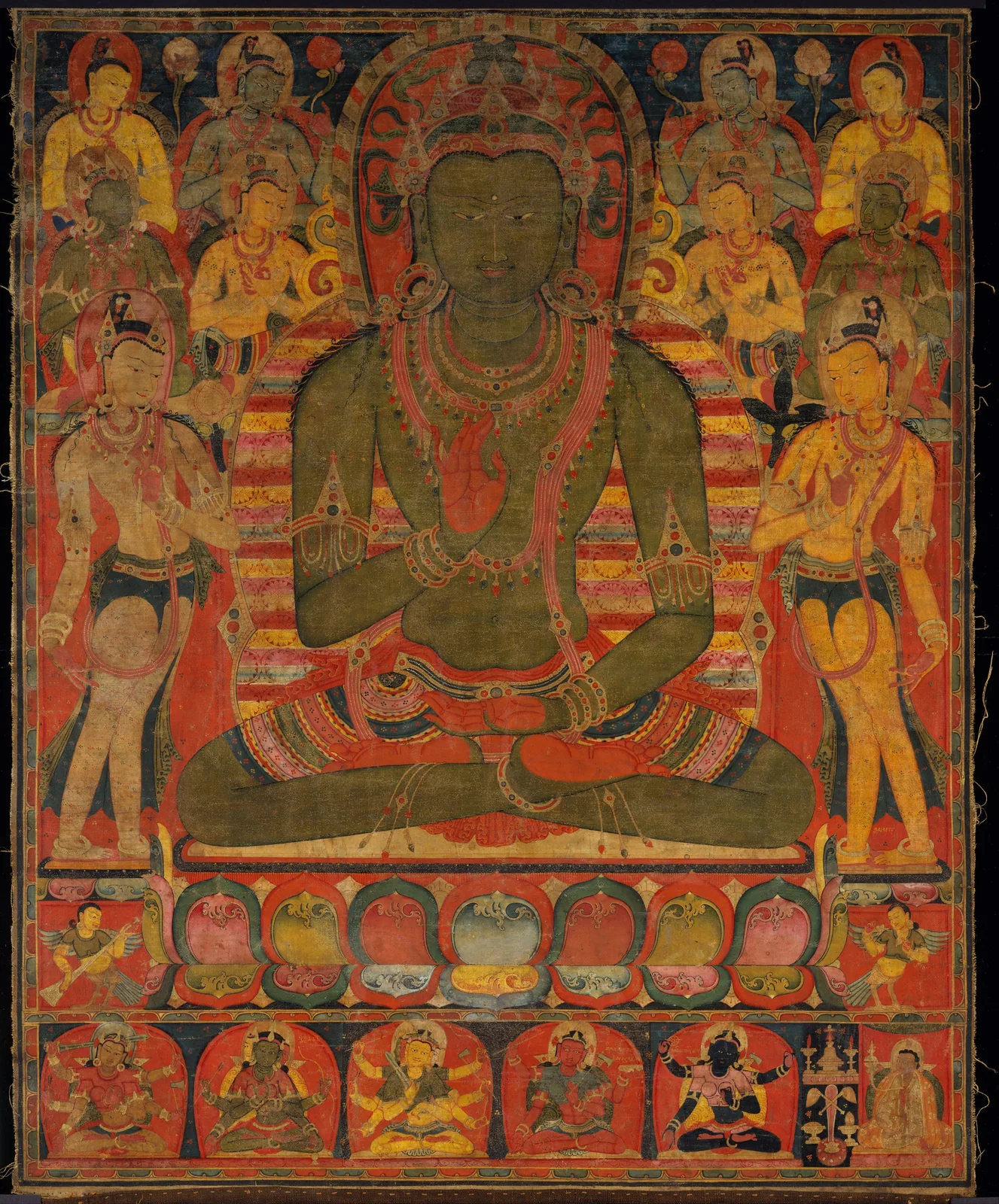
- Date: About 1200–1250 (roughly the Southern Song period)
- Origin and medium: Central Tibet · Thangka, distemper on cloth; the Buddha Amoghasiddhi with the Eight Great Bodhisattvas
- Collection: The Metropolitan Museum of Art, accession no. 1991.74 · Public domain