
Begtse
A Dharma protector in copper armor, red from head to toe, especially revered in the Mongolian regions.
Watch the video
Who he is
Begtse's Tibetan name is Chamsing (meaning "brother and sister," referring to him and his sister). He is also called Begtse, meaning "coat of mail." In Chinese temples he is called the "Great Red Lord of Life."
He is one of the important protectors of the Gelug school. He is especially common in monasteries all across Mongolia, and he can also be seen in Tibetan Buddhist temples in Han Chinese regions.
What he does
He guards the Dharma and practitioners. He is known for his bravery and is seen as a warrior-like protector.
What people pray to him for
Traditionally, people pray to Begtse for:
- Protection for monasteries and practitioners
- Subduing obstacles and disturbances
- Courage and decisiveness
Mantra
Traditionally, a protector's mantra and practice must be received from a qualified teacher. They are not given here.
Story: The War God Who Blocked the Road
A story has long circulated in Western books: in the sixteenth century, the Gelug master Sonam Gyatso was invited to Mongolia to teach the Dharma, and on the way a war god with his troops blocked the road. The master appeared on the spot in the form of Avalokiteshvara; the war god was overawed and vowed to guard the Dharma.
This story is very widely told, but it is not reliable. Begtse's practice was already circulating in Tibet in the eleventh century. It is found first in the Sakya and Kagyu schools and later passed into the Gelug school, and he was also the personal protector of the master Sonam Gyatso himself. It was only when the Gelug school spread to Mongolia in the late sixteenth century that he became especially revered there.
How to recognize him
- Red body, wrathful form, three eyes, wearing copper armor and tall boots
- Right hand raises a flaming sword with a hilt in the shape of a scorpion
- Left hand grips a heart at the chest, with a bow and arrows and a spear held in the crook of the arm
- Treads on the corpses of a horse and a human
- Two attendants often appear beside him: his sister, riding a bear, and a red warrior riding a wolf
The images
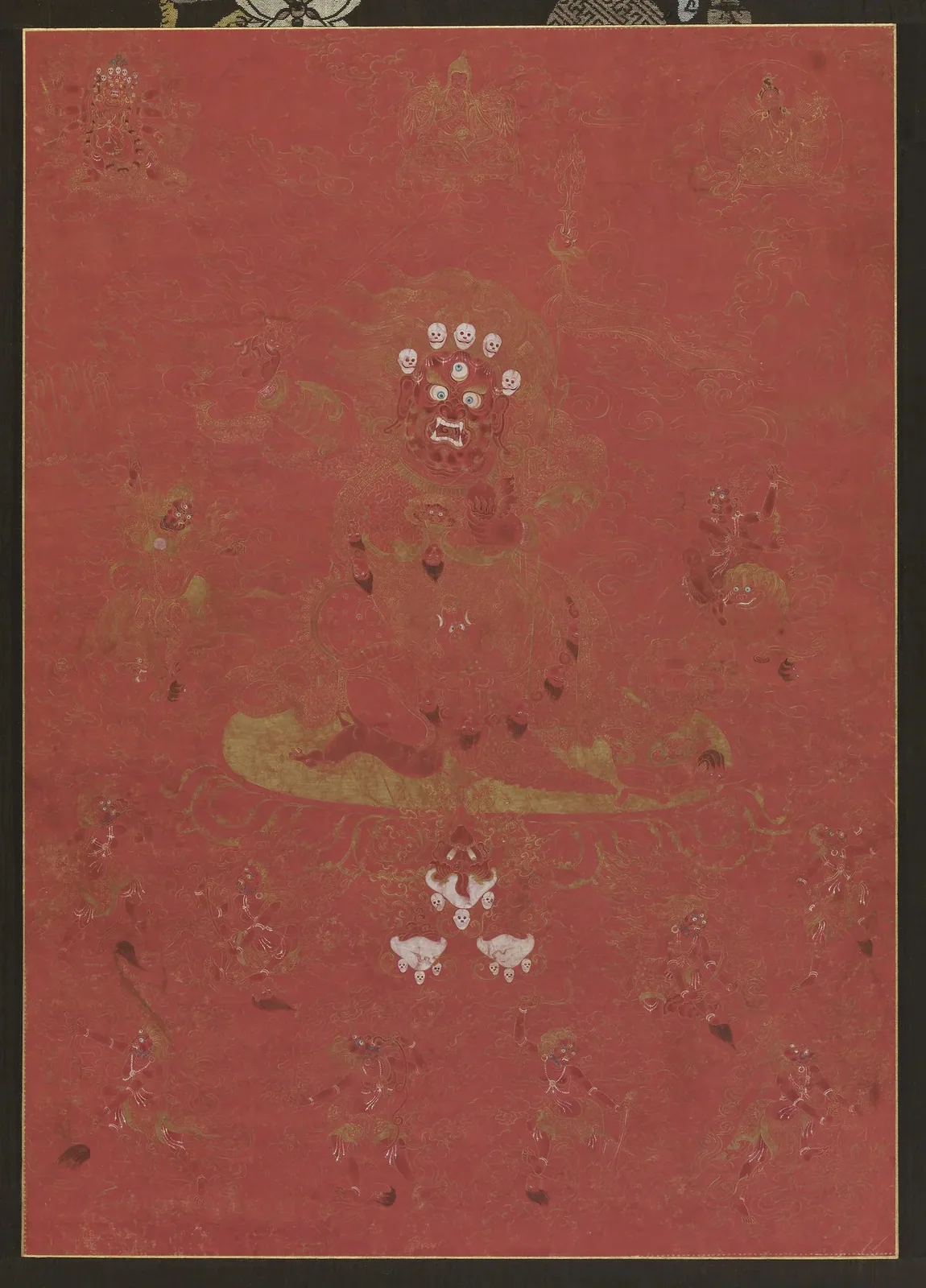
- Date: 18th century (Qing dynasty)
- Origin and medium: Tibet · thangka, colors and gold on cloth
- Collection: Walters Art Museum, accession no. 35.316 · CC0
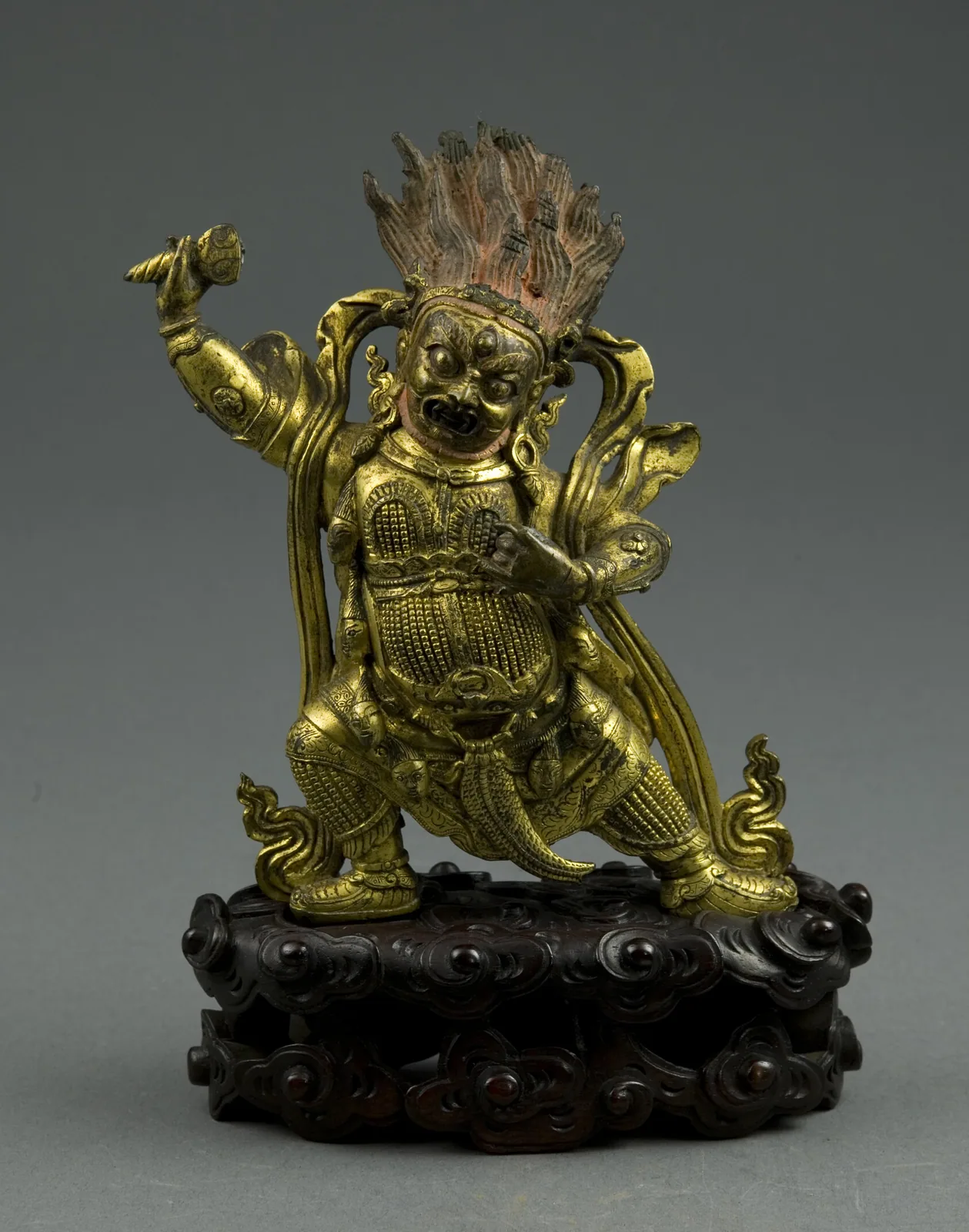
- Date: 19th century (Qing dynasty)
- Origin and medium: Tibet · sculpture
- Collection: Art Institute of Chicago, accession no. 1924.121 · CC0