
Yellow Jambhala
The most common wealth deity in Tibet, holding a mongoose that spits out jewels.
Watch the video
Who he is
Yellow Jambhala's Sanskrit name is Jambhala. In Tibetan he is called Dzambhala Serpo. Tibetan Buddhism has five wealth deities: yellow, white, black, red and green. Together they are known as the five Jambhalas. Yellow Jambhala is first among them, and also the most common.
What he does
He grants the resources needed for living. Buddhism does not see poverty as a virtue. When food and clothing are taken care of, a person can practice with a settled mind. When there is something to spare, a person is able to give.
What people pray to him for
Traditionally, people pray to Yellow Jambhala for:
- A stable life, free from poverty
- Work and household finances that go smoothly
- The ability to look after family and help others
- Overcoming stinginess and learning to give
Mantra
OṂ JAMBHALA JALENDRĀYE SVĀHĀ
It is openly taught; anyone may recite it. Tradition stresses one point: people pray to a wealth deity in order to have something to spare for doing good, not out of greed.
Story: Why water is poured over Jambhala
The story goes that while the Buddha was teaching, someone with ill will pushed a rock down, hoping to hurt him. Yellow Jambhala stepped forward and stood in the way, and the rock struck him on the head.
The Buddha stroked the top of his head and poured nectar water over his crown, and the pain vanished at once. The Buddha then gave him an instruction: from now on, whenever people make offerings to you and recite your mantra, you are to help them be free from poverty.
That is why the practice of Yellow Jambhala has a special method, called the "water offering": while reciting the mantra, a person slowly pours clean water over the top of the Jambhala statue's head.
How to recognize him
- Golden-yellow body, short and stout, with a very large belly
- A fruit in his right hand; his left hand holds a jewel-spitting mongoose, with jewels coming out of its mouth
- His right foot rests on a conch shell
- He wears a jeweled crown and has a smile on his face
The image
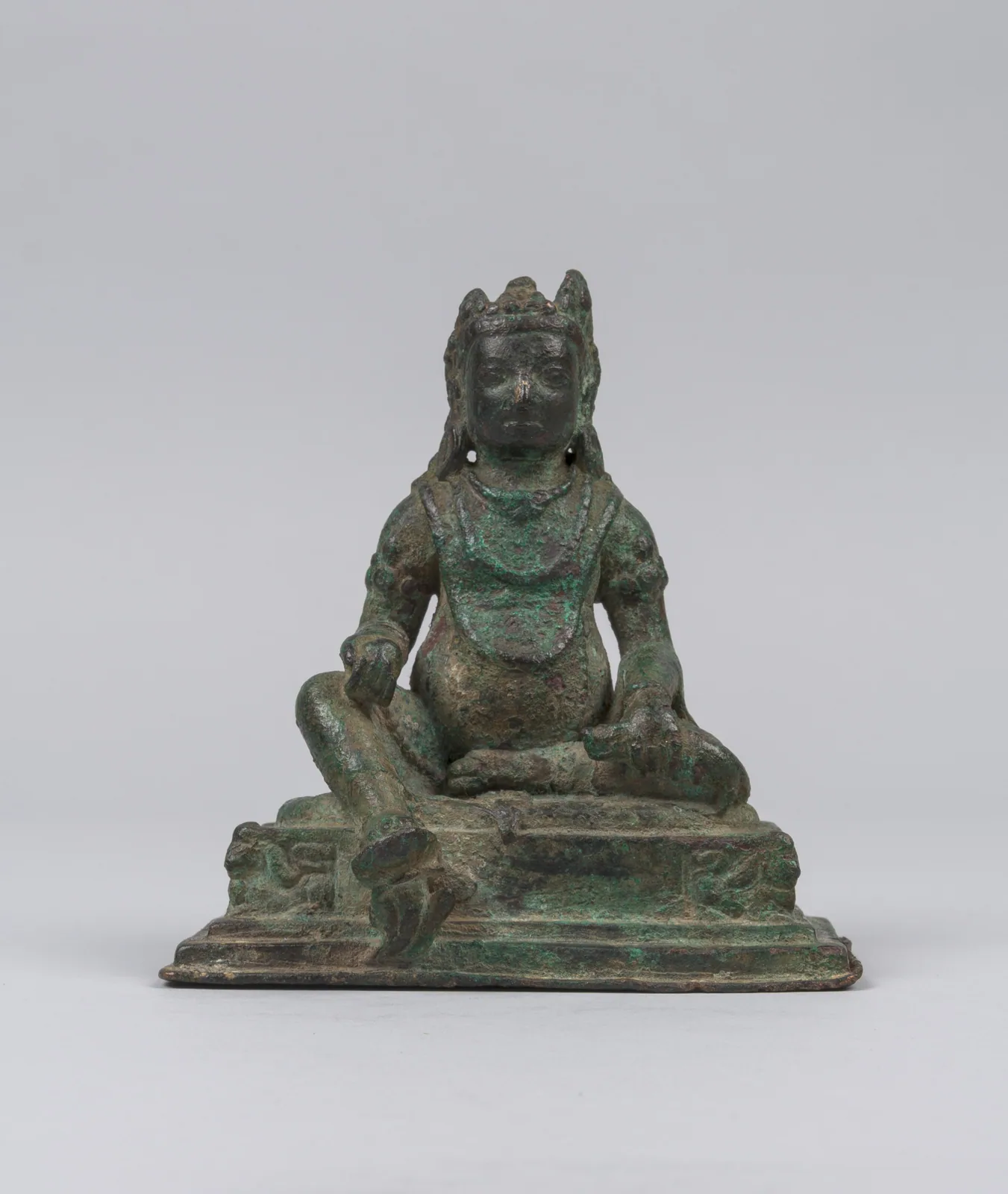
- Date: 10th century (roughly the Five Dynasties to the early Northern Song)
- Origin and medium: Kathmandu Valley, Nepal · copper alloy figure
- Collection: The Metropolitan Museum of Art, accession no. 1987.142.320 · Public domain