
Hayagriva
The wrathful form of Avalokiteshvara (Chenrezig), with a neighing horse's head on top of his head.
Watch the video
Who he is
Hayagriva's Sanskrit name is Hayagrīva, meaning "horse's neck." In Tibetan he is called Tamdrin. He is the wrathful form Avalokiteshvara takes in order to subdue stubborn beings who are hard to change.
In the Gelug school, Sera Je college of Sera Monastery in Lhasa takes Hayagriva as its main yidam (meditational deity) and Dharma protector. Its Hayagriva chapel is famous far and wide, and many people make a special trip to pay their respects there.
What he does
With fierce power he drives away obstacles, especially illness and the various forces that disturb practice. The story goes that a single neigh from the horse on top of his head can overawe every demonic obstacle.
What people pray to him for
Traditionally, people pray to Hayagriva for:
- Driving away illness, especially illness that has long resisted treatment
- Clearing away disturbances and obstacles
- Keeping children safe
Mantra
Traditionally, the mantra and practice of this yidam may be taken up only after receiving empowerment from a qualified teacher. They are not given here.
Story: Why a Horse's Head
In ancient India, the horse was a symbol of speed and strength. A horse's neigh is high and sudden, and it can startle a person out of drowsiness in an instant.
The horse on top of Hayagriva's head stands for exactly this power to "wake with a single cry": when compassion reaches its limit, it becomes a sharp shout that calls people out of their confusion.
So although his form is wrathful, at the root he is still the compassion of Avalokiteshvara. Chinese Buddhism also has a "Horse-Headed Avalokiteshvara," one of the six forms of Avalokiteshvara, often seen in Japanese temples.
How to recognize him
- Red body, wrathful form, three eyes
- The clearest sign: a small green horse's head rising out of the middle of his hair
- Some forms have one face and two arms; others have three faces and six arms, or more arms still
- Often holds a staff or a sword, wears snakes as ornaments, and stands amid flames
The images
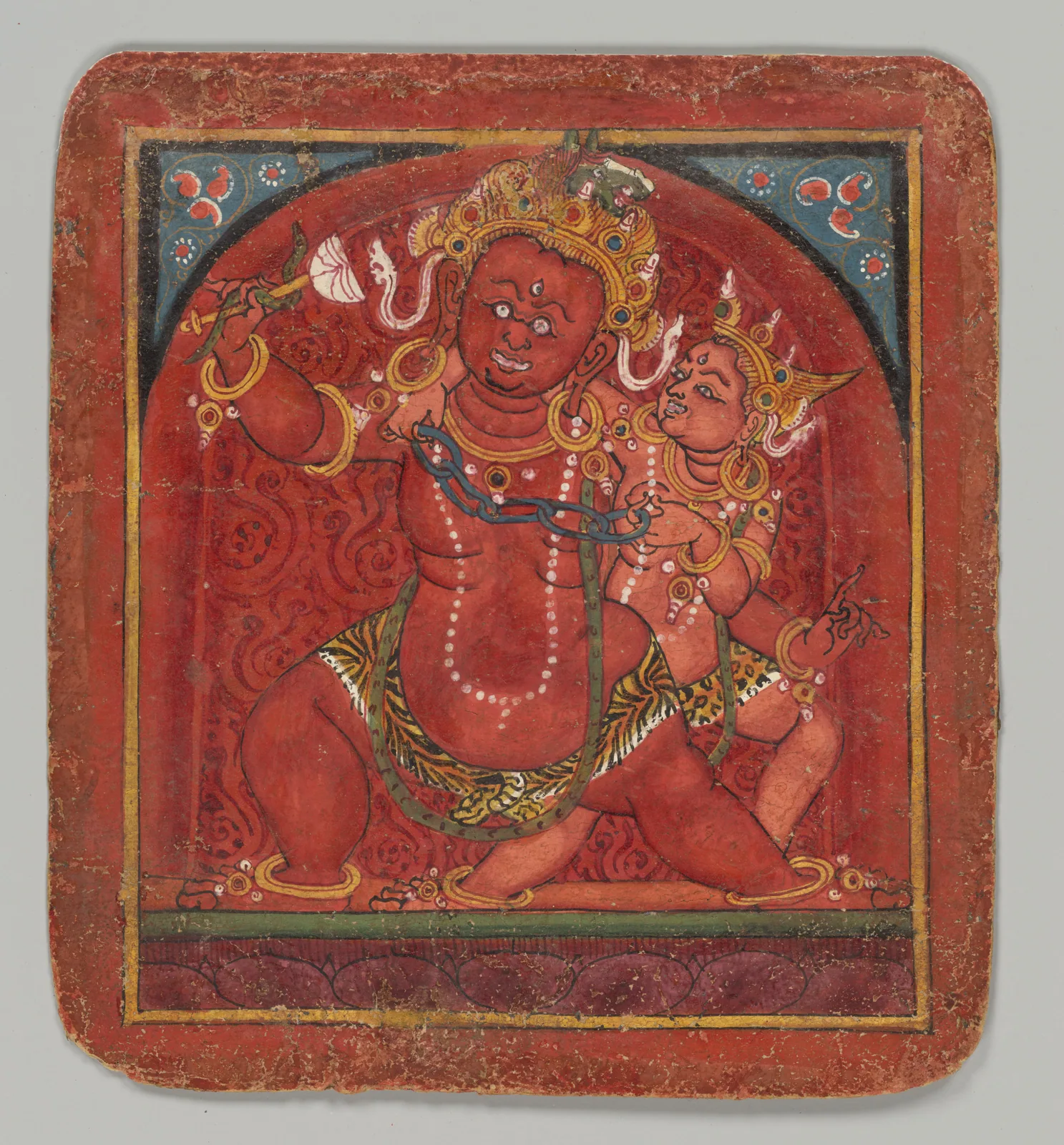
- Date: early 15th century (Ming dynasty, around the Yongle reign)
- Origin and medium: Tibet · tsakali (initiation card), colors on paper
- Collection: The Metropolitan Museum of Art, accession no. 2000.282.16 · Public domain
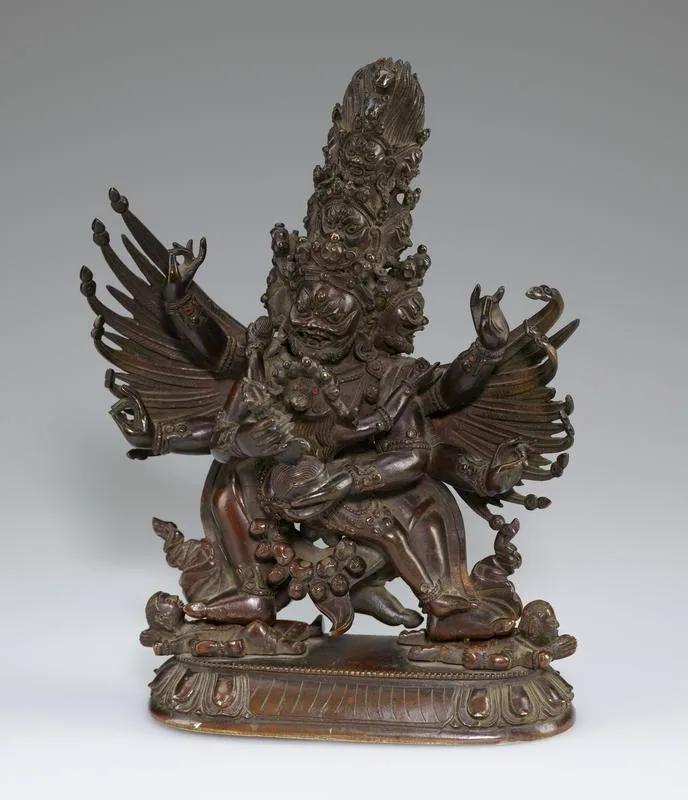
- Date: 18th century (Qing dynasty)
- Origin and medium: Tibet · copper alloy sculpture, inlaid with gems; Hayagriva and consort
- Collection: Minneapolis Institute of Art, accession no. 2019.50 · Public domain
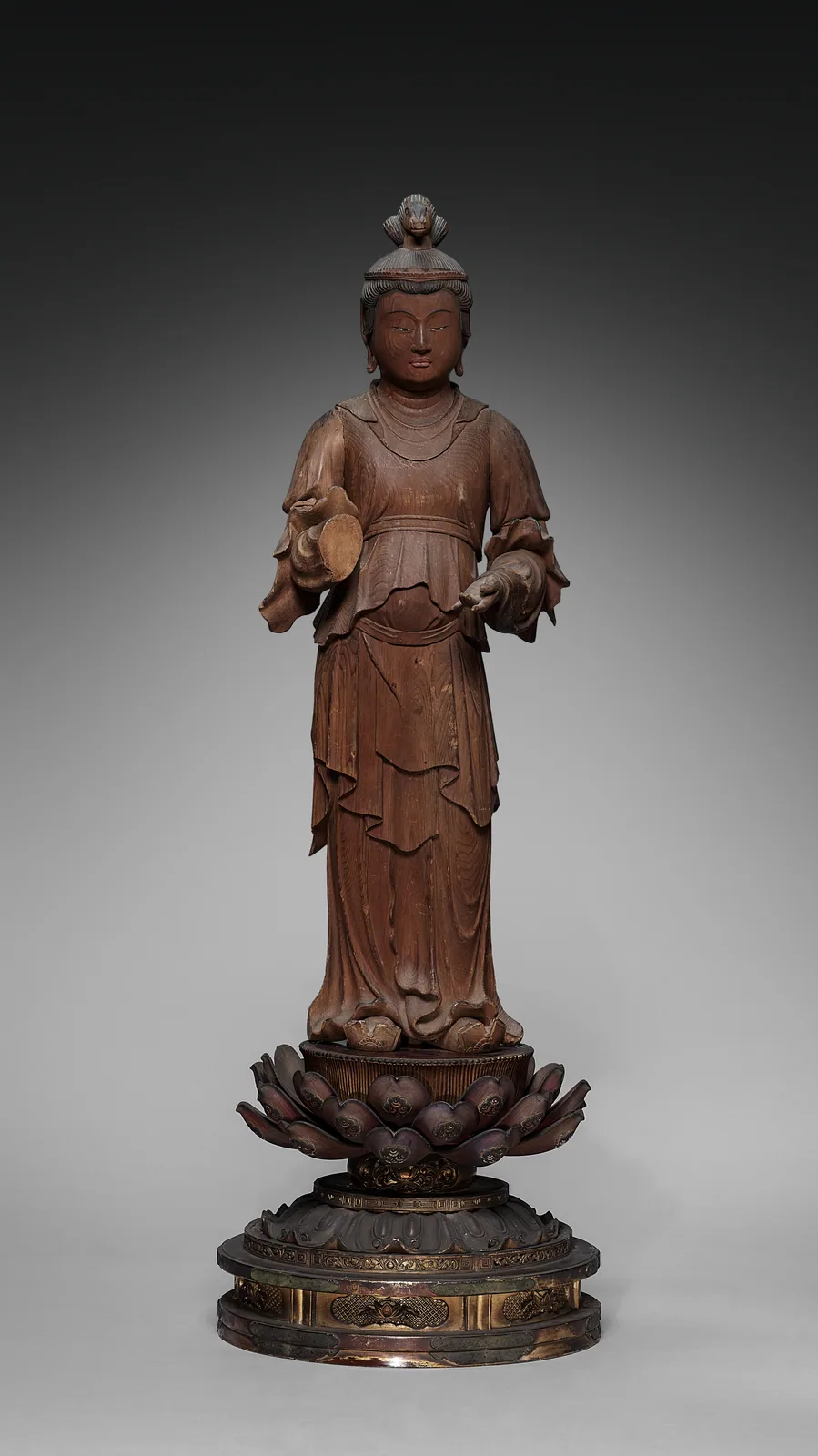
- Date: early 14th century (Kamakura period, Japan)
- Origin and medium: Japan · sculpture; Horse-Headed Avalokiteshvara
- Collection: Cleveland Museum of Art, accession no. 1981.1 · CC0