
Vajrayogini
A red female yidam (meditational deity) with her head tilted back and a skull cup raised high; a mother tantra yidam often practiced in the Gelug school.
Watch the video
Who she is
Vajrayogini's Sanskrit name is Vajrayoginī. In Tibetan she is called Dorje Naljorma. She is the consort of Chakrasamvara, and she is also practiced as a yidam in her own right.
The form practiced in the Gelug school is called Naro Khachö (Naropa's Dakini), because the great Indian adept Naropa saw it directly and passed it down.
What she does
This is a yidam practiced by dedicated practitioners, not a figure to pray to for worldly things. For people who have not yet entered tantra, getting to know her and feeling respect for her is already a way of making a connection for future study and practice.
What people pray to her for
Traditionally, people pray to Vajrayogini for:
- A good connection with tantra
- Growing wisdom and breaking through attachment to the self
- The clearing away of obstacles to practice
Mantra
Traditionally, the mantra and practice of this yidam may be taken up only after receiving empowerment from a qualified teacher. They are not given here.
Story: Naropa and the Old Woman
A thousand years ago, Naropa was one of the most famous scholars at Nalanda monastery in India. One day he was reading when a shadow fell across the page. He looked up and saw an ugly old woman.
The old woman asked, "What you are reading: do you understand the words, or the meaning?" Naropa said, "I understand the words." The old woman was so pleased that she laughed and jumped for joy. Naropa went on, "I understand the meaning too." At once the old woman began to cry. "When you say you understand the words, that is the truth. When you say you understand the meaning, you are lying."
Naropa asked, "Then who understands the meaning?" The old woman said, "My older brother, Tilopa." With that she vanished.
Because of this, Naropa gave up his standing as a scholar and left Nalanda to look for Tilopa. He went through twelve great hardships and finally attained realization. Traditionally, that old woman is said to have been an emanation of Vajrayogini.
How to recognize her
- Red body, one face, two arms, three eyes, long hair hanging loose
- Face turned upward to her left; left hand raises a brimming skull cup
- Right hand hangs down, holding a curved knife
- A long staff leans against her left shoulder
- Wears bone ornaments and a necklace strung with skulls, stands amid flames, and treads on two gods
The images
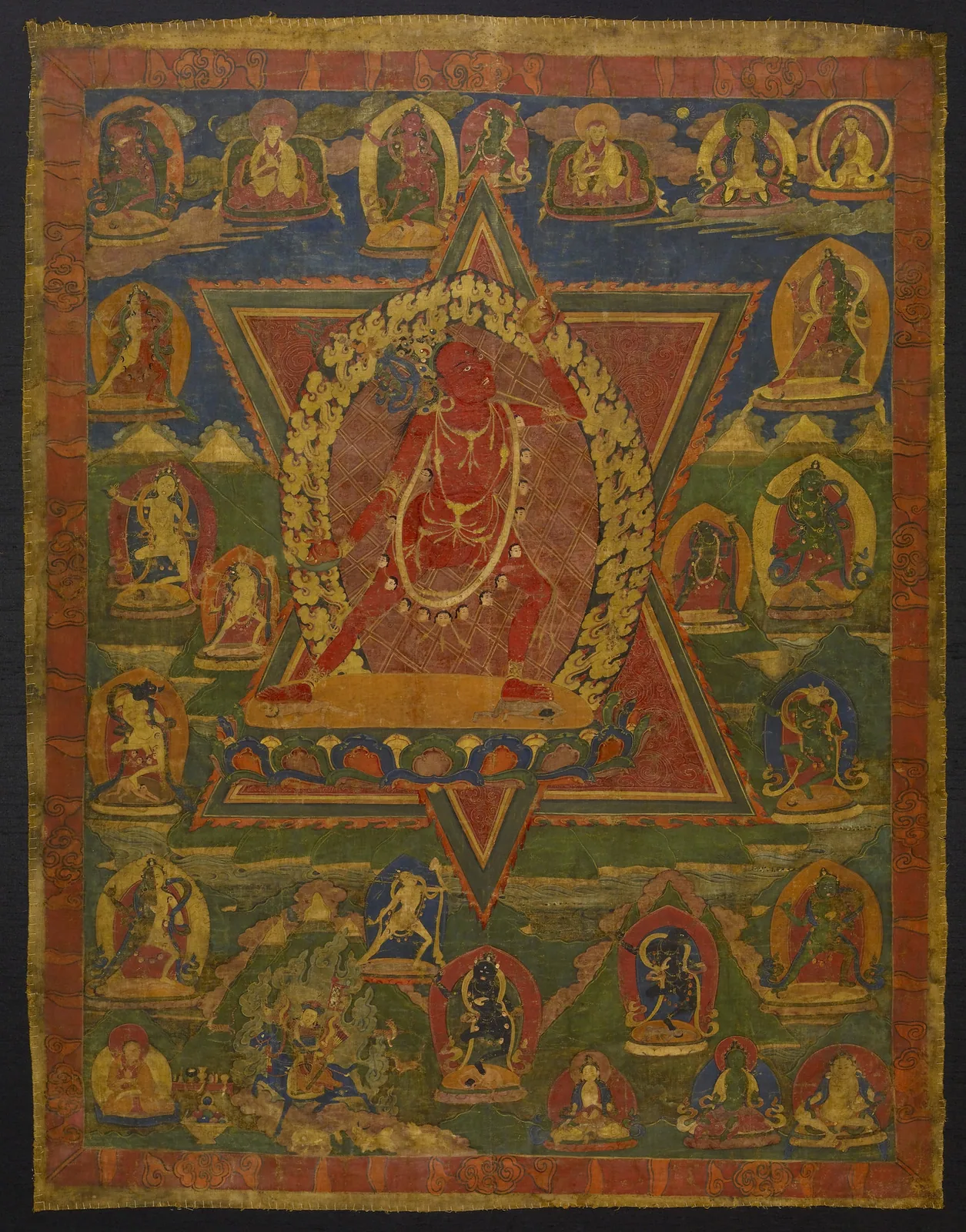
- Date: 18th century (Qing dynasty)
- Origin and medium: Tibet · thangka, colors and gold on cloth; Naro Khachö
- Collection: Walters Art Museum, accession no. 35.334 · CC0
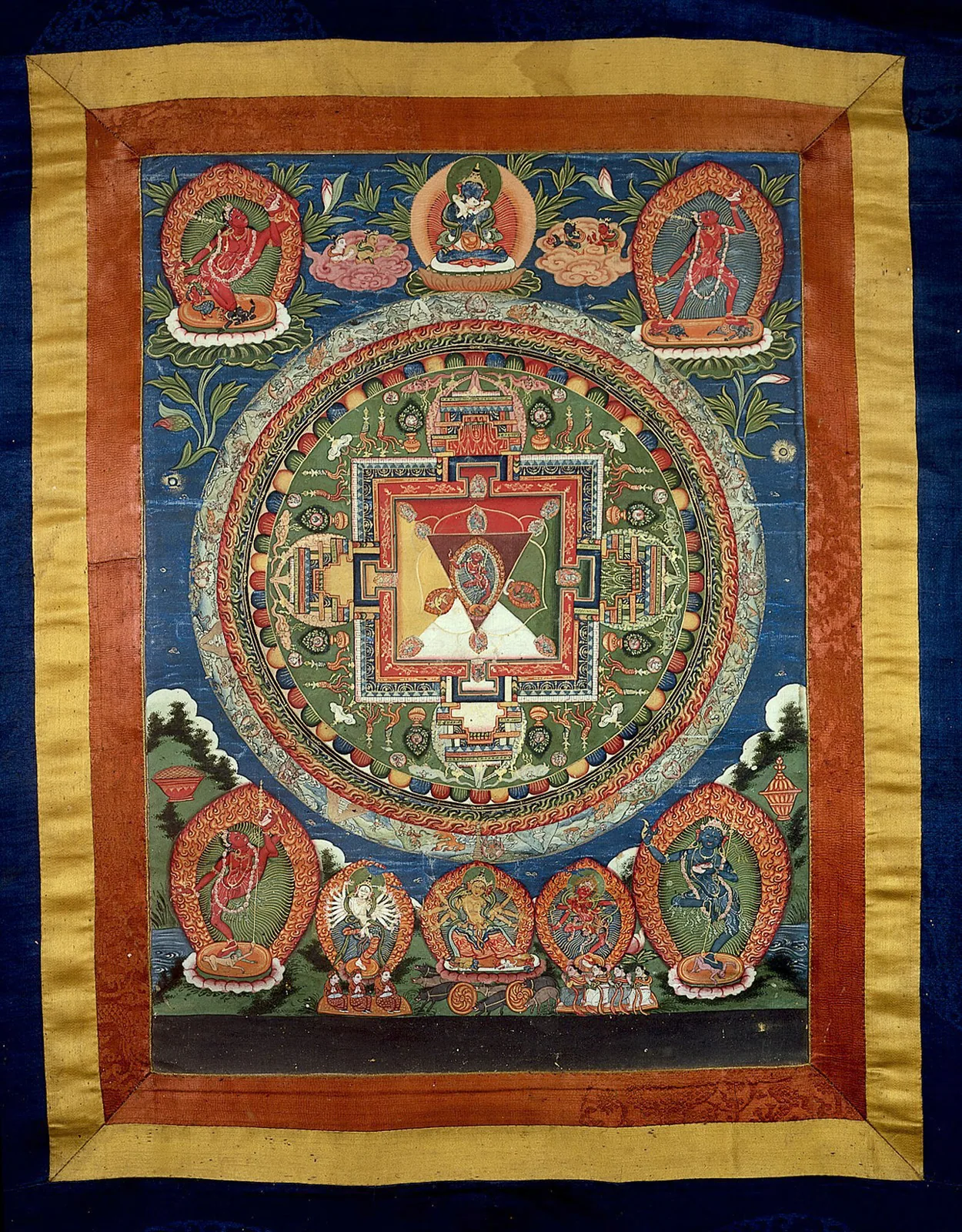
- Date: Date not given
- Origin and medium: Tibet · distemper on cloth; Vajrayogini with retinue, 51 × 40 cm
- Collection: Wellcome Collection, London, accession no. 47084i · Public Domain Mark
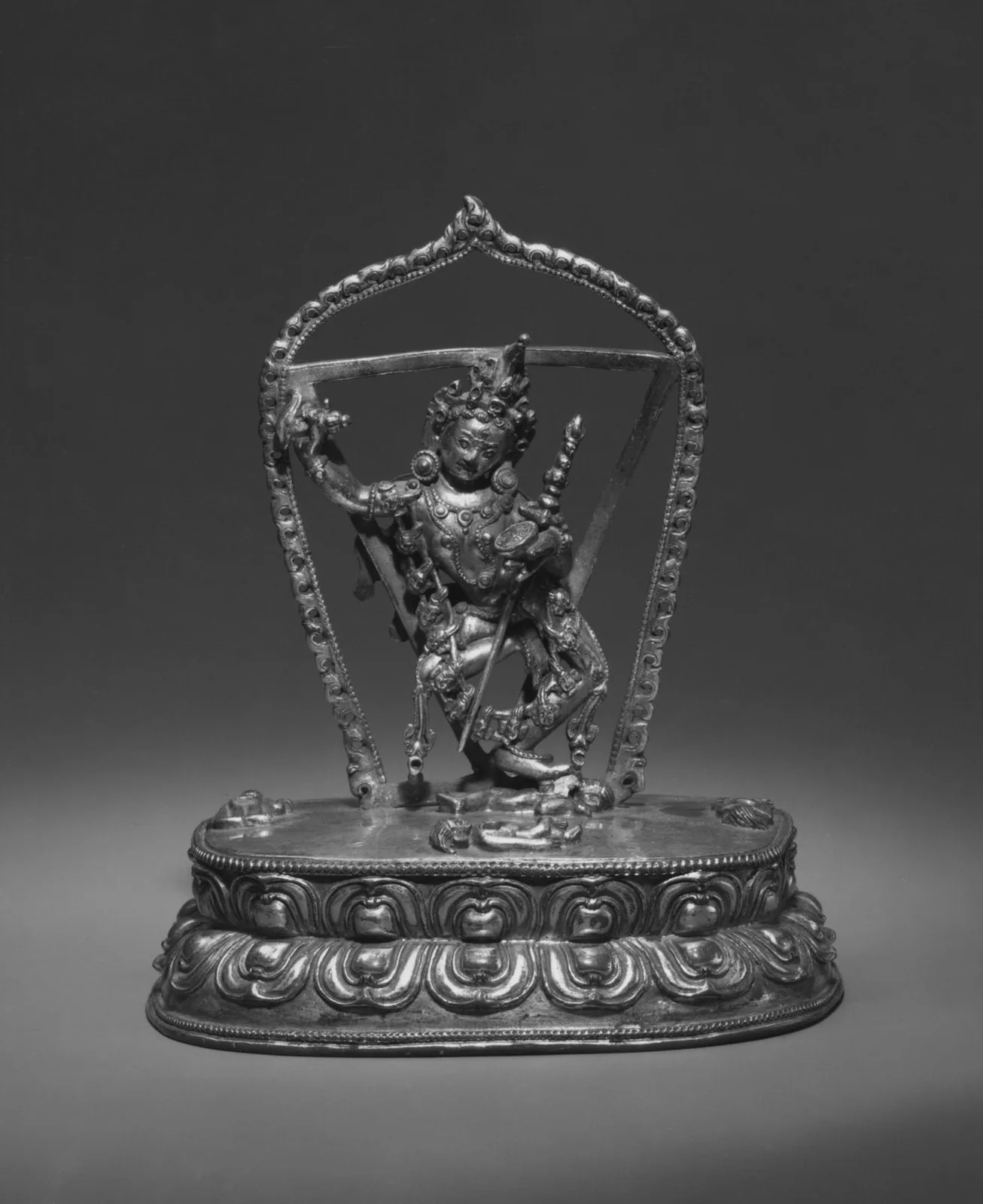
- Date: about 17th century (late Ming to early Qing dynasty)
- Origin and medium: Tibet · gilt copper figure, inlaid with gems
- Collection: The Metropolitan Museum of Art, accession no. 1979.504 · Public domain