
Samantabhadra
The bodhisattva who turns aspirations into action. He stands for "great conduct", which means putting things into practice.
Watch the video
Who he is
Samantabhadra's name in Sanskrit is Samantabhadra, meaning "Universally Good". In Tibetan he is called Kuntu Zangpo. He is one of the Eight Great Bodhisattvas.
Manjushri stands for wisdom, and Samantabhadra stands for vows and action. The two often stand to the left and right of Shakyamuni Buddha: one is in charge of seeing clearly, the other of doing.
In the Nyingma school of Tibet there is also a figure with the same name, the primordial Buddha Samantabhadra. He is a deep blue Buddha with no clothing or ornaments, and he is not the same as the bodhisattva Samantabhadra described here.
What he does
He stands for "action" and "aspiration": once a vow is made, it is carried out, one thing at a time.
What people pray to him for
Traditionally, people pray to Samantabhadra for:
- Keeping the vows they have made, all the way to the end
- Truly living by what they have learned
- A bigger heart when making offerings and dedicating merit
Mantra
You can recite his name: Namo Samantabhadra Bodhisattva.
At the end of ceremonies in all the schools of Tibet, the verses of the "Aspiration of Samantabhadra" are often recited once. This is one of the most widely used dedication prayers.
Story: The Ten Great Vows
At the end of the Avatamsaka Sutra, Samantabhadra sets out ten great vows, known as the "ten great kings of vows":
- Paying homage to all the Buddhas
- Praising the Tathagatas
- Making abundant offerings
- Confessing karmic obscurations
- Rejoicing in merit
- Requesting the turning of the Dharma wheel
- Requesting the Buddhas to remain in the world
- Always following the Buddhas in learning
- Always accommodating living beings
- Dedicating all merit universally
These ten later became the basic framework of practice in Mahayana Buddhism. The "seven-limb offering" done every day in Tibetan Buddhism comes from these ten vows.
How to recognize him
- In China: riding a white elephant with six tusks
- In Tibet: dressed as a bodhisattva, holding a lotus or a jewel
- The Eight Great Bodhisattvas often appear as a group on either side of a Buddha; you tell them apart by what they hold in their hands
The images
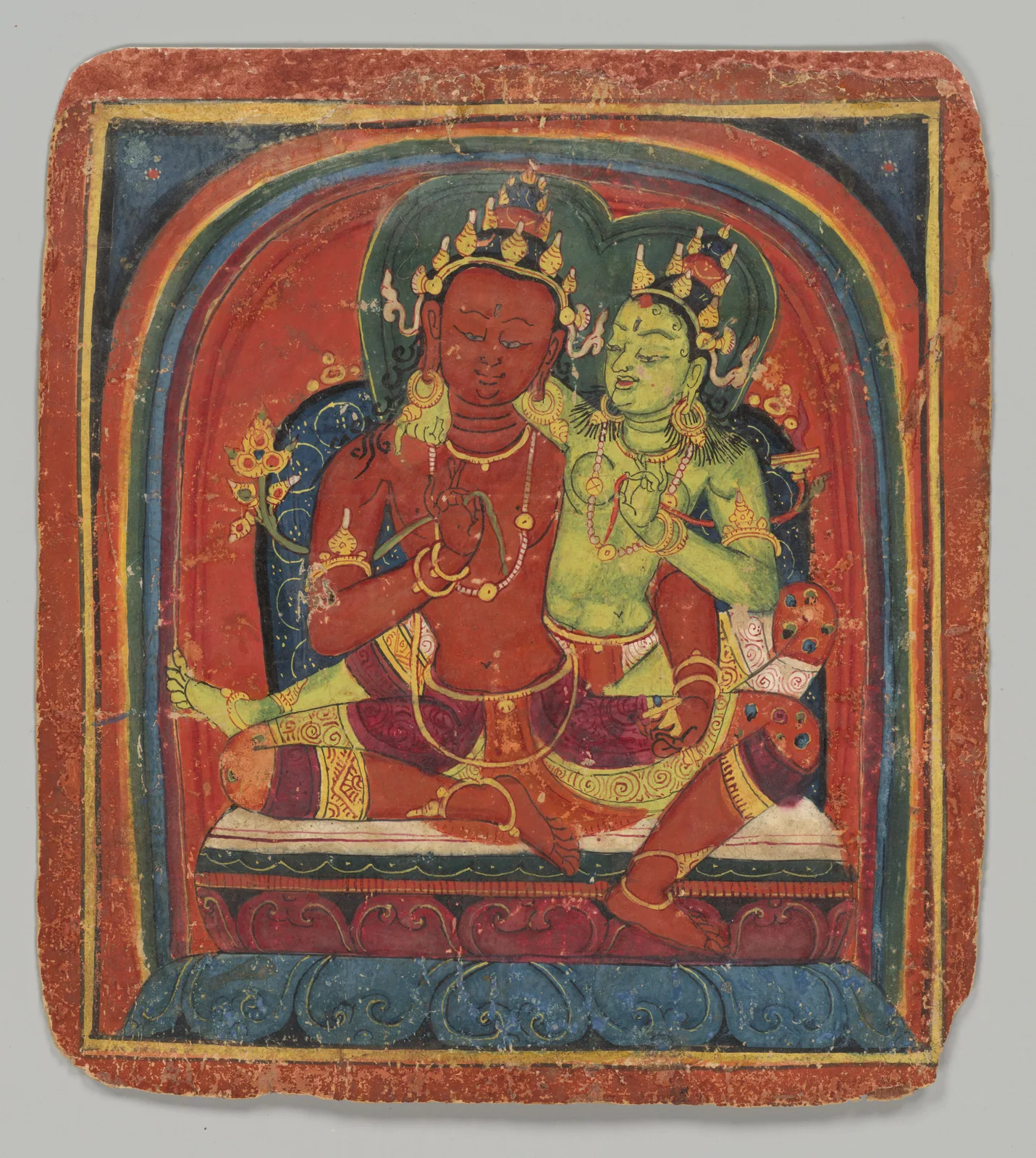
- Date: Early 15th century (Ming dynasty, around the Yongle reign)
- Origin and medium: Tibet · Initiation card (tsakali), color on paper
- Collection: The Metropolitan Museum of Art, accession no. 2000.282.12 · Public domain
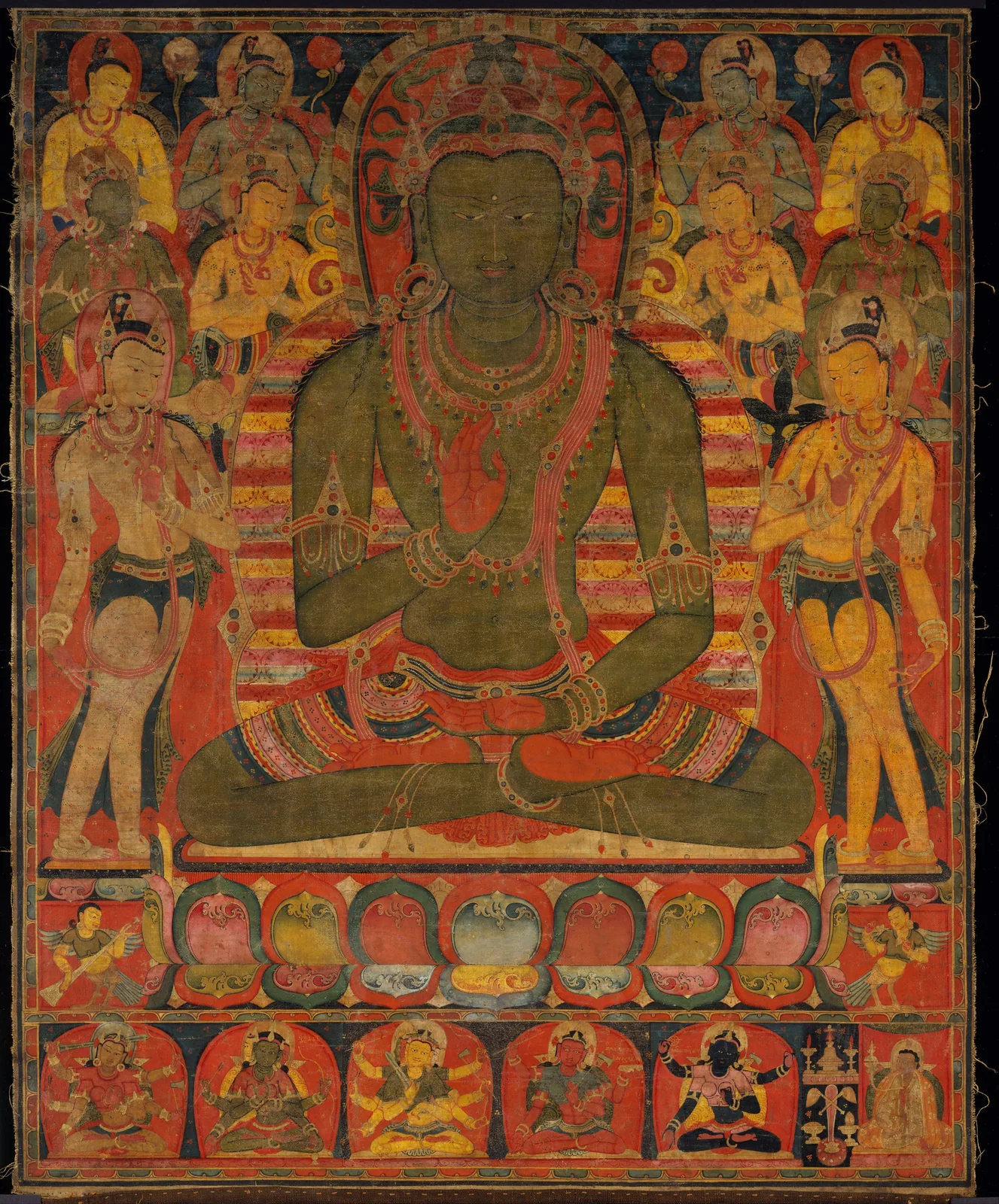
- Date: About 1200–1250 (roughly the Southern Song period)
- Origin and medium: Central Tibet · Thangka, distemper on cloth; the Buddha Amoghasiddhi with the Eight Great Bodhisattvas
- Collection: The Metropolitan Museum of Art, accession no. 1991.74 · Public domain
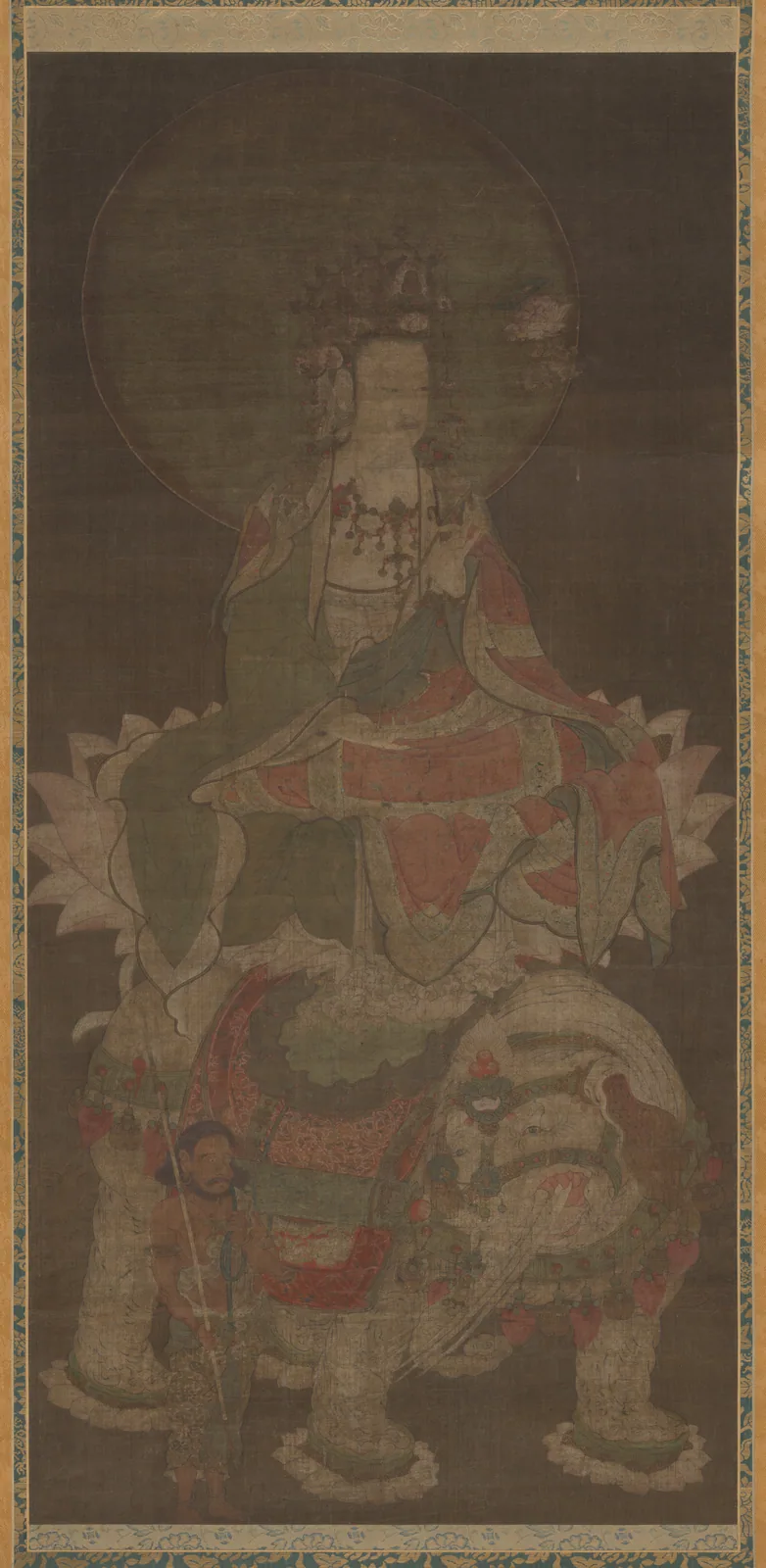
- Date: 12th century (Southern Song dynasty)
- Origin and medium: China · Painting
- Collection: Cleveland Museum of Art, accession no. 1962.161 · CC0