
Sitatapatra (White Parasol)
The female Buddha who opens a great white parasol and keeps disasters out.
Watch the video
Who she is
Sitatapatra's Sanskrit name is Sitātapatrā. In Tibetan she is called Dukar, which simply means "white parasol." Like Ushnishavijaya, the story goes that she too emanated from the light at the crown of the Buddha's head.
In ancient India the parasol was part of a king's regalia, and also a symbol of shelter. "White Parasol" means that the Buddha's compassion is like a great parasol that shelters all beings.
What she does
She blocks disasters and turns them back: illness, accidents, curses, lawsuits, harmful spirits, and every kind of harm that comes from outside.
What people pray to her for
Traditionally, people pray to Sitatapatra for:
- Safety for the whole family, with no harm in coming and going
- Turning back illness, accidents, and quarrels and gossip
- Peace for the home, the local area, and the country
Mantra
HŪṂ MAMA HŪṂ NI SVĀHĀ
This is the shortest phrase, from the end of the near-heart mantra. The fuller near-heart mantra is OṂ SARVA TATHĀGATOṢṆĪṢA SITĀTAPATRE HŪṂ PHAṬ HŪṂ MAMA HŪṂ NI SVĀHĀ. The mantra is openly taught and may be recited; the complete ritual practice, however, must first be received from a teacher. Tibetan families often print Sitatapatra's sutra and mantra on prayer flags and hang them up, or carry them in an amulet box.
Story: The Yuan Emperor's White Parasol
Sitatapatra has a historical connection with the court of the Yuan dynasty.
The History of the Yuan records that the Yuan emperor Kublai Khan, on the advice of the Imperial Preceptor Phagpa, placed a white parasol above the throne in the great hall of the palace to protect the state. From then on, every year on the fifteenth day of the second month, a grand "White Parasol ceremony" was held in Dadu (today's Beijing): the white parasol was brought out and carried in procession once around the imperial city, surrounded by an honor guard, monks, and musicians, and the whole city came out to watch.
It is an example of a female Buddha of Tibetan Buddhism becoming part of a dynasty's ritual for protecting the state.
How to recognize her
- Simple form: white body, one face, two arms, holding a white parasol
- Complex form: a thousand faces, a thousand arms, and a thousand legs, with eyes all over her body, still holding the white parasol
- The white parasol is her emblem
The image
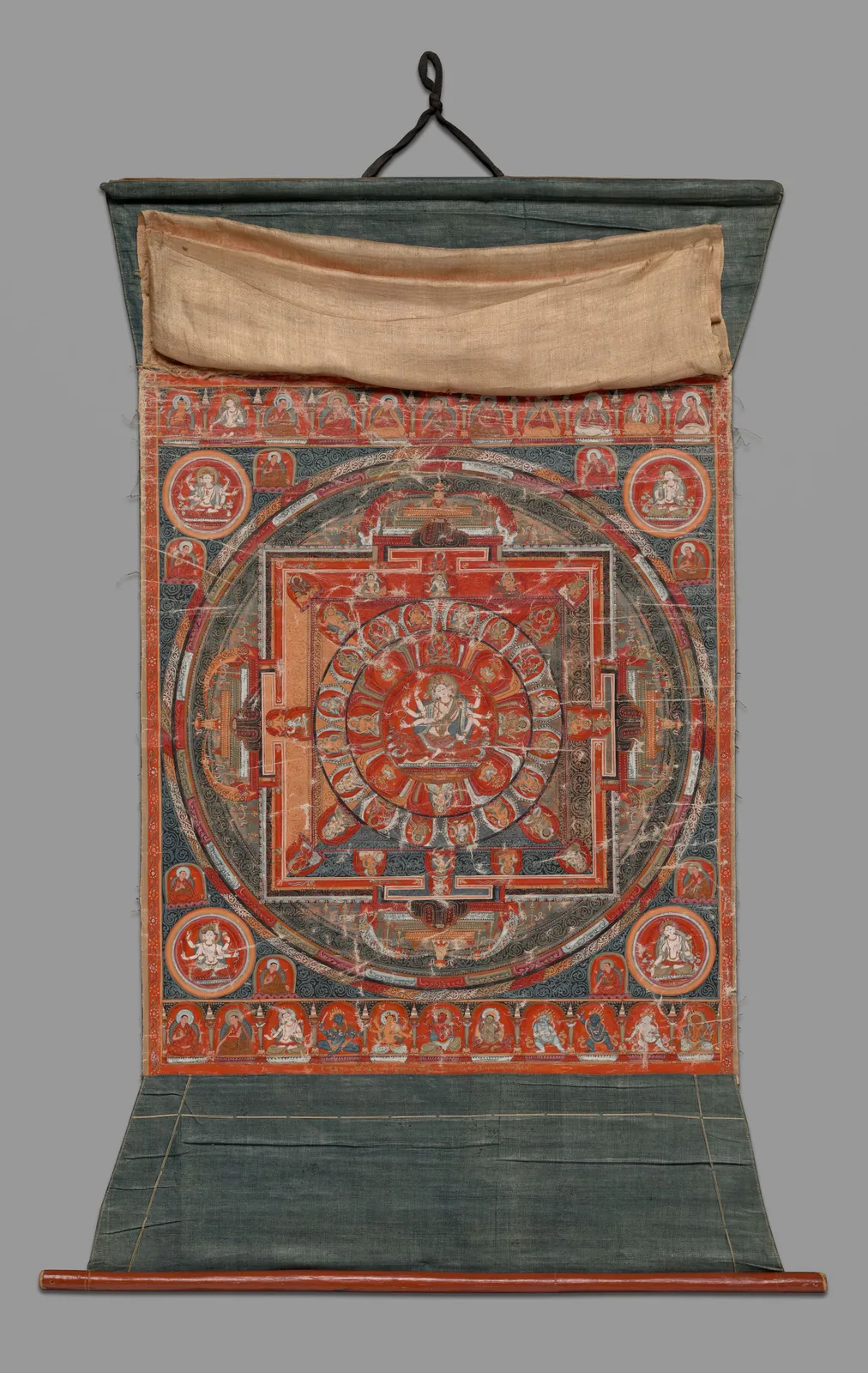
- Date: early 16th century (mid-Ming dynasty)
- Origin and medium: Ngor Monastery, Tibet · colors on cloth; mandala of Sitatapatra
- Collection: Yale University Art Gallery, accession no. 2022.29.1 · Marked by the museum as no copyright (CC0)