
Ushnishavijaya
A female Buddha who appeared from the light at the crown of the Buddha's head. Her special work is lengthening life and purifying negative karma.
Watch the video
Who she is
Ushnishavijaya's name in Sanskrit is Uṣṇīṣavijayā. In Tibetan she is called Namgyalma, meaning "the Victorious One". The "ushnisha" in her name is the mound on the crown of the Buddha's head. The story goes that she appeared from the light that shone out from it.
Together with Amitayus and White Tara, she is one of the Three Deities of Long Life.
What she does
She lengthens life and purifies negative karma. In particular, she clears away obstacles such as a short life or an untimely death.
What people pray to her for
Traditionally, people pray to Ushnishavijaya for:
- A longer life, and the clearing of obstacles to life span
- Purifying negative karma from the past
- Blessings for the seriously ill, the dying and those who have died
Mantra
OṂ BHRŪṂ SVĀHĀ
OṂ AMṚTA ĀYUR DADE SVĀHĀ
These are two short mantras. The complete Ushnishavijaya Dharani is very long. In both China and Tibet it is often carved on stone pillars and printed on prayer flags. It is openly taught; anyone may recite it.
Story: The god with only seven days left to live
The Ushnishavijaya Dharani Sutra tells this story. In the heavens there was a god named Supratishthita. He was enjoying himself with the goddesses when, in the night, he suddenly heard a voice say: "You have seven days left to live. After you die you will be reborn as an animal seven times, and then you will fall into hell."
Supratishthita was terrified and ran to the king of the gods for help. The king of the gods could do nothing either, so he went to ask the Buddha. The Buddha sent out light from the crown of his head and taught the Ushnishavijaya Dharani. He told the king of the gods to pass it on to Supratishthita, who was to recite it for six days and six nights.
Supratishthita did as he was told. Seven days later, not only had he not died, his life had been lengthened and his negative karma had been purified.
How to recognize her
- White body, three faces, eight arms
- The first right hand holds a crossed vajra at the chest
- Another right hand holds up a small image of Amitabha
- Her hands also hold a bow, an arrow and a long-life vase
- Often painted in the middle of a stupa
The images
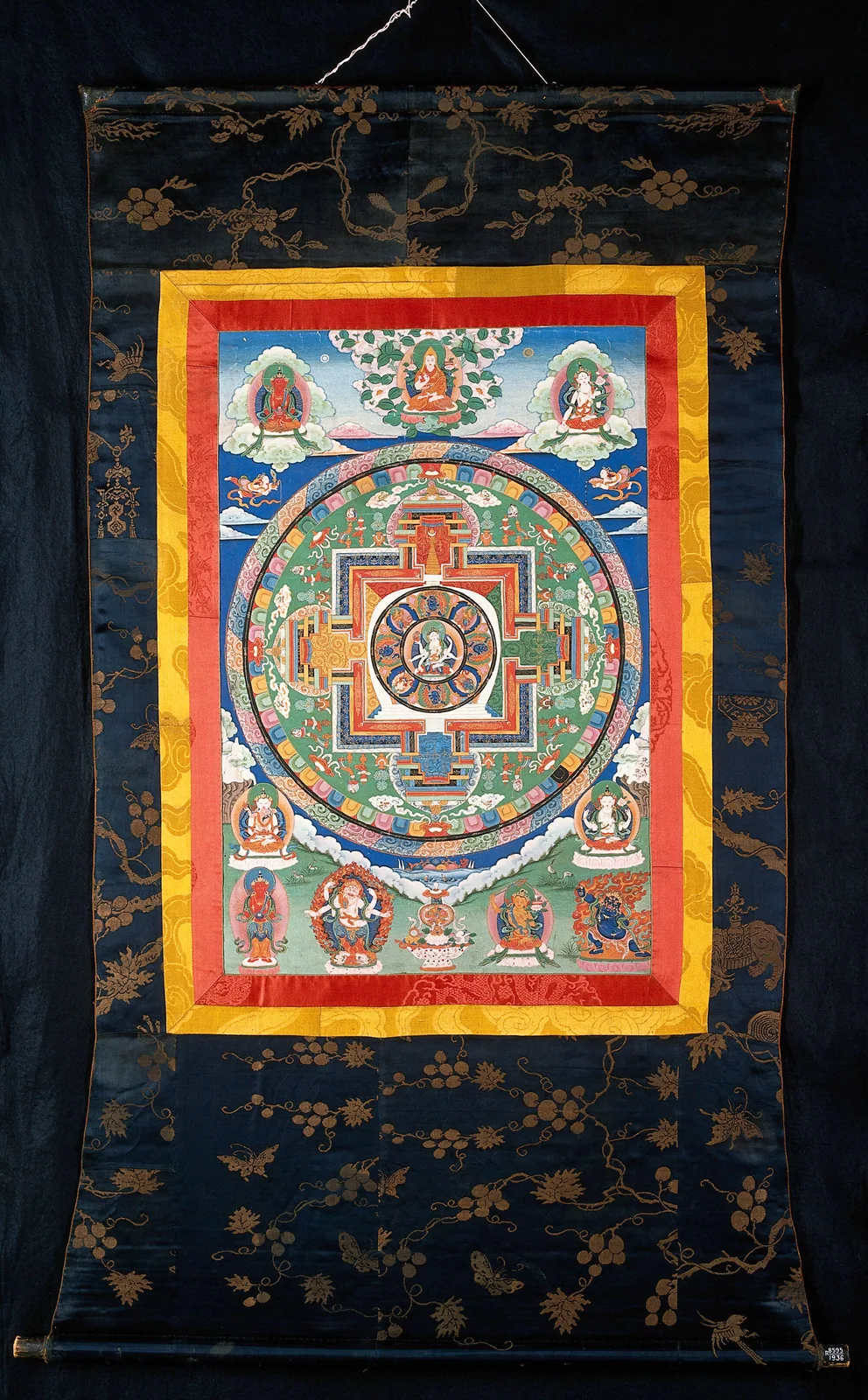
- Date: Date not given
- Origin and medium: Tibet · Distemper on cloth; mandala of the eight-armed Ushnishavijaya
- Collection: Wellcome Collection, London, accession no. 47073i · Public Domain Mark
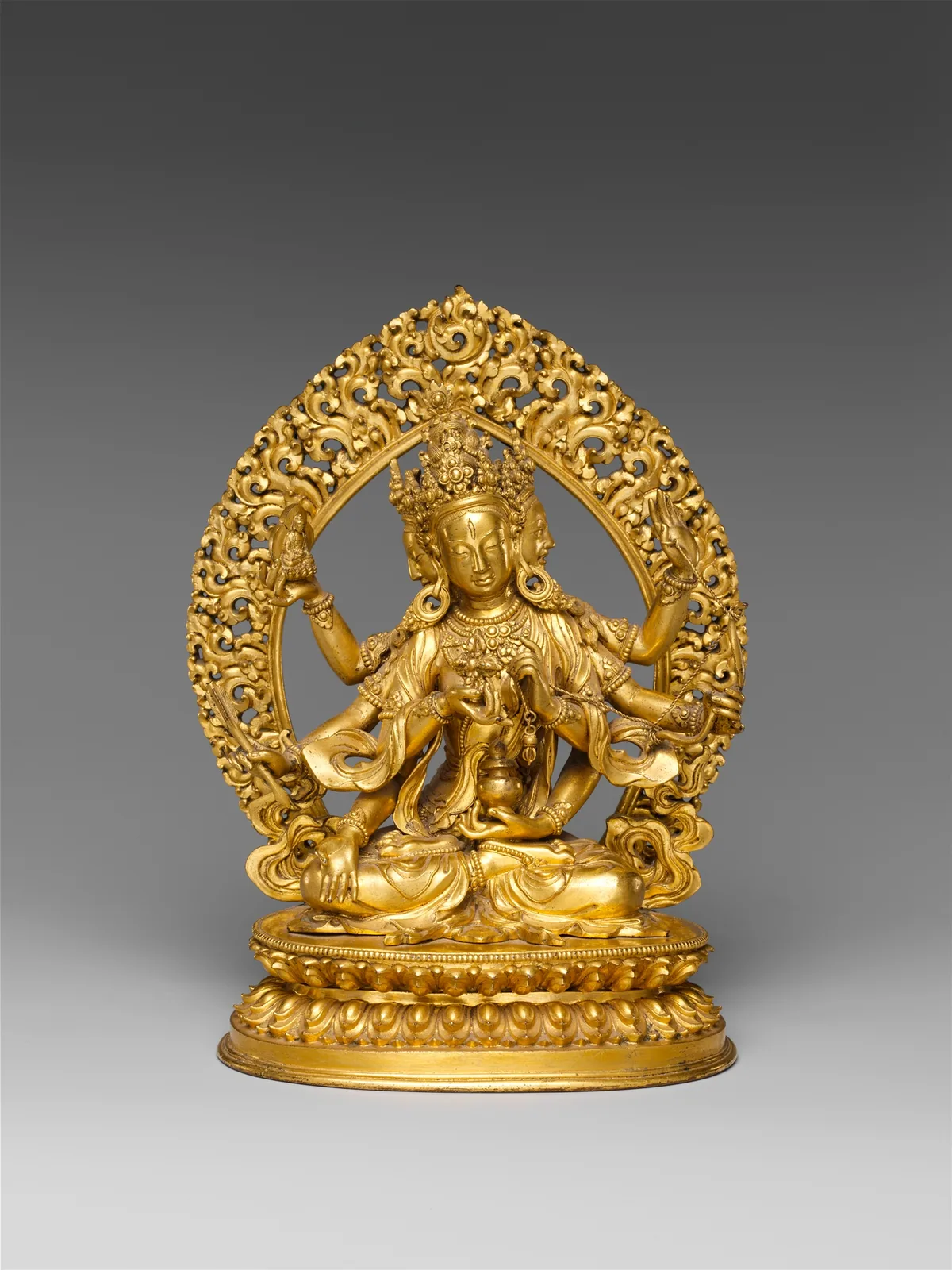
- Date: Late 17th to 18th century (Qing dynasty)
- Origin and medium: China · Gilt copper alloy statue
- Collection: The Metropolitan Museum of Art, accession no. 2007.75a, b · Public domain
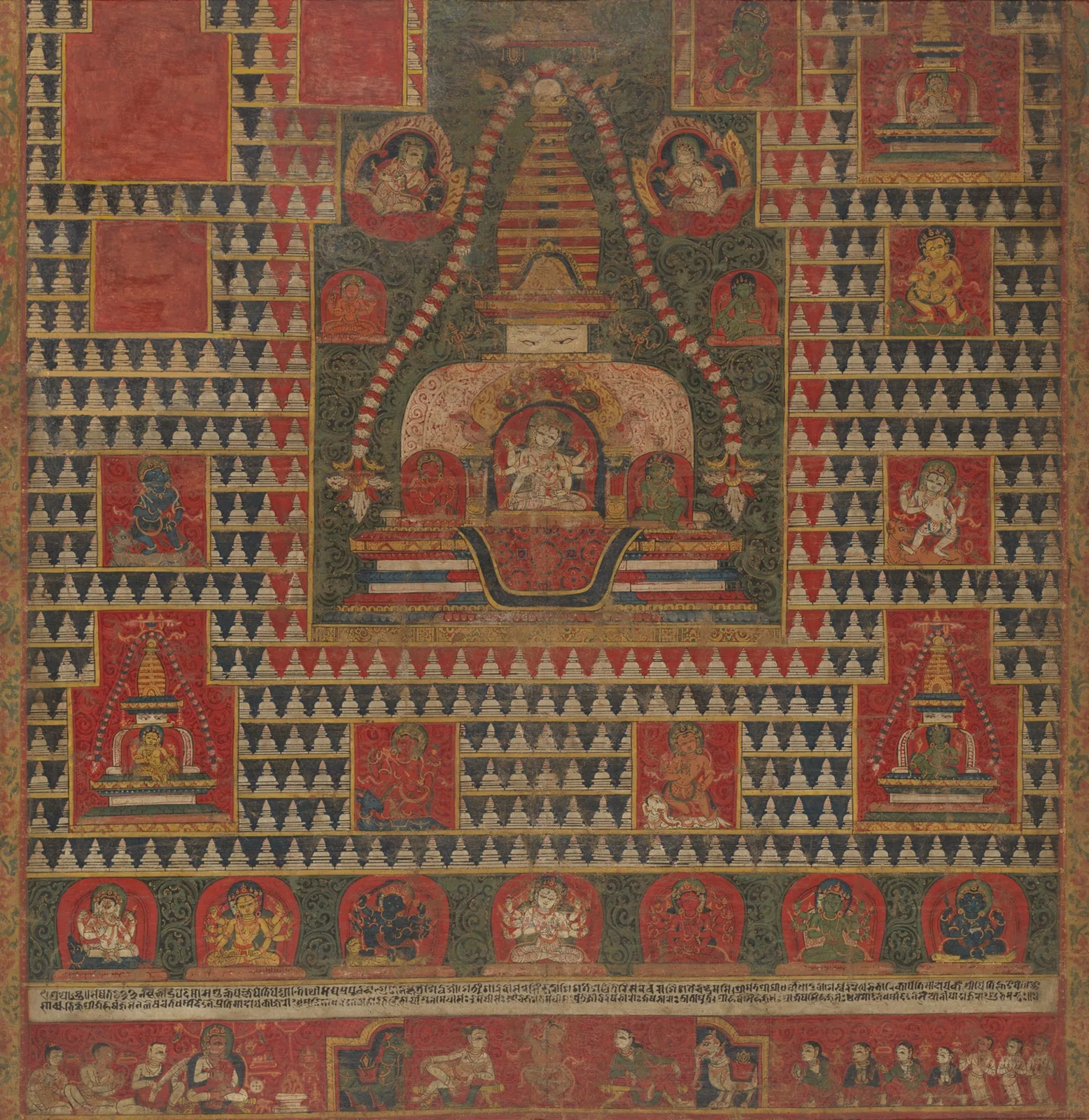
- Date: 1513 (Ming dynasty, Zhengde reign)
- Origin and medium: Nepal · Painting; Ushnishavijaya inside a stupa, with a dated inscription
- Collection: Art Institute of Chicago, accession no. 2014.1040 · CC0