
Vajrasattva
The yidam (meditational deity) specially devoted to confession and purification, pure white all over.
Watch the video
Who he is
Vajrasattva's Sanskrit name is Vajrasattva. In Tibetan he is called Dorje Sempa. "Vajra" means firm and indestructible; "sattva" means hero.
In Tibetan Buddhism he is the main yidam for purifying karmic obscurations. Before formally practicing tantra, every school first requires the "preliminary practices," and one of them is reciting Vajrasattva's hundred-syllable mantra one hundred thousand times.
What he does
He helps people confess and purify: clearing away the wrong things they have done, the wrong things they have said, and the harmful thoughts they have had, so that the mind becomes light and at ease again.
What people pray to him for
Traditionally, people pray to Vajrasattva for:
- Confessing past mistakes
- Letting go of guilt and regret, and starting again
- Becoming pure again after breaking a vow or going back on a commitment
- Clearing away obstacles before beginning practice
Mantra
OṂ VAJRASATTVA HŪṂ
This is the short mantra. It is openly taught; anyone may recite it. The full mantra has one hundred syllables and is called the "hundred-syllable mantra." It is found in the prayer books of every school.
Story: Confession Needs Four Powers
Buddhism holds that wrong actions can be purified, but reciting a mantra alone is not enough. Four powers are needed:
- The power of reliance: turning to the Buddhas and bodhisattvas, and giving rise to refuge and the wish to help all beings.
- The power of regret: sincerely recognizing that one did wrong, like discovering that one has swallowed poison by mistake.
- The power of the remedy: making up for it with real good actions, such as reciting Vajrasattva's mantra.
- The power of not doing it again: resolving not to act that way in the future.
Only when all four powers are present is the confession complete. Traditionally this is called "the four opponent powers," and it is the standard way confession is taught in the Gelug school.
How to recognize him
- White body, dressed as a bodhisattva, wearing a jeweled crown
- Right hand holds a vajra at the chest
- Left hand holds a bell at the hip
- He is usually shown seated; a standing figure has been chosen here
The images
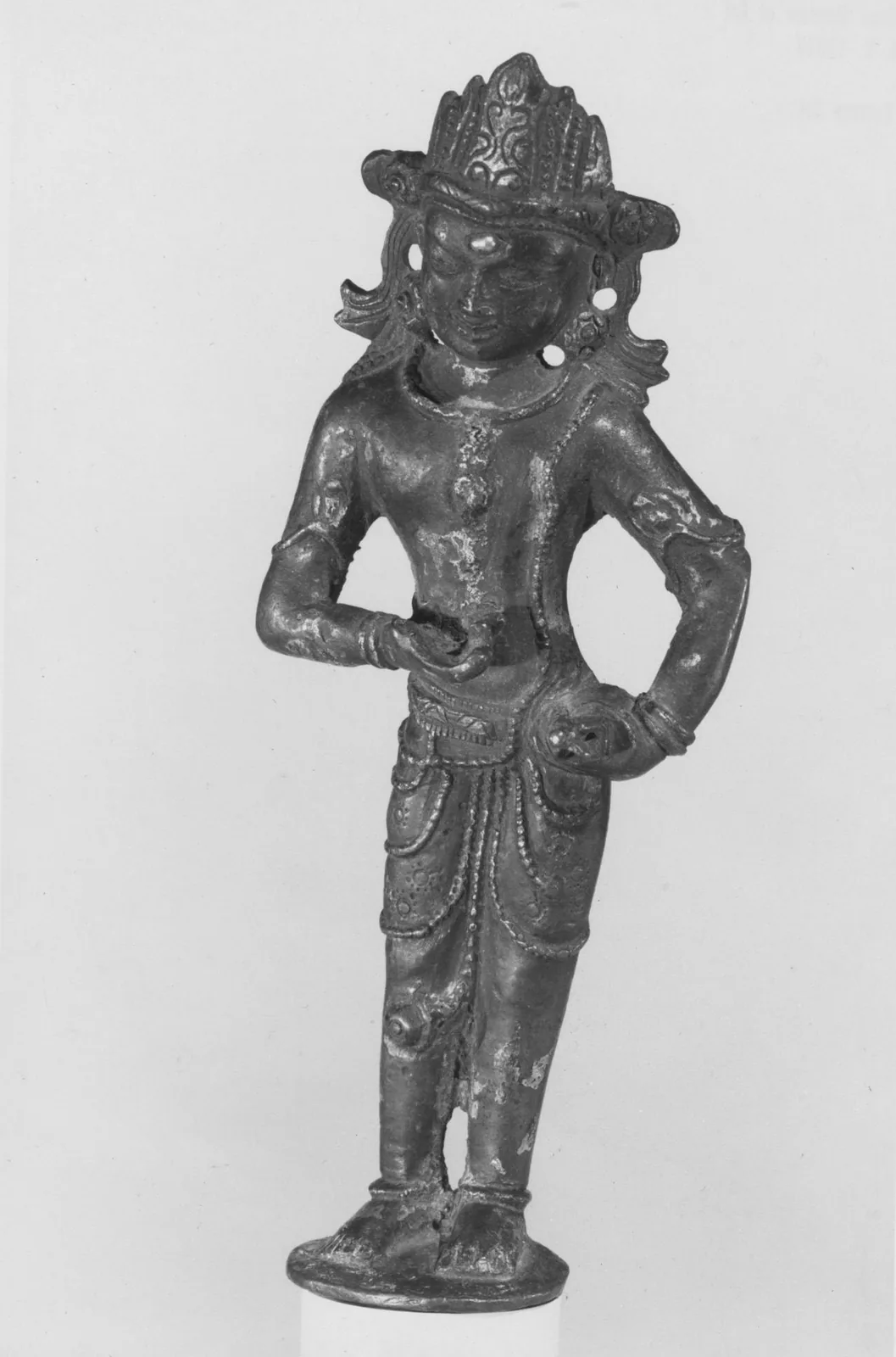
- Date: about 11th century (roughly the Northern Song period)
- Origin and medium: Western Tibet · standing figure, gilt copper
- Collection: The Metropolitan Museum of Art, accession no. 1975.441 · Public domain
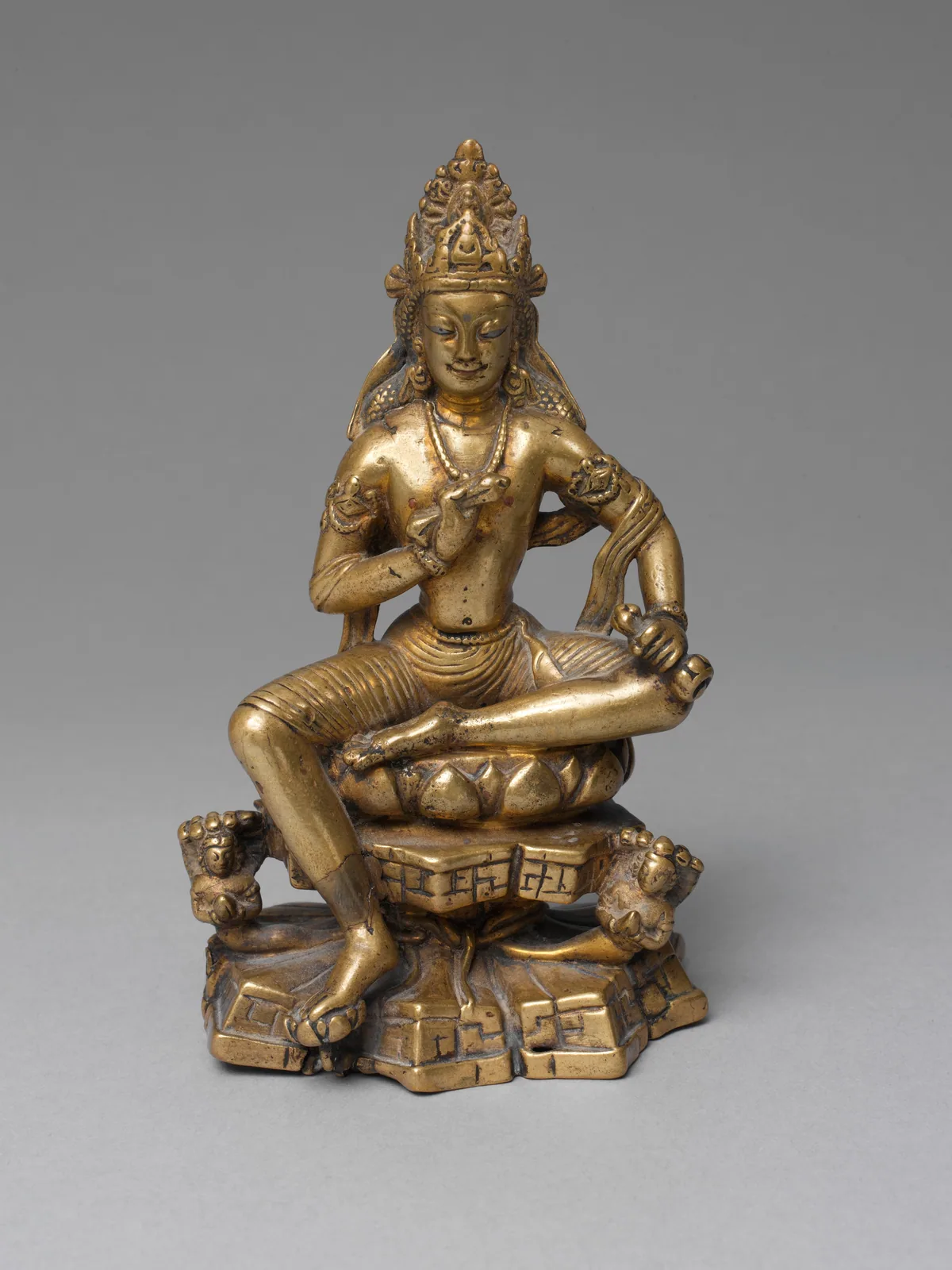
- Date: 8th century (roughly the Tang dynasty)
- Origin and medium: Kashmir · seated figure, brass inlaid with silver
- Collection: The Metropolitan Museum of Art, accession no. 2015.500.4.6 · Public domain