
Yamantaka (Vajrabhairava)
The wrathful form of Manjushri, with the head of a water buffalo; the most widely practiced yidam (meditational deity) in the Gelug school.
Watch the video
Who he is
Yamantaka's Sanskrit name is Vajrabhairava. He is also called Yamāntaka, meaning "the one who subdues the Lord of Death." In Tibetan he is called Dorje Jigje.
He is the fiercest form taken by Manjushri, in order to subdue those who are hardest to tame. Je Tsongkhapa made Yamantaka one of his own most central practices, and almost every Gelug monastery enshrines him.
What he does
This is a yidam practiced by dedicated practitioners, not a figure to pray to for worldly things. For people who have not yet entered tantra, getting to know him and feeling respect for him is already a way of making a connection for future study and practice.
At a deeper level, the "Lord of Death" he subdues means people's fear of death, and the ignorance that causes the cycle of birth and death.
What people pray to him for
Traditionally, people pray to Yamantaka for:
- A good connection with tantra
- Clearing away the most stubborn obstacles in practice
- Overcoming the fear of death
Mantra
Traditionally, the mantra and practice of this yidam may be taken up only after receiving empowerment from a qualified teacher. They are not given here.
Story: Where the Bull's Head Comes From
This story is told among the people of Tibet. Once there was a practitioner in retreat in a mountain cave, and he was on the verge of accomplishing his practice. Just then a gang of robbers stole a bull and hid in the cave to slaughter it. They discovered the practitioner and, afraid he would report them, killed him too.
In his last moment, great hatred arose in the practitioner. He picked up the bull's head and set it on his own neck, becoming the bull-headed Yama. He killed the robbers, and even then he did not stop, but went about killing everywhere.
The people called on Manjushri to save them. Manjushri emanated a form that also had a bull's head but was far more terrifying than Yama. This is Yamantaka. Once subdued, Yama vowed to guard the Dharma and became a protector. He is Yama Dharmaraja, who is introduced later.
How to recognize him
- Blue-black body; the main face is that of a wrathful water buffalo, with two great horns on his head
- Nine faces in all; the topmost is the face of Manjushri
- Thirty-four arms and sixteen legs, the hands holding all kinds of ritual implements
- Often embraces his consort, with flames all around his body
The images
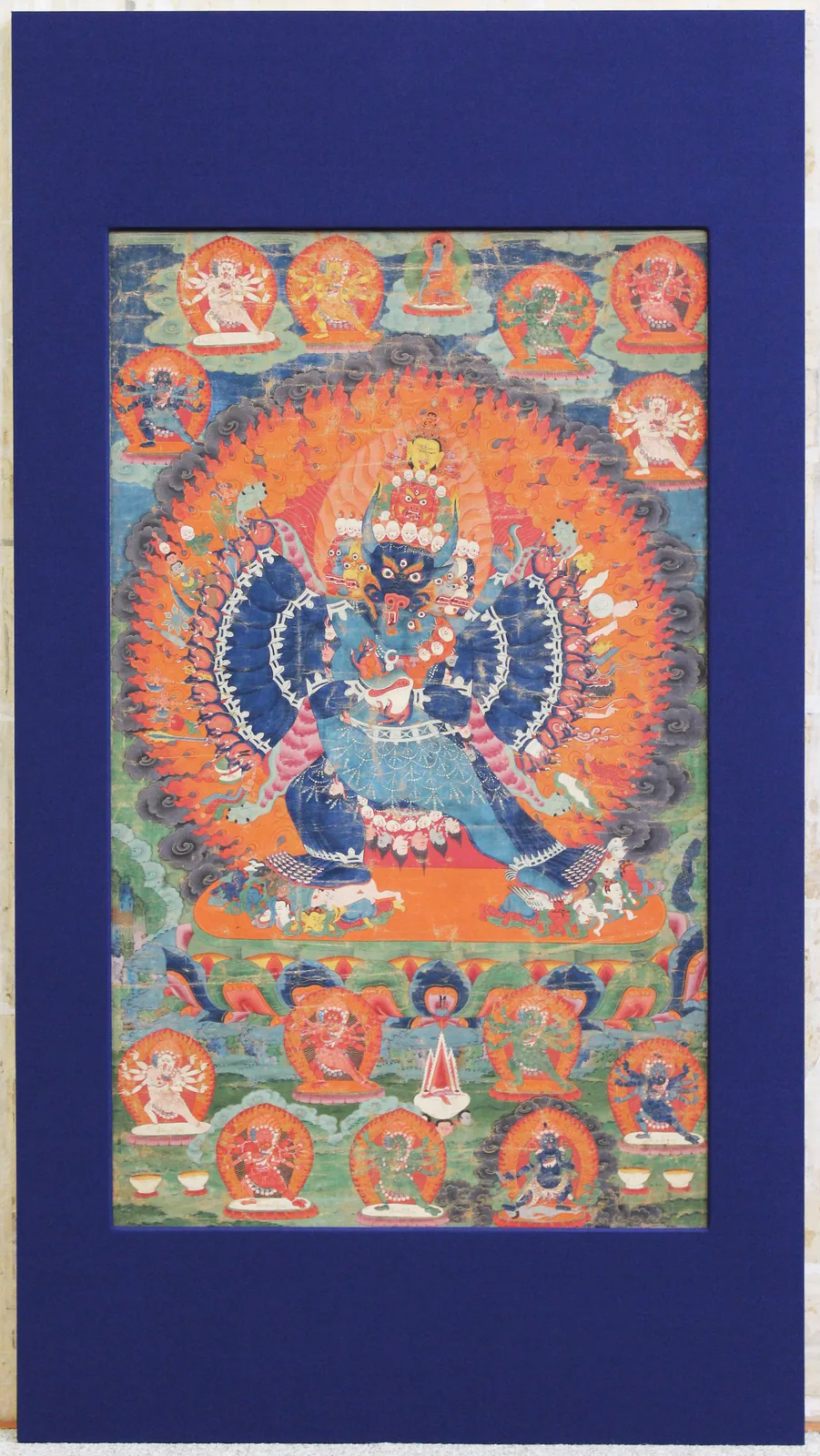
- Date: 18th century (Qing dynasty)
- Origin and medium: Tibet · thangka, distemper on cloth
- Collection: The Metropolitan Museum of Art, accession no. 31.128.3 · Public domain
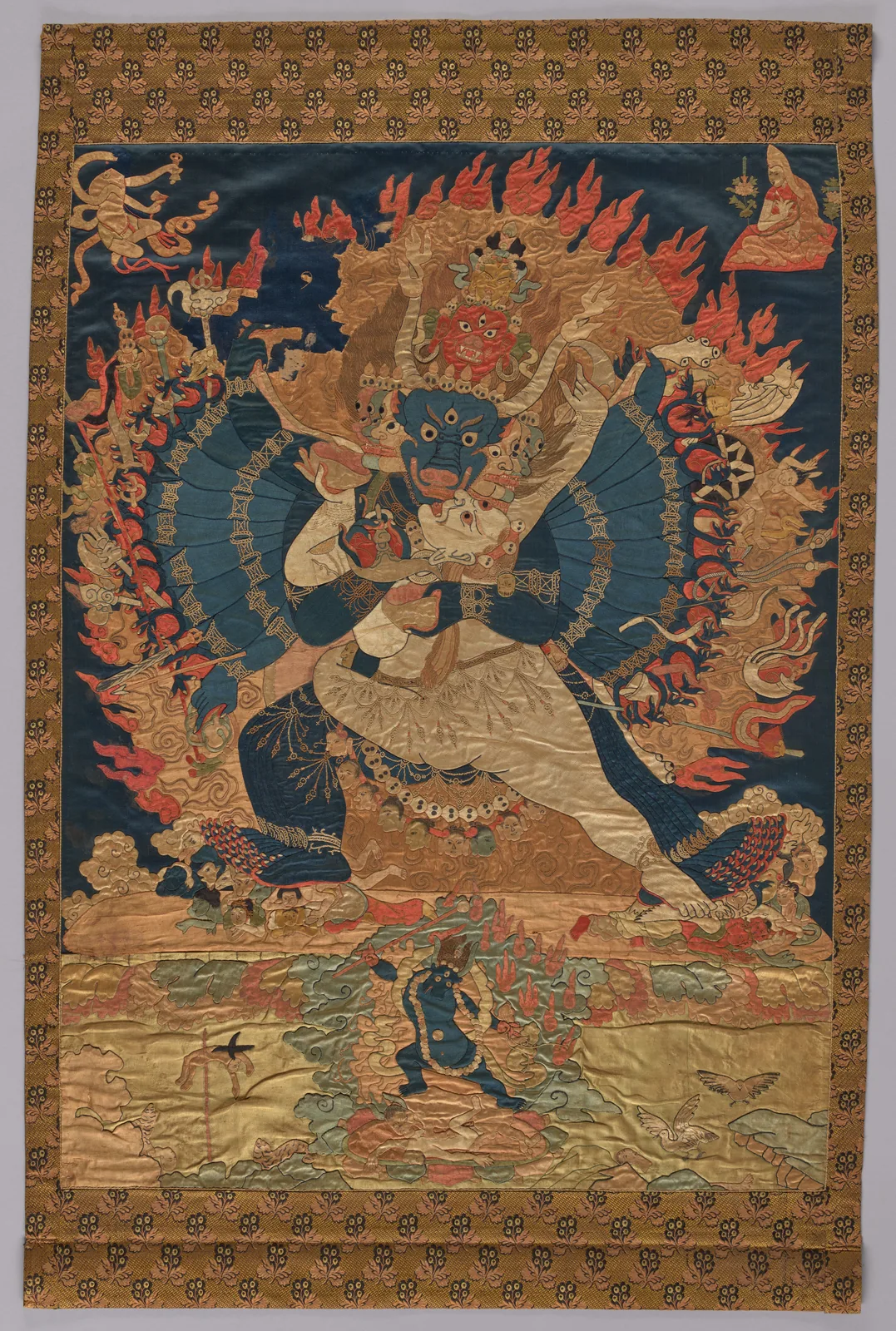
- Date: 18th century (Qing dynasty)
- Origin and medium: Tibet · silk appliqué
- Collection: Cleveland Museum of Art, accession no. 1918.548 · CC0
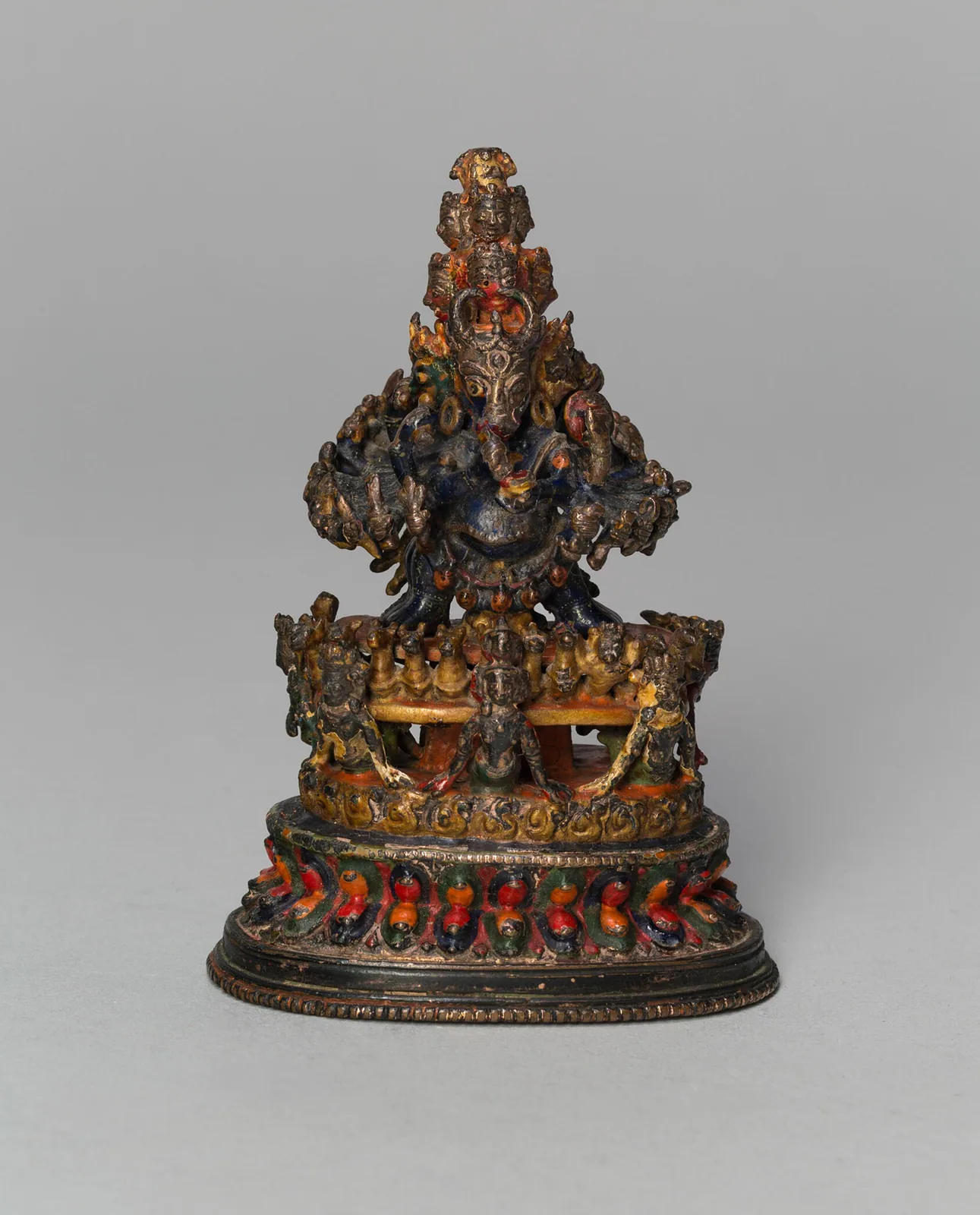
- Date: 15th century (Ming dynasty)
- Origin and medium: Southern Tibet · metal sculpture
- Collection: Art Institute of Chicago, accession no. 2014.1046 · CC0