
Vasudhara
The female Buddha of harvests and wealth, holding a sheaf of rice in her hand.
Watch the video
Who she is
Vasudhara's Sanskrit name is Vasudhārā, which means "stream of treasure." In Tibetan she is called Norgyunma. In the Chinese translations of the sutras, her dharani is called the Chishi ("World-Upholding") Dharani, so Chinese Buddhism also calls her Chishi Bodhisattva.
She is regarded as the partner of Yellow Jambhala. Among the Buddhists of Nepal she holds an especially high place, and every household makes offerings to her.
What she does
She grants wealth and good harvests, and she also grants wisdom. The sheaf of rice in her hand stands for having enough food and clothing. The scripture stands for wisdom. The meaning is that the two should grow together.
What people pray to her for
Traditionally, people pray to Vasudhara for:
- Good harvests and a household with plenty
- Wealth and wisdom growing together
- A harmonious family, and a home that runs smoothly for the woman who keeps it
Mantra
OṂ VASUDHĀRE SVĀHĀ
It is openly taught; anyone may recite it.
Story: The householder Sucandra and his hard times
The Vasudhara Dharani Sutra (another Chinese translation is titled the Rain of Jewels Dharani Sutra) tells this story. When the Buddha was alive, there was a householder named Sucandra. He was a kind man with sincere faith. But his family was large and poor, and someone was often sick, so life was very hard.
He went to see the Buddha and asked: Is there a way for the poor to become well off, and for the sick to get well? The Buddha then taught him the Vasudhara dharani, which is the mantra of Vasudhara.
Sucandra went home and recited it as he had been taught. His family's situation soon improved, and his storehouses filled up. Later the Buddha sent his disciple Ananda to take a look. Ananda saw that every storehouse in Sucandra's home was full and was greatly surprised. He came back and asked the Buddha the reason, and so the Buddha taught this sutra to everyone.
How to recognize her
- Golden-yellow body, a young and peaceful face, dressed as a bodhisattva
- Nepalese style: one face, six hands, holding a sheaf of rice, a treasure vase, a scripture and jewels
- Tibetan style: one face, two hands, the right hand open and turned downward, the left hand holding a sheaf of rice
- The sheaf of rice is her mark
The images
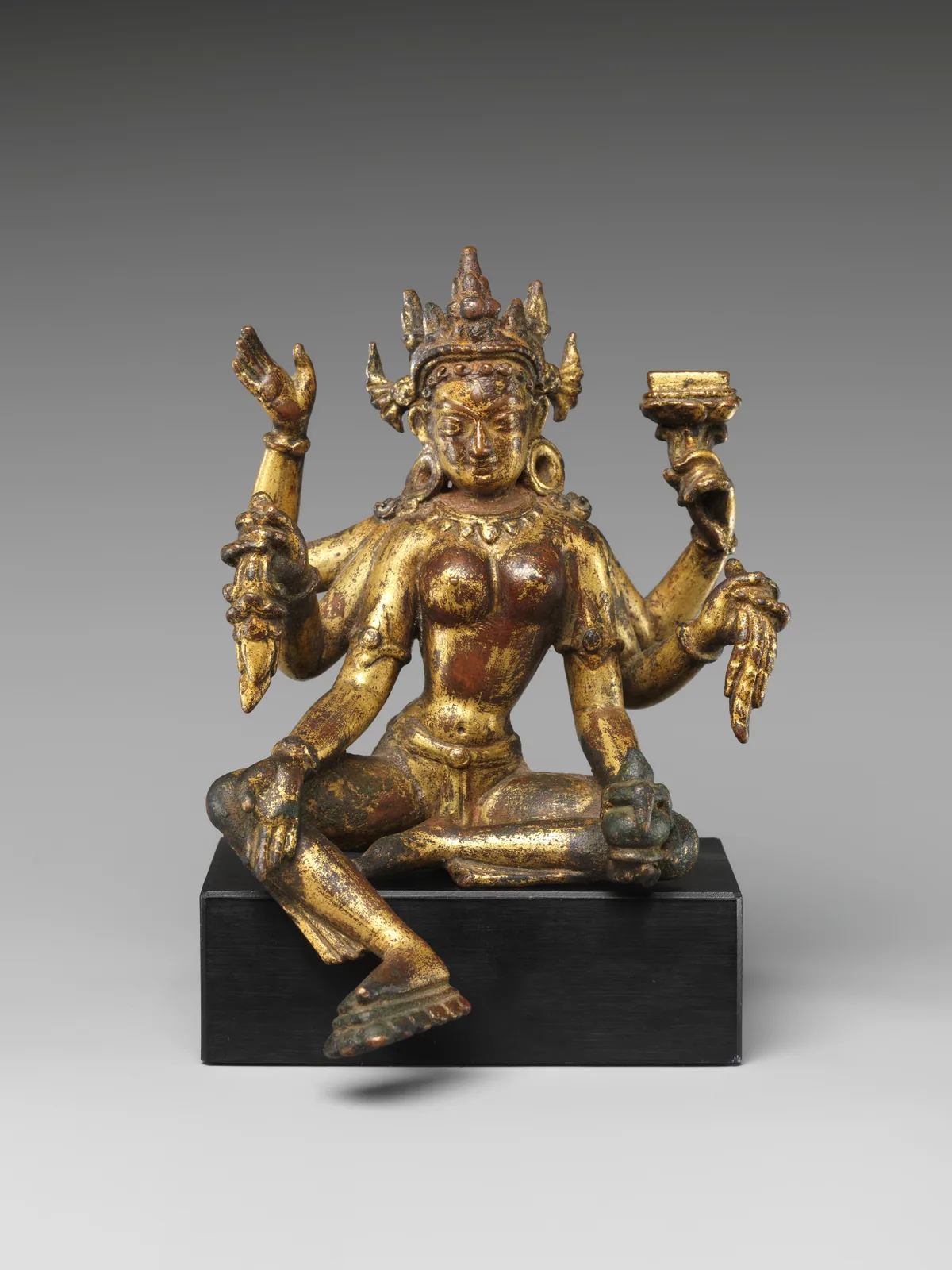
- Date: 14th–15th century (late Yuan to Ming dynasty)
- Origin and medium: Kathmandu Valley, Nepal · gilt copper alloy figure
- Collection: The Metropolitan Museum of Art, accession no. 1983.547 · Public domain
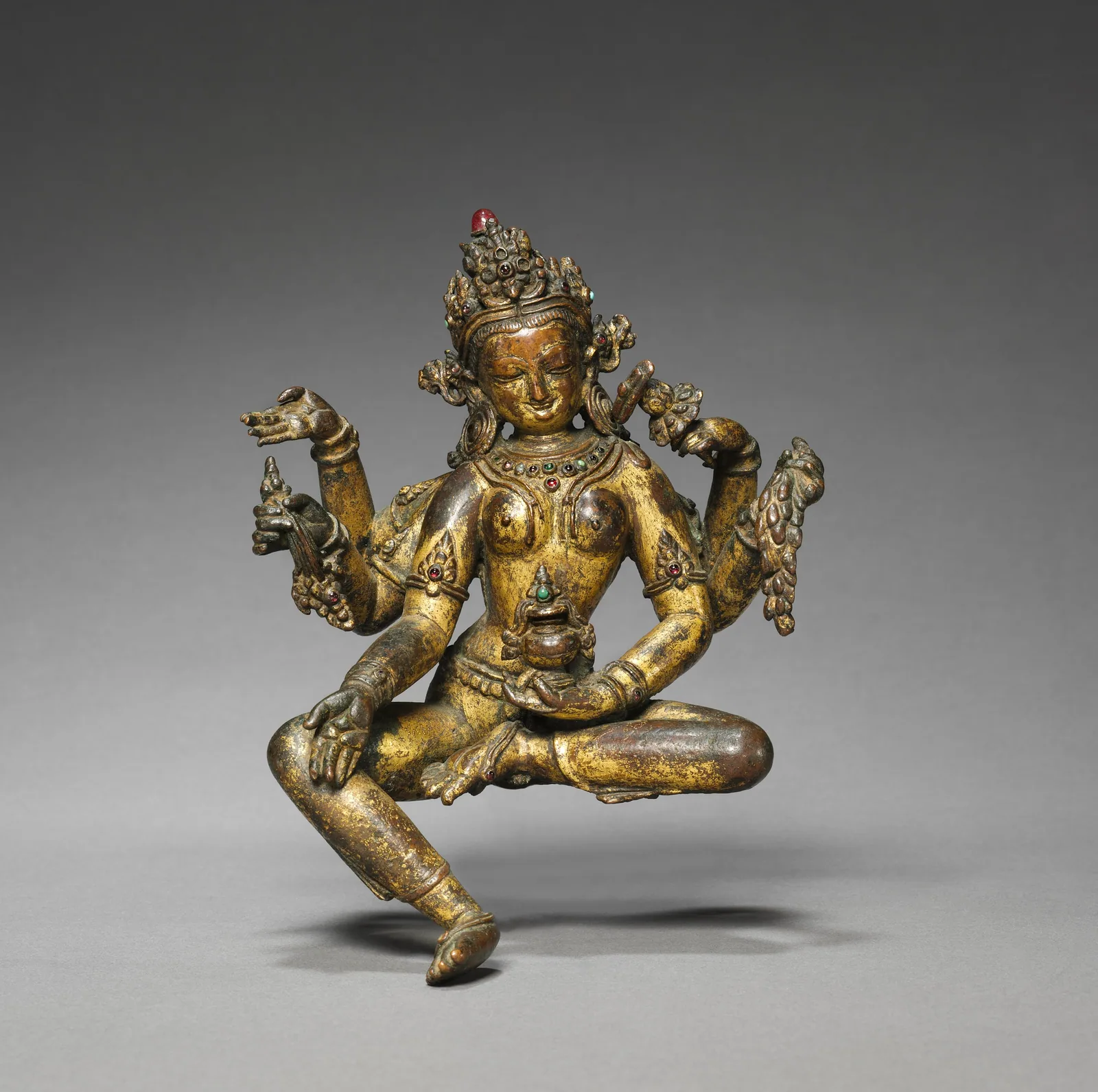
- Date: 14th–15th century (late Yuan to Ming dynasty)
- Origin and medium: Nepal · statue
- Collection: Cleveland Museum of Art, accession no. 1947.493 · CC0
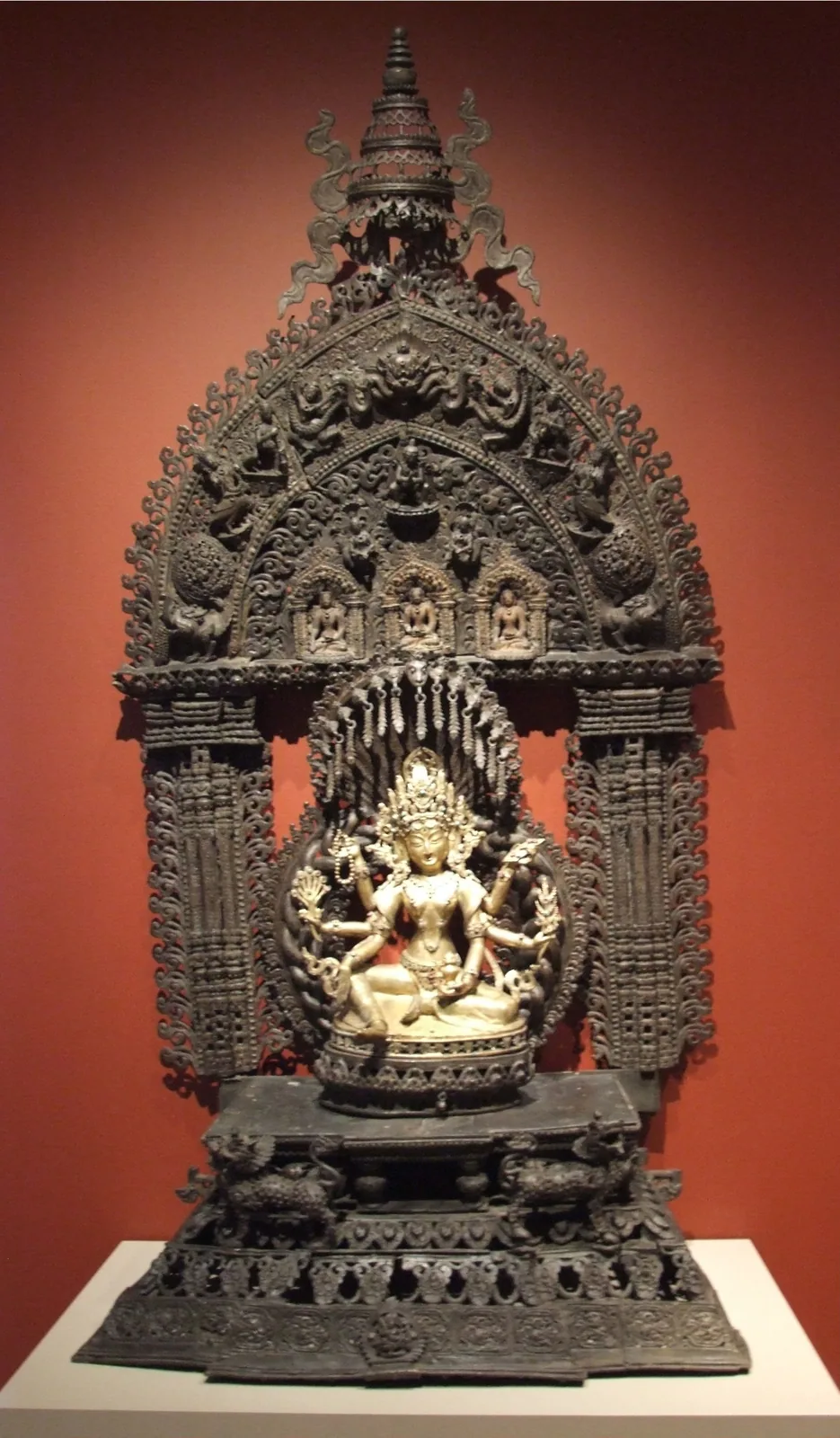
- Date: 18th–19th century (Qing dynasty)
- Origin and medium: Nepal · shrine of copper and gilt brass, inlaid with gemstones
- Collection: Yale University Art Gallery, accession no. 1951.51.62.1-.2a-i · Marked by the museum as no copyright (CC0)