
Dhritarashtra, Heavenly King of the East
The heavenly king who guards the east, playing a lute.
Watch the video
Who he is
Dhritarashtra's Sanskrit name is Dhṛtarāṣṭra. In Tibetan he is called Yulkhor Sung, which means "upholder of the realm." He guards the east and leads the musicians of the heavens.
The Four Heavenly Kings live halfway up Mount Meru. Each guards one direction. They are the most commonly seen Dharma protectors in Buddhism. In Tibetan monasteries they are painted, almost without exception, on both sides of the porch at the entrance to the main hall. In Chinese temples the first hall is called the "Hall of the Heavenly Kings."
What he does
He guards the east and keeps the realm at peace. The lute in his hands shows that he moves and changes living beings through music and gentle means.
What people pray to him for
Traditionally, people pray to Dhritarashtra, Heavenly King of the East, for:
- A peaceful country and a peaceful home region
- A harmonious family, and people getting along well with one another
- Monasteries and practitioners being left undisturbed
Mantra
Traditionally, the mantras and practices of protectors must be received from a qualified teacher. They are not given here.
Story: The Four Heavenly Kings offer a bowl
After the Buddha attained awakening under the Bodhi tree, two passing merchants wanted to offer him food. But the Buddha had no bowl to hold it.
When the Four Heavenly Kings learned of this, each brought a stone bowl and offered it to the Buddha. The Buddha thought: if I accept only one, the other three will be sad. So he accepted all four bowls and stacked them together. He pressed down with his hand, and the four bowls became one. The lines of four rims could still be seen at its mouth.
This is the most famous appearance of the Four Heavenly Kings in the story of the Buddha's life. According to the sutras, they guarded the Buddha from the moment he entered his mother's womb, and before the Buddha they also vowed to guard his teachings.
How to recognize him
- White body, wearing a general's armor
- Both hands hold a lute, which he is playing
- A relatively gentle face
The image
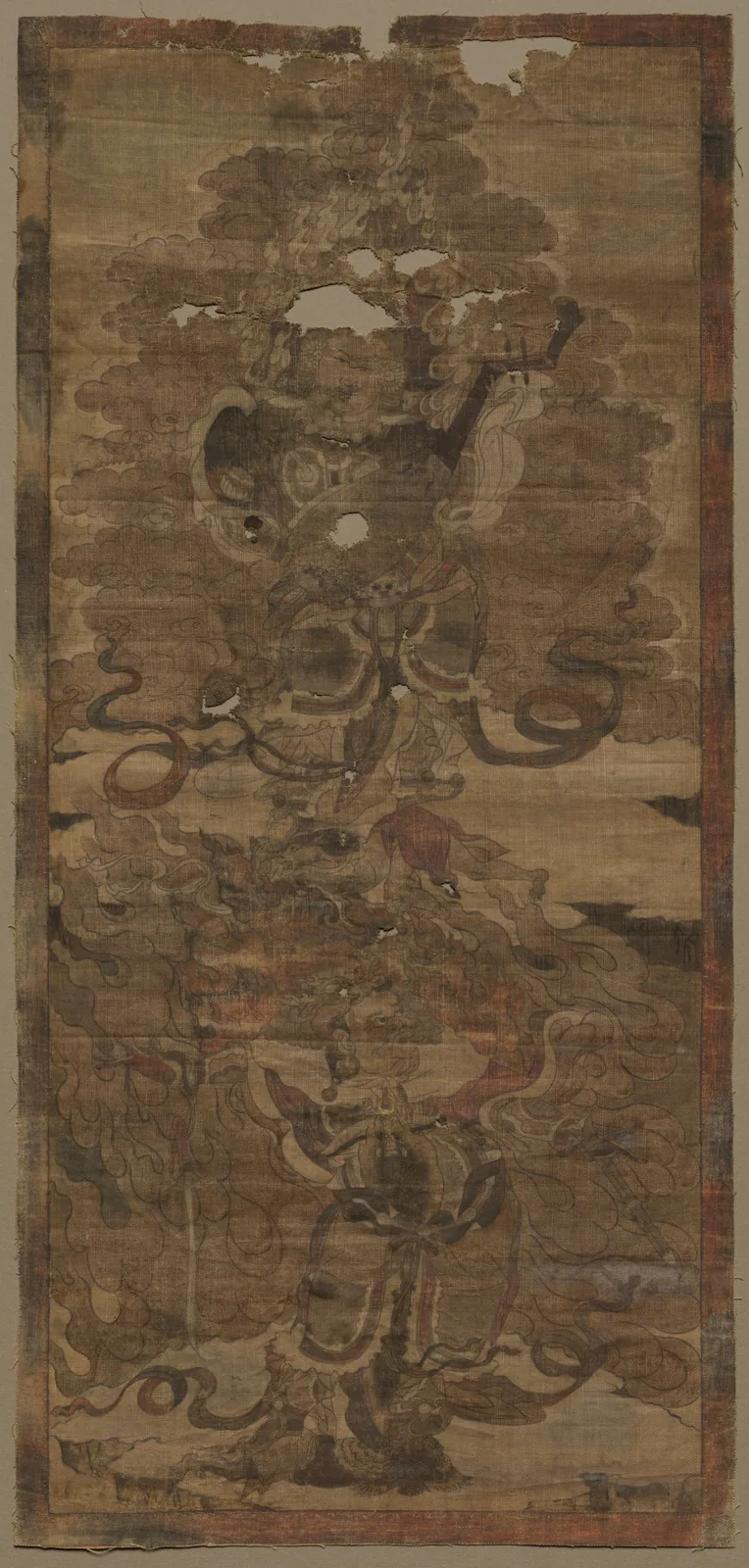
- Date: First half of the 14th century (Yuan dynasty)
- Origin and medium: Sino-Tibetan · thangka on cotton, Dhritarashtra and Virupaksha in the same painting
- Collection: Cleveland Museum of Art, accession no. 1989.476 · CC0