
Virupaksha, Heavenly King of the West
The heavenly king who guards the west, holding a snake and a stupa.
Watch the video
Who he is
Virupaksha's Sanskrit name is Virūpākṣa. In Tibetan he is called Chenmizang. His Chinese name, Guangmu, means "wide eyes." He guards the west and leads the nagas.
The Four Heavenly Kings live halfway up Mount Meru. Each guards one direction. They are the most commonly seen Dharma protectors in Buddhism. In Tibetan monasteries they are painted, almost without exception, on both sides of the porch at the entrance to the main hall. In Chinese temples the first hall is called the "Hall of the Heavenly Kings."
What he does
He guards the west. With his pure divine eye he watches over the world and protects living beings. The nagas are under his command, which is why he holds a snake (a naga) in his hand.
What people pray to him for
Traditionally, people pray to Virupaksha, Heavenly King of the West, for:
- Seeing right and wrong clearly, without being deceived
- Rain in the right amount at the right time, and clean sources of water
- Monasteries and practitioners being left undisturbed
Mantra
Traditionally, the mantras and practices of protectors must be received from a qualified teacher. They are not given here.
Story: The leader of the nagas
In Indian tradition, the nagas live in rivers, lakes and seas and under the ground. They are in charge of rain and sources of water, and they also guard the treasures under the earth. When the nagas are pleased, the winds are favorable and the rains come on time. When the nagas are angered, there are droughts, floods and skin diseases.
Virupaksha is the leader of the nagas, so he can hold them in check and keep them from doing harm. In his other hand he holds up a small stupa.
Tibetans take the relationship with the nagas very seriously. They do not pollute sources of water, they do not dig up the ground carelessly, and each year there are special days for making naga offerings. Behind this is a simple idea: people should live in harmony with water and land.
How to recognize him
- Red body, wearing a general's armor
- A snake in his right hand, and a small stupa held up in his left
- Eyes opened very wide
The images
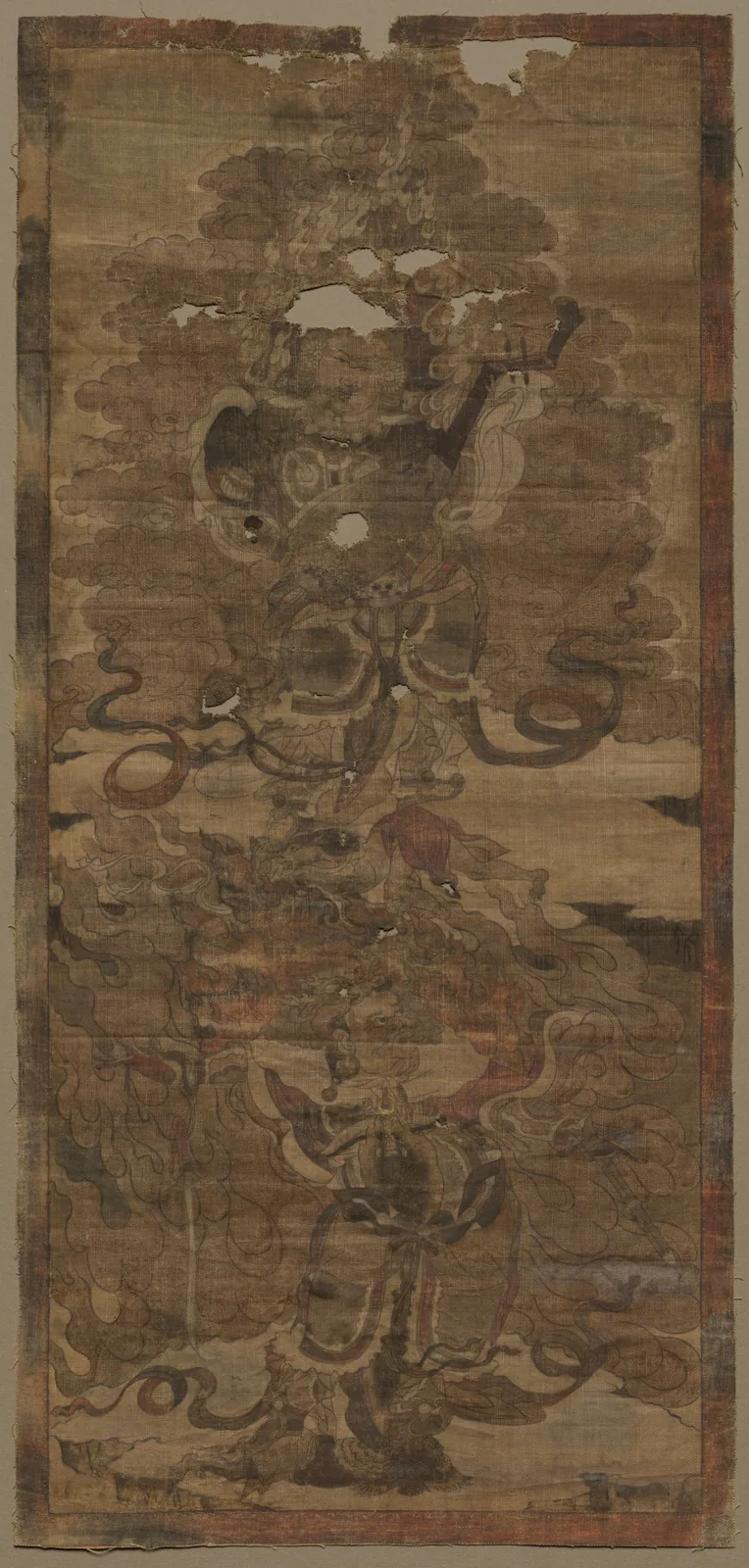
- Date: First half of the 14th century (Yuan dynasty)
- Origin and medium: Sino-Tibetan · thangka on cotton, Dhritarashtra and Virupaksha in the same painting
- Collection: Cleveland Museum of Art, accession no. 1989.476 · CC0
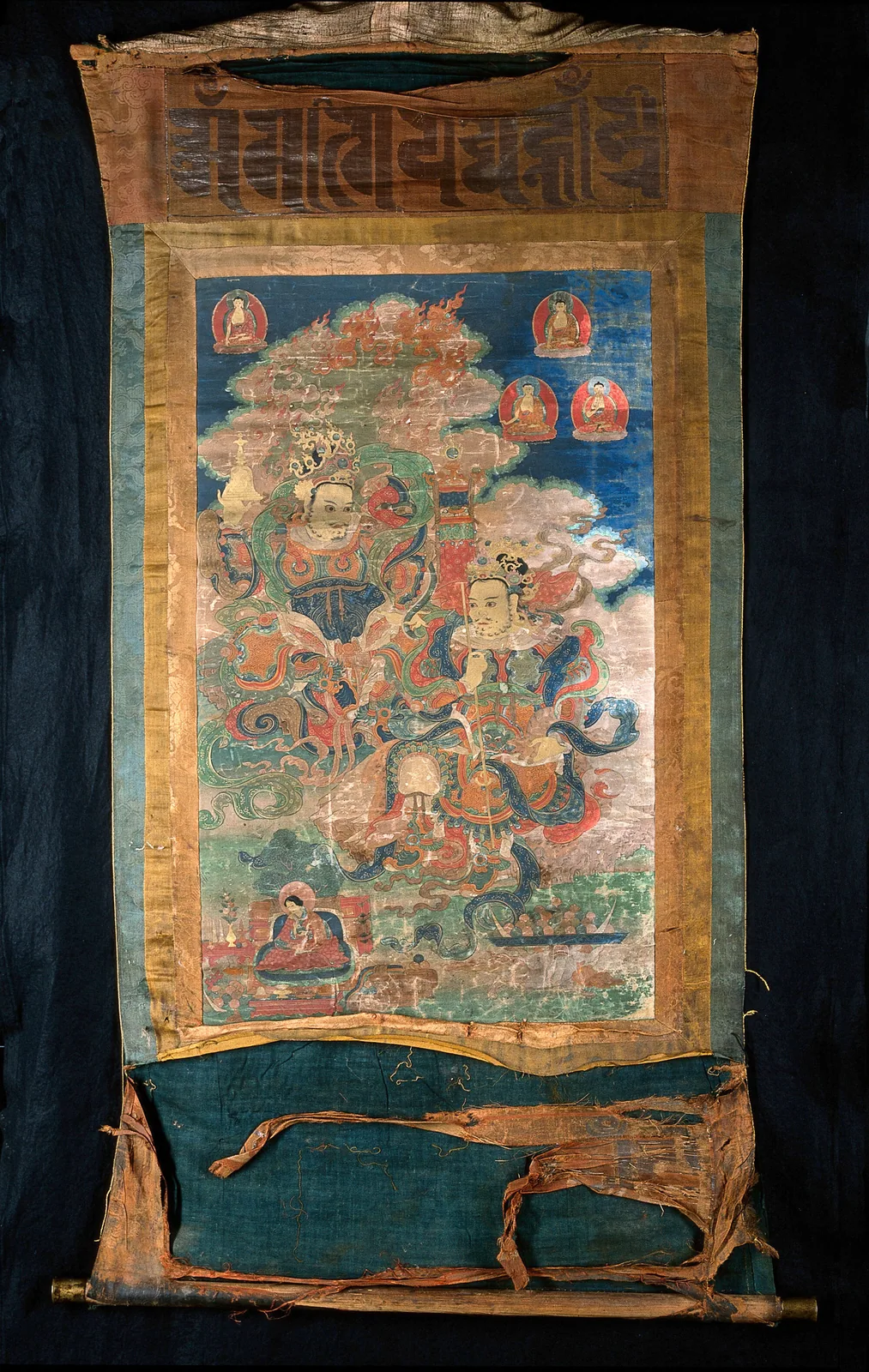
- Date: Date not given
- Origin and medium: Tibet · distemper on cloth, Virupaksha and Vaishravana in the same painting
- Collection: Wellcome Collection, London, accession no. 47068i · Public Domain Mark