
Who is the Buddha?
Describe the Buddha as an awakened teacher who sought freedom from suffering and taught a path to others.
Watch lesson 1
Open the full image, then touch and hold to save on a phone, or right-click and save on a computer.
Let’s begin
This is our first lesson. Questions and ‘I don’t know’ are welcome.
When you really want to understand something, how do you look for an answer?
Story time
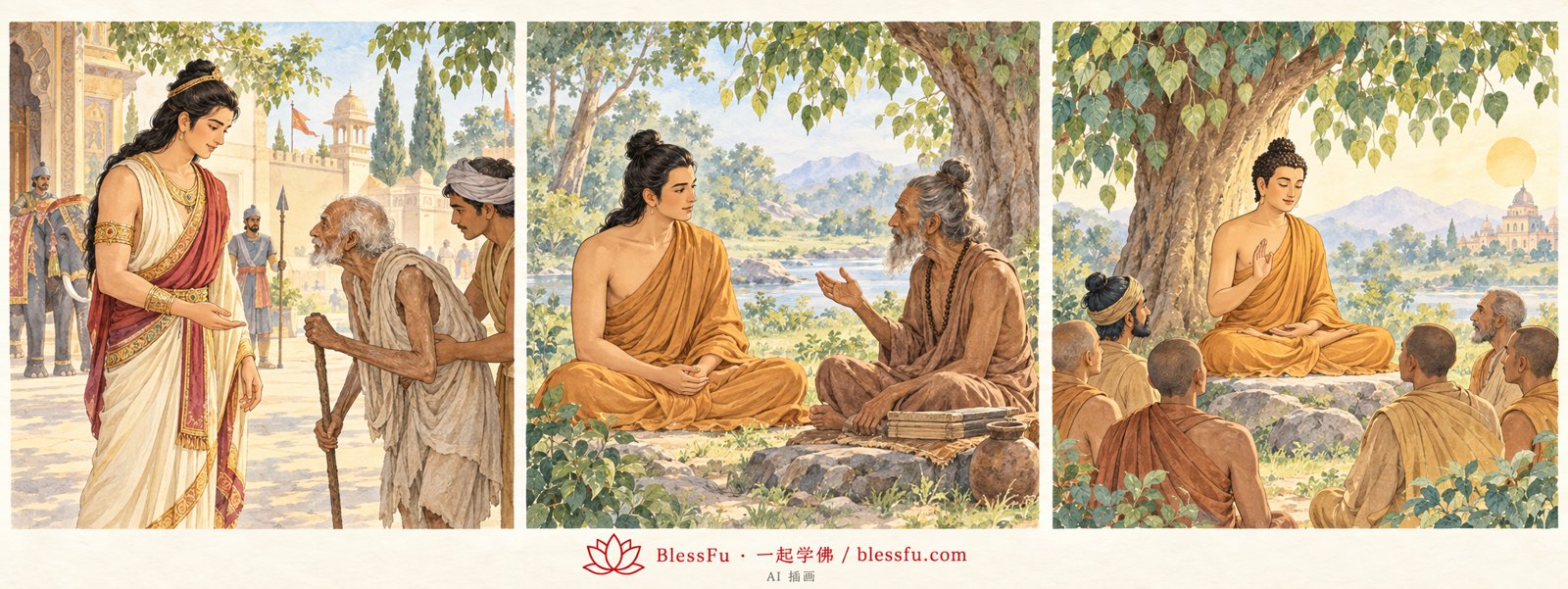
Long ago in ancient India, a person named Siddhartha lived in comfort. Traditional accounts tell how he became deeply concerned about aging, illness and death. A comfortable life could not make these questions disappear.
He left his familiar life, learned from teachers and practised. After trying extreme hardship, he stopped harming his body and continued his search. Buddhist tradition says he awakened beneath the bodhi tree and became known as the Buddha.
He then taught about suffering, its causes and the path to its ending. We can begin learning too, with a small question: how can we bring less hurt into our lives and the lives of others?
Think together
The Buddha taught a path of understanding and practice. Learning involves asking questions, thinking and trying things out.
- Why did Siddhartha still have questions when his life was comfortable?
- What could you do when you do not know an answer?
Try an activity
Put these events in order: noticing suffering; seeking and practising; awakening; teaching others. Draw four scenes or explain your order aloud.
Take it home
Ask someone at home a question you really care about. Listen to their answer and say what you would like to learn next.
For adults: read-aloud script and guidance
Say: ‘Today we meet someone who took his questions seriously. You do not have to remember every name.’ Speak gently about aging and death. Listen to a child’s actual concern before explaining more. This is a brief introduction to a traditional life account, not a complete biography.
Nine-slide lesson outline
1. Who is the Buddha?
Learn together, one small step.
Describe the Buddha as an awakened teacher who sought freedom from suffering and taught a path to others.
This is our first lesson. Questions and ‘I don’t know’ are welcome.
2. Look closely
When you really want to understand something, how do you look for an answer?
This is our first lesson. Questions and ‘I don’t know’ are welcome.
When you really want to understand something, how do you look for an answer?
3. Story 1 / 3
Long ago in ancient India, a person named Siddhartha lived in comfort. Traditional accounts tell how he became deeply concerned about aging, illness and death. A comfortable life could not make these questions disappear.
Long ago in ancient India, a person named Siddhartha lived in comfort. Traditional accounts tell how he became deeply concerned about aging, illness and death. A comfortable life could not make these questions disappear.
4. Story 2 / 3
He left his familiar life, learned from teachers and practised. After trying extreme hardship, he stopped harming his body and continued his search. Buddhist tradition says he awakened beneath the bodhi tree and became known as the Buddha.
He left his familiar life, learned from teachers and practised. After trying extreme hardship, he stopped harming his body and continued his search. Buddhist tradition says he awakened beneath the bodhi tree and became known as the Buddha.
5. Story 3 / 3
He then taught about suffering, its causes and the path to its ending. We can begin learning too, with a small question: how can we bring less hurt into our lives and the lives of others?
He then taught about suffering, its causes and the path to its ending. We can begin learning too, with a small question: how can we bring less hurt into our lives and the lives of others?
6. A Buddhist idea
The Buddha taught a path out of suffering. We begin by asking thoughtful questions.
The Buddha taught a path of understanding and practice. Learning involves asking questions, thinking and trying things out.
7. Talk together
Why did Siddhartha still have questions when his life was comfortable?
What could you do when you do not know an answer?
Listen to different answers. Ask why. Children may discuss the characters rather than private experiences.
8. Try an activity
Put the events in order: notice, seek, awaken, teach.
Put these events in order: noticing suffering; seeking and practising; awakening; teaching others. Draw four scenes or explain your order aloud.
Ask someone at home a question you really care about. Listen to their answer and say what you would like to learn next.
9. For grown-ups
Read aloud, discuss and try a small activity.
Stories and exercises: BlessFu
Illustrations: AI-assisted
Full references and guidance are in the companion booklet.
Say: ‘Today we meet someone who took his questions seriously. You do not have to remember every name.’ Speak gently about aging and death. Listen to a child’s actual concern before explaining more. This is a brief introduction to a traditional life account, not a complete biography.
Next, we explore compassion: what can we do when someone needs help?
Story and references
Based on the life overview in Study Buddhism, Who Is the Buddha? by Tsenshap Serkong Rinpoche II and Matt Lindén. Original child-friendly explanation, not a verbatim translation.
https://studybuddhism.com/en/essentials/what-is/who-is-the-buddha
Next, we explore compassion: what can we do when someone needs help?