
What is compassion?
Ask what someone needs before choosing a helpful action.
Watch lesson 2
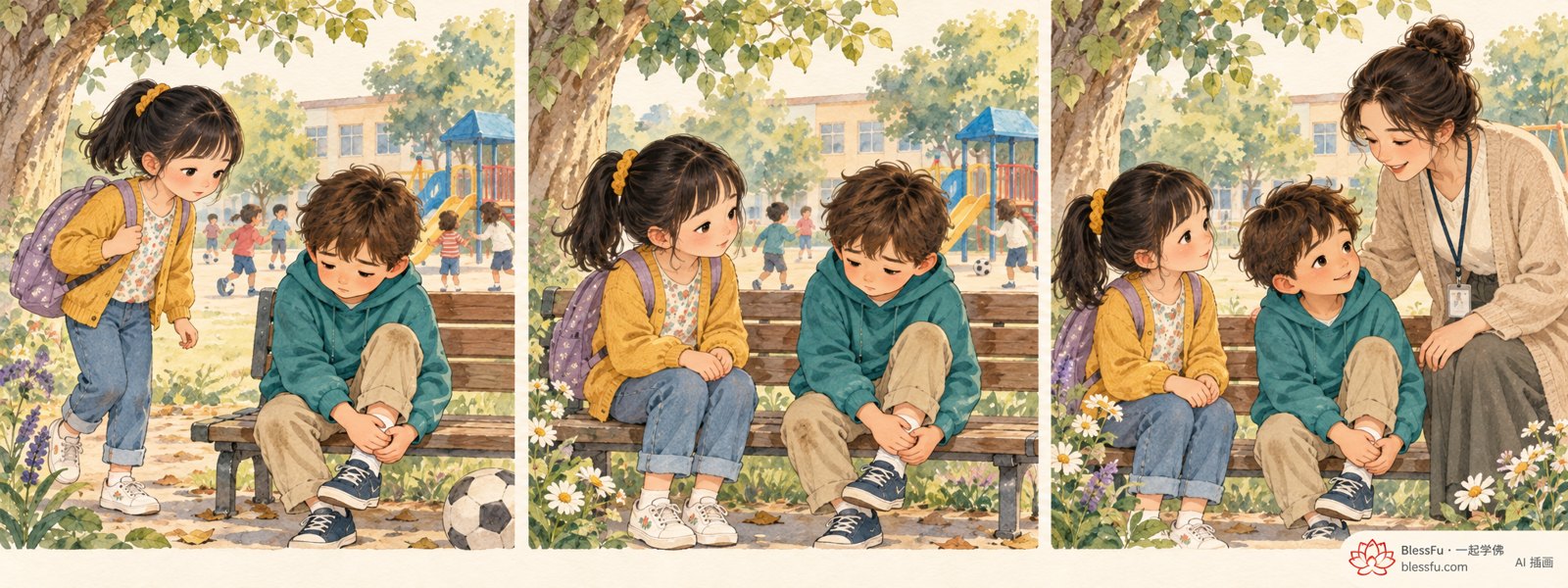
Open the full image, then touch and hold to save on a phone, or right-click and save on a computer.
Let’s begin
We met the Buddha, who cared about suffering. Today we look at someone nearby.
A child is sitting alone by the playground. Are they definitely unhappy?
Story time
Xiaohe ran towards the playground with a ball. A new classmate, Ayuan, was sitting on a bench. ‘They must need a friend!’ Xiaohe thought, and reached to pull Ayuan into the game. ‘Wait,’ Ayuan said.
Xiaohe stopped. ‘Would you like to play, or sit here for a while?’ Ayuan explained, ‘My foot hurts. I’m waiting for our teacher.’ Xiaohe had guessed wrong.
‘Would you like me to call the teacher?’ Ayuan nodded. Helping did not mean getting Ayuan into the game. It meant asking what would actually help.
Think together
Loving-kindness wishes others happiness. Compassion wishes them freedom from suffering. We can begin by noticing and asking.
- Why did Xiaohe’s first idea not help?
- How could we respect Ayuan if they wanted some quiet time?
Try an activity
Take turns asking: ‘Would you like help?’ ‘I would like…’ ‘Would this be okay?’ Try lending a pencil, finding a teacher or keeping someone company.
Take it home
Ask someone at home what small help they would welcome. Choose something you can willingly do.
For adults: read-aloud script and guidance
Ask: ‘Did we see what happened, or did we guess?’ Children should find an adult for an injury, not treat it alone. Appreciate the wish to help while discussing whether the action fits the need.
Nine-slide lesson outline
1. What is compassion?
Learn together, one small step.
Ask what someone needs before choosing a helpful action.
We met the Buddha, who cared about suffering. Today we look at someone nearby.
2. Look closely
A child is sitting alone by the playground. Are they definitely unhappy?
We met the Buddha, who cared about suffering. Today we look at someone nearby.
A child is sitting alone by the playground. Are they definitely unhappy?
3. Story 1 / 3
Xiaohe ran towards the playground with a ball. A new classmate, Ayuan, was sitting on a bench. ‘They must need a friend!’ Xiaohe thought, and reached to pull Ayuan into the game. ‘Wait,’ Ayuan said.
Xiaohe ran towards the playground with a ball. A new classmate, Ayuan, was sitting on a bench. ‘They must need a friend!’ Xiaohe thought, and reached to pull Ayuan into the game. ‘Wait,’ Ayuan said.
4. Story 2 / 3
Xiaohe stopped. ‘Would you like to play, or sit here for a while?’ Ayuan explained, ‘My foot hurts. I’m waiting for our teacher.’ Xiaohe had guessed wrong.
Xiaohe stopped. ‘Would you like to play, or sit here for a while?’ Ayuan explained, ‘My foot hurts. I’m waiting for our teacher.’ Xiaohe had guessed wrong.
5. Story 3 / 3
‘Would you like me to call the teacher?’ Ayuan nodded. Helping did not mean getting Ayuan into the game. It meant asking what would actually help.
‘Would you like me to call the teacher?’ Ayuan nodded. Helping did not mean getting Ayuan into the game. It meant asking what would actually help.
6. A Buddhist idea
May you be happy. May you suffer less. Asking helps us choose well.
Loving-kindness wishes others happiness. Compassion wishes them freedom from suffering. We can begin by noticing and asking.
7. Talk together
Why did Xiaohe’s first idea not help?
How could we respect Ayuan if they wanted some quiet time?
Listen to different answers. Ask why. Children may discuss the characters rather than private experiences.
8. Try an activity
Act it out: ‘Would you like help?’ ‘I would like…’
Take turns asking: ‘Would you like help?’ ‘I would like…’ ‘Would this be okay?’ Try lending a pencil, finding a teacher or keeping someone company.
Ask someone at home what small help they would welcome. Choose something you can willingly do.
9. For grown-ups
Read aloud, discuss and try a small activity.
Stories and exercises: BlessFu
Illustrations: AI-assisted
Full references and guidance are in the companion booklet.
Ask: ‘Did we see what happened, or did we guess?’ Children should find an adult for an injury, not treat it alone. Appreciate the wish to help while discussing whether the action fits the need.
Next, we notice our own feelings when something goes wrong.
Story and references
Khenpo Sodargye’s public talk Wisdom and Compassion informs the theme. The playground story, dialogue and activity are original, not his words.
https://www.khenposodargye.org/talks/2015/09/wisdom-and-compassion/
Next, we notice our own feelings when something goes wrong.