
A mistake can be a new start
Describe an honest repair and a way to act differently next time.
Watch lesson 5
Open the full image, then touch and hold to save on a phone, or right-click and save on a computer.
Let’s begin
Sharing can warm a friendship. A hurt friendship may need repair.
You damaged something you borrowed. What could help you tell the truth?
Story time
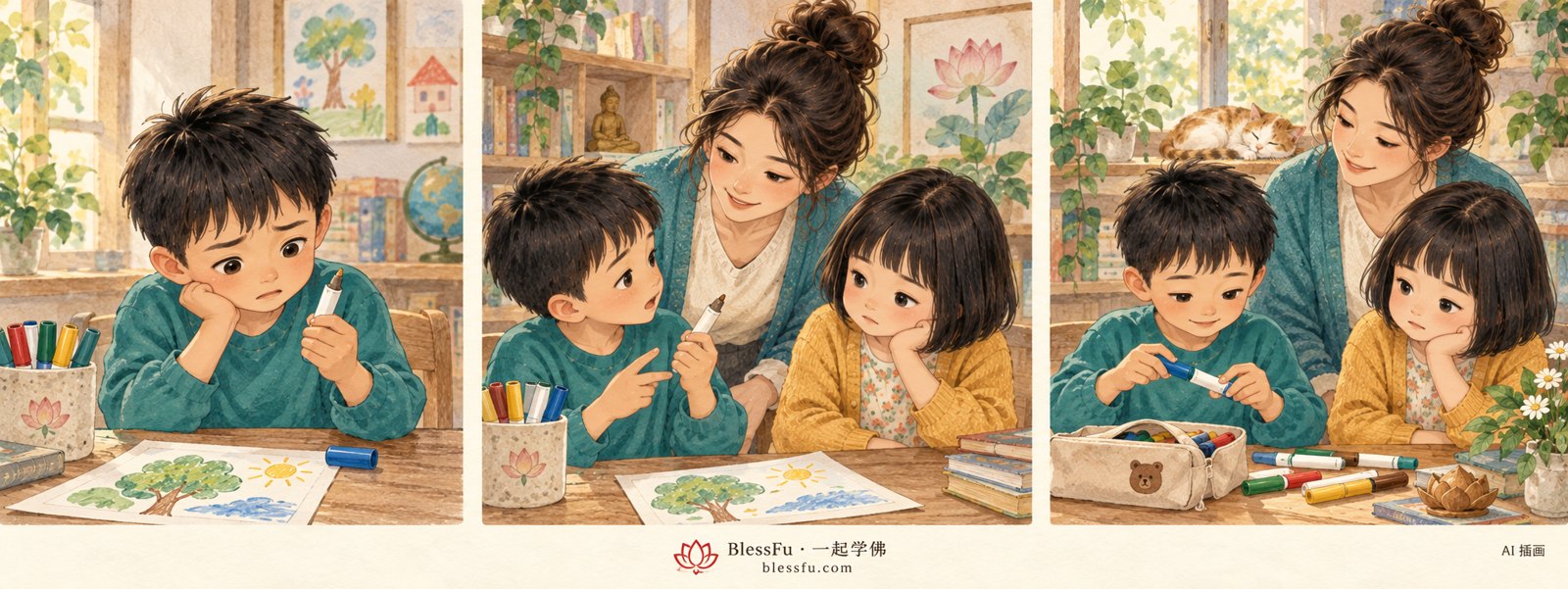
Ayuan borrowed Xiaohe’s pen and forgot its cap. The next morning it was dry. He put it back in the pencil case, hoping she would not notice. But he felt more and more uneasy.
He asked a teacher to stand beside him. ‘I left the cap off and the pen dried out. I’m sorry. Can we work out how to fix this?’ Xiaohe frowned. She did not immediately say it was okay.
The teacher helped them discuss repair or replacement. Ayuan planned to check things before returning them. Xiaohe could need time. A sincere apology did not require her to feel happy straight away.
Think together
We can recognize a mistake, make amends and practise a different choice next time.
- Why was it okay to ask a teacher for support?
- Must someone forgive us immediately after an apology?
Try an activity
Complete: ‘I did… It affected… I can repair it by… Next time I will…’ You may discuss Ayuan instead of a personal experience.
Take it home
Check a borrowed item or invent a reminder that would help Ayuan put the cap back on.
For adults: read-aloud script and guidance
Do not ask children to confess private experiences. Discuss the fictional character first. A mistake does not make a child a bad person. This introduces regret and repair; it does not teach the full Buddhist purification practice.
Nine-slide lesson outline
1. A mistake can be a new start
Learn together, one small step.
Describe an honest repair and a way to act differently next time.
Sharing can warm a friendship. A hurt friendship may need repair.
2. Look closely
You damaged something you borrowed. What could help you tell the truth?
Sharing can warm a friendship. A hurt friendship may need repair.
You damaged something you borrowed. What could help you tell the truth?
3. Story 1 / 3
Ayuan borrowed Xiaohe’s pen and forgot its cap. The next morning it was dry. He put it back in the pencil case, hoping she would not notice. But he felt more and more uneasy.
Ayuan borrowed Xiaohe’s pen and forgot its cap. The next morning it was dry. He put it back in the pencil case, hoping she would not notice. But he felt more and more uneasy.
4. Story 2 / 3
He asked a teacher to stand beside him. ‘I left the cap off and the pen dried out. I’m sorry. Can we work out how to fix this?’ Xiaohe frowned. She did not immediately say it was okay.
He asked a teacher to stand beside him. ‘I left the cap off and the pen dried out. I’m sorry. Can we work out how to fix this?’ Xiaohe frowned. She did not immediately say it was okay.
5. Story 3 / 3
The teacher helped them discuss repair or replacement. Ayuan planned to check things before returning them. Xiaohe could need time. A sincere apology did not require her to feel happy straight away.
The teacher helped them discuss repair or replacement. Ayuan planned to check things before returning them. Xiaohe could need time. A sincere apology did not require her to feel happy straight away.
6. A Buddhist idea
We can make amends. Others may still need time.
We can recognize a mistake, make amends and practise a different choice next time.
7. Talk together
Why was it okay to ask a teacher for support?
Must someone forgive us immediately after an apology?
Listen to different answers. Ask why. Children may discuss the characters rather than private experiences.
8. Try an activity
‘I did… I can repair it by… Next time I will…’
Complete: ‘I did… It affected… I can repair it by… Next time I will…’ You may discuss Ayuan instead of a personal experience.
Check a borrowed item or invent a reminder that would help Ayuan put the cap back on.
9. For grown-ups
Read aloud, discuss and try a small activity.
Stories and exercises: BlessFu
Illustrations: AI-assisted
Full references and guidance are in the companion booklet.
Do not ask children to confess private experiences. Discuss the fictional character first. A mistake does not make a child a bad person. This introduces regret and repair; it does not teach the full Buddhist purification practice.
Next, we connect a kind intention with a small action and dedication.
Story and references
LYWA’s four opponent powers entry informs regret, remedy and resolve. Everyday repair is not equivalent to the full practice, which also includes refuge and bodhicitta. Achieve by Doing was consulted only through its official book description.
Next, we connect a kind intention with a small action and dedication.