
More ways to share
Name two ways to share without money and understand that giving is voluntary.
Watch lesson 4
Open the full image, then touch and hold to save on a phone, or right-click and save on a computer.
Let’s begin
We practised pausing. Now we explore what we can offer.
Can you give something kind with no money in your pocket?
Story time
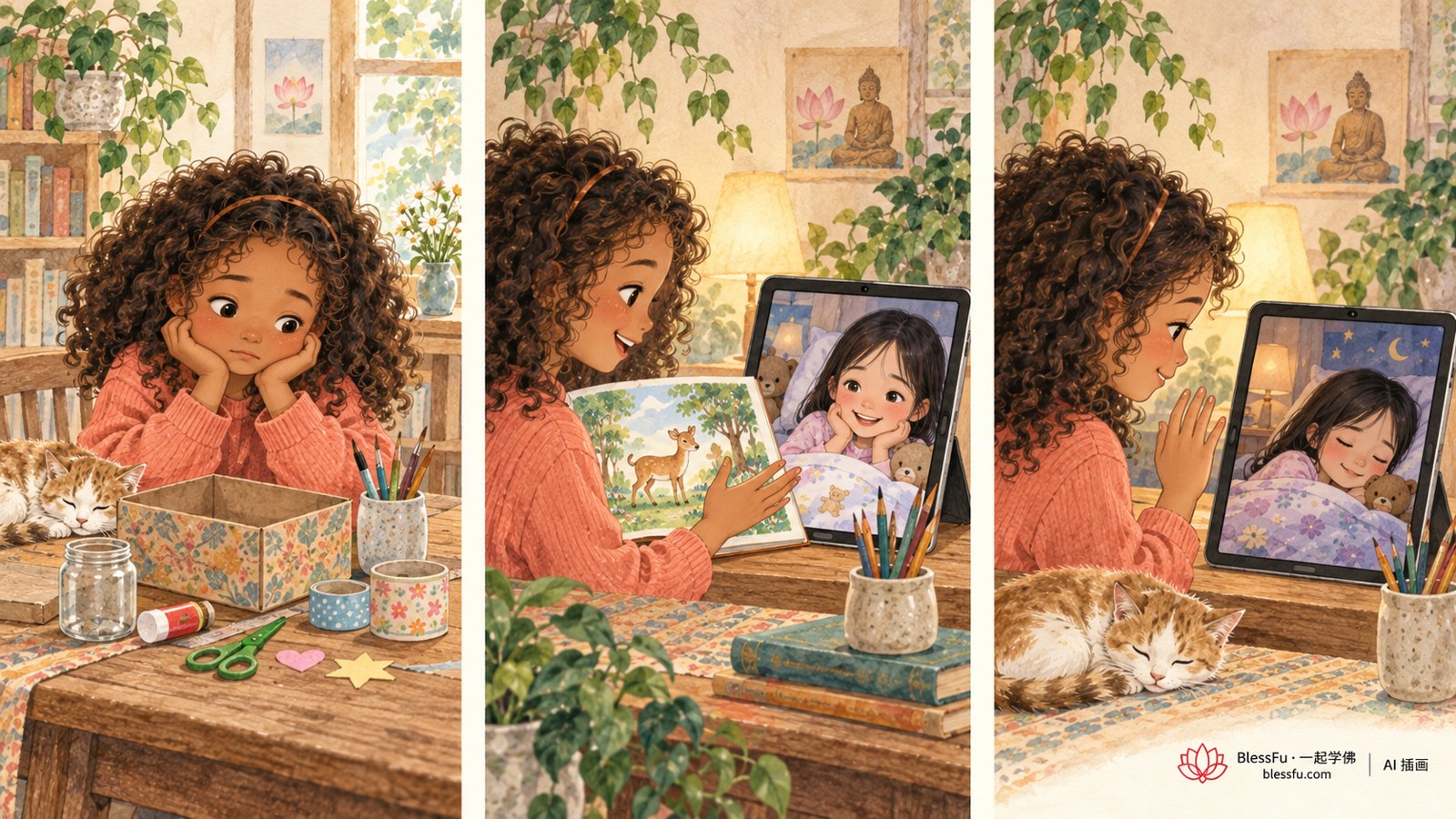
Mimi’s friend was home sick. Other children were making cards, but Mimi had no coloured paper or stickers. Looking at her empty hands, she felt she had nothing to offer.
With a parent’s help, she called her friend. ‘I missed today’s story,’ the friend said. Mimi brightened. ‘I can tell it to you!’
She told the story in her own words and stopped when her friend grew tired. Later she helped remember what to bring to class. Time, patience and help could be shared too.
Think together
Generosity can begin with willingly offering care, time or help.
- What did Mimi share?
- Why was stopping when her friend felt tired a kind choice?
Try an activity
Draw or name a skill, some time and a small help you could willingly share. Choose one to try.
Take it home
Offer something freely and respect ‘No, thank you.’ You do not have to give away a treasured possession.
For adults: read-aloud script and guidance
Ask what the child enjoys doing and how it might help someone. Avoid comparing gift prices. The source supports the general principle of kindness; it is not the source of this fictional story.
Nine-slide lesson outline
1. More ways to share
Learn together, one small step.
Name two ways to share without money and understand that giving is voluntary.
We practised pausing. Now we explore what we can offer.
2. Look closely
Can you give something kind with no money in your pocket?
We practised pausing. Now we explore what we can offer.
Can you give something kind with no money in your pocket?
3. Story 1 / 3
Mimi’s friend was home sick. Other children were making cards, but Mimi had no coloured paper or stickers. Looking at her empty hands, she felt she had nothing to offer.
Mimi’s friend was home sick. Other children were making cards, but Mimi had no coloured paper or stickers. Looking at her empty hands, she felt she had nothing to offer.
4. Story 2 / 3
With a parent’s help, she called her friend. ‘I missed today’s story,’ the friend said. Mimi brightened. ‘I can tell it to you!’
With a parent’s help, she called her friend. ‘I missed today’s story,’ the friend said. Mimi brightened. ‘I can tell it to you!’
5. Story 3 / 3
She told the story in her own words and stopped when her friend grew tired. Later she helped remember what to bring to class. Time, patience and help could be shared too.
She told the story in her own words and stopped when her friend grew tired. Later she helped remember what to bring to class. Time, patience and help could be shared too.
6. A Buddhist idea
Time and patience can be shared. Giving should be willing.
Generosity can begin with willingly offering care, time or help.
7. Talk together
What did Mimi share?
Why was stopping when her friend felt tired a kind choice?
Listen to different answers. Ask why. Children may discuss the characters rather than private experiences.
8. Try an activity
Draw a skill, some time or a small help you could offer.
Draw or name a skill, some time and a small help you could willingly share. Choose one to try.
Offer something freely and respect ‘No, thank you.’ You do not have to give away a treasured possession.
9. For grown-ups
Read aloud, discuss and try a small activity.
Stories and exercises: BlessFu
Illustrations: AI-assisted
Full references and guidance are in the companion booklet.
Ask what the child enjoys doing and how it might help someone. Avoid comparing gift prices. The source supports the general principle of kindness; it is not the source of this fictional story.
Next, we explore making things right after a mistake.
Story and references
Inspired by the everyday kindness theme in LYWA’s How to Raise a Child. Story and activities are original.
Next, we explore making things right after a mistake.