
A Need or a Want?
Discuss a basic need and a wish without feeling ashamed of wanting things.
Watch lesson 8
Open the full image, then touch and hold to save on a phone, or right-click and save on a computer.
Let’s begin
We have noticed our inner weather. Now let's listen to the voice that says, 'I want it!'
On a rainy day, do rainboots and a new toy do the same job?
Story time
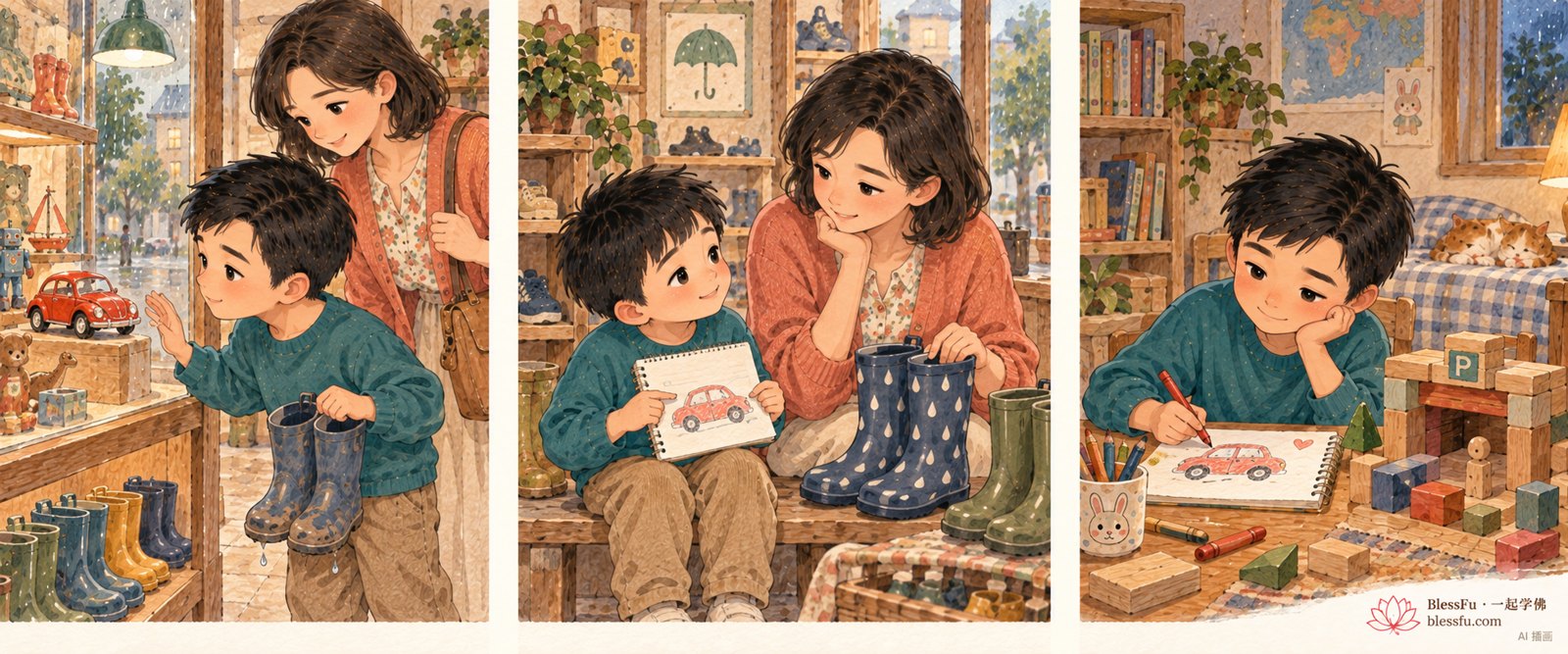
Ayuan went shopping for rainboots with Mom. His old boots leaked, but a shiny toy car stood near the shop door. 'I want both!' he said. Mom replied, 'You really like that car. Today we planned to find boots that keep your feet dry.'
They did not argue about whether the car was good or bad. They made two lists: a problem to solve now, and something he might like later. Boots went on the first list; the car went on the second. 'Is wanting it wrong?' he asked. 'You can like something and wait,' Mom said.
At home, Ayuan drew the car in his wish notebook. He noticed that his wooden blocks could make a garage. In a few days he might still want the car, or he might change his mind. The notebook gave him time to think, without pretending he did not like it.
Think together
Contentment can begin with caring for what we have and pausing before a purchase. Needs vary with the person, weather and body; price alone does not tell us what is needed.
- Why did Ayuan need to deal with his boots first?
- How is writing down a wish different from pretending not to want it?
Try an activity
Draw three cards for a character: something needed now, something wanted, and something already owned that deserves care. Explain your choices without comparing family possessions.
Take it home
Clean, mend or put away one thing you already have.
For adults: read-aloud script and guidance
Do not ask children to reveal family finances or imply that a purchase was refused because they were bad. Food, water, safety and care must not become rewards to withhold.
Nine-slide lesson outline
1. A Need or a Want?
Learn together, one small step.
Discuss a basic need and a wish without feeling ashamed of wanting things.
We have noticed our inner weather. Now let's listen to the voice that says, 'I want it!'
2. Look closely
On a rainy day, do rainboots and a new toy do the same job?
We have noticed our inner weather. Now let's listen to the voice that says, 'I want it!'
On a rainy day, do rainboots and a new toy do the same job?
3. Story 1 / 3
Ayuan went shopping for rainboots with Mom. His old boots leaked, but a shiny toy car stood near the shop door. 'I want both!' he said. Mom replied, 'You really like that car. Today we planned to find boots that keep your feet dry.'
Ayuan went shopping for rainboots with Mom. His old boots leaked, but a shiny toy car stood near the shop door. 'I want both!' he said. Mom replied, 'You really like that car. Today we planned to find boots that keep your feet dry.'
4. Story 2 / 3
They did not argue about whether the car was good or bad. They made two lists: a problem to solve now, and something he might like later. Boots went on the first list; the car went on the second. 'Is wanting it wrong?' he asked. 'You can like something and wait,' Mom said.
They did not argue about whether the car was good or bad. They made two lists: a problem to solve now, and something he might like later. Boots went on the first list; the car went on the second. 'Is wanting it wrong?' he asked. 'You can like something and wait,' Mom said.
5. Story 3 / 3
At home, Ayuan drew the car in his wish notebook. He noticed that his wooden blocks could make a garage. In a few days he might still want the car, or he might change his mind. The notebook gave him time to think, without pretending he did not like it.
At home, Ayuan drew the car in his wish notebook. He noticed that his wooden blocks could make a garage. In a few days he might still want the car, or he might change his mind. The notebook gave him time to think, without pretending he did not like it.
6. A Buddhist idea
We can like something and wait.
Care for what we have.
Contentment can begin with caring for what we have and pausing before a purchase. Needs vary with the person, weather and body; price alone does not tell us what is needed.
7. Talk together
Why did Ayuan need to deal with his boots first?
How is writing down a wish different from pretending not to want it?
Listen to different answers. Ask why. Children may discuss the characters rather than private experiences.
8. Try an activity
Draw a need, a wish and something to care for.
Draw three cards for a character: something needed now, something wanted, and something already owned that deserves care. Explain your choices without comparing family possessions.
Clean, mend or put away one thing you already have.
9. For grown-ups
Read aloud, discuss and try a small activity.
Stories and exercises: BlessFu
Illustrations: AI-assisted
Full references and guidance are in the companion booklet.
Do not ask children to reveal family finances or imply that a purchase was refused because they were bad. Food, water, safety and care must not become rewards to withhold.
Next, what if a friend succeeds at something we also want to learn?
Story and references
Theme reference: Lama Zopa Rinpoche, Joyful Parents, Successful Children, chapter 4, section on contentment, Lama Yeshe Wisdom Archive. Only the broad theme is used. Story, dialogue, needs-and-wants activity and questions are original BlessFu work, not a translation or an endorsed course.
https://www.lamayeshe.com/article/chapter/4-teaching-seven-foundations
Next, what if a friend succeeds at something we also want to learn?