
The Twenty-One Taras
Twenty-one emanations of the one Tara, each looking after one kind of difficulty.
Watch the video
Who they are
The Twenty-One Taras are not twenty-one unrelated deities. They are twenty-one forms that Tara takes in order to meet different difficulties. The central figure is Green Tara, and the other Taras surround her.
They are based on a text called the Praise to the Twenty-One Taras. It has twenty-one verses, and each verse praises one Tara. Many monasteries in Tibet recite it every day at morning prayers, and many Tibetans know it by heart from childhood.
What they do
The activities of the twenty-one Taras fall into four kinds: pacifying disasters, increasing merit and life span, winning people's hearts, and subduing obstacles. Some are peaceful and some are wrathful, and their colors differ as well.
What people pray to them for
Traditionally, people pray to the Twenty-One Taras for:
- Pacifying illness, disaster and conflict
- Increasing life span, merit and wealth
- Removing all kinds of specific fears and obstacles
- Wishes fulfilled quickly
Mantra
OṂ TĀRE TUTTĀRE TURE SVĀHĀ
When practicing the Twenty-One Taras, the most common approach is to recite this root mantra of Green Tara. In the lineage of Atisha and some others, each Tara also has a mantra of her own. A fuller way to recite is to recite the Praise to the Twenty-One Taras. It is openly taught; anyone may recite it.
Story: Atisha and Tara
Atisha was an Indian master who came to Tibet to teach in the eleventh century. All his life, Tara was the yidam (meditational deity) closest to him. The story goes that whenever he faced a major decision, he would pray to Tara.
At that time Jangchub Ö, the king of the Ngari region in western Tibet, sent people to India to invite him to Tibet. Atisha could not make up his mind, so he asked Tara. The answer he received was: going to Tibet will shorten your life, but it will benefit countless people. So Atisha set out for Tibet.
The wide spread of Tara practice in Tibet has a great deal to do with him. The Kadam school, one of the sources of the Gelug school's teachings, was founded by a disciple of his.
How to recognize them
- A larger Green Tara in the center, surrounded by smaller Taras; Image 1 shows twenty of them, twenty-one with the central figure
- In one style of painting, all twenty-one have the same pose; only their colors and the colors of the vases in their hands differ
- In another style of painting, each one has a different number of faces, a different number of arms and a different pose
The images
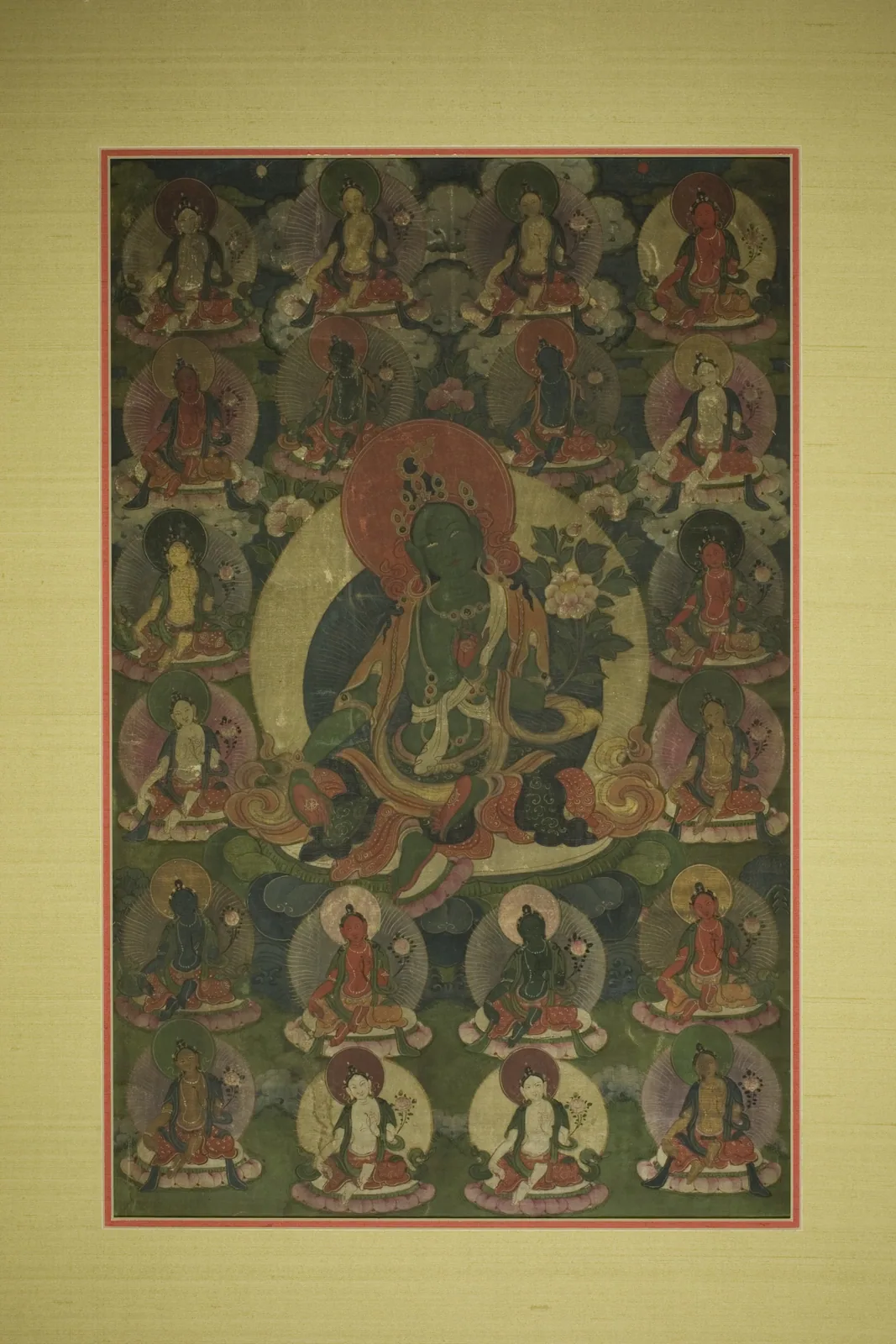
- Date: 18th century (Qing dynasty)
- Origin and medium: Tibet · Thangka; Green Tara and the Twenty-One Taras
- Collection: Art Institute of Chicago, accession no. 1986.1314 · CC0
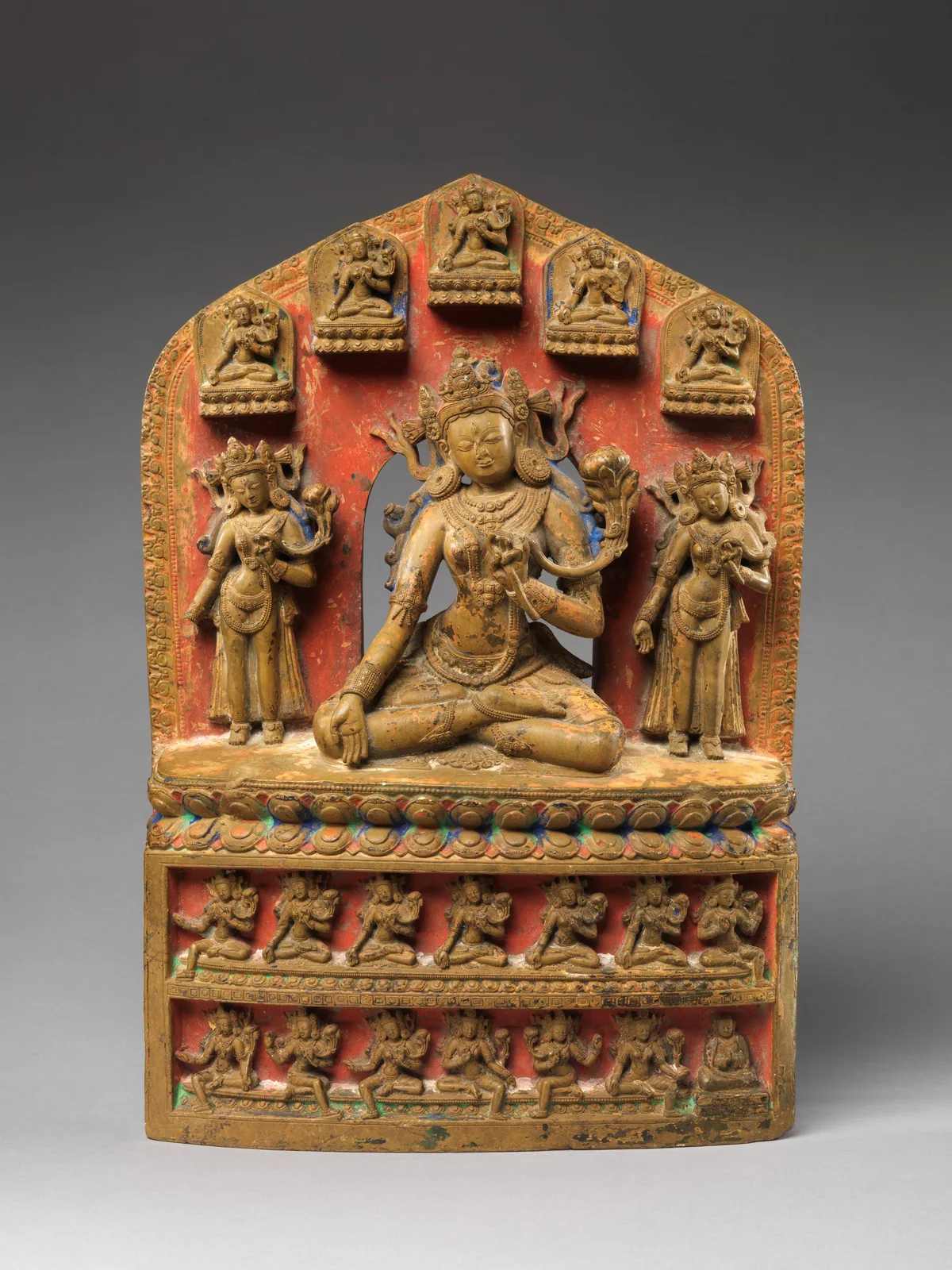
- Date: 14th century (Yuan to early Ming dynasty)
- Origin and medium: Tibet · Painted stone carving
- Collection: The Metropolitan Museum of Art, accession no. 2015.500.4.19 · Public domain