
White Tara
The Tara who grants long life and health. She has seven eyes on her body.
Watch the video
Who she is
White Tara is called Drolkar in Tibetan. Of all Tara's forms she is the most commonly seen, on a par with Green Tara.
Together with Amitayus and Ushnishavijaya (Namgyalma), she is one of the Three Deities of Long Life, the three figures most often practiced in Tibet when praying for long life.
What she does
She grants long life, health and peace. Green Tara leans toward "speed": people turn to her in an emergency. White Tara leans toward "steadiness": people pray to her for lasting safety and a long life.
What people pray to her for
Traditionally, people pray to White Tara for:
- Health and long life
- A quick recovery from illness
- Long life for parents, elders and teachers
- A calm mind, free of agitation
Mantra
OṂ TĀRE TUTTĀRE TURE MAMA ĀYUḤ PUṆYA JÑĀNA PUṢṬIṂ KURU SVĀHĀ
The first half is the same as Green Tara's mantra. The second half means "please increase my life span, merit and wisdom". It is openly taught; anyone may recite it.
Story: Seven eyes
What is most distinctive about White Tara is that she has seven eyes on her body: three on her face, one in the palm of each hand, and one on the sole of each foot.
The extra eye on her face is in the middle of her forehead and stands for wisdom. The four eyes on her palms and soles show that she brings awareness to every action she takes to help living beings, and never overlooks a single person.
This is why White Tara is also called the "Seven-Eyed Mother". If you see a white female Buddha with eyes painted on her palms and soles, that is her.
How to recognize her
- White body, with a peaceful face
- Seated with legs crossed, not with one foot stretched out like Green Tara
- Seven eyes in all, on the forehead, palms and soles
- Right hand open and lowered; left hand at the chest, holding a white lotus
The images
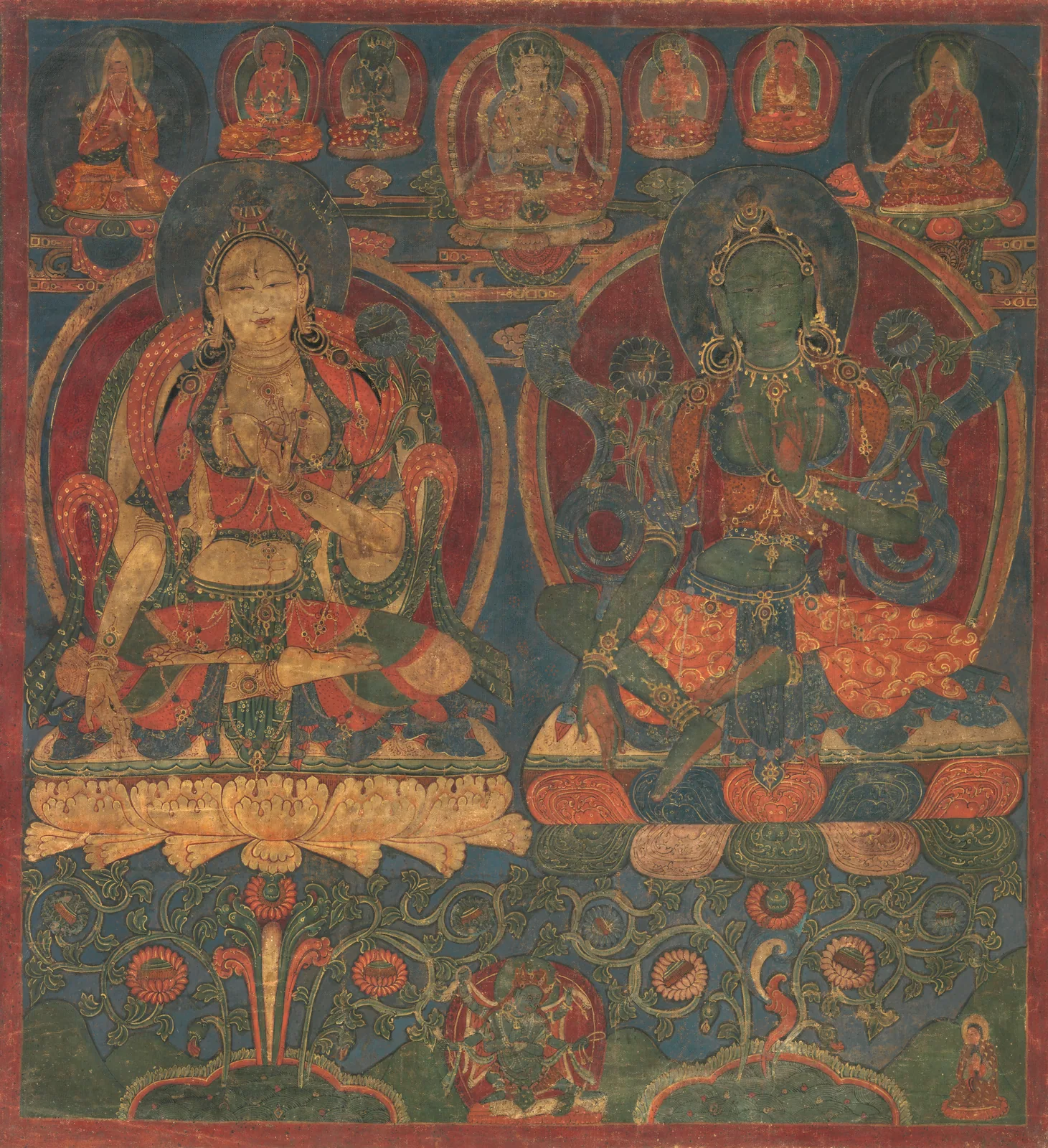
- Date: 1450–1500 (mid-Ming dynasty)
- Origin and medium: Guge, western Tibet · Thangka, distemper on cloth; White Tara and Green Tara in one painting
- Collection: The Metropolitan Museum of Art, accession no. 2012.460 · Public domain
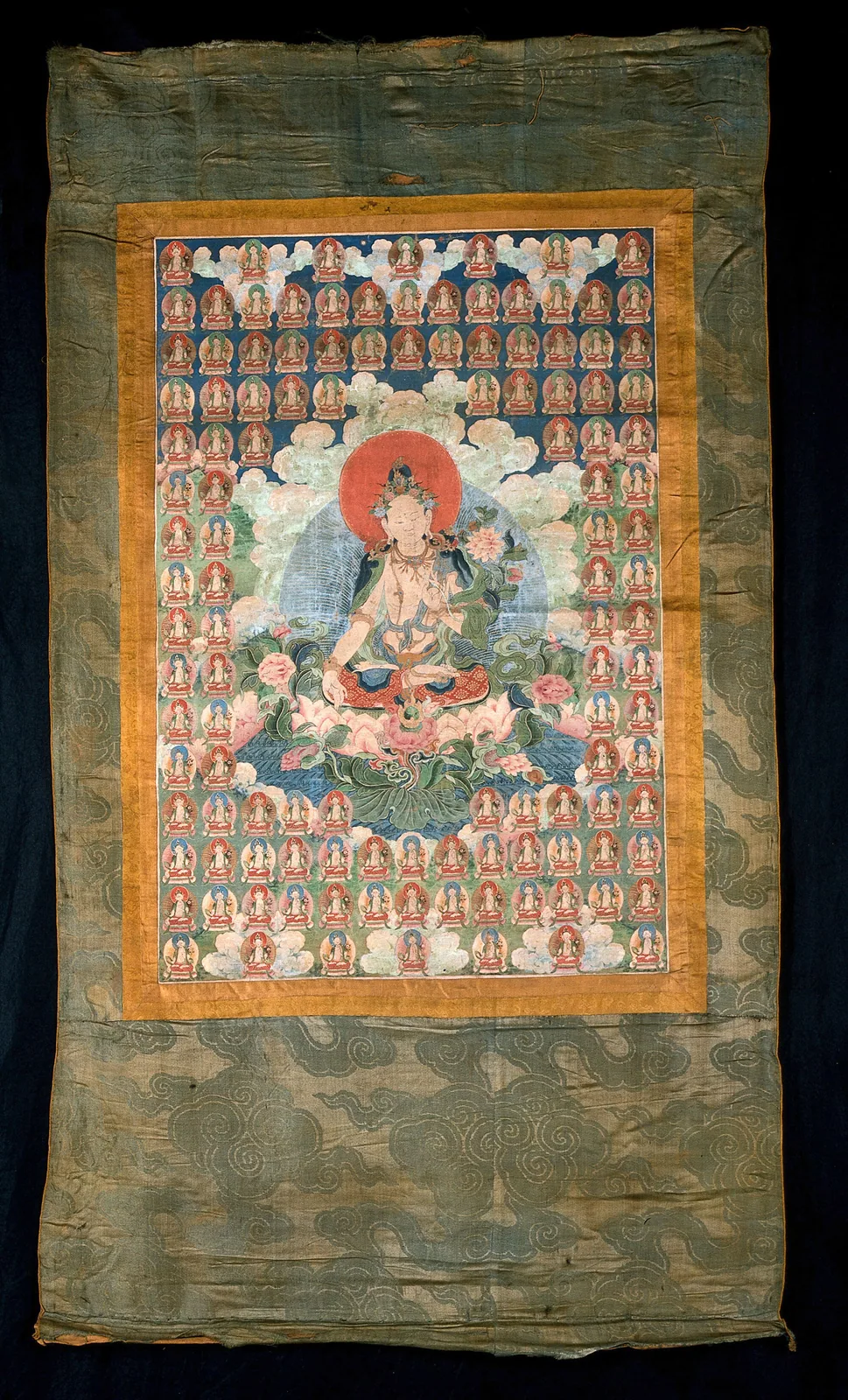
- Date: Date not given
- Origin and medium: Tibet · Distemper on cloth; White Tara with 120 emanations
- Collection: Wellcome Collection, London, accession no. 47106i · Public Domain Mark
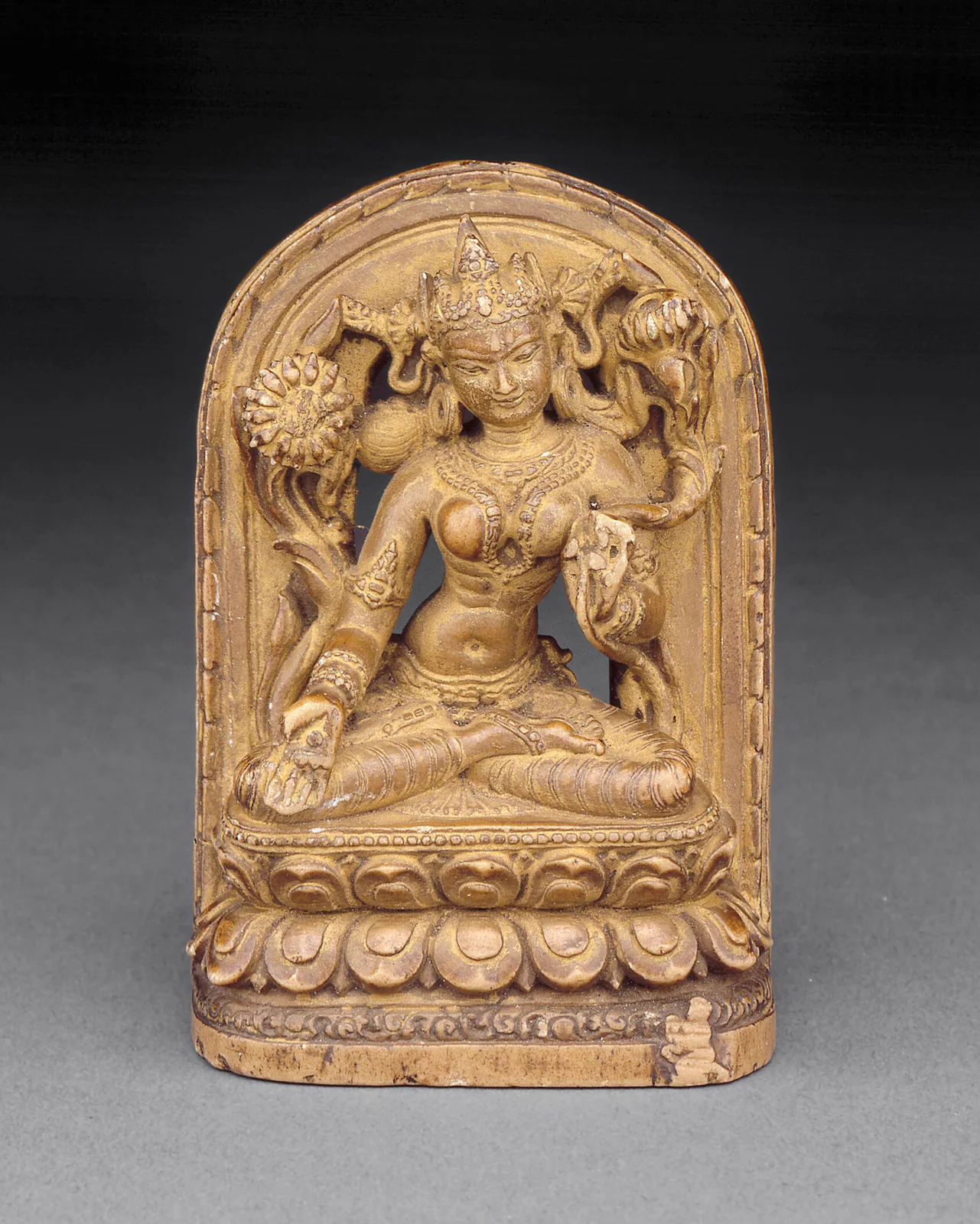
- Date: About the 12th century (roughly the Southern Song period)
- Origin and medium: Central Tibet · Statue, with a kneeling donor below the seat
- Collection: Art Institute of Chicago, accession no. 2014.1044 · CC0