
An introduction to names, symbolism and lineages, rather than a practice manual.
An edited learning guide · Sources and image credits below
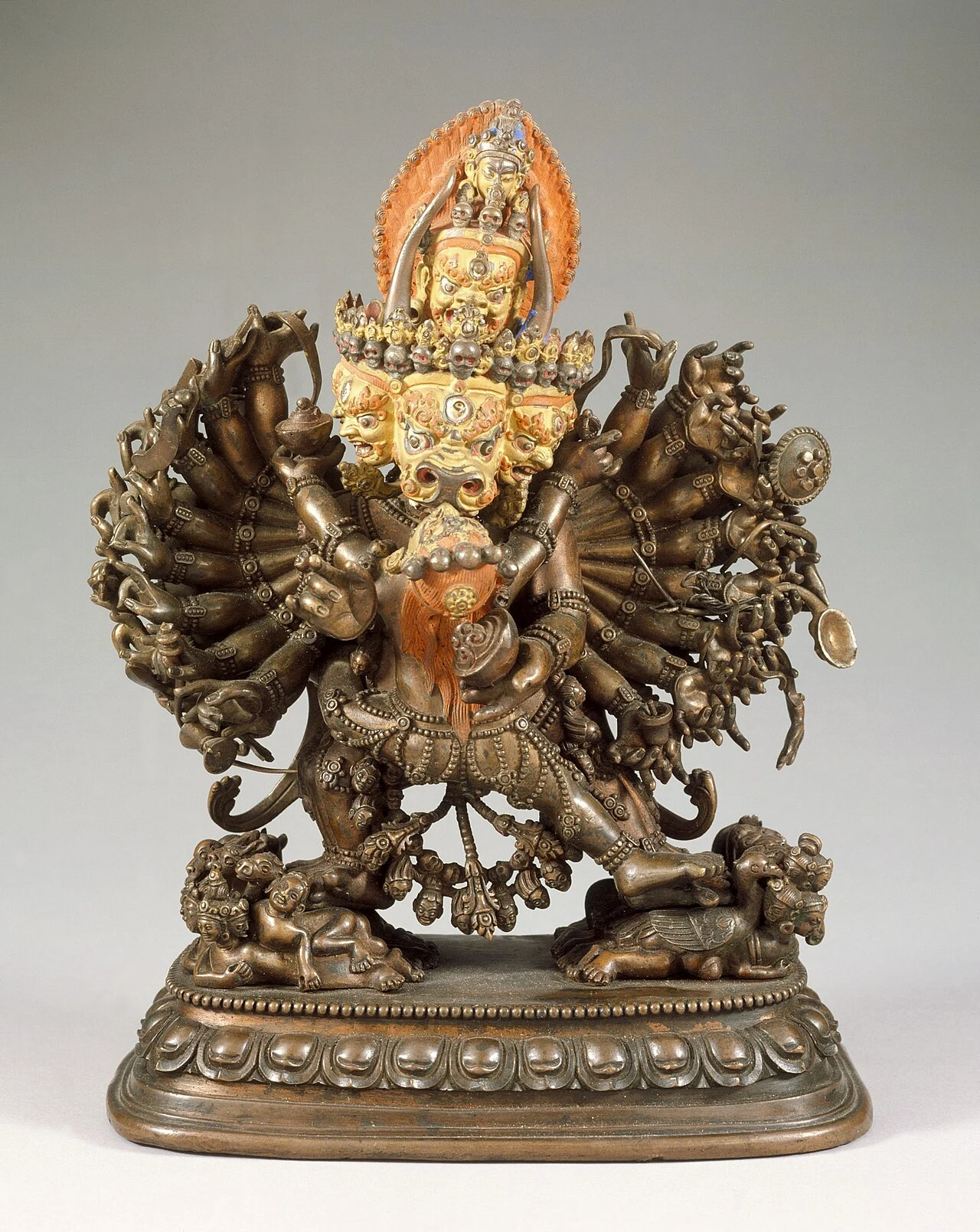
Why these three are discussed together
Guhyasamaja, Chakrasamvara and Vajrabhairava hold important places in Gelug tantric learning. Tsongkhapa and later teachers developed extensive explanations of these systems. They are neither a menu of promised benefits nor an exhaustive list of Gelug tantric traditions.
Guhyasamaja
Guhyasamaja is commonly discussed within the father-tantra classification, and it is closely connected with Tsongkhapa’s writings on completion-stage theory. Faces, arms, attributes and attendants depend on the particular form and lineage. A museum image should be identified specifically rather than treated as a universal template.
Chakrasamvara
Chakrasamvara is prominent in mother-tantra traditions, including lineages associated with Luipa and Ghantapa. Its imagery concerns Buddhist accounts of wisdom and method, not ordinary gratification. Mandalas and practice sequences are lineage-specific; this page introduces their context without providing self-guided visualization instructions.
Vajrabhairava and Manjushri
Vajrabhairava is understood as a wrathful manifestation of Manjushri, confronting death and ignorance. Yamantaka can refer to a broader range of related forms and is not interchangeable in every context. Wrathful imagery does not encourage anger or harm toward other people.
Art and practice prerequisites
Viewing publicly exhibited art and reading history differ from undertaking a formal practice. Self-generation and specialized rituals require the prerequisites, teachings and commitments of their lineage. Blanket claims that uninitiated visitors may not encounter any tantric object are also misleading; ask about the specific situation.
A starting point for beginners
Begin with refuge, ethical conduct, renunciation, bodhicitta and dependent arising. A guided reading of the Three Principal Aspects or lamrim helps build a foundation. Avoid comparing deities as competing sources of magical results. A qualified teacher can advise on appropriate further study.
Sources & further reading
- Geluk International Foundation · Gyuto
- The Metropolitan Museum of Art · Vajrabhairava
- Smithsonian · Vajrabhairava and Consort
Introductory cultural and historical material. Specific tantric practices require the relevant instruction, transmission and, where applicable, empowerment.