
Discover the meaning of Drepung, its colleges, monastic learning and Shoton festival.
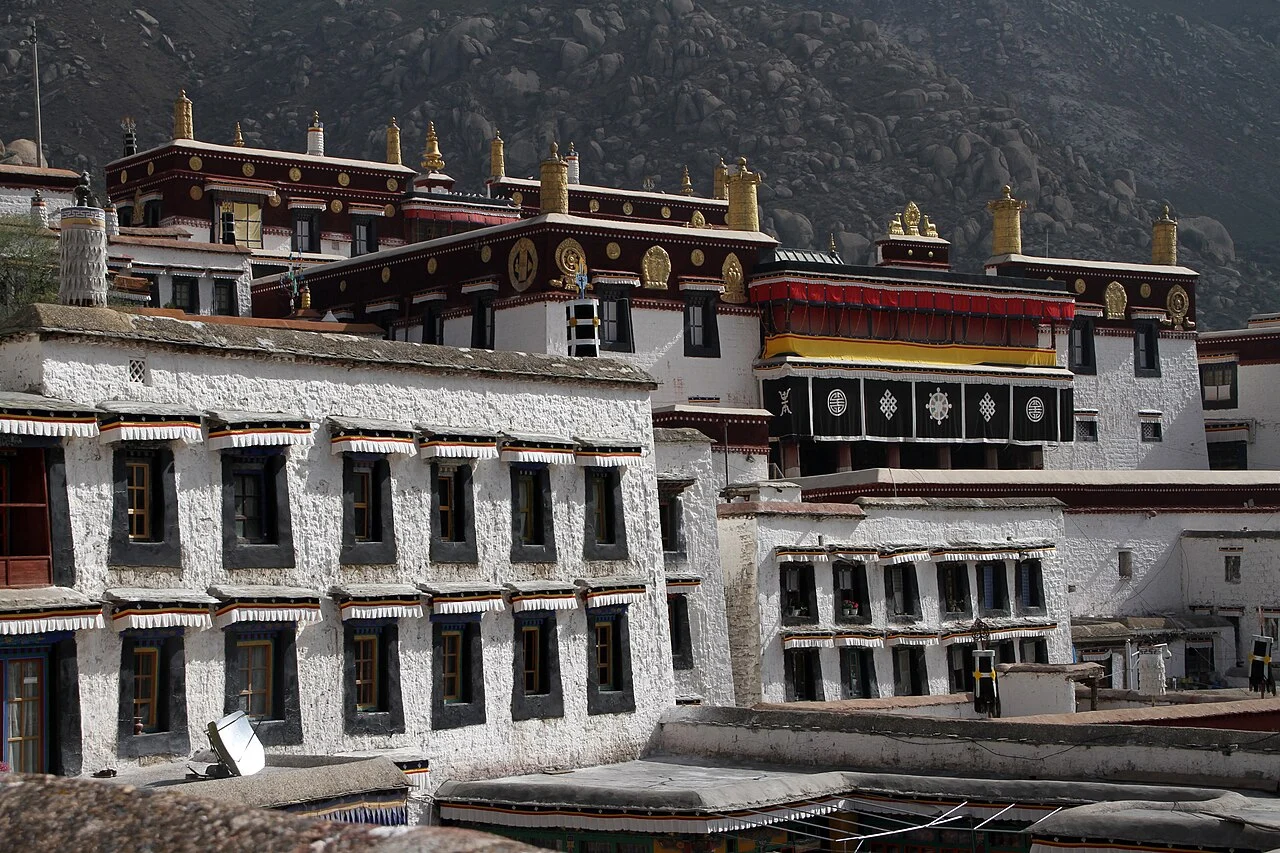
Founded in 1416
Drepung was founded west of Lhasa in 1416 by Tsongkhapa’s disciple Jamyang Choje Tashi Palden. It developed into a major centre of Buddhist learning. Its later scale and influence were the work of many generations of teachers, monks and patrons.
Name and historical scale
Drepung means a heap of rice. Its clustered white buildings evoke that image, while the name also has an Indian sacred-site association. Historical population estimates vary considerably. Calling it a great monastic centre is more useful than presenting an unqualified world ranking or treating old figures as current counts.
Colleges and their traditions
Its colleges include Gomang, Loseling, Deyang and Ngagpa. Colleges organize study, residence, rituals and examinations. Distinct textbooks and commentarial traditions support a varied intellectual culture. These differences deserve closer study rather than simplistic claims that one college debates more aggressively or is superior.
Texts, memory and debate
Students develop language and reasoning skills before advanced study. Memorization builds familiarity with texts, explanation clarifies meaning and debate tests consequences. Curricula and examinations vary across institutions and periods. A geshe qualification reflects sustained traditional study, without a universal equivalence to every modern doctoral degree.
Ganden Phodrang and Shoton
Ganden Phodrang first referred to a residence associated with the Dalai Lamas at Drepung and later became the name of a seventeenth-century government. The building and political institution should be distinguished. Shoton’s large-image display is a notable observance; its Gregorian date changes and requires an annual announcement.
Identify the place
Drepung in Lhasa and its re-established colleges in Mundgod, India, are distinct locations. Gomang and Loseling maintain their own institutional information. Visitors can learn from architecture and monastic life while respecting teaching sessions. Captions should always identify the actual place shown.
Key figures and textbook traditions
Drepung was founded by Jamyang Choje Tashi Palden (1379–1449), a disciple of Tsongkhapa. Later Gendun Gyatso (1475–1542, recognised in retrospect as the Second Dalai Lama) served as its abbot and built a residence there, the original Ganden Phodrang.
Each college follows its own textbooks: Loseling uses Panchen Sonam Drakpa (1478–1554), as Ganden Shartse does; Gomang uses Jamyang Shepa (1648–1721). Jamyang Shepa, a Gomang scholar, later founded Labrang Monastery in Amdo (today Xiahe, Gansu), so Gomang and Labrang share close study ties.
Questions
How large is Drepung?
Historically it was one of the largest monasteries anywhere, with sources citing thousands of monks or more, but numbers changed over time and old figures are not today’s.
How do Gomang and Loseling differ?
Both study the five great texts towards the Geshe degree; the main difference is their textbooks, Jamyang Shepa for Gomang and Panchen Sonam Drakpa for Loseling.
Why is the Shoton festival linked with Drepung?
During Shoton a giant thangka is unveiled at Drepung, one of Lhasa’s best-known sights. Dates change each year, so check the current announcement.
Where is Drepung in India?
After 1959, Gomang and Loseling were re-established at Mundgod, Karnataka, next to the Ganden colleges.
What are the other two great monasteries of Lhasa?
Ganden (1409) and Sera (1419). Each has its own colleges and textbooks.