
Explore the monastery founded in 1409, its colleges, throne and remembrance of Tsongkhapa.
An edited learning guide · Sources and image credits below
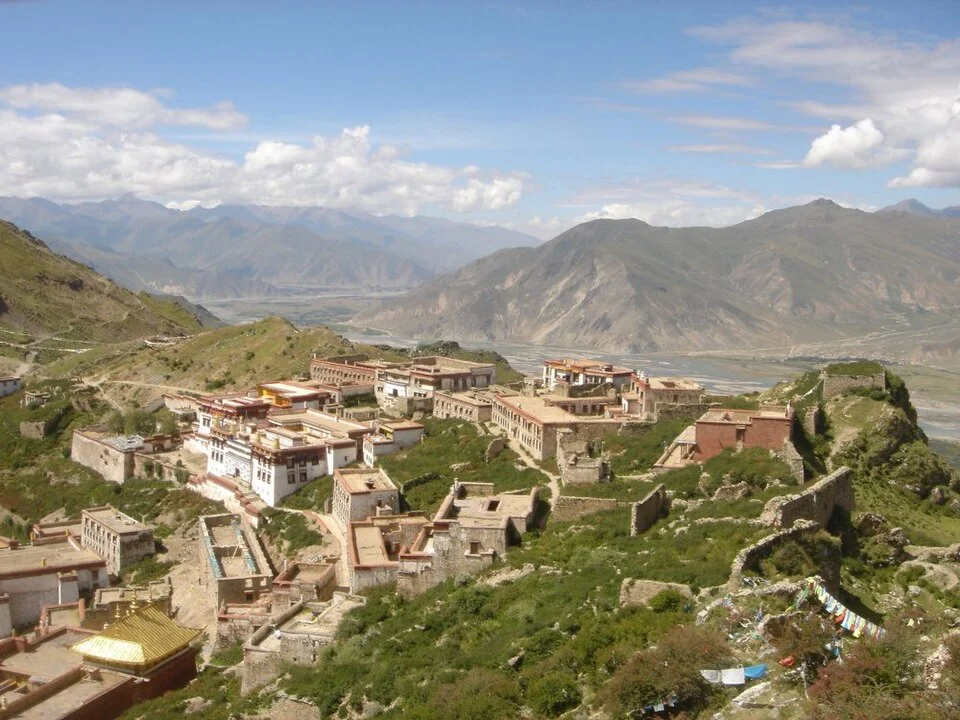
A monastery on the mountain
Tsongkhapa founded Ganden east of Lhasa in 1409, the year he inaugurated the Great Prayer Festival. The monastery gave his community a lasting centre for study and teaching. Ganden, Drepung and Sera are the three great Gelug monasteries of Lhasa, each with its own founding history and colleges.
The meaning of Ganden
Ganden is associated with Tushita, the Joyful realm linked in Buddhist tradition with Maitreya. The name carries a devotional meaning. Accounts of predictions and auspicious signs belong to sacred-place narratives and should be distinguished from dated institutional history.
Tsongkhapa’s later years
Ganden was an important setting for Tsongkhapa’s later teaching and practice. Following his death in 1419, disciples continued his teachings and succession. Reliquaries and memorial spaces express remembrance of the founder. Destruction and restoration form part of the monastery’s history; present structures are not all original fifteenth-century fabric.
Shartse and Jangtse
Shartse and Jangtse are Ganden’s two principal colleges. They support textual study, debate, examinations and communal life. Their learning includes philosophy, epistemology and monastic discipline. Neither college should be reduced to the study of only one tantric deity.
The throne and its succession
The Ganden Tripa holds Tsongkhapa’s throne and serves as the formal head of the Gelug tradition. This office differs from the Dalai Lama and Panchen Lama incarnate lineages. The Shartse and Jangtse Choje offices are connected with the tantric-college succession and are not simply the ordinary abbacies of Ganden’s two colleges.
Places and visiting
Re-established Shartse and Jangtse colleges also stand in Mundgod, Karnataka, India. Identify the location when viewing photographs or event notices. Ganden Ngamchoe, the twenty-fifth day of the tenth Tibetan month, commemorates Tsongkhapa. Check local visitor arrangements and photography rules before travelling.
Sources & further reading
Introductory cultural and historical material. Specific tantric practices require the relevant instruction, transmission and, where applicable, empowerment.