
Understand the questions, reasoning and gestures of monastic debate.
An edited learning guide · Sources and image credits below
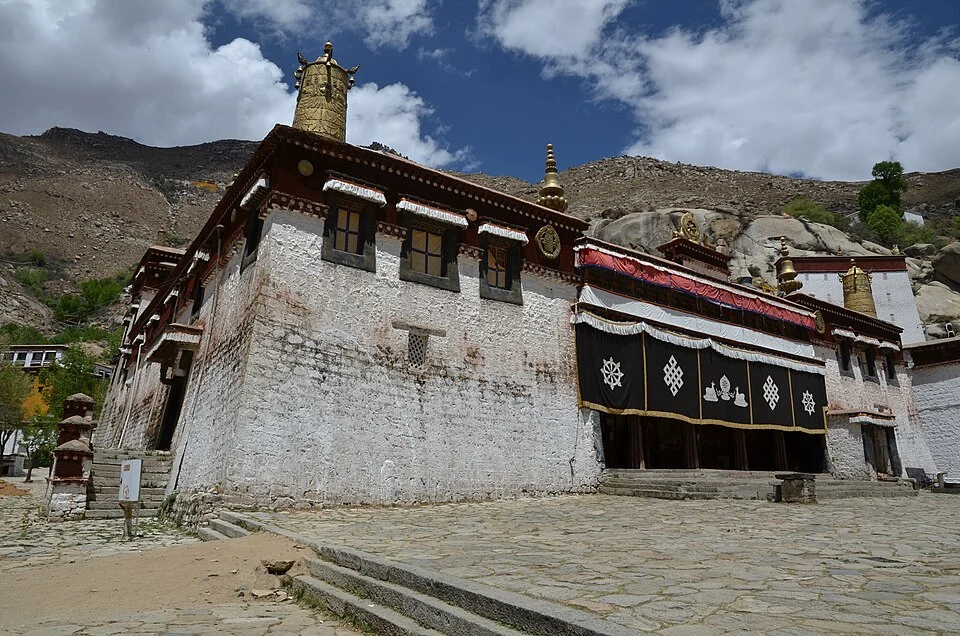
The founding of Sera
Shakya Yeshe founded Sera north of Lhasa in 1419. A disciple of Tsongkhapa, he travelled to the Ming court and became known by the title Jamchen Choje. His teaching relationships, monastery foundation and cultural exchanges provide useful ways to understand his life.
Je, Me and Ngagpa
Sera’s principal colleges are Je, Me and Ngagpa. They organize learning, rituals and community life. Re-established Sera Je and Sera Me in Bylakuppe, India, are distinct from the Lhasa site. Their schedules and courses should be checked with the relevant institution.
What debate does
Debate examines definitions, reasons and consequences. One participant commonly stands to question while another sits to respond. Lively gestures are part of the format, not evidence of hostility. Explaining why a claim follows helps reveal uncertainty that memorizing an answer may conceal.
Gestures and a simple example
The clap punctuates a challenge and has traditional symbolic explanations, but a fixed universal sequence of three claps should not be assumed. A simple learning question is whether something that changes can remain exactly the same forever. Clarifying the terms illustrates inquiry; it is not a formal debate formula.
The great texts and the geshe
The curriculum includes Prajnaparamita, Madhyamaka, epistemology, Abhidharma and Vinaya. Major texts include the Abhisamayalamkara, Madhyamakavatara, Pramanavarttika, Abhidharmakosha and Gunaprabha’s Vinayasutra. Memorization, explanation, debate and examinations work together, while their arrangements differ across periods and colleges.
Visiting and learning
Debate is a real educational activity. Keep a respectful distance, follow photography rules and avoid interrupting. Confirm visitor times locally. In everyday discussion, ask a clear question, listen fully and examine your own reasoning. Respect for other traditions supports learning together.
Sources & further reading
Introductory cultural and historical material. Specific tantric practices require the relevant instruction, transmission and, where applicable, empowerment.