
When I feel angry
Choose a safe pause and express a feeling and a need.
Watch lesson 3
Open the full image, then touch and hold to save on a phone, or right-click and save on a computer.
Let’s begin
We practised asking what others need. Our own feelings need attention too.
Your carefully built block bridge falls down. What might you feel in your body?
Story time
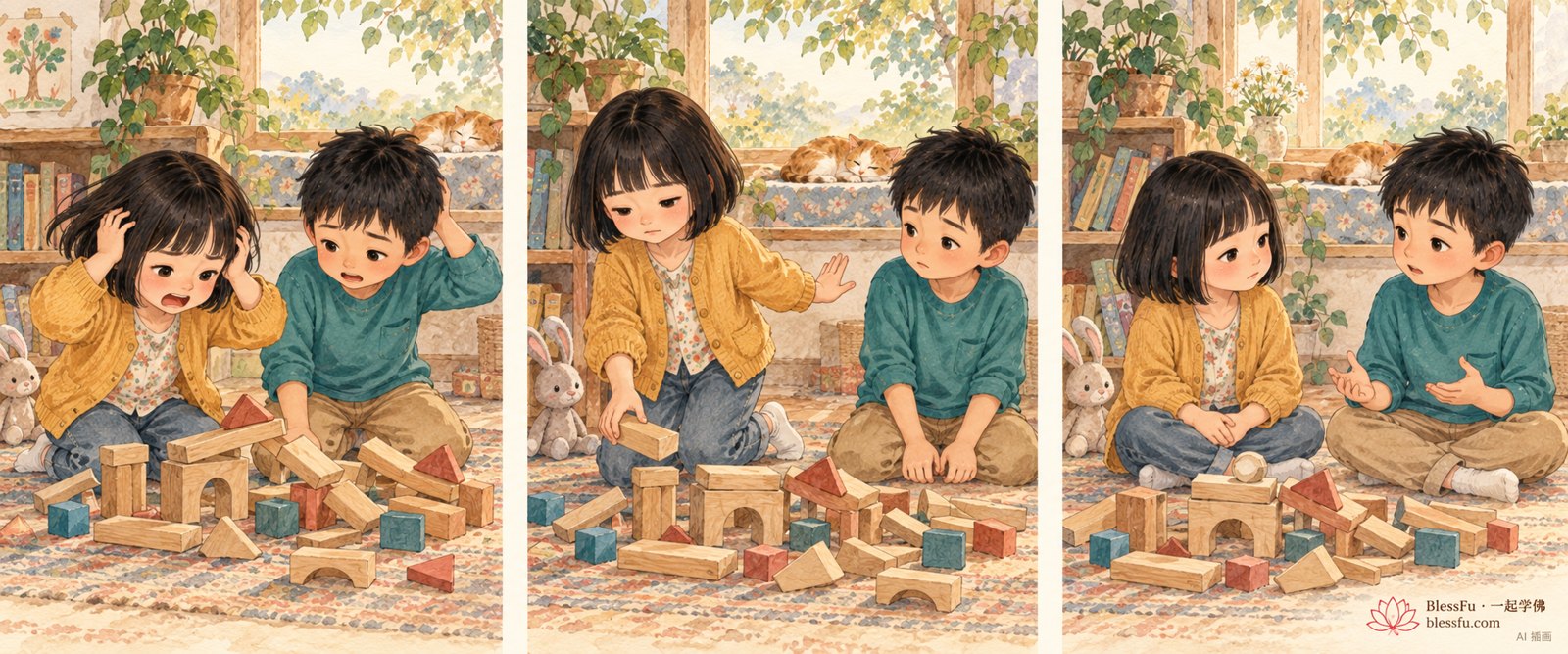
Xiaohe had just finished a tall block bridge. Ayuan turned and caught it with a sleeve. Crash! Xiaohe’s face felt hot and her fists tightened. ‘You always do that!’ she shouted.
She put down the block in her hand and stepped back. She did not force herself to feel happy. She breathed comfortably and waited until she could speak.
‘I’m angry because that took a long time. I need a moment. Then could you help me rebuild?’ Ayuan apologized. The bridge was still broken, but they had found a way to talk.
Think together
We can notice anger and take time to choose an action that does not hurt someone.
- Did Xiaohe’s anger have to vanish as soon as she paused?
- Who could help if someone kept bullying her?
Try an activity
Try: ‘I feel… because… I would like…’ Choose a safe pause: put an object down, step away or find an adult.
Take it home
Agree on a pause phrase with your caregiver, such as ‘I need a moment.’ Either person may use it.
For adults: read-aloud script and guidance
Do not say Buddhist children must never feel angry. Pausing is not punishment. Eyes may stay open; breathing exercises are optional. Seek a trusted adult for ongoing bullying. This is an everyday learning activity, not therapy.
Nine-slide lesson outline
1. When I feel angry
Learn together, one small step.
Choose a safe pause and express a feeling and a need.
We practised asking what others need. Our own feelings need attention too.
2. Look closely
Your carefully built block bridge falls down. What might you feel in your body?
We practised asking what others need. Our own feelings need attention too.
Your carefully built block bridge falls down. What might you feel in your body?
3. Story 1 / 3
Xiaohe had just finished a tall block bridge. Ayuan turned and caught it with a sleeve. Crash! Xiaohe’s face felt hot and her fists tightened. ‘You always do that!’ she shouted.
Xiaohe had just finished a tall block bridge. Ayuan turned and caught it with a sleeve. Crash! Xiaohe’s face felt hot and her fists tightened. ‘You always do that!’ she shouted.
4. Story 2 / 3
She put down the block in her hand and stepped back. She did not force herself to feel happy. She breathed comfortably and waited until she could speak.
She put down the block in her hand and stepped back. She did not force herself to feel happy. She breathed comfortably and waited until she could speak.
5. Story 3 / 3
‘I’m angry because that took a long time. I need a moment. Then could you help me rebuild?’ Ayuan apologized. The bridge was still broken, but they had found a way to talk.
‘I’m angry because that took a long time. I need a moment. Then could you help me rebuild?’ Ayuan apologized. The bridge was still broken, but they had found a way to talk.
6. A Buddhist idea
We can notice anger. We can take time before acting.
We can notice anger and take time to choose an action that does not hurt someone.
7. Talk together
Did Xiaohe’s anger have to vanish as soon as she paused?
Who could help if someone kept bullying her?
Listen to different answers. Ask why. Children may discuss the characters rather than private experiences.
8. Try an activity
Try saying: ‘I feel… because… I would like…’
Try: ‘I feel… because… I would like…’ Choose a safe pause: put an object down, step away or find an adult.
Agree on a pause phrase with your caregiver, such as ‘I need a moment.’ Either person may use it.
9. For grown-ups
Read aloud, discuss and try a small activity.
Stories and exercises: BlessFu
Illustrations: AI-assisted
Full references and guidance are in the companion booklet.
Do not say Buddhist children must never feel angry. Pausing is not punishment. Eyes may stay open; breathing exercises are optional. Seek a trusted adult for ongoing bullying. This is an everyday learning activity, not therapy.
Next, we discover things we can share without buying a gift.
Story and references
LYWA’s How to Raise a Child informs the broad theme of kindness and patience. The scenario and communication exercise are BlessFu’s own.
Next, we discover things we can share without buying a gift.