
A Thought Is Not Always a Fact
Distinguish a guess from what is known and choose to ask, check safely or seek help.
Watch lesson 12
Open the full image, then touch and hold to save on a phone, or right-click and save on a computer.
Let’s begin
Thoughts appear in our minds. Today we ask one more question: do I know this is true?
If a friend does not answer at once, does that always mean they dislike us?
Story time
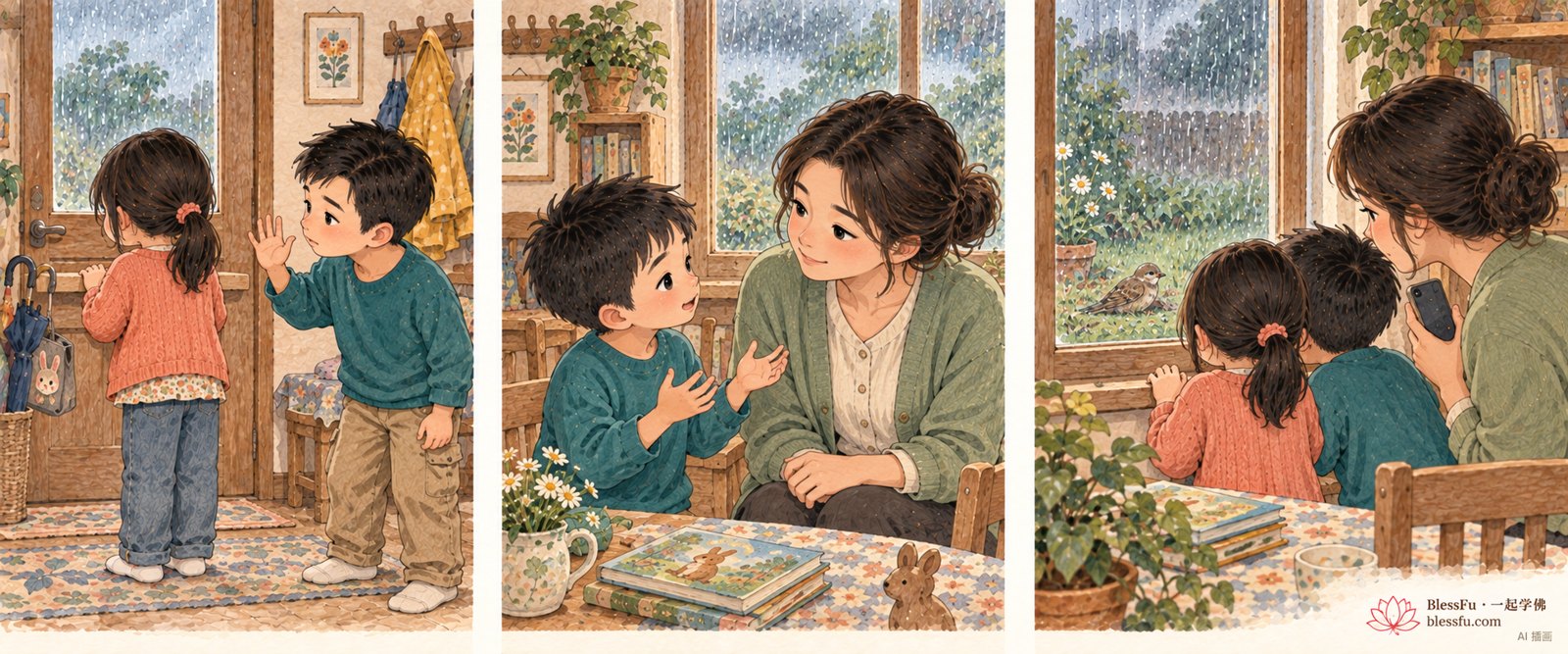
Ayuan waved to Anan by the window, but she did not turn around. 'She doesn't want to be my friend,' he thought. He wanted to leave. The teacher asked, 'What did you see? And what are you guessing?'
'I waved and she didn't answer,' Ayuan said. That was what he had seen. 'She dislikes me' was still a guess. He went a little closer and called her name. Anan had been watching an injured bird outside and had not noticed him. She wanted an adult to help.
Ayuan felt relieved. A thought could prompt him to find out more, but it was not already a fact. Sometimes finding out would still feel upsetting. Then he could speak with a trusted adult, instead of trying to figure everything out alone.
Think together
Noticing a thought can leave room for a choice. We do not have to act on every thought, and we should not dismiss every concern either.
- What had Ayuan observed, and what had he guessed?
- If a child really is being excluded, who could help?
Try an activity
Make three boxes: what I saw, what I guessed, and how I could find out. Use colors or drawings instead of writing if you prefer.
Take it home
For a small everyday misunderstanding, try saying, 'I don't know yet. I can ask.' This is optional.
For adults: read-aloud script and guidance
Never use 'It's only a thought' to dismiss a child's report of harm. Take concerns about danger, bullying or inappropriate touch seriously; do not make a child investigate alone. Do not touch injured wildlife; an adult can contact suitable help.
Nine-slide lesson outline
1. A Thought Is Not Always a Fact
Learn together, one small step.
Distinguish a guess from what is known and choose to ask, check safely or seek help.
Thoughts appear in our minds. Today we ask one more question: do I know this is true?
2. Look closely
If a friend does not answer at once, does that always mean they dislike us?
Thoughts appear in our minds. Today we ask one more question: do I know this is true?
If a friend does not answer at once, does that always mean they dislike us?
3. Story 1 / 3
Ayuan waved to Anan by the window, but she did not turn around. 'She doesn't want to be my friend,' he thought. He wanted to leave. The teacher asked, 'What did you see? And what are you guessing?'
Ayuan waved to Anan by the window, but she did not turn around. 'She doesn't want to be my friend,' he thought. He wanted to leave. The teacher asked, 'What did you see? And what are you guessing?'
4. Story 2 / 3
'I waved and she didn't answer,' Ayuan said. That was what he had seen. 'She dislikes me' was still a guess. He went a little closer and called her name. Anan had been watching an injured bird outside and had not noticed him. She wanted an adult to help.
'I waved and she didn't answer,' Ayuan said. That was what he had seen. 'She dislikes me' was still a guess. He went a little closer and called her name. Anan had been watching an injured bird outside and had not noticed him. She wanted an adult to help.
5. Story 3 / 3
Ayuan felt relieved. A thought could prompt him to find out more, but it was not already a fact. Sometimes finding out would still feel upsetting. Then he could speak with a trusted adult, instead of trying to figure everything out alone.
Ayuan felt relieved. A thought could prompt him to find out more, but it was not already a fact. Sometimes finding out would still feel upsetting. Then he could speak with a trusted adult, instead of trying to figure everything out alone.
6. A Buddhist idea
A thought appears.
It is not automatically a fact.
Noticing a thought can leave room for a choice. We do not have to act on every thought, and we should not dismiss every concern either.
7. Talk together
What had Ayuan observed, and what had he guessed?
If a child really is being excluded, who could help?
Listen to different answers. Ask why. Children may discuss the characters rather than private experiences.
8. Try an activity
Draw: observed, guessed,
and a safe way to ask.
Make three boxes: what I saw, what I guessed, and how I could find out. Use colors or drawings instead of writing if you prefer.
For a small everyday misunderstanding, try saying, 'I don't know yet. I can ask.' This is optional.
9. For grown-ups
Read aloud, discuss and try a small activity.
Stories and exercises: BlessFu
Illustrations: AI-assisted
Full references and guidance are in the companion booklet.
Never use 'It's only a thought' to dismiss a child's report of harm. Take concerns about danger, bullying or inappropriate touch seriously; do not make a child investigate alone. Do not touch injured wildlife; an adult can contact suitable help.
In the next batch we will explore kind speech and listening.
Story and references
Broad teaching reference: Matt Lindén, SEE Learning: Understanding Our Emotions, Study Buddhism, on awareness and creating space before responding. The fact-and-guess story and exercise are original BlessFu work, not scripture, a translation or an endorsed SEE Learning lesson.
https://studybuddhism.com/en/essentials/universal-values/see-learning-understanding-our-emotions
In the next batch we will explore kind speech and listening.