
Tell the Truth, Ask for Help
Know that mistakes can be shared with a trusted adult, and worrying secrets need not be kept.
Watch lesson 14
Open the full image, then touch and hold to save on a phone, or right-click and save on a computer.
Let’s begin
We have practised helpful words. Today we try speaking up when we feel worried.
After tipping a flowerpot, how could Xiaohe ask for help?
Story time
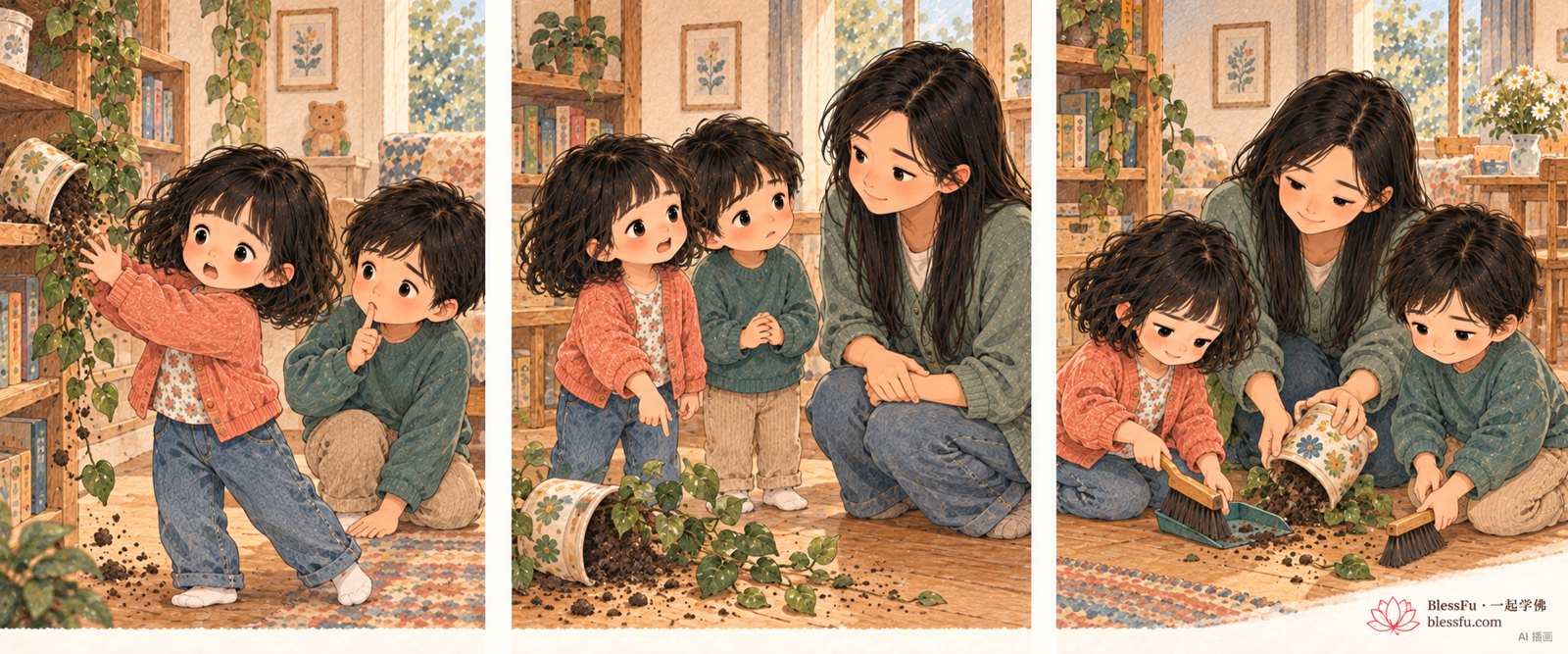
While reaching for a book, Xiaohe knocked a small flowerpot off the shelf. Soil spilled across the floor. “Hide it. Do not tell,” whispered Lele. Her heart beat fast. She worried about being scolded, but did not know whether the pot was broken or safe to touch. She went to her mother nearby.
“I knocked the pot. I am scared, and I do not know how to clean it up.” Mother checked that the pot had no broken pieces. “Thank you for telling me. Let us make it safe first.” She did not make Xiaohe stand and confess for a long time. She brought small brushes so the children could help sweep up the soil.
Afterwards Mother said, “Some surprises, like a birthday card not yet given, can wait. But if something feels frightening or uncomfortable, or someone could get hurt, you can ask a trusted adult for help.” Xiaohe nodded. “Even if I said I would not tell, I can still ask for help.”
Think together
Honesty helps build trust and makes help possible. Keeping personal information private is not lying. You do not have to tell everyone private things. When you need help, you can tell a trusted adult.
- How did Mother make it easier for Xiaohe to explain?
- If the first adult does not understand, who else could the character ask?
Try an activity
Draw two “helping hands” for the character. Beside each, draw an adult role who listens and helps, such as a caregiver or teacher. Practise: “I need help. Can you listen?” Do not add real names or contact details.
Take it home
An adult explains how to ask for help after a small accident at home: “Tell me first. We will work out what to do.”
For adults: read-aloud script and guidance
Respond calmly. Do not promise secrecy about safety concerns. Do not ask children to disclose frightening experiences publicly; discuss the characters instead. Encourage seeking another helpful adult. Never blame a child for not speaking up. Do not threaten invented punishments or karmic consequences.
Nine-slide lesson outline
1. Tell the Truth, Ask for Help
Learn together, one small step.
Know that mistakes can be shared with a trusted adult, and worrying secrets need not be kept.
We have practised helpful words. Today we try speaking up when we feel worried.
2. Look closely
After tipping a flowerpot, how could Xiaohe ask for help?
We have practised helpful words. Today we try speaking up when we feel worried.
After tipping a flowerpot, how could Xiaohe ask for help?
3. Story 1 / 3
While reaching for a book, Xiaohe knocked a small flowerpot off the shelf. Soil spilled across the floor. “Hide it. Do not tell,” whispered Lele. Her heart beat fast. She worried about being scolded, but did not know whether the pot was broken or safe to touch. She went to her mother nearby.
While reaching for a book, Xiaohe knocked a small flowerpot off the shelf. Soil spilled across the floor. “Hide it. Do not tell,” whispered Lele. Her heart beat fast. She worried about being scolded, but did not know whether the pot was broken or safe to touch. She went to her mother nearby.
4. Story 2 / 3
“I knocked the pot. I am scared, and I do not know how to clean it up.” Mother checked that the pot had no broken pieces. “Thank you for telling me. Let us make it safe first.” She did not make Xiaohe stand and confess for a long time. She brought small brushes so the children could help sweep up the soil.
“I knocked the pot. I am scared, and I do not know how to clean it up.” Mother checked that the pot had no broken pieces. “Thank you for telling me. Let us make it safe first.” She did not make Xiaohe stand and confess for a long time. She brought small brushes so the children could help sweep up the soil.
5. Story 3 / 3
Afterwards Mother said, “Some surprises, like a birthday card not yet given, can wait. But if something feels frightening or uncomfortable, or someone could get hurt, you can ask a trusted adult for help.” Xiaohe nodded. “Even if I said I would not tell, I can still ask for help.”
Afterwards Mother said, “Some surprises, like a birthday card not yet given, can wait. But if something feels frightening or uncomfortable, or someone could get hurt, you can ask a trusted adult for help.” Xiaohe nodded. “Even if I said I would not tell, I can still ask for help.”
6. A Buddhist idea
Honesty includes asking for help.
Private details are not for everyone.
Honesty helps build trust and makes help possible. Keeping personal information private is not lying. You do not have to tell everyone private things. When you need help, you can tell a trusted adult.
7. Talk together
How did Mother make it easier for Xiaohe to explain?
If the first adult does not understand, who else could the character ask?
Listen to different answers. Ask why. Children may discuss the characters rather than private experiences.
8. Try an activity
Draw a help map for the character.
Draw two “helping hands” for the character. Beside each, draw an adult role who listens and helps, such as a caregiver or teacher. Practise: “I need help. Can you listen?” Do not add real names or contact details.
An adult explains how to ask for help after a small accident at home: “Tell me first. We will work out what to do.”
9. For grown-ups
Read aloud, discuss and try a small activity.
Stories and exercises: BlessFu
Illustrations: AI-assisted
Full references and guidance are in the companion booklet.
Respond calmly. Do not promise secrecy about safety concerns. Do not ask children to disclose frightening experiences publicly; discuss the characters instead. Encourage seeking another helpful adult. Never blame a child for not speaking up. Do not threaten invented punishments or karmic consequences.
Next, we practise listening when someone else speaks.
Story and references
Theme reference: Matt Lindén, “SEE Learning: Cultivating Social Skills,” Study Buddhism, an abridgment of the Emory University SEE Learning framework. Used only for broad themes of care, listening, diversity and appreciation. This is a universal ethics reference, not a Buddhist scripture. Stories, dialogue and activities are original BlessFu writing, not a translation or an endorsed course.
https://studybuddhism.com/en/essentials/universal-values/see-learning-cultivating-social-skills
Next, we practise listening when someone else speaks.