
The Journey of a Meal
Name three kinds of help or conditions that make a meal possible.
Watch lesson 20
Open the full image, then touch and hold to save on a phone, or right-click and save on a computer.
Let’s begin
We noticed a tree changing. Now we explore how many conditions help things appear.
Does a bowl of vegetable rice depend only on the cook?
Story time
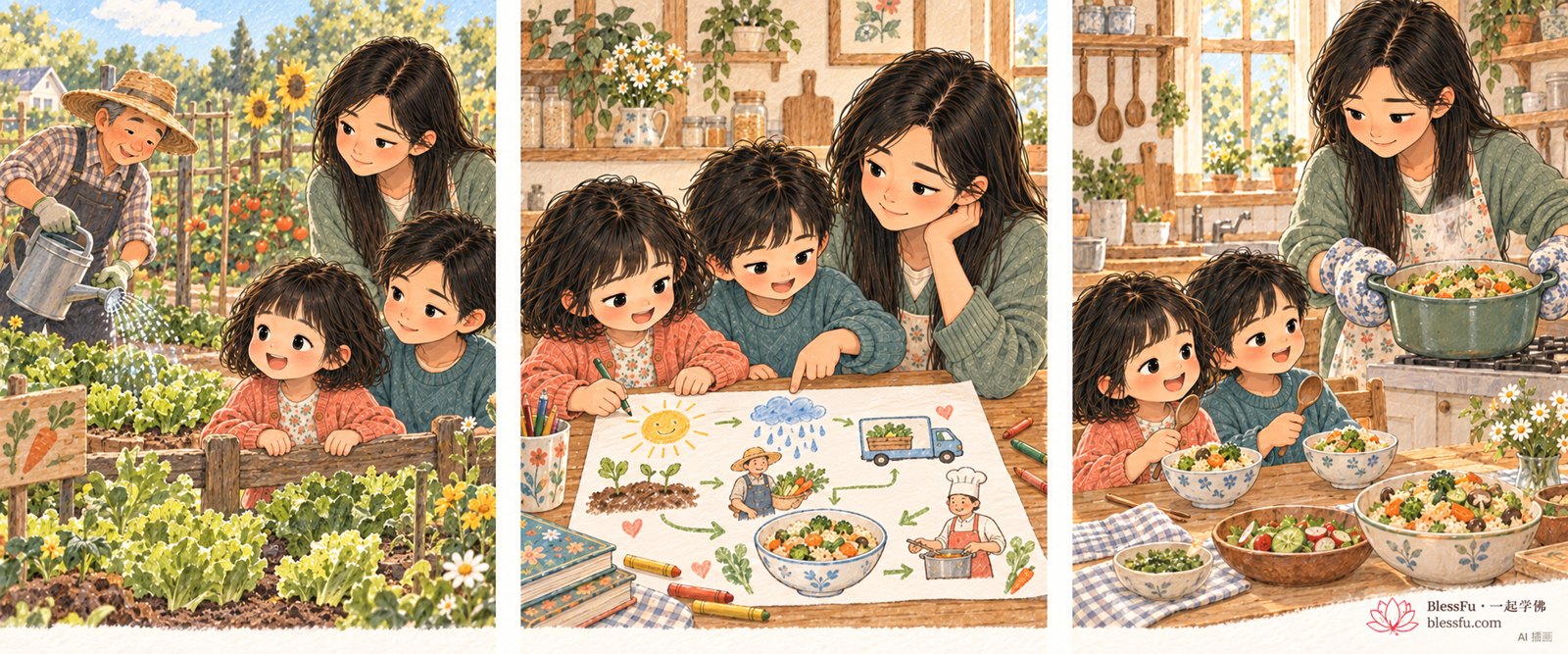
In a community garden, Lele saw a gardener watering seedlings. “Vegetables grow here before they reach a plate!” he said. “What about rice?” asked Xiaohe. “Rice comes from a grain crop,” Mother explained. “Different foods have different journeys. Let us draw a map at home.”
They drew vegetable rice in the middle of a sheet and added sunshine, rain, soil, growers, transport workers and a cook around it. Lele wanted to make the cook biggest. “Without the other help, the cook would not have these ingredients,” Xiaohe said. They made room for each condition.
While Mother handled the hot pot, the children set spoons on the cool table nearby. Food had not appeared from nowhere. Many conditions had come together for this meal. “I cannot do every job,” said Lele, “but I can take care of my small part.”
Think together
An introductory way to explore dependent arising is to notice causes and conditions. A meal is one everyday example, not a complete account of the teaching. Seeing connections can help us appreciate work and resources.
- What would change without water or transport?
- How can children help without touching a hot pot?
Try an activity
Draw an imaginary meal. Connect it to at least three small pictures: a natural condition, someone’s work, and a safe action you can take.
Take it home
Choose a household object and ask what materials and work it needed. Leave question marks where you do not know, then investigate together.
For adults: read-aloud script and guidance
Do not force children to finish food or shame them with hunger stories. Do not rank family meals by cost. Adults handle heat and knives. Explain that rice and vegetables may come from different places; do not invent their actual origin.
Nine-slide lesson outline
1. The Journey of a Meal
Learn together, one small step.
Name three kinds of help or conditions that make a meal possible.
We noticed a tree changing. Now we explore how many conditions help things appear.
2. Look closely
Does a bowl of vegetable rice depend only on the cook?
We noticed a tree changing. Now we explore how many conditions help things appear.
Does a bowl of vegetable rice depend only on the cook?
3. Story 1 / 3
In a community garden, Lele saw a gardener watering seedlings. “Vegetables grow here before they reach a plate!” he said. “What about rice?” asked Xiaohe. “Rice comes from a grain crop,” Mother explained. “Different foods have different journeys. Let us draw a map at home.”
In a community garden, Lele saw a gardener watering seedlings. “Vegetables grow here before they reach a plate!” he said. “What about rice?” asked Xiaohe. “Rice comes from a grain crop,” Mother explained. “Different foods have different journeys. Let us draw a map at home.”
4. Story 2 / 3
They drew vegetable rice in the middle of a sheet and added sunshine, rain, soil, growers, transport workers and a cook around it. Lele wanted to make the cook biggest. “Without the other help, the cook would not have these ingredients,” Xiaohe said. They made room for each condition.
They drew vegetable rice in the middle of a sheet and added sunshine, rain, soil, growers, transport workers and a cook around it. Lele wanted to make the cook biggest. “Without the other help, the cook would not have these ingredients,” Xiaohe said. They made room for each condition.
5. Story 3 / 3
While Mother handled the hot pot, the children set spoons on the cool table nearby. Food had not appeared from nowhere. Many conditions had come together for this meal. “I cannot do every job,” said Lele, “but I can take care of my small part.”
While Mother handled the hot pot, the children set spoons on the cool table nearby. Food had not appeared from nowhere. Many conditions had come together for this meal. “I cannot do every job,” said Lele, “but I can take care of my small part.”
6. A Buddhist idea
Notice causes and conditions.
Appreciate a meal’s journey.
An introductory way to explore dependent arising is to notice causes and conditions. A meal is one everyday example, not a complete account of the teaching. Seeing connections can help us appreciate work and resources.
7. Talk together
What would change without water or transport?
How can children help without touching a hot pot?
Listen to different answers. Ask why. Children may discuss the characters rather than private experiences.
8. Try an activity
Draw three things that support a meal.
Draw an imaginary meal. Connect it to at least three small pictures: a natural condition, someone’s work, and a safe action you can take.
Choose a household object and ask what materials and work it needed. Leave question marks where you do not know, then investigate together.
9. For grown-ups
Read aloud, discuss and try a small activity.
Stories and exercises: BlessFu
Illustrations: AI-assisted
Full references and guidance are in the companion booklet.
Do not force children to finish food or shame them with hunger stories. Do not rank family meals by cost. Adults handle heat and knives. Explain that rice and vegetables may come from different places; do not invent their actual origin.
Next, we explore the effects of our own actions.
Story and references
Theme reference: Matt Lindén, SEE Learning: Becoming a Global Citizen. Themes of interdependence and food origins inform the original characters, plot and activities, not a full account of dependent arising. Stories, dialogue, questions and activities are original BlessFu writing, not a scripture translation or an endorsed course.
https://studybuddhism.com/en/essentials/universal-values/see-learning-becoming-a-global-citizen
Next, we explore the effects of our own actions.