
Our First Temple Visit
Practise observing, asking and visiting without interrupting others.
Watch lesson 37
Open the full image, then touch and hold to save on a phone, or right-click and save on a computer.
Let’s begin
We learned about study in monasteries. Now imagine a family visit.
What could we ask when we arrive somewhere unfamiliar?
Story time
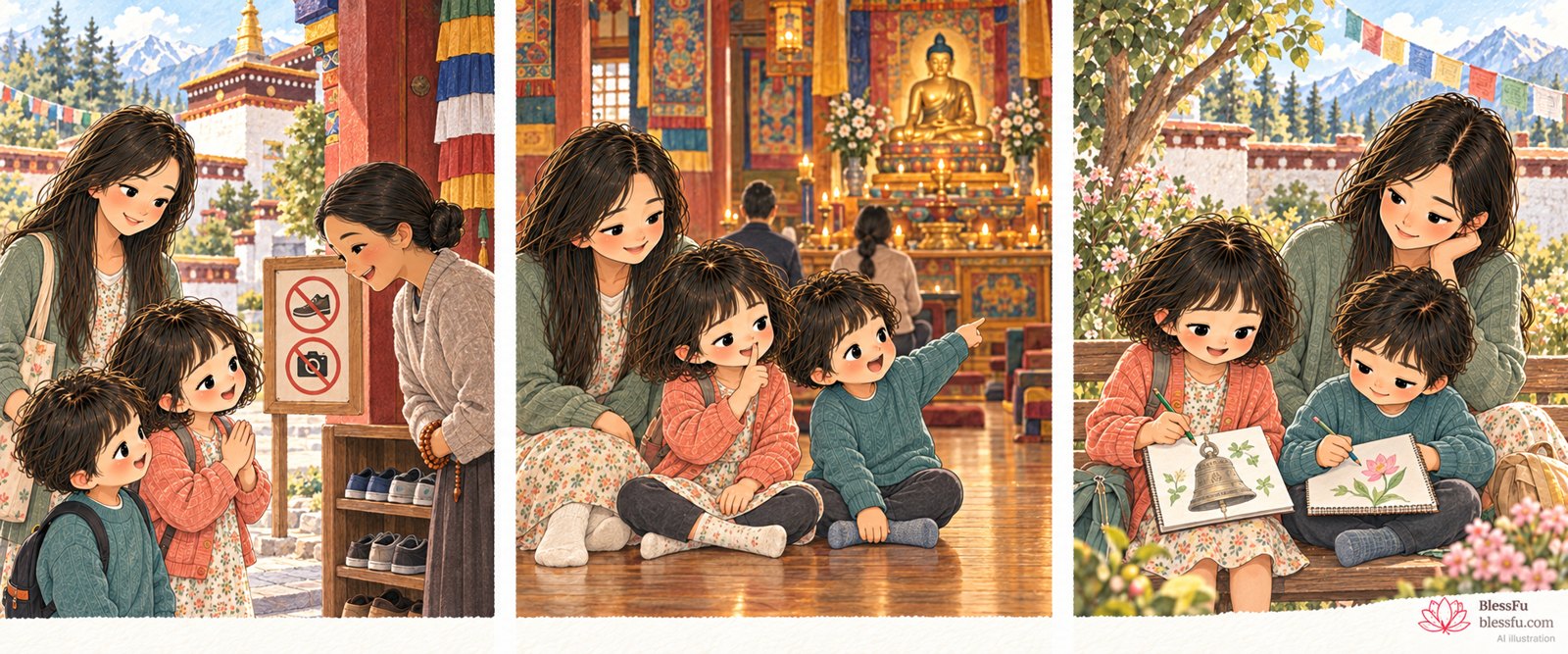
At the temple gate, Xiaohe meets a welcoming attendant. Mum asks, “Which areas can we visit today? What should we know before entering?” The attendant points to the signs. Xiaohe discovers that asking is easier than guessing.
They remove their shoes as requested here. Her brother almost calls out when he sees a Buddha statue. Xiaohe quietly says, “Let us talk more outside.” She does not scold him. They walk gently, sit down and leave space for people studying quietly.
In the garden, her brother asks about a flower he saw. Mum opens a notebook. “Draw it, and we can ask at a suitable time.” Xiaohe thanks the attendant before leaving. Looking carefully and asking questions can help us learn without touching everything.
Think together
Respect includes noticing other people and caring for our own needs. Rules about shoes, photography and access vary; follow the place and event you are visiting. A child can tell a caregiver when something is confusing or uncomfortable.
- How can Xiaohe remind her excited brother kindly?
- What if there is no sign about photographs?
Try an activity
Draw three visit cards: eyes for observing, a question mark for asking and an ear for being considerate. An adult plays the attendant. Practise: “May we take a photo here?” No bowing practice is required.
Take it home
At a library or another public place, find one sign and discuss whom it helps.
For adults: read-aloud script and guidance
This is an invented visit, not the rules of a particular monastery. Check access beforehand and accompany children. Participation in worship, photographs and physical contact is optional. Ask about accessibility or a quiet break when needed. Do not frighten children with punishment for mistakes.
Nine-slide lesson outline
1. Our First Temple Visit
Learn together, one small step.
Practise observing, asking and visiting without interrupting others.
We learned about study in monasteries. Now imagine a family visit.
2. Look closely
What could we ask when we arrive somewhere unfamiliar?
We learned about study in monasteries. Now imagine a family visit.
What could we ask when we arrive somewhere unfamiliar?
3. Story 1 / 3
At the temple gate, Xiaohe meets a welcoming attendant. Mum asks, “Which areas can we visit today? What should we know before entering?” The attendant points to the signs. Xiaohe discovers that asking is easier than guessing.
At the temple gate, Xiaohe meets a welcoming attendant. Mum asks, “Which areas can we visit today? What should we know before entering?” The attendant points to the signs. Xiaohe discovers that asking is easier than guessing.
4. Story 2 / 3
They remove their shoes as requested here. Her brother almost calls out when he sees a Buddha statue. Xiaohe quietly says, “Let us talk more outside.” She does not scold him. They walk gently, sit down and leave space for people studying quietly.
They remove their shoes as requested here. Her brother almost calls out when he sees a Buddha statue. Xiaohe quietly says, “Let us talk more outside.” She does not scold him. They walk gently, sit down and leave space for people studying quietly.
5. Story 3 / 3
In the garden, her brother asks about a flower he saw. Mum opens a notebook. “Draw it, and we can ask at a suitable time.” Xiaohe thanks the attendant before leaving. Looking carefully and asking questions can help us learn without touching everything.
In the garden, her brother asks about a flower he saw. Mum opens a notebook. “Draw it, and we can ask at a suitable time.” Xiaohe thanks the attendant before leaving. Looking carefully and asking questions can help us learn without touching everything.
6. A Buddhist idea
Use kind questions in a new place.
Respect includes noticing other people and caring for our own needs. Rules about shoes, photography and access vary; follow the place and event you are visiting. A child can tell a caregiver when something is confusing or uncomfortable.
7. Talk together
How can Xiaohe remind her excited brother kindly?
What if there is no sign about photographs?
Listen to different answers. Ask why. Children may discuss the characters rather than private experiences.
8. Try an activity
Draw three visit cards.
Draw three visit cards: eyes for observing, a question mark for asking and an ear for being considerate. An adult plays the attendant. Practise: “May we take a photo here?” No bowing practice is required.
At a library or another public place, find one sign and discuss whom it helps.
9. For grown-ups
Read aloud, discuss and try a small activity.
Stories and exercises: BlessFu
Illustrations: AI-assisted
Full references and guidance are in the companion booklet.
This is an invented visit, not the rules of a particular monastery. Check access beforehand and accompany children. Participation in worship, photographs and physical contact is optional. Ask about accessibility or a quiet break when needed. Do not frighten children with punishment for mistakes.
Next, we look closely at a thangka.
Story and references
Theme reference: FPMT, Showing Respect to Holy Objects. The visit, conversations and child-friendly questions are original, not a translation of its rules. AI-assisted teaching illustrations, not historical photographs, a real temple record or ritual instructions. Sources checked 2026-09-15.
Next, we look closely at a thangka.