
Different, Together
Notice a difference and show respect by asking and offering choices.
Watch lesson 16
Open the full image, then touch and hold to save on a phone, or right-click and save on a computer.
Let’s begin
We have practised listening. Today we see what different ideas can bring.
Three leaf pictures look different. Which one is “correct”?
Story time
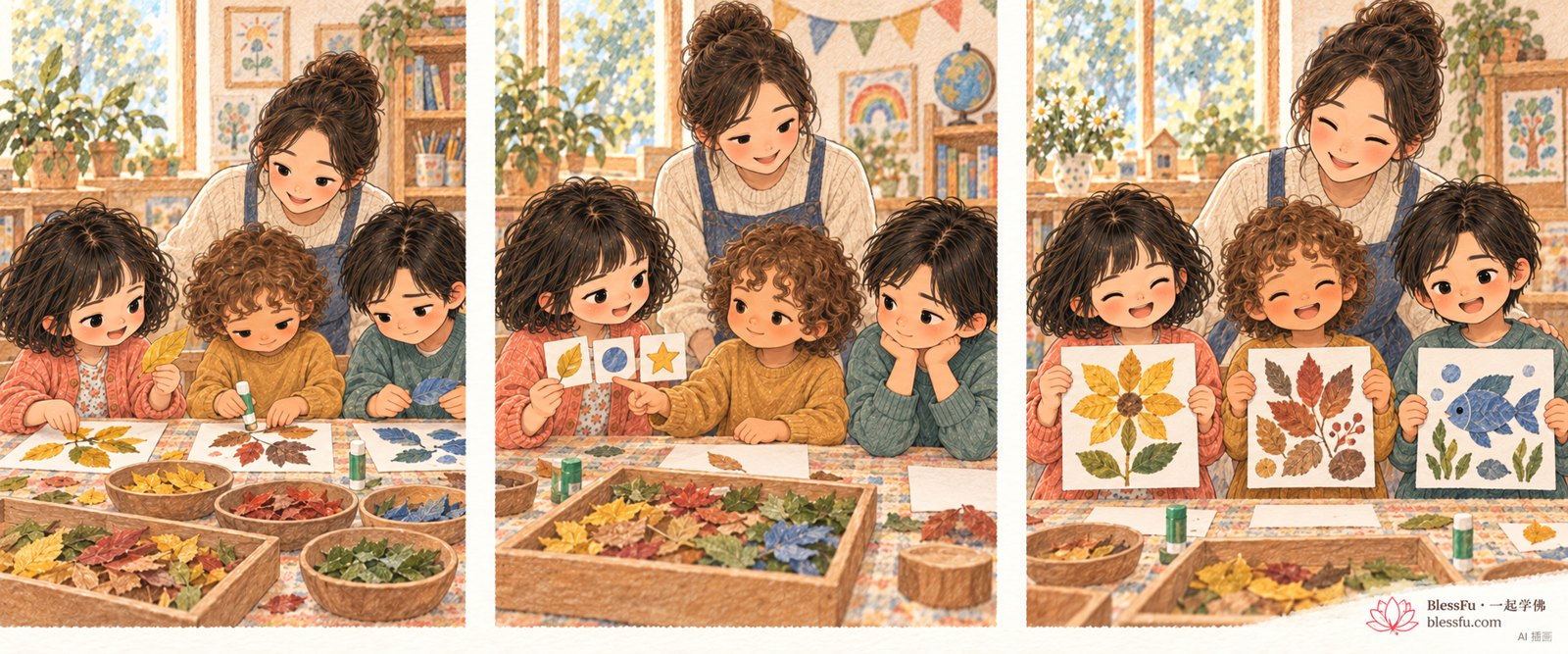
At the craft table, Xiaohe made a yellow flower from leaves. Lele made a blue fish. Mimi, who was new, chose leaves slowly and did not speak right away. Xiaohe nearly decided for Mimi: “Make a flower too!” The teacher asked gently, “Shall we find out what Mimi would like?”
There were picture cards showing a leaf, a circle and a star. Xiaohe slid them toward Mimi and waited. Mimi pointed to the leaf, then arranged a bunch of red leafy branches on the paper. “Leaves can become leafy branches too!” said Lele. Nobody insisted that Mimi answer with spoken words.
The three pictures hung side by side: flower, fish and leafy branches, each different. “We do not have to make the same thing for the wall to look lovely,” said Xiaohe. Mimi smiled and nodded. Doing something together could mean making room for different choices.
Think together
Respecting differences starts with not mocking, asking first and offering choices. People may enjoy and express things differently, and each deserves consideration. We can also adapt shared activities so more people can join.
- Why did the teacher not choose a picture for Mimi?
- What could happen if Mimi did not want to display the picture yet?
Try an activity
Draw a “wall of three choices”: three different answers to one art prompt. Add a way to join without speaking, such as pointing to a picture, writing or drawing.
Take it home
Each family member chooses a colour for a shared picture. Explaining the choice is optional.
For adults: read-aloud script and guidance
Do not ask a child to represent a culture, language or bodily difference. Avoid erasing needs by saying everyone is exactly the same. Discuss adapting activities. Being quiet does not mean not understanding; answering slowly does not mean being less capable.
Nine-slide lesson outline
1. Different, Together
Learn together, one small step.
Notice a difference and show respect by asking and offering choices.
We have practised listening. Today we see what different ideas can bring.
2. Look closely
Three leaf pictures look different. Which one is “correct”?
We have practised listening. Today we see what different ideas can bring.
Three leaf pictures look different. Which one is “correct”?
3. Story 1 / 3
At the craft table, Xiaohe made a yellow flower from leaves. Lele made a blue fish. Mimi, who was new, chose leaves slowly and did not speak right away. Xiaohe nearly decided for Mimi: “Make a flower too!” The teacher asked gently, “Shall we find out what Mimi would like?”
At the craft table, Xiaohe made a yellow flower from leaves. Lele made a blue fish. Mimi, who was new, chose leaves slowly and did not speak right away. Xiaohe nearly decided for Mimi: “Make a flower too!” The teacher asked gently, “Shall we find out what Mimi would like?”
4. Story 2 / 3
There were picture cards showing a leaf, a circle and a star. Xiaohe slid them toward Mimi and waited. Mimi pointed to the leaf, then arranged a bunch of red leafy branches on the paper. “Leaves can become leafy branches too!” said Lele. Nobody insisted that Mimi answer with spoken words.
There were picture cards showing a leaf, a circle and a star. Xiaohe slid them toward Mimi and waited. Mimi pointed to the leaf, then arranged a bunch of red leafy branches on the paper. “Leaves can become leafy branches too!” said Lele. Nobody insisted that Mimi answer with spoken words.
5. Story 3 / 3
The three pictures hung side by side: flower, fish and leafy branches, each different. “We do not have to make the same thing for the wall to look lovely,” said Xiaohe. Mimi smiled and nodded. Doing something together could mean making room for different choices.
The three pictures hung side by side: flower, fish and leafy branches, each different. “We do not have to make the same thing for the wall to look lovely,” said Xiaohe. Mimi smiled and nodded. Doing something together could mean making room for different choices.
6. A Buddhist idea
Different choices
deserve to be taken seriously.
Respecting differences starts with not mocking, asking first and offering choices. People may enjoy and express things differently, and each deserves consideration. We can also adapt shared activities so more people can join.
7. Talk together
Why did the teacher not choose a picture for Mimi?
What could happen if Mimi did not want to display the picture yet?
Listen to different answers. Ask why. Children may discuss the characters rather than private experiences.
8. Try an activity
Draw a wall with three different answers.
Draw a “wall of three choices”: three different answers to one art prompt. Add a way to join without speaking, such as pointing to a picture, writing or drawing.
Each family member chooses a colour for a shared picture. Explaining the choice is optional.
9. For grown-ups
Read aloud, discuss and try a small activity.
Stories and exercises: BlessFu
Illustrations: AI-assisted
Full references and guidance are in the companion booklet.
Do not ask a child to represent a culture, language or bodily difference. Avoid erasing needs by saying everyone is exactly the same. Discuss adapting activities. Being quiet does not mean not understanding; answering slowly does not mean being less capable.
Next, we respect others while respecting our own boundaries.
Story and references
Theme reference: Matt Lindén, “SEE Learning: Cultivating Social Skills,” Study Buddhism, an abridgment of the Emory University SEE Learning framework. Used only for broad themes of care, listening, diversity and appreciation. This is a universal ethics reference, not a Buddhist scripture. Stories, dialogue and activities are original BlessFu writing, not a translation or an endorsed course.
https://studybuddhism.com/en/essentials/universal-values/see-learning-cultivating-social-skills
Next, we respect others while respecting our own boundaries.