
A Small Bowl of Water
Meet water offerings and practise preparing and tidying with care.
Watch lesson 43
Open the full image, then touch and hold to save on a phone, or right-click and save on a computer.
Let’s begin
We explored temples and cultural objects. Now we return home and begin with a bowl of water.
Does a thoughtful offering have to be expensive?
Story time
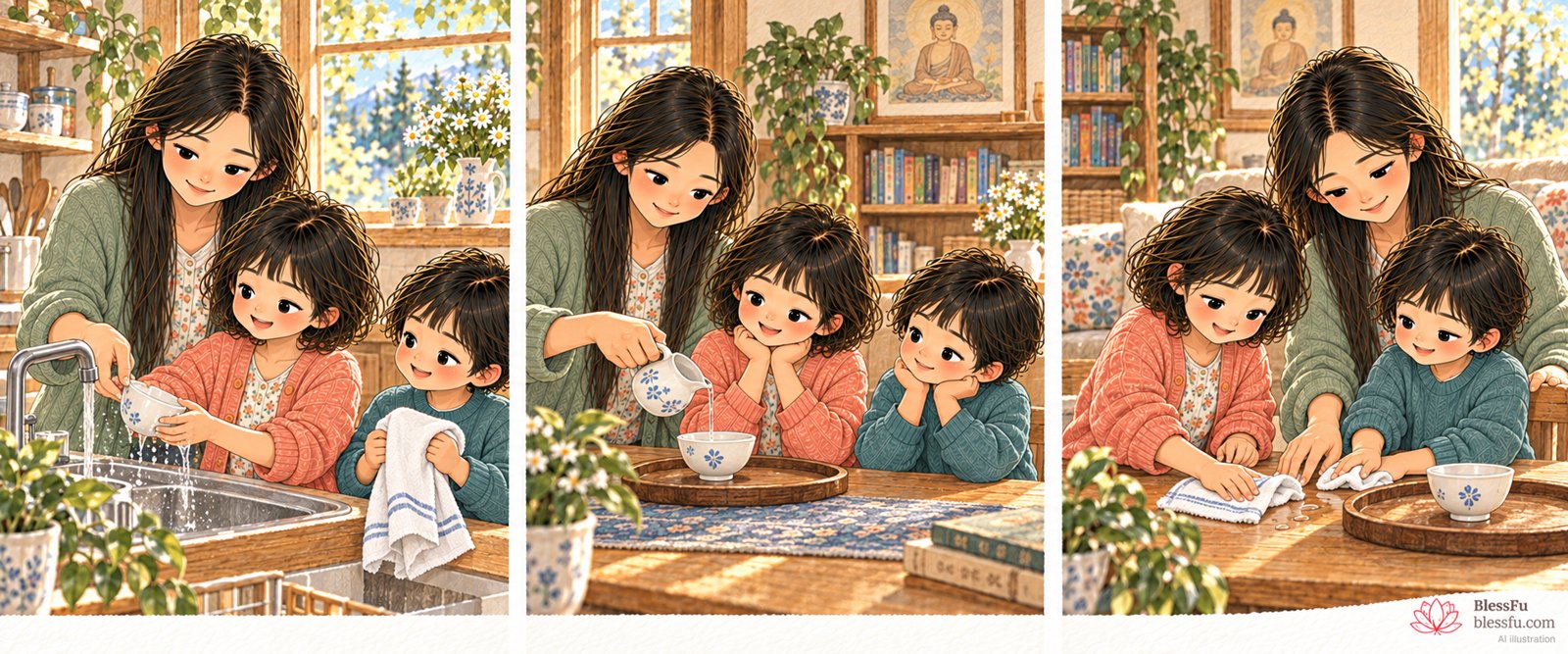
Mum brings out a small white bowl. “Some Buddhist families offer clean water to express respect and practise giving.” Xiaohe wants to help. She washes the bowl with Mum while her brother brings a clean cloth. First they clear the table.
Mum places the bowl on a tray and slowly demonstrates pouring from a small jug, leaving room at the top. Xiaohe watches carefully. “I want to learn to care for others,” she says. Mum explains that this is an introduction; families can ask about the full practice in their own tradition.
Her brother bumps the table and spills a drop. He looks worried. Xiaohe brings a cloth. “We can wipe it up.” Together they care for the bowl and table. Preparing carefully, speaking kindly and tidying patiently are all things they can practise.
Think together
An offering can express respect for the Buddha, Dharma and Sangha and develop generosity. Groups of water bowls are common in Tibetan Buddhism. Our single-bowl introduction explores intention; it is not a complete offering ritual or a requirement for children.
- Why prepare an inexpensive bowl with care?
- What response helps the boy after the spill?
Try an activity
With an adult, a willing child cleans a stable small bowl, pours a little clean water over a tray, names a kind intention and helps tidy. Alternatively, draw three scenes: preparing, caring and tidying.
Take it home
Ask whether a family member would like a small drink of water. Discuss how everyday care and religious offerings are related and different.
For adults: read-aloud script and guidance
An adult handles the altar and removal of offerings. Avoid climbing, electrical items and heavy jugs. Offering water is not for children to play with or drink. Never describe an accidental spill as a curse or punishment. Seek guidance within your tradition for formal practice. No visualizations, mantras or accumulation targets are taught. Use little water and existing equipment.
Nine-slide lesson outline
1. A Small Bowl of Water
Learn together, one small step.
Meet water offerings and practise preparing and tidying with care.
We explored temples and cultural objects. Now we return home and begin with a bowl of water.
2. Look closely
Does a thoughtful offering have to be expensive?
We explored temples and cultural objects. Now we return home and begin with a bowl of water.
Does a thoughtful offering have to be expensive?
3. Story 1 / 3
Mum brings out a small white bowl. “Some Buddhist families offer clean water to express respect and practise giving.” Xiaohe wants to help. She washes the bowl with Mum while her brother brings a clean cloth. First they clear the table.
Mum brings out a small white bowl. “Some Buddhist families offer clean water to express respect and practise giving.” Xiaohe wants to help. She washes the bowl with Mum while her brother brings a clean cloth. First they clear the table.
4. Story 2 / 3
Mum places the bowl on a tray and slowly demonstrates pouring from a small jug, leaving room at the top. Xiaohe watches carefully. “I want to learn to care for others,” she says. Mum explains that this is an introduction; families can ask about the full practice in their own tradition.
Mum places the bowl on a tray and slowly demonstrates pouring from a small jug, leaving room at the top. Xiaohe watches carefully. “I want to learn to care for others,” she says. Mum explains that this is an introduction; families can ask about the full practice in their own tradition.
5. Story 3 / 3
Her brother bumps the table and spills a drop. He looks worried. Xiaohe brings a cloth. “We can wipe it up.” Together they care for the bowl and table. Preparing carefully, speaking kindly and tidying patiently are all things they can practise.
Her brother bumps the table and spills a drop. He looks worried. Xiaohe brings a cloth. “We can wipe it up.” Together they care for the bowl and table. Preparing carefully, speaking kindly and tidying patiently are all things they can practise.
6. A Buddhist idea
Care for objects and people.
An offering can express respect for the Buddha, Dharma and Sangha and develop generosity. Groups of water bowls are common in Tibetan Buddhism. Our single-bowl introduction explores intention; it is not a complete offering ritual or a requirement for children.
7. Talk together
Why prepare an inexpensive bowl with care?
What response helps the boy after the spill?
Listen to different answers. Ask why. Children may discuss the characters rather than private experiences.
8. Try an activity
Draw three steps: prepare, care, tidy.
Practise with water and an adult nearby.
With an adult, a willing child cleans a stable small bowl, pours a little clean water over a tray, names a kind intention and helps tidy. Alternatively, draw three scenes: preparing, caring and tidying.
Ask whether a family member would like a small drink of water. Discuss how everyday care and religious offerings are related and different.
9. For grown-ups
Read aloud, discuss and try a small activity.
Stories and exercises: BlessFu
Illustrations: AI-assisted
Full references and guidance are in the companion booklet.
An adult handles the altar and removal of offerings. Avoid climbing, electrical items and heavy jugs. Offering water is not for children to play with or drink. Never describe an accidental spill as a curse or punishment. Seek guidance within your tradition for formal practice. No visualizations, mantras or accumulation targets are taught. Use little water and existing equipment.
Next, we explore the meaning of a light and a flower.
Story and references
Background: Losang Dragpa Centre, Altar Set-up. Only the basic themes of clean water and offering are used; the single-bowl family activity is original, not its seven-bowl procedure. Stories, dialogue and activities are original BlessFu writing, not scripture translations. AI-assisted teaching illustrations do not show a complete ritual. Sources checked 2026-09-15.
Next, we explore the meaning of a light and a flower.